 Blaine
 Why Ferndale Windows Wear Out Differently Than Windows Inland
Ferndale sits close enough to the water and to the open weather systems moving through Whatcom County that its homes take a different kind of beating than houses further inland. It's not one dramatic storm that does the damage — it's the accumulation. Salt-laden air drifting off the Strait and the bay corrodes hardware and dulls finishes over years, not months. Driving rain, often pushed sideways by wind off the water, finds every weak seal and every place where old caulk has given up. And the long, wet, low-sun stretch of fall through spring gives moss and algae months at a time to take hold on sills, tracks, and anything that stays damp.
None of that is dramatic on its own. But on a 15- or 20-year-old window, it adds up to soft wood at the sill, hardware that won't latch cleanly anymore, seals that have lost their grip, and glass that fogs between the panes. By the time a homeowner notices a draft or a stuck sash, the window has usually been losing the fight quietly for a while.
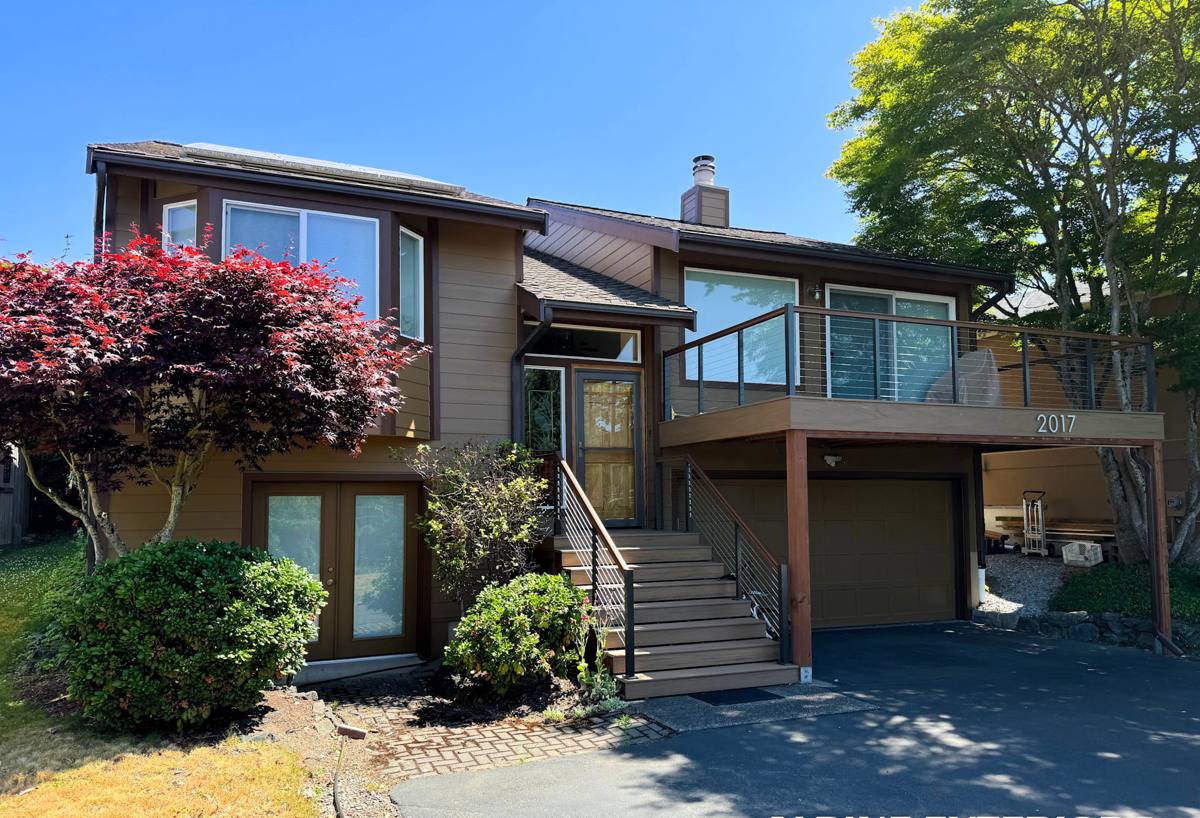
Signs a Ferndale Home Is Ready for Window Replacement
Some of these show up gradually, which is exactly why they get missed. Worth checking each window in the house against this list, not just the ones that are obviously failing:
- Fogging or a milky haze between panes — the seal has failed and the insulating gas or dead air space is gone
- Windows that are hard to open, close, or lock, especially after damp weather
- Visible gaps, drafts, or a cold radiating feeling near the frame in winter
- Soft, spongy, or discolored wood at the sill or lower corners of the frame
- Moss, algae, or persistent black streaking on the sill or exterior trim that keeps coming back after cleaning
- Condensation forming on the inside of the glass regularly, even with normal ventilation
- Visible daylight or gaps around the frame from outside
- A noticeable rise in heating costs without any other explanation
One or two of these on a single window might just mean that window needs attention. Several of them showing up across multiple windows usually means the whole set is reaching the end of its useful life at roughly the same time — which is common, since most homes get their windows installed in one pass.
What a Correct Window Replacement Job Actually Involves
Window replacement looks simple from the outside — old window out, new window in — but the parts that determine whether it lasts happen where you can't see them once the job is done. This is the sequence that matters.
Removal and Inspection
Pulling the old window is also the only real chance to look at the framing underneath. In a climate that pushes this much moisture at a house, it's not unusual to find some degree of sill or framing damage behind an old window, especially on walls that take direct weather. A proper job stops here and addresses what's found — replacing or sistering damaged framing — before anything new goes in. Setting a new window into a compromised opening just hides the problem for a few more years.
Flashing and Water Management
This is the step that separates a window that survives driving rain from one that doesn't. Correct flashing directs water that gets behind the siding back out, rather than letting it pool at the sill or track down into the wall cavity. It has to be layered correctly — usually sill pan first, then side flashing, then the window itself integrated with the water-resistive barrier above — so water always sheds downward and outward, never inward. Skipping or rushing this step is the single most common reason a window replacement fails early in a wet climate like this one.
Air Sealing and Insulation
The gap between the new window frame and the rough opening needs to be filled with the right material — typically a low-expansion foam or backer rod and sealant, not the standard high-expansion foam that can bow a frame out of square. Done correctly, this stops both drafts and the kind of hidden air leakage that lets moist air condense inside the wall.
Setting, Shimming, and Finish Work
The window has to be shimmed level, plumb, and square, then fastened per the manufacturer's specification — not just screwed in wherever it happens to sit. Interior and exterior trim gets reset or replaced, and exterior caulking gets applied at the joints that actually need it. Caulking everything indiscriminately can trap moisture instead of shedding it, which is a mistake worth avoiding.
Choosing the Right Window for This Climate
Frame material matters more here than in a dry climate, because the frame spends more of the year damp. There's no single "best" choice for every home — it depends on the home's exposure, budget, and maintenance appetite — but here's how the common options compare for a Whatcom County setting.
| Frame Material | Moisture Resistance | Maintenance | Best Fit |
|---|---|---|---|
| Vinyl | Very good — won't rot, resists salt air corrosion | Low — occasional cleaning | Most homes; strong value for the climate |
| Fiberglass | Excellent — very stable, minimal expansion/contraction | Low | Homes with direct wind/rain exposure or larger window sizes |
| Wood / Wood-clad | Fair — needs an intact exterior cladding or finish to stay protected | Higher — finish needs upkeep, more sensitive to sustained moisture | Homes prioritizing a specific traditional interior look |
| Aluminum | Poor for this climate — conducts cold, prone to condensation | Moderate | Generally not recommended for Whatcom County homes |
Glass performance matters as much as the frame. A double-pane unit with a low-E coating and an argon or krypton gas fill does most of the work of keeping heat in during winter and reducing condensation risk. On a west- or water-facing wall that takes the brunt of driving rain and wind, it's worth paying attention to the window's design pressure and water infiltration rating, not just its energy rating — a window can be efficient and still leak if it isn't rated for the wind-driven rain this area sees.
What Drives the Cost of a Window Replacement
Every home is different, so exact numbers depend on a site visit, but the main factors that move the price up or down are consistent:
| Factor | Why It Matters |
|---|---|
| Number and size of windows | Larger openings and whole-house jobs have more material and labor per project, but often better per-window pricing |
| Frame material and glass package | Fiberglass and upgraded glass (triple-pane, higher-performance low-E) cost more than standard vinyl double-pane |
| Condition of the existing opening | Rot or framing damage found during removal adds repair work before the new window can be installed correctly |
| Full-frame vs. insert replacement | Full-frame replacement (down to the framing) costs more than an insert replacement but is often necessary when the frame itself has failed |
| Access and site conditions | Second-story windows, tight landscaping, or limited staging space add labor time |
As a general rule, a straightforward vinyl window replacement runs in the low-to-mid hundreds per window installed, with fiberglass, larger openings, or framing repairs pushing individual windows higher. A written estimate after an in-person look at the home is the only way to get a number that actually applies to a given house.
How Our Process Works
- On-site assessment. We walk the exterior and interior with you, check each window in question, and note anything — rot, failed seals, drafts — that affects the recommendation.
- Written estimate. You get a clear breakdown of window count, materials, and price before any work starts. No pressure to decide on the spot.
- Scheduling around the weather. Openings are exposed during the swap, so we plan around forecasted rain where we can and work efficiently to keep openings covered when we can't.
- Removal, inspection, and repair. Old windows come out, framing gets inspected, and any damage gets addressed before the new window goes in.
- Correct installation. Flashing, air sealing, shimming, and finish work done to spec — the steps described above, not shortcuts.
- Final walkthrough. We check operation, sealing, and finish work with you before calling the job done.
Why Local Experience in Ferndale Matters
A window that's correctly installed in a dry, mild climate can still fail early here if it's installed the same way. Crews who work Whatcom County regularly already know which walls in this area take the worst of the wind-driven rain, how much flashing overlap actually holds up through a wet winter, and which framing issues are common enough in older Ferndale homes to check for automatically rather than discover halfway through the job. That's not something a general contractor passing through picks up on one job — it comes from doing this work in this specific climate, on this specific kind of housing stock, over and over.
It also matters for accountability. A local crew is still around next year and the year after if a question comes up about how a window is performing — not just reachable by phone, but positioned to actually come back out and look.
Keeping New Windows Performing Through Whatcom County Weather
New windows still need a small amount of upkeep to get their full lifespan in this climate:
- Rinse sills and tracks periodically to keep salt residue and organic debris from building up
- Clear moss or algae from sills and surrounding trim before it spreads onto the window itself
- Check exterior caulking once a year, typically before the wet season starts, and touch up anything that's cracked or pulled away
- Operate every window a few times a season, even ones that aren't opened often, so hardware doesn't seize up
- Keep an eye on nearby vegetation so it isn't holding moisture against the window or frame
None of this is heavy maintenance — it's the kind of five-minute check that catches small issues before they turn into the kind of failure that ends up requiring a full replacement again in a decade instead of two or three.
If your Ferndale home has windows showing any of the signs above, or you'd just like an honest opinion on whether repair or replacement makes more sense, we're glad to take a look. Reach out for a free, no-pressure estimate using the form below.