 Blaine
 Why Semiahmoo Homes Wear Out Differently
Semiahmoo sits about as close to the water as a Whatcom County property can get, and that proximity shapes everything about how an exterior ages here. Homes on or near the spit and along the shoreline take on a combination of stresses that inland Blaine and Birch Bay properties see in a milder form: salt-laden air off Semiahmoo Bay and the Strait of Georgia, wind-driven rain that hits siding sideways instead of running straight down it, and a damp, shaded microclimate that keeps moss and algae active for most of the year. None of this is dramatic on any given day. It's cumulative. A siding product that's rated "good enough" for a typical Pacific Northwest town can still fall short a few blocks from the water, where the air itself is more corrosive and the moisture load is heavier and more constant.
We work throughout Blaine and Whatcom County, but Semiahmoo gets a specific mention because the exterior products that hold up fine in a drier, more sheltered lot start showing their limits faster here. Salt air accelerates corrosion on fasteners and trim metal, softens some paint films faster than manufacturers' published timelines assume, and works into any gap or seam left by a rushed installation. Understanding that is the first step to picking materials and a crew that are actually matched to the site.
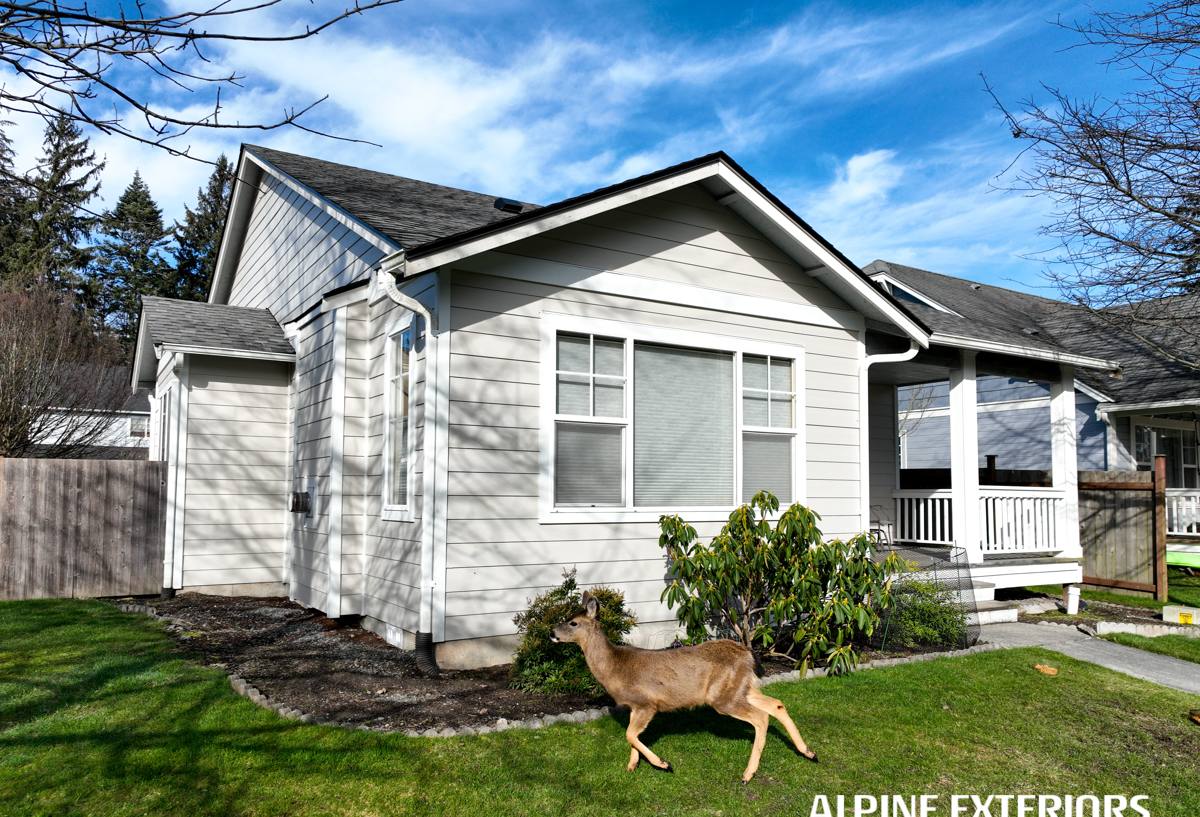
What Salt Air Actually Does to an Exterior
Salt air isn't just "humid air near water." Airborne salt is hygroscopic — it pulls moisture out of the atmosphere and holds it against whatever surface it lands on, including painted siding, window flashing, and fastener heads. Over years, that means:
- Faster breakdown of lower-grade paint and coatings, especially on the weather-facing (usually west and southwest) sides of a house
- Accelerated corrosion on exposed or poor-quality fasteners, hinges, and trim hardware
- Chalking and fading that shows up sooner than the same product would experience even a mile or two inland
- A steady supply of moisture that helps moss, lichen, and algae get established on north-facing walls and anything shaded by trees or the house itself
This is why we pay close attention to fastener specification and coating quality on any Semiahmoo project, not just the siding panel itself. An exterior is a system — siding, trim, flashing, fasteners, and paint all have to be rated for the environment they're actually in, not just the regional average.
Driving Rain and Wind-Loaded Water
Semiahmoo's exposure to open water means wind and rain often arrive together and from the same direction, which pushes water sideways into laps, seams, and trim joints instead of letting gravity do the work of shedding it. That's a different load than a sheltered inland lot deals with, and it means installation details — lap exposure, caulking at trim, flashing above windows and doors, and drainage behind the siding plane — matter more here than almost anywhere else in the county. A product installed to the letter of the manufacturer's spec on a calm inland lot can still leak or trap moisture on a wind-exposed shoreline wall if those same details aren't followed with real discipline.
Why We Install James Hardie Fiber Cement — and Nothing Else
We made a decision a while back to install James Hardie fiber cement siding exclusively, and we don't install vinyl, LP SmartSide, Cemplank, Allura, primed spruce, or cedar. That's not a marketing position — it's a standard we hold ourselves to because we've seen how each of those materials actually performs over time in this climate, and we'd rather turn down a job than install something we don't believe will hold up on a Blaine or Semiahmoo exterior.
Fiber cement is non-combustible and dimensionally stable — it doesn't expand and contract with moisture and temperature the way wood-based products do, which matters directly for a house dealing with constant humidity swings and salt exposure. James Hardie's factory-applied ColorPlus finish is baked on under controlled conditions, which gives it more consistent adhesion and UV resistance than field-applied paint, and that finish is backed by its own dedicated warranty separate from the substrate warranty. In a salt-air environment, a factory finish that's actually engineered for weather exposure — rather than touched up in the field — is worth the difference.
James Hardie also builds region-specific HZ5 product lines engineered for cold, wet, and high-moisture climates, which is the right specification for a shoreline property in this part of Washington. That's a meaningful distinction from wood-based or generic fiber cement alternatives that aren't engineered with a specific climate zone in mind.
What We'd Tell You About the Alternatives
Vinyl siding is inexpensive and easy to install, but it's a petroleum-based product that expands and contracts more than fiber cement, and its seams and J-channels give wind-driven rain more opportunities to find a way behind the cladding — a real concern on an exposed Semiahmoo lot. LP SmartSide and other engineered wood products perform reasonably well when installation and caulking are maintained perfectly, but any wood-based substrate is more vulnerable to sustained moisture exposure than fiber cement, and salt air doesn't make maintenance easier. Cedar and primed spruce are beautiful materials, but they demand a repainting and resealing cycle that most homeowners underestimate, and that maintenance burden only gets steeper this close to open water. None of these are "bad" products in the abstract — they're just not what we'd choose to put on a home that has to handle what Semiahmoo throws at an exterior year-round.
Roofing, Windows, and Decks in the Same Environment
Siding isn't the only part of a Semiahmoo exterior fighting salt air and driving rain. We handle roofing, windows, and decks as well, and the same logic applies across all of them:
- Roofing: flashing details and fastener corrosion resistance matter more near the water; a roof system needs to shed wind-driven rain, not just vertical rainfall
- Windows: window and door flashing integration with the siding plane is one of the most common failure points we find on older shoreline homes — it's rarely the window itself, it's how it was tied into the wall assembly
- Decks: fastener and hardware corrosion shows up fastest on exposed deck structures near open water, and material choice there deserves the same scrutiny as siding does
When we're on a Semiahmoo property for a siding project, we're looking at the whole envelope, because a new siding job installed around a leaking window or failing flashing detail just moves the problem, it doesn't solve it.
Moss, Algae, and the Shaded North Side
Whatcom County's long wet season, combined with tree cover and the shade many Semiahmoo lots get from mature landscaping, keeps moisture sitting on north- and east-facing walls longer than the sun-facing sides ever have to deal with. That's where moss and algae get a foothold first. Fiber cement resists moisture absorption far better than wood-based siding, but no exterior material is immune to organic growth if water and shade are both present. A few practical habits go a long way:
- Keep gutters clear so overflow doesn't run down the wall face repeatedly through the wet months
- Trim back vegetation that shades siding and slows drying time after rain
- Have visible moss or algae addressed before it's left to sit for multiple seasons
- Have caulking and trim joints checked periodically, since that's where trapped moisture does the most damage over time
What a Semiahmoo Siding Project Typically Involves
Assessment
We start by looking at the existing siding, trim, flashing, and any visible moisture damage, paying particular attention to wind-exposed walls and anything showing early corrosion or coating breakdown — the tells that a house has been fighting salt air for longer than its current siding was built to handle.
Installation Details That Matter Here
Correct James Hardie installation on a Semiahmoo home means following manufacturer fastening and clearance specs closely, using corrosion-resistant fasteners rated for the exposure, maintaining proper drainage behind the siding plane, and sealing trim and penetration points with materials suited to sustained UV and salt exposure. These aren't optional extras — they're the difference between a siding job that holds up for decades near open water and one that starts showing problems in year five.
Comparing Siding Options for a Semiahmoo Property
| Material | Salt Air Resistance | Driving Rain Performance | Maintenance Burden |
|---|---|---|---|
| James Hardie Fiber Cement (HZ5) | Strong — non-combustible, factory finish | Strong when installed to spec | Low — periodic wash, no repainting cycle needed for years |
| Vinyl | Moderate — can fade and become brittle faster near salt air | Weaker at seams and J-channels | Low, but limited repair options if damaged |
| Cedar / Primed Spruce | Weaker — absorbs moisture, salt accelerates weathering | Moderate, highly dependent on maintenance | High — regular repainting and sealing required |
| LP SmartSide | Moderate — engineered wood, sensitive to sustained moisture | Good when caulking is well maintained | Moderate — caulking and touch-up need regular attention |
This is a general comparison based on how these material categories typically behave, not a claim about any specific product failing — it's the reasoning that led us to standardize on fiber cement for homes in this kind of exposure.
Why a Local Crew Matters Here
Semiahmoo and the surrounding Blaine shoreline aren't like the rest of Whatcom County, and a crew that mostly works inland won't necessarily know to spec corrosion-resistant fasteners, tighten up flashing details, or flag the early signs of salt-air wear before they become expensive repairs. We work this area regularly, which means we've seen what actually goes wrong on these properties over time — not in the abstract, but on the specific walls, orientations, and details that take the brunt of it. That local pattern recognition is worth more than a generic install crew that treats every job the same regardless of where the house sits.
Getting Started
If you're noticing early coating wear, moss buildup, or trim issues on a Semiahmoo home, or you're just planning ahead for a siding, roofing, window, or deck project, we're happy to take a look and walk you through what we're seeing. We offer free, no-pressure estimates — reach out using the form below and we'll set up a time to come take a look at your property.