 Blaine
 A Peninsula With Its Own Weather Rules
Point Roberts sits out on its own — a piece of Whatcom County connected to the rest of the mainland only by a drive through Canada. That geography isn't just a quirk of the map. It puts homes here on a point of land surrounded on three sides by water, which means more direct exposure to marine air, wind-driven rain, and the kind of damp, shaded conditions that keep moss and algae going strong for most of the year. Homes a few miles inland in Blaine can get away with siding choices that simply don't hold up as well right on the water in Point Roberts.
We're based in Blaine and have serviced Point Roberts long enough to know that "close to the border" doesn't mean "same conditions as everywhere else in Whatcom County." Waterfront and near-waterfront properties here take a heavier beating from the elements, and the exterior materials on those homes need to be chosen with that in mind.
What Salt Air and Driving Rain Actually Do to a House
Salt Air
Airborne salt doesn't just sit on the surface — over years it works into seams, fasteners, and any small crack or gap in a siding or trim system. On untreated wood and some engineered wood products, that moisture intrusion accelerates swelling, splitting, and rot from the inside out. Metal fasteners and flashing are also more prone to corrosion in a salt-air environment, which is why the quality of flashing and fastener details matters as much as the siding material itself.
Driving Rain
Point Roberts gets rain coming sideways off the water, not just straight down. That kind of wind-driven rain finds every weak lap joint, every under-caulked window trim piece, and every spot where siding wasn't installed tight to manufacturer spec. A product that performs fine in a sheltered inland lot can fail years earlier when it's facing that kind of exposure day after day.
Why Moss Season Runs Long Out Here
Whatcom County as a whole has a long wet season, but the combination of marine humidity, tree cover, and north-facing exposure on many Point Roberts lots stretches that moss-and-algae window even further. Moss holds moisture against a wall long after the rain has stopped, and on porous or absorbent siding materials that constant dampness is exactly what feeds rot, delamination, and paint failure. The material you choose either resists that cycle or feeds it.
What This Means for Siding Choice
- Materials that absorb water swell, and swelling cracks paint and caulking, which lets in more water — a cycle that repeats every wet season
- Anything requiring regular repainting becomes a bigger, more frequent job when moss and mildew are constantly present
- Fastener and flashing corrosion resistance matters more here than in drier inland areas
- Factory-applied, baked-on finishes hold up to UV and moisture far longer than field-applied paint
Why We Install Only James Hardie Fiber Cement
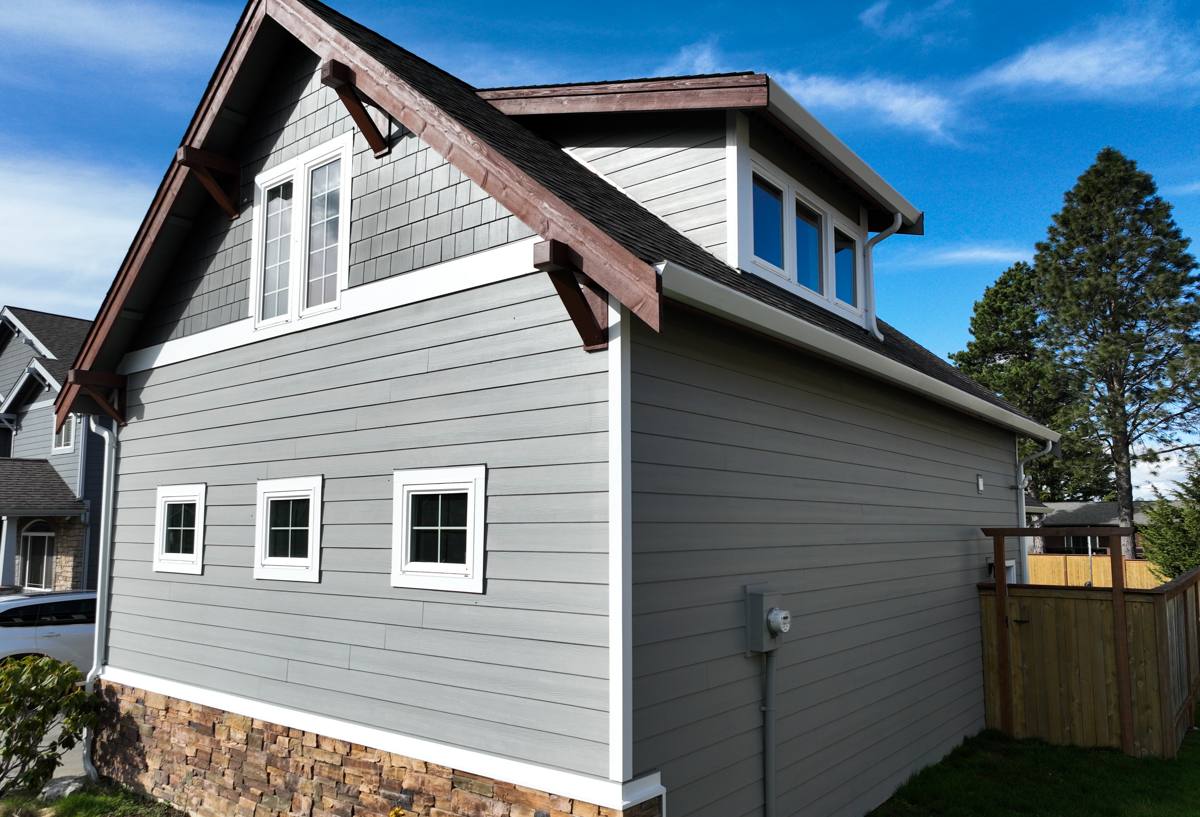
We made a decision as a company to install James Hardie fiber cement siding exclusively — not LP SmartSide, not vinyl, not Cemplank or Allura, not primed spruce or cedar. That's not a marketing angle; it's a standard we hold because of what we've seen these different materials do over time in exactly the conditions Point Roberts homes face.
Non-Combustible Core
Hardie's fiber cement composition is non-combustible, which matters for insurance considerations and general peace of mind regardless of climate, but it also means the material itself isn't subject to the moisture-driven wood rot and insect vulnerability that engineered wood and cedar products carry.
ColorPlus Factory Finish
Rather than relying on field-applied paint, Hardie's ColorPlus finish is baked on in a controlled factory process. That finish is engineered to resist fading and hold its color far longer than site-painted siding, which matters a great deal in a spot where UV, salt, and moisture are all working on the exterior at once.
Climate-Engineered HZ Product Lines
Hardie manufactures its HZ5 product line specifically for the wetter, more humid climate zones like the Pacific Northwest. That's a meaningful distinction from a one-size-fits-all siding product — it's engineered moisture resistance built for exactly this kind of weather, not a general-purpose product asked to perform in a demanding environment.
Warranty Backing
Hardie backs its products with a strong, transferable warranty. For a peninsula community where a fair number of homes eventually change hands, a warranty that transfers to a new owner is a real, practical asset — not just fine print.
Siding Materials: A Fair Comparison for This Climate
| Material | Behavior in Salt Air / Wet Climate | Maintenance Burden |
|---|---|---|
| Vinyl | Can warp or become brittle with UV and temperature swings; seams are a water-entry risk | Low upfront, but limited lifespan in harsh exposure |
| LP SmartSide / engineered wood | Wood-based core is vulnerable to moisture wicking at cuts and joints if not perfectly sealed | Ongoing caulk and paint upkeep to prevent moisture entry |
| Cedar / primed spruce | Natural wood absorbs moisture, especially in shaded, moss-prone areas | Frequent refinishing and rot inspection |
| James Hardie fiber cement (HZ5) | Engineered for wet, humid climates; non-combustible; resists moisture-driven swelling | Factory finish reduces repainting cycles significantly |
Beyond Siding: Roofing, Windows, and Decks for Peninsula Homes
Siding is only one part of a home's defense against this kind of climate, and we handle the rest of the exterior too. Roofing on a point of land facing wind-driven rain needs correct underlayment, flashing, and ventilation details — a roof that's marginal inland can fail faster out here. Windows need tight, properly flashed installation so wind-driven rain doesn't find its way behind the trim, which is often where hidden rot starts. Decks facing salt air and constant dampness need materials and fastener choices that won't corrode or degrade under that exposure. We look at these systems together, because a new set of siding installed next to an old, poorly flashed window or a deck ledger that's been collecting moisture doesn't solve the underlying problem.
Working With a Local Blaine Crew on an Exclave
Point Roberts' geography means getting a crew and materials there takes some planning that a contractor unfamiliar with the area might not account for. Being based in Blaine, we already know the logistics of scheduling work on the peninsula, coordinating material delivery, and planning around the realities of the border crossing — so it doesn't turn into a surprise that delays your project. We also know the specific exposure patterns of Point Roberts lots from having worked on homes there before: which sides of a house typically take the worst of the weather, where moss tends to build up fastest, and what installation details matter most given the conditions.
A crew that only occasionally works this far out doesn't have that same working knowledge, and on a home facing this kind of exposure, the installation details are exactly what determines whether siding lasts fifteen years or thirty-five.
What Affects the Cost of a Project Out Here
| Factor | Why It Matters in Point Roberts |
|---|---|
| Home size and wall complexity | More corners, dormers, and trim details mean more labor and flashing work |
| Current siding removal | Tear-off and disposal of existing material, especially if there's hidden moisture damage underneath |
| Exposure level | Waterfront-facing walls generally need more careful flashing and joint detailing than sheltered walls |
| Access and logistics | Material delivery and crew scheduling on the peninsula require lead time built into the project |
| Underlying repairs | Rot or moisture damage found once old siding comes off adds scope but should be fixed, not covered up |
A Simple Maintenance Checklist for Point Roberts Homeowners
- Walk the exterior once or twice a year and look for moss buildup, especially on north-facing and shaded walls
- Check caulking around windows, doors, and trim for cracking or gaps where rain could get behind the siding
- Look at gutter and downspout function after fall storms — clogged gutters push water where it shouldn't go
- Watch for soft spots or discoloration near ground level and around deck ledgers, common early signs of moisture damage
- Have flashing and fastener condition checked periodically, since salt air accelerates corrosion faster than most homeowners expect
If your Point Roberts home is due for new siding, or you're weighing options after noticing moss, cracking, or moisture damage on your current exterior, we're happy to come take a look. We'll walk the property, explain what we see, and put together a straightforward, no-pressure estimate for the work — fill out the form below to get started.