 Blaine
 Exterior Work in the Peace Arch Area
Peace Arch sits at the very northwest corner of Washington State, right up against the Canadian border in Blaine. It's a part of Whatcom County that gets the full brunt of Pacific marine weather: salt-laden air off the water, long stretches of driving rain through fall and winter, and a moss and mildew season that can run most of the year on shaded or north-facing walls. Homes here work harder than homes twenty miles inland, and the exterior materials on them need to be chosen with that in mind, not just for how they look on install day.
We work on siding, roofing, windows, and decks for homeowners throughout Blaine and the surrounding Whatcom County communities, and Peace Arch is territory we know well. That matters more than it sounds — a crew that understands how a specific neighborhood's exposure, tree cover, and weather patterns behave will make different, better calls on flashing details, ventilation, and material selection than a crew driving up from somewhere with a milder, drier climate.
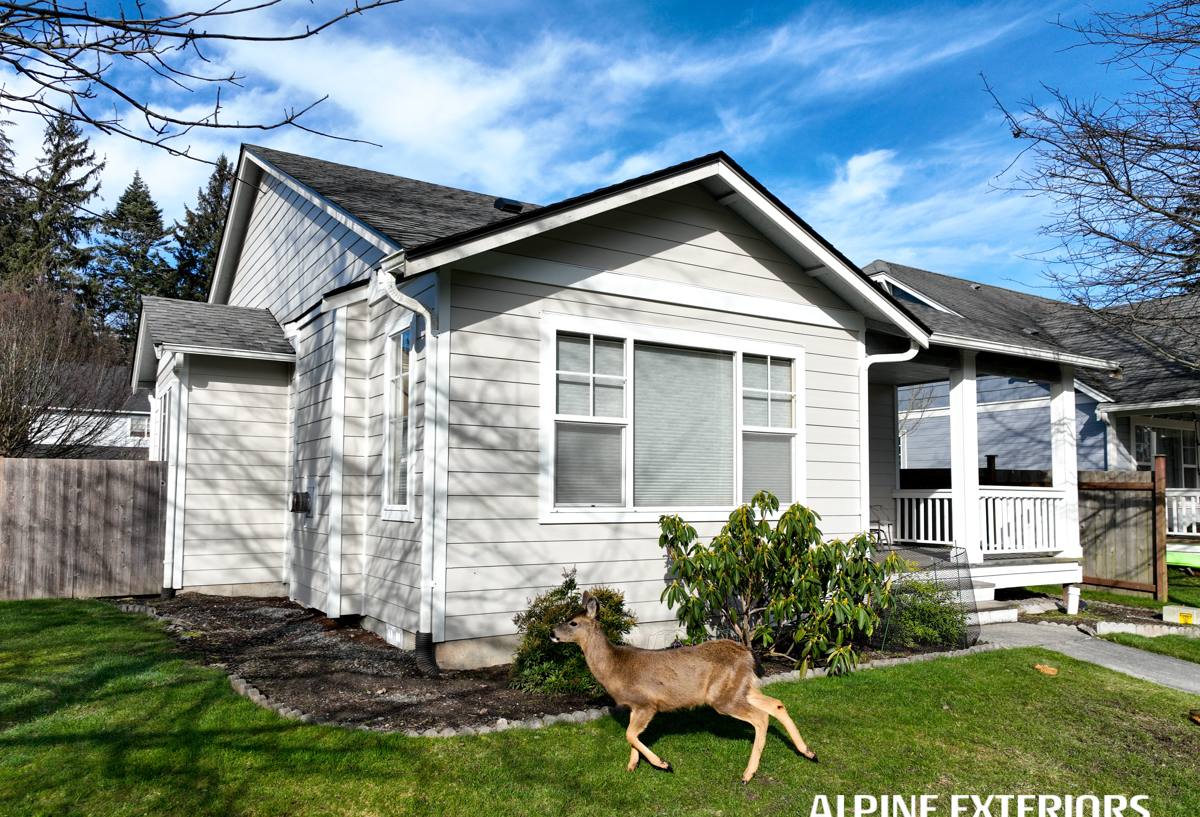
What Salt Air and Marine Exposure Do to a House
Proximity to salt water doesn't just mean occasional storms. It means airborne salt is settling on every exterior surface, day after day, mixing with moisture and accelerating corrosion on anything metal — fasteners, flashing, trim, hardware. Over years, that corrosion can compromise the very details that are supposed to keep water out of your wall assembly.
It also means paint and coatings on siding take more abuse. Salt air breaks down lesser coatings faster than inland exposure does, which is one of the reasons we're picky about what goes on a Peace Arch home. A siding product with a weak factory finish, or one that depends on field-applied paint holding up indefinitely, is starting from behind in this environment.
Wind-Driven Rain
Blaine's position near the water and the border means storms often arrive with real horizontal force behind the rain. Wind-driven rain finds every gap in flashing, every under-caulked seam, and every place where siding wasn't lapped correctly. This is a detail-sensitive climate — the quality of the installation matters as much as the material itself.
Moss, Mildew, and the Long Wet Season
Whatcom County's rainy season stretches long, and Peace Arch's tree cover and marine humidity keep exterior surfaces damp for extended periods, especially on north- and east-facing walls that don't get much direct sun. That's ideal territory for moss and mildew growth on siding, trim, and roofing.
Moss isn't just cosmetic. It holds moisture against the surface underneath it, and on materials that are vulnerable to sustained moisture contact — wood, some composites, certain lower-grade siding products — that constant dampness is what eventually leads to rot, delamination, or paint failure. A siding material's real-world performance in this climate depends heavily on how it handles being wet, and staying wet, for long stretches of the year.
What This Means for Material Choice
- Fasteners and flashing should be corrosion-resistant, not just standard-grade
- Siding needs a finish that holds color and integrity under salt exposure and UV, not just a coat of paint
- Water-shedding details (laps, kickout flashing, window and door trim) need to be installed correctly the first time, since re-doing them later means removing siding
- The base material has to tolerate prolonged dampness without swelling, softening, or rotting
- Shaded, north-facing walls need extra attention during design and installation, since they dry out slower after every rain
Why We Install Only James Hardie Fiber Cement
We made a deliberate decision as a company to install James Hardie fiber cement siding exclusively. We don't install vinyl, LP SmartSide, Cemplank, Allura, primed spruce, or cedar. That's not a marketing position — it's the product line we trust to perform correctly, year after year, in exactly the conditions Peace Arch homes face.
Vinyl siding is affordable and low-maintenance in the sense that it doesn't need painting, but it's a thin plastic product that can warp or crack under temperature swings and impact, and it relies on lap seams and trim details that are less forgiving of the kind of wind-driven rain this area sees. Wood siding, whether cedar or primed spruce, looks great when new but requires ongoing maintenance — recoating, caulking, and vigilance against rot — that most homeowners don't want to sign up for in a climate this wet. Engineered wood products like LP SmartSide use a wood-strand substrate that's more moisture-resistant than raw wood, but it's still an organic material at its core, and edge sealing and maintenance schedules have to be followed closely to avoid moisture problems. Other fiber cement brands like Cemplank and Allura are legitimate fiber cement products, but we've standardized on Hardie specifically for its factory finish system, its climate-engineered product lines, and the strength of its transferable warranty — consistency we can stand behind on every job rather than mixing supply chains.
Fiber cement, done right, doesn't rot, it doesn't attract insects, and it's non-combustible. James Hardie's ColorPlus finish is baked on at the factory under controlled conditions, which gives it better UV and fade resistance than field-applied paint, and it comes backed by a real transferable warranty — something that matters to buyers if you ever sell the home.
The Hardie Product Lines We Use
James Hardie engineers its siding in different formulations for different climate zones, called HZ10 and HZ5. Coastal Washington falls into the zone requiring HZ5 engineering, which is formulated for wetter, harsher climates — exactly the conditions Peace Arch deals with. We spec the correct HZ line for this area rather than defaulting to a generic product.
Common Product Choices
- HardiePlank lap siding — the most common choice, available in several exposure widths and textures (smooth or cedar-grain)
- HardiePanel vertical siding — often used for accent sections, gables, or a more modern look
- HardieShingle siding — a shingle-style profile for homes wanting a traditional Pacific Northwest look without wood's maintenance burden
- HardieTrim — matching trim boards for a consistent, factory-finished look around windows, corners, and fascia
Color selection matters here too. ColorPlus finishes come in a range of factory colors engineered to resist the fading that salt air and UV exposure cause faster than they would inland.
Our Siding Installation Process
The material is only half the equation. Fiber cement siding is only as good as its installation, and in a climate like Blaine's, installation mistakes show up faster than they would somewhere drier.
- Assessment — we look at the existing siding, sheathing, and any signs of moisture intrusion before quoting anything
- Weather barrier and flashing — correct house wrap, window and door flashing, and kickout flashing at roof-wall intersections are non-negotiable in this climate
- Proper fastening and clearances — Hardie specifies fastener types, spacing, and minimum clearances from grade, decks, and roof lines; we follow those specs to keep the warranty intact and keep water out
- Caulking and sealing at penetrations — every fixture, vent, and utility penetration gets sealed correctly, since these are common failure points in wind-driven rain
- Final inspection — checking laps, corners, and trim details before we consider a job finished
Beyond Siding: Roofing, Windows, and Decks
Siding doesn't work in isolation — it's one piece of a home's whole exterior envelope, and Peace Arch's climate stresses all of it. We also handle roofing, window replacement, and deck construction, which lets us look at a home's exterior as a system rather than patching one component at a time.
A roof with failing flashing will send water down behind good siding. Old, poorly sealed windows undercut even the best siding job around their perimeter. Decks built from the wrong materials, or without proper ledger flashing, deal with the same wet-season and moss pressures as walls do. Handling these trades together means fewer contractors pointing fingers at each other's work, and fewer gaps where two trades' work meets.
Cost Factors for a Peace Arch Siding Project
| Factor | Why It Matters Here |
|---|---|
| Home size and wall complexity | More corners, dormers, and trim details mean more labor and material |
| Existing siding removal | Tear-off of old wood or vinyl, and any rot repair underneath, affects both cost and timeline |
| Product line and profile | HardiePlank, HardiePanel, and HardieShingle carry different material costs |
| Trim and detail work | Corner boards, window trim, and fascia detailing add labor but improve long-term water-shedding |
| Access and site conditions | Sloped lots, tree cover, and tight setbacks common in this area can affect scaffolding and staging |
| Moisture damage found during tear-off | Sheathing or framing repair, if needed, is priced separately once uncovered |
Choosing a Contractor for This Climate
Not every siding crew has real experience with the specific demands of a marine, high-rainfall climate like Blaine's. Before hiring anyone for exterior work in Peace Arch, it's worth checking a few things.
- Washington contractor license and active insurance, verifiable through the state's contractor lookup
- Manufacturer training or certification specific to the siding product being installed
- A written scope that spells out flashing, house wrap, and fastening details — not just "install siding"
- Willingness to explain why they use the products they use, including trade-offs of alternatives
- Local references or a track record of work in Whatcom County's climate specifically
- A clear, transferable manufacturer warranty backing the installed product
A contractor who's vague about flashing details or brushes past questions about moisture management is a red flag in a climate where those details determine whether siding lasts fifteen years or fifty.
Maintenance After Installation
James Hardie siding is low-maintenance compared to wood, but "low-maintenance" doesn't mean "zero-maintenance," especially in a moss-prone area like Peace Arch. A periodic rinse to keep moss and mildew from building up, an annual look at caulking around windows and penetrations, and prompt attention to any impact damage will keep a Hardie installation performing the way it's designed to for decades.
If you're weighing a siding, roofing, window, or deck project for a home in Peace Arch or elsewhere around Blaine, we're happy to take a look and talk through what your home actually needs — no pressure, no obligation. Reach out for a free estimate using the form below.