 Blaine
 Siding Installation Built for the Nooksack Area's Climate
Homes in the Nooksack area of Whatcom County sit in one of the more punishing exterior climates in Washington State. It's not any single extreme — it's the combination. Moist air moving in off the water sits on siding for days at a time. Driving rain, pushed sideways by wind, finds every gap in flashing and trim. And because the sun disappears for long stretches of the year, north- and east-facing walls stay damp long enough for moss and algae to take hold and never fully let go. Any siding installed here has to be chosen and installed with that combination in mind, not just picked off a sample board.
That's the lens we use on every Nooksack-area siding job: not "what looks good on day one," but "what still looks good and performs correctly in year fifteen, under this specific weather."
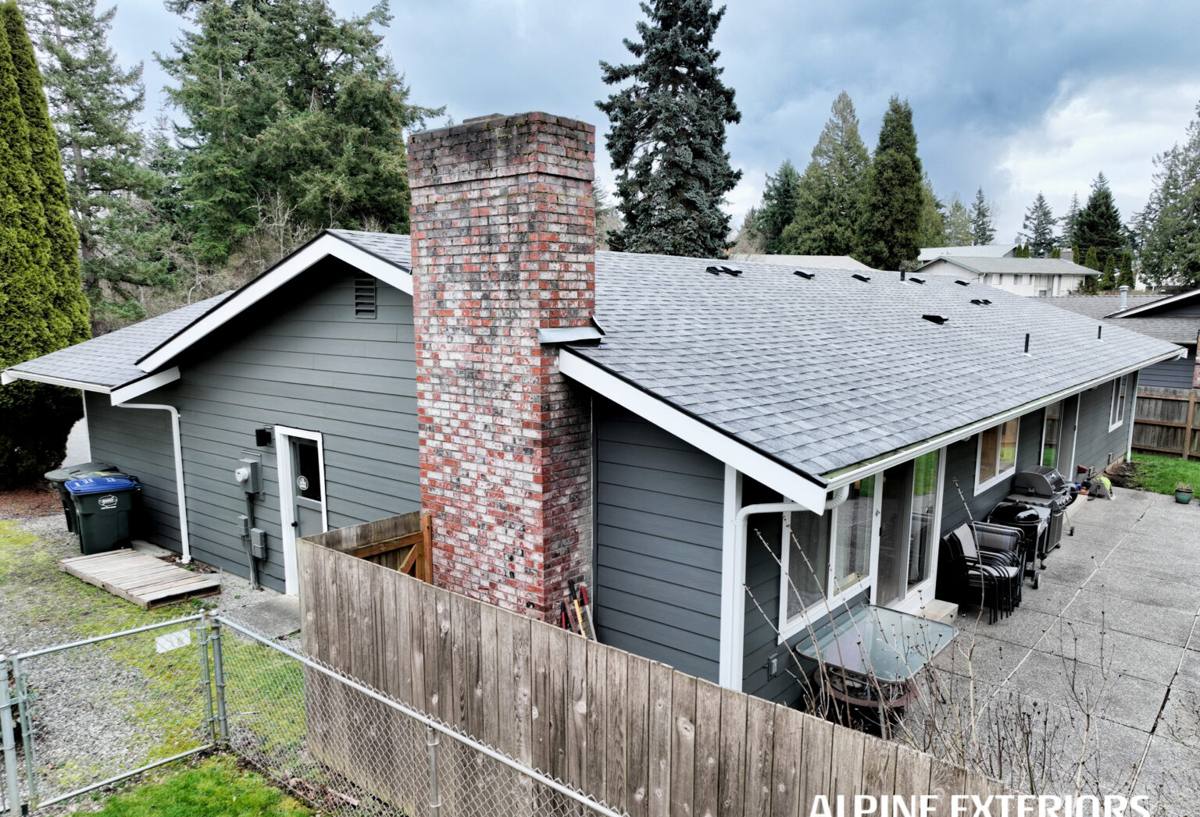
What Local Homes Actually Need From Their Siding
Moisture management, not just moisture resistance
A lot of siding failure in Whatcom County isn't the siding material failing outright — it's water getting behind the siding through poor flashing, poor caulking, or panels installed too tight to the ground or trim, and then having nowhere to dry out. A correct installation manages water in three ways: it sheds it off the surface, it flashes and laps it away from seams and openings, and it leaves enough of a drainage gap and clearance for anything that does get behind the cladding to dry out instead of sitting there.
Resistance to moss, mildew, and algae staining
With as much shade and moisture as this region gets, moss and algae growth on siding is close to inevitable on some elevations no matter what product you choose. What varies enormously is how the material handles it. Some siding absorbs moisture into the substrate itself, which accelerates rot and softens the material under the growth. Others simply hold a surface stain that can be cleaned without damaging what's underneath.
Stability against wind-driven rain and temperature swings
Coastal Whatcom County gets real wind events, and wind-driven rain doesn't behave like a gentle shower — it gets pushed up and under laps and around corners. Siding that swells, warps, or cups when it absorbs moisture will open gaps at exactly the spots wind-driven rain is trying to exploit. Dimensionally stable material keeps those gaps from opening in the first place.
Why We Only Install James Hardie Fiber Cement
We made a decision as a company to install one siding system: James Hardie fiber cement. Not because it's the only decent product on the market, but because it's the one that consistently holds up to this exact climate without the maintenance headaches or moisture risk we see in materials designed for drier, milder regions.
Fiber cement doesn't rot, and it isn't a food source for moss or fungus the way wood-based products can be. It's non-combustible, which matters given how much wildfire smoke and ember exposure the broader Pacific Northwest has seen in recent summers. And it's engineered — Hardie makes specific HZ5 product formulations for climates like ours, with freeze-thaw cycling and sustained moisture built into the engineering, not treated as an afterthought.
ColorPlus factory finish
Most siding failures we're called out to inspect aren't the substrate — they're the paint. Field-applied paint on any siding material is only as good as the prep, primer, and weather conditions on the day it was sprayed, and it starts breaking down within a few years in a climate this wet. Hardie's ColorPlus finish is baked on at the factory under controlled conditions, resists fading and chipping far longer than field-applied paint, and comes backed by its own finish warranty separate from the product warranty.
| Feature | Why It Matters in Whatcom County |
|---|---|
| HZ5 climate-engineered formulation | Built for sustained moisture and freeze-thaw exposure, not a generic national product |
| Fiber cement substrate | Doesn't rot or feed moss/fungus the way wood-based sidings can |
| ColorPlus factory finish | Outlasts field-applied paint in constant damp, low-sun conditions |
| Non-combustible material | Added protection during regional wildfire smoke/ember seasons |
| Transferable manufacturer warranty | Protects resale value if the home changes hands |
What a Correct Installation Actually Involves
Fiber cement siding is only as good as the install behind it. James Hardie publishes detailed installation requirements, and skipping steps is the single biggest cause of premature siding problems we see on homes that were sided by crews unfamiliar with the product.
- Weather-resistive barrier inspected and repaired before a single panel goes up — old, torn, or improperly lapped house wrap gets fixed, not covered over.
- Proper clearances from grade, roofing, decks, and patios — Hardie specifies minimum gaps so the bottom edge of the siding never sits in standing water or gets buried by mulch and soil over time.
- Correct fastener type, spacing, and penetration — under- or over-driven nails, or the wrong fastener for the substrate, are a common source of callbacks on rushed jobs.
- Flashing at every horizontal joint, window, and door — not just caulk. Caulk is a second line of defense, never the primary water management strategy.
- Correct panel gaps and expansion joints at butt joints, corners, and trim to accommodate the material's slight movement with temperature and moisture changes.
- Field-cut edges sealed per manufacturer spec so exposed cut ends aren't left to wick moisture.
Our Process on Nooksack-Area Jobs
1. On-site assessment
We walk the exterior, check the current siding and what's underneath it where accessible, and note problem elevations — usually the sides that get the least sun and the most wind-driven rain.
2. Tear-off and sheathing check
Old siding comes off and we inspect the sheathing and house wrap underneath before anything new goes up. Water damage found at this stage gets repaired first — installing new siding over compromised sheathing just hides the problem.
3. Weather barrier and flashing
House wrap gets repaired or replaced where needed, and flashing goes in at every penetration and horizontal transition before siding starts.
4. Hardie installation to spec
Panels, fasteners, clearances, and joints installed per James Hardie's published requirements — not shortcuts that happen to look fine until the first hard winter.
5. Trim, caulking, and final inspection
Trim work finished, caulking used as a secondary seal (not a substitute for flashing), and a final walk-through before we call the job done.
Why Hiring a Crew That Works This Area Matters
Siding installation isn't identical everywhere. A crew that mostly works drier inland regions can do a technically fine installation that still underperforms here, simply because they're not thinking about the specific ways Whatcom County weather attacks a building envelope — sustained damp, wind-driven rain angles, and shaded elevations that never fully dry between storms. Crews that work the Blaine and greater Whatcom County area regularly know which elevations on a given home need extra attention, which details fail first locally, and how to sequence a job around the wet season instead of fighting it.
Cost Factors for a Nooksack-Area Siding Project
| Factor | How It Affects the Project |
|---|---|
| Home size and wall complexity | More corners, gables, and dormers mean more cutting, flashing, and labor time |
| Condition of existing sheathing | Rot or water damage found at tear-off adds repair scope before siding can go on |
| Siding profile chosen | Lap width, shingle-style panels, and trim details vary in material and labor cost |
| Color and finish | Factory ColorPlus finishes and premium colors carry different pricing than standard options |
| Access and site conditions | Tight lots, slopes, or limited equipment access can add time and cost |
Signs Your Current Siding Is Losing the Battle
- Persistent moss or algae staining that comes back within months of cleaning
- Soft or spongy spots when you press on the siding, especially near the bottom courses
- Visible cupping, warping, or gaps opening at panel joints
- Paint that's peeling, bubbling, or chalking well before it should
- Interior signs like peeling paint, musty smells, or soft drywall near exterior walls
A Straightforward Recommendation
If you're weighing a full siding replacement or repairing storm and moisture damage on a home in the Nooksack area, our recommendation is consistent: James Hardie fiber cement, installed to the manufacturer's full specification, by a crew that understands what this specific climate does to a building envelope over time. It costs more upfront than some alternatives, and it's not the fastest material to install correctly — but for homes that have to stand up to salt air, driving rain, and a moss season that doesn't really end, it's the standard we're willing to put our name on.
If you'd like a straightforward look at your home's siding and what it would take to get it right, we're happy to come take a look. Estimates are free, there's no pressure, and we'll tell you honestly what we find.