 Blaine
 Why Siding Fails Faster Near the Water
Blaine sits right on the water, and that location comes with a trade-off. The same coastal setting that makes the views worth having also means your siding is dealing with salt-laden air, driving rain off the Strait of Georgia, and a moss season that can run eight months out of the year in a shaded, humid Whatcom County yard. Siding that would coast along for decades in a drier inland climate gets tested constantly here. Catching the warning signs early is the difference between a patch job and a full tear-off.
Most siding failure isn't sudden. It's a slow process that starts small — a hairline crack, a patch of discoloration, a slightly soft spot near a window trim — and gets worse every wet season it goes unaddressed. This page walks through what to actually look for, what it means, and when it's time to call someone out.
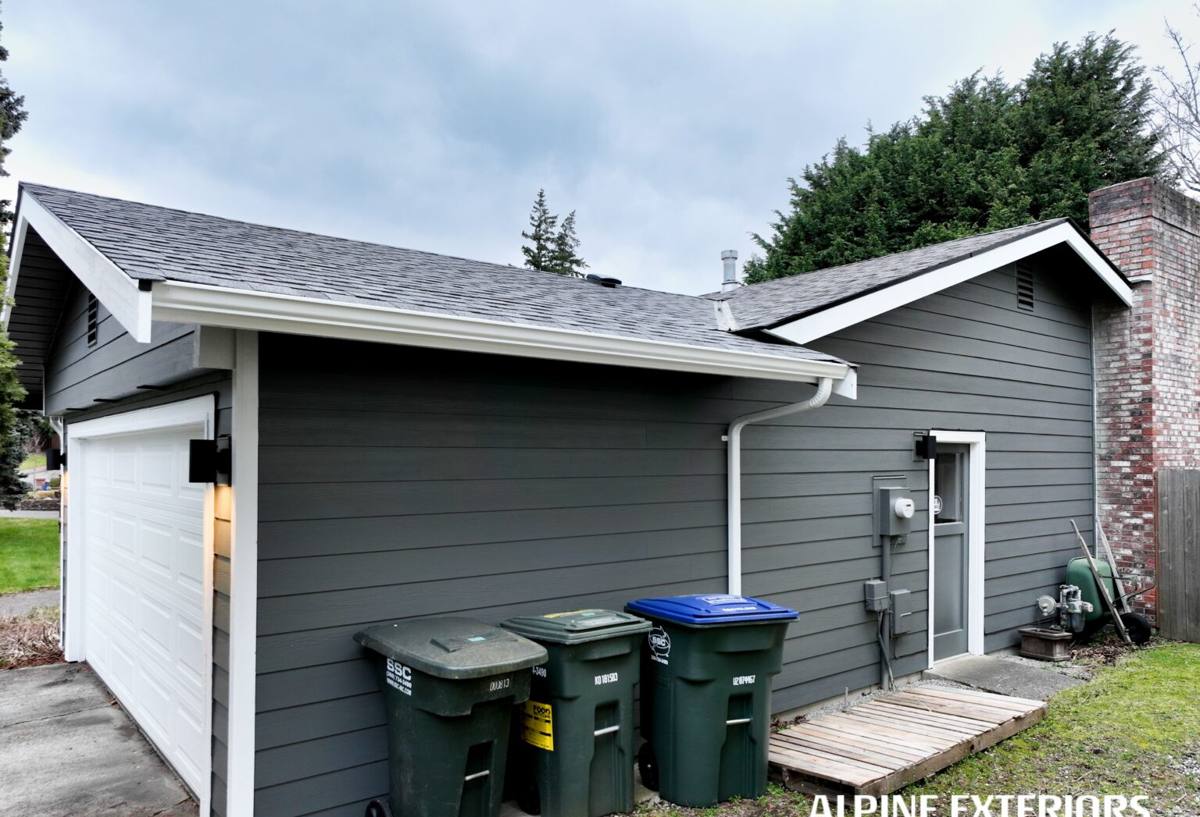
Visual Signs You Can Spot From the Ground
Peeling, Bubbling, or Chalking Paint
Paint failure is often the first visible clue that something's wrong underneath, not just a cosmetic issue on its own. If paint is bubbling or peeling in sheets rather than just fading evenly, moisture is very likely getting trapped behind it. Chalking — a powdery residue that rubs off on your hand — is more normal aging and less urgent, but bubbling and peeling deserve a closer look.
Warping, Buckling, or Wavy Panels
Siding that looks wavy, bowed, or no longer sits flat against the wall has usually absorbed moisture and started to swell, or the fasteners have failed and the panel is no longer secured properly. This is especially common on the sides of a house that take the most direct weather — typically the west and south-facing walls in Blaine, which catch the prevailing wind-driven rain.
Visible Cracks and Gaps
Small cracks let water behind the siding, and once water is behind the siding, the problem accelerates. Gaps at seams, corners, or around trim also give moisture — and pests — a direct path into the wall assembly.
Signs You Have to Get Closer to Notice
Soft or Spongy Spots
Press gently on the siding near the bottom of walls, below windows, and around any penetration (hose bibs, vents, light fixtures). If it gives under light pressure or feels spongy rather than solid, there's likely water damage or rot in that area. This is one of the most reliable indicators of real trouble, and it's often missed because it's not obvious from a normal walking distance.
Moss, Algae, and Persistent Green or Black Staining
Some surface moss on north-facing walls or under tree cover is common in this part of Washington and isn't automatically a red flag. What matters is whether it's just sitting on the surface or whether it's holding moisture against the siding long-term. Moss that's been established for a season or more, especially in shaded, low-airflow areas, keeps the surface damp far longer after every rain, which speeds up whatever damage is already underway underneath.
Rust Streaks or Nail Pops
Rust streaks running down from a fastener usually mean the wrong nail was used, or the coating on the nail has failed. Nail pops — fasteners backing out and creating small bumps or holes — are a sign of movement in the siding, often from moisture cycling (swelling when wet, shrinking when dry).
Signs From Inside the House
Not every siding problem announces itself outside first. Interior clues are worth checking too, especially in older homes or after a particularly wet Whatcom County winter.
- Musty odor near exterior walls, especially in closets or corners that don't get much airflow
- Visible staining or discoloration on interior drywall near window and door openings
- Peeling interior paint or wallpaper on an exterior wall
- Noticeably higher heating bills without another clear explanation, which can point to compromised insulation from long-term moisture intrusion
- Soft drywall or slight give when you press near baseboards on exterior walls
Any of these, especially combined with a visible exterior issue in the same area, is a good reason to get a professional look rather than wait.
Material-Specific Failure Patterns
What failure looks like depends heavily on what the siding is made of. Knowing your siding type helps you know what to actually watch for.
| Siding Type | Common Failure Signs | Typical Cause |
|---|---|---|
| Wood (cedar, primed spruce) | Soft spots, splitting, visible rot at bottom edges, peeling paint | Moisture absorption, especially at end grain and fastener points |
| Vinyl | Cracking, warping/melting distortion, fading, brittleness | UV exposure, temperature swings, impact damage |
| Engineered wood (OSB-based) | Swelling at edges, delamination, soft or crumbling panel edges | Moisture wicking into the wood-strand core, often starting at cut edges |
| Fiber cement (Hardie) | Failure is rare when installed to spec; issues usually trace back to caulking, flashing, or paint maintenance rather than the panel itself | Installation error or deferred maintenance, not material breakdown |
This is part of why we standardized on James Hardie fiber cement for every install we do. It's a non-combustible product that's engineered for exactly this kind of wet, coastal exposure, and when it does show wear, it's almost always something maintainable — not the board itself breaking down from the inside.
How Fast Does Siding Failure Actually Spread?
This depends on the material and the specific problem, but as a general pattern: surface issues (chalking, minor fading) can sit stable for a long time if you stay on top of them. Moisture intrusion issues — soft spots, trapped water behind panels, rot — get worse every wet season, because Blaine simply doesn't have a long enough dry stretch most years to let a wall assembly fully dry out on its own. A soft spot the size of a fist behind a downspout can become a section of wall sheathing that needs replacing within a couple of winters if it's ignored.
What to Do When You Spot a Warning Sign
- Don't just repaint over a soft spot or a crack — that hides the problem without fixing it.
- Check the surrounding area, not just the exact spot you noticed. Water travels before it shows up visually.
- Look at flashing and caulking around windows, doors, and penetrations first — a huge share of siding failure starts at these transition points, not in the middle of a flat wall.
- Get a professional opinion before deciding between a repair and a replacement. Some issues are contained and fixable; others are a sign the whole wall section needs attention.
- If you're already looking at a larger repair, that's a natural point to ask what it would cost to do the job once with a material built for this climate, instead of repairing the same failure-prone product again in a few years.
A Quick Self-Inspection Checklist
Walk the exterior of your home once a year, ideally after the wettest stretch of winter has passed. Bring this list with you:
- Press-test the bottom 12 inches of siding on every wall, especially near downspouts and sprinkler heads
- Check every window and door corner for cracking, gapping, or soft trim
- Look for paint that's bubbling or peeling rather than just fading
- Note any wall sections with heavy, long-standing moss or algae growth
- Check for rust streaking below fasteners
- Look up — check the siding near the roofline and under gutters, where overflow and ice damming can cause damage that's easy to miss from the ground
- Walk the interior exterior walls for musty smells, stains, or soft drywall
Why We Only Install James Hardie
When we're called out to look at failing siding in Blaine, the pattern is consistent: the materials that struggle most here are the ones that weren't built with this specific climate in mind — sustained damp, salt air, and a moss season that gives surfaces very little time to fully dry between rain events. James Hardie's HZ5 product line is engineered specifically for climates like ours, the ColorPlus factory finish resists the fading and peeling that drives most of the paint-related failures we see, and fiber cement doesn't feed rot or attract the moisture-loving growth that wood and engineered-wood products are prone to here. It's why, when a repair conversation turns into a replacement conversation, this is the product we put on the house.
If you're noticing any of the signs above — or you just want a second set of eyes on your siding before a problem gets worse — we're happy to take a look. Reach out for a free, no-pressure estimate; there's a form below to get started.