 Blaine
 Siding Built for Everson's Corner of Whatcom County
Everson sits in the Nooksack River valley, a few miles from the Canadian border and not far from the Georgia Strait weather systems that move through this part of Washington. Homes here deal with a long wet season, heavy tree cover in many neighborhoods, and the kind of persistent damp that doesn't let up for months at a time. Siding in this area isn't just a cosmetic choice — it's the first line of defense against moisture that has nowhere fast to go once it soaks into a wall assembly.
We're based in Blaine and work throughout Whatcom County, including Everson, Nooksack, and the surrounding valley communities. That regional footprint matters. A crew that only ever sees dry-climate installs doesn't have the same instinct for flashing details, drainage planes, and butt-joint sealing that a Pacific Northwest crew develops after years of working in this weather.
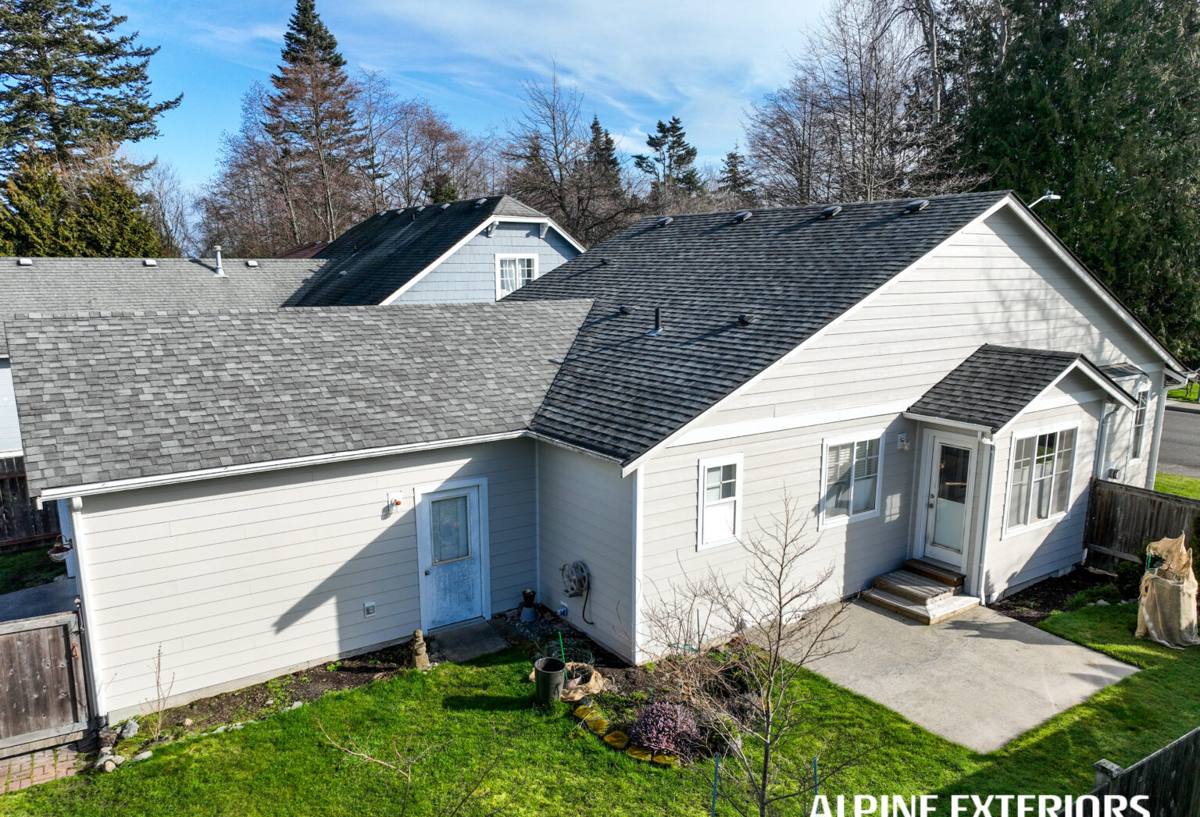
What the Local Climate Does to Siding
Three things define exterior wear in this part of Whatcom County, and they compound each other over time.
Salt Air and Coastal Moisture
Blaine and the water-facing communities near it deal with salt-laden air moving inland off the Strait of Georgia and Drayton Harbor. Even in inland valley towns like Everson, that moist marine air carries through — it's part of what keeps this whole region humid rather than arid. Salt-influenced moisture accelerates corrosion on fasteners and trim metal, and it keeps wood-based products from ever fully drying out between rain events.
Driving Rain
Storms coming off the Pacific don't just fall straight down — wind-driven rain gets pushed sideways into wall assemblies, siding laps, and trim joints. Product that isn't engineered to shed water under wind pressure, or that isn't installed with the right lap and clearance, lets moisture track behind the cladding. Once water gets behind siding in a climate this wet, it often doesn't dry out again until summer.
A Long Moss Season
Whatcom County's moss season effectively runs from fall through spring. Shaded, north-facing walls and anything near tree cover stay damp long enough for moss, algae, and mildew to take hold. On porous or absorbent siding materials, that growth isn't just cosmetic — it holds moisture against the surface and speeds up deterioration underneath.
Why We Only Install James Hardie Fiber Cement
We made a decision as a company to install James Hardie fiber cement siding exclusively. We don't install vinyl, LP SmartSide, Cemplank, Allura, primed spruce, or cedar. That's not a marketing line — it's a standard we hold because of what we've seen play out on homes in exactly this kind of climate.
What We Don't Install, and Why
- Vinyl siding — It's inexpensive and low-maintenance in mild climates, but it can warp or crack in temperature swings, and its seams and J-channels give wind-driven rain more opportunities to find a way behind the panel.
- LP SmartSide and other engineered wood products — These are wood-based (OSB) products with a coating. Once that coating is compromised — at a cut edge, a fastener hole, or a joint that opens up — the wood substrate is exposed to exactly the sustained dampness this region produces, and swelling or edge deterioration can follow.
- Primed spruce and cedar — Real wood siding is a legitimate, attractive product, but it demands an ongoing maintenance schedule: repainting, caulking, and moisture checks. In a moss-season climate, that maintenance window shrinks and the consequences of skipping it show up faster.
- Cemplank and Allura — These are also fiber cement products and share Hardie's core moisture resistance. Our decision to standardize on Hardie specifically comes down to their engineered-for-climate product lines, factory finish process, and warranty structure — not a claim that competing fiber cement is unsafe or defective.
Fiber cement as a category resists moisture, doesn't feed mold or insects, and won't warp in the wet-to-dry cycles this region puts siding through every year. James Hardie is the manufacturer we trust to deliver that performance consistently, backed by a factory finish and a transferable warranty we can stand behind.
James Hardie's HZ Product Lines
James Hardie engineers specific product formulations for different climate zones — HZ5 for the colder, wetter regions like the Pacific Northwest and HZ10 for hot, humid zones. For Everson and the rest of Whatcom County, that means the siding on your wall was formulated for freeze-thaw cycling and sustained moisture exposure, not a generic one-size-fits-all mix.
ColorPlus Factory Finish
Most Hardie installs we do use their ColorPlus finish — a factory-applied, baked-on finish that's more consistent and more weather-resistant than field-applied paint. It also means less repainting over the life of the siding, which matters in a climate where exterior painting conditions are only reliably good for a few months a year.
How a Siding Replacement Project Works
Assessment and Estimate
We start with an on-site look at your home's current siding, the condition of the sheathing and trim underneath where accessible, and any problem areas — north-facing walls, spots near downspouts, areas with heavy shade. We'll give you a straightforward estimate with no pressure to sign on the spot.
Tear-Off and Substrate Check
Old siding comes off and we check the wall sheathing for rot or water damage before anything new goes up. In a climate this wet, this step catches problems that would otherwise get sealed behind new siding and left to worsen.
Weather Barrier and Flashing
A correctly installed weather-resistive barrier and properly lapped, sealed flashing at windows, doors, and penetrations matters as much as the siding itself. This is where driving rain either gets shed or gets in — it's the detail work that separates a durable install from one that fails early.
Hardie Installation to Spec
James Hardie publishes specific installation requirements — clearances, fastening patterns, joint treatment — that are part of what keeps their warranty valid. We install to that spec, not to a shortcut version of it.
Final Walkthrough
We walk the finished job with you, check caulking and trim details, and make sure you know what basic upkeep (if any) is expected going forward.
Comparing Siding Options for a Whatcom County Home
| Product | Moisture Behavior in This Climate | Maintenance | Do We Install It |
|---|---|---|---|
| James Hardie Fiber Cement | Resists moisture absorption, engineered HZ5 formulation for PNW conditions | Low — factory finish, occasional wash | Yes |
| Vinyl | Seams and channels can let wind-driven rain track behind panels | Low, but prone to cracking/warping | No |
| LP SmartSide / Engineered Wood | Wood substrate vulnerable once coating is compromised | Moderate — edge and joint monitoring | No |
| Cedar / Primed Spruce | Absorbs moisture, prone to swelling in sustained damp | High — repainting, sealing schedule | No |
| Cemplank / Allura Fiber Cement | Comparable moisture resistance to Hardie | Low | No (Hardie is our standard) |
Roofing, Windows, and Decks
Siding rarely fails in isolation. A roof that's shedding water poorly, windows with failed flashing, or a deck ledger board trapping moisture against the house all put extra load on the siding around them. We handle roofing, window replacement, and deck work alongside siding so we can look at the whole exterior envelope rather than one component at a time. If your Everson home needs more than siding, we can scope that in the same visit.
Signs Your Everson Home Needs a Siding Assessment
- Visible moss or algae buildup that returns quickly after cleaning
- Soft or spongy spots when you press on the siding, especially near the base of walls
- Paint that's peeling, bubbling, or won't hold on wood-based siding
- Warped, cupped, or separating panels
- Rising utility bills that might point to a compromised weather barrier
- Visible gaps at trim, corners, or window edges
Why a Local Crew Matters
A crew that works Whatcom County year-round knows how the weather here actually behaves — not from a manual, but from installing and revisiting jobs through multiple wet seasons. That shows up in the small decisions: how much clearance to leave at grade, how joints get sealed before a fall storm rolls in, which walls in a given neighborhood tend to hold moss longest. It's the difference between an install that looks right on install day and one that's still performing five wet seasons later.
If you're weighing a siding replacement, roof work, new windows, or a deck project for your Everson home, we'd be glad to take a look and put together a free, no-pressure estimate. Fill out the form below and we'll get in touch.