 Blaine
 An Honest Answer to a Question We Get Often
Homeowners in Blaine occasionally ask us to bid a job using Allura fiber cement siding, usually because a competing bid came in lower or because they've seen the product at a building supply store. We get the question enough that we think it deserves a straight answer instead of a sales pitch. This page explains what Allura is, where it performs reasonably well, and why we've made the decision as a company to install only James Hardie fiber cement products on the homes we work on in Whatcom County.
This isn't about telling you Allura is a bad product. Fiber cement as a category — cement, sand, and cellulose fiber pressed and cured into planks — is a solid choice for the Pacific Northwest, far better suited to our wet, salt-tinged air than wood or vinyl in most respects. Our decision comes down to manufacturing consistency, finish systems, regional engineering, and the practical realities of warranty support when something goes wrong five or ten years down the road.
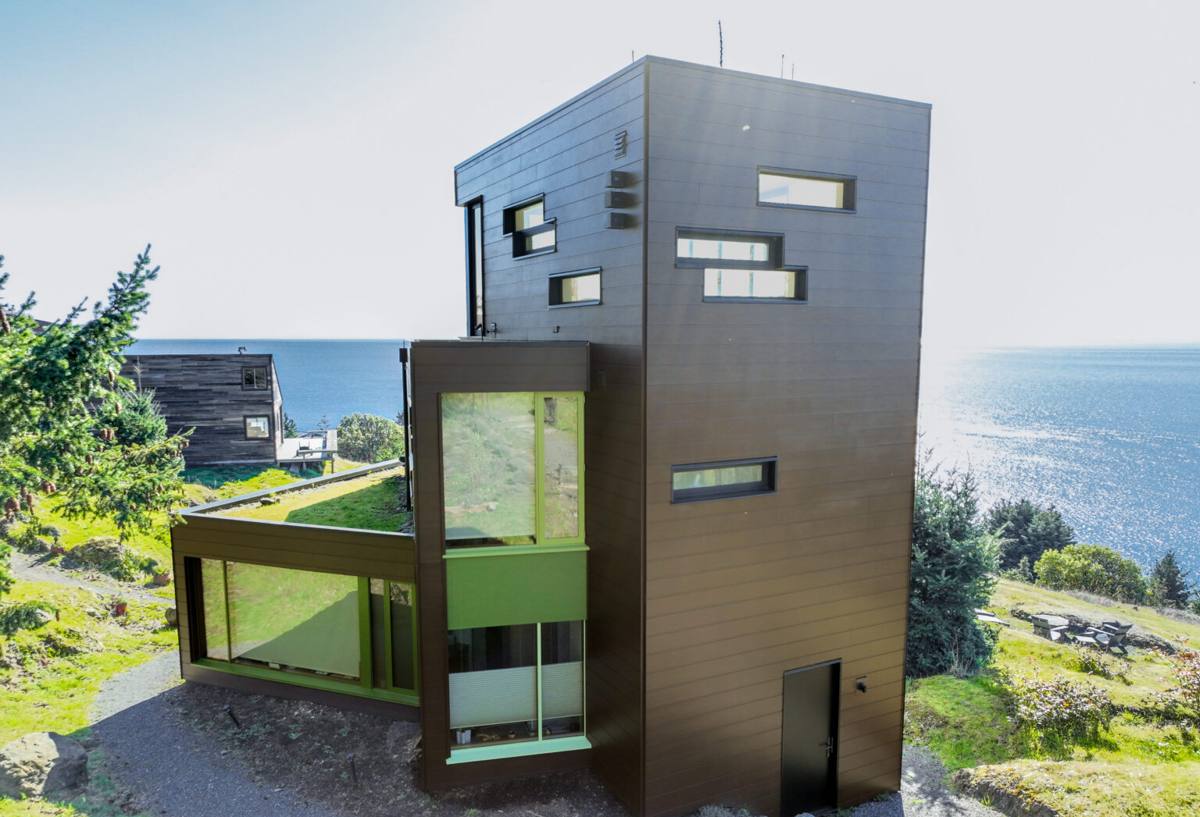
What Allura Siding Is
Allura (formerly Nichiha's fiber cement line before changing ownership, and a rebrand of what was once marketed under other names) is a fiber cement lap siding, panel, and trim product manufactured primarily in North Carolina and Mexico. It's Portland cement-based, non-combustible, and resistant to rot and pests in the same general way James Hardie's products are — this is the core appeal of fiber cement over wood or engineered wood siding like LP SmartSide.
Allura sells primed boards meant for field painting, along with a factory-finished line in a limited color selection. It's typically priced below James Hardie, which is the main reason it comes up in bids at all.
Where Allura Gets It Right
- It's genuine fiber cement — non-combustible, won't rot, and doesn't attract insects the way wood siding can.
- It handles moisture far better than vinyl or primed wood over the long term, assuming correct installation and flashing.
- It's a legitimate lower-cost entry point into fiber cement for homeowners who want the category but are working with a tighter budget.
- The product itself, on paper, meets the same ASTM standards most fiber cement siding is held to.
Why We Don't Install It Anyway
Our reasons are practical, not about running down a competitor's product. They come down to three things: finish durability, manufacturing consistency, and regional engineering — plus what happens when a homeowner needs warranty support years after the crew has moved on to other jobs.
Factory Finish and Color Retention
Most Allura siding sold in our market is primed, not factory-finished, which means the paint job becomes the responsibility of the installing contractor or the homeowner. In a marine climate like Blaine's — with salt air rolling off Semiahmoo Bay and Drayton Harbor, driving winter rain, and long stretches of damp, moss-friendly weather — a field-applied paint job is the first thing to fail. Caulk joints crack, paint chalks and fades unevenly, and repainting siding at height every seven to ten years is a real, recurring cost that homeowners often don't budget for when they compare initial bid prices.
James Hardie's ColorPlus finish is baked on in a controlled factory environment with multiple coats and a clear coat, backed by its own separate finish warranty. That's a meaningfully different product experience than field-painted primed board, and it's one of the biggest reasons we don't want our name on a siding job that we know will need repainting within a decade in this climate.
Regional Engineering
James Hardie engineers specific product formulations for different climate zones — its HZ5 line, for example, is formulated for the wetter, colder Pacific Northwest and northern climates, with different moisture and freeze-thaw performance than its products sold in the Southwest or Southeast. Allura sells a more generalized product line without that same degree of regional-specific engineering. In a county that sees over 40 inches of rain a year, with fog and marine moisture sitting on north-facing walls for days at a stretch, that regional formulation isn't a marketing detail — it's the difference between siding that sheds water cleanly and siding that stays damp longer than it should.
Manufacturing Consistency and Installation Sensitivity
Fiber cement siding, generally, is less forgiving to install than vinyl — it requires correct fastener placement, gapping, caulking, and flashing details, or moisture problems show up behind the cladding regardless of brand. We've found Allura's board tolerances and batch consistency to be less predictable than Hardie's, which matters when a crew is trying to hit tight reveal lines and consistent butt joints across a whole elevation. Small inconsistencies that are a minor annoyance on one job become a callback on the next.
Warranty Support in Practice
Every siding manufacturer publishes a warranty. What matters more is whether that warranty is easy to act on when a homeowner actually needs it — a cracked board, a finish failure, a manufacturing defect discovered years later. James Hardie has a long track record in the Pacific Northwest, an established regional distributor and installer network, and a warranty that's transferable to a new owner if the home sells. We've found that network depth translates into faster, less complicated support. Allura's warranty terms look reasonable on paper, but the company's regional presence and installer network in Western Washington is thinner, which matters if you need a claim handled ten years from now.
Allura vs. James Hardie: Side by Side
| Factor | Allura Fiber Cement | James Hardie |
|---|---|---|
| Factory finish | Mostly primed; limited factory-finished options | ColorPlus factory finish standard on most lines, separate finish warranty |
| Climate-specific engineering | General-purpose formulation | Region-specific HZ product lines (e.g., HZ5 for PNW/cold climates) |
| Repainting burden in a wet, salty climate | Higher — primed board typically needs repainting within 7-10 years | Lower — factory finish rated for decades under normal exposure |
| Regional installer/distributor network | Thinner presence in Western Washington | Well-established in the Pacific Northwest |
| Approximate cost position | Lower upfront material cost | Higher upfront, generally lower lifecycle cost |
| Installation tolerance | Requires the same care as any fiber cement; less consistent batch tolerances | Consistent board tolerances, easier to hit tight installation details |
Why Blaine's Climate Makes This Decision Sharper
Blaine sits right on the water, with Semiahmoo Bay and Boundary Bay both within a few miles of most homes in town. That proximity to saltwater means airborne salt is a real factor in how exterior materials age here, on top of the rain and humidity that define Whatcom County winters. Add in a moss season that can run from October through April on shaded, north- and east-facing walls, and you have a climate that is genuinely harder on siding than most of the country experiences.
None of that means fiber cement in general is a bad fit — it's actually one of the better options for this specific climate. But it does mean the difference between a factory-cured, climate-engineered finish and a field-painted, general-purpose board shows up faster here than it would in a drier inland climate. We'd rather explain that trade-off up front than have a homeowner discover it at year eight when the paint starts failing.
What Correct Fiber Cement Installation Actually Requires
Regardless of brand, fiber cement siding is only as good as the installation behind it. The material itself doesn't fail nearly as often as the installation does. Correct installation in our climate means:
- Proper rainscreen or drainage gap behind the siding so incidental moisture can escape rather than sit against the substrate
- Correct fastener type, spacing, and placement per the manufacturer's specific installation instructions
- Factory-cut or properly sealed field cuts, since exposed raw edges are where moisture intrusion starts
- Correct flashing at every window, door, and penetration — this matters more than the siding brand itself
- Adequate clearance from grade, decks, and roof lines to keep the bottom edge of the siding out of standing water and splash-back
- Caulk and joint details that match the manufacturer's published specifications, not generic best guesses
We'd rather turn down a job than install any fiber cement product, ours or otherwise, without these details done correctly. A good product installed poorly will fail faster than a good product installed to spec.
Why We Standardized on James Hardie
After years of installing and repairing siding across Whatcom County, we made the call to install only James Hardie fiber cement. It comes down to a combination of things: a non-combustible material well suited to wildfire-conscious building codes, a factory ColorPlus finish that holds up under salt air and driving rain without needing repainting every decade, climate-specific HZ product engineering built for the Pacific Northwest, and a mature regional distributor and warranty network that's still going to be there to support a claim in fifteen years. It also lets our crews build deep, repeatable expertise installing one system correctly rather than switching techniques between product lines.
That standardization is also why you won't see us bidding LP SmartSide, vinyl, Cemplank, primed spruce, or cedar siding either — the reasoning is the same across each of those products, just with different specific trade-offs.
Questions to Ask Any Contractor Bidding Fiber Cement Siding
- Is the siding factory-finished or field-primed, and who is responsible for painting and its warranty?
- What is the manufacturer's published installation guide, and will the crew follow it exactly, including fastener spacing and drainage gap?
- Is there a regional distributor and installer network for this product in Western Washington, in case a warranty claim comes up later?
- Does the warranty transfer to a new owner if the home is sold?
- Is the product line engineered for this specific climate, or is it a general-purpose formulation?
If you're weighing siding options for a home in Blaine or elsewhere in Whatcom County, we're happy to walk through what we'd actually recommend for your specific house and explain the reasoning, not just hand you a quote. Reach out for a free, no-pressure estimate — there's a form below to get started.