 Blaine
 Exterior Work Around Cherry Point: A Rural, Coastal Piece of Whatcom County
Cherry Point sits along the Whatcom County coastline near Blaine, and it's a different kind of setting than the denser neighborhoods closer to town. Homes here tend to sit on larger, more spread-out lots, often with a treeline or open field between one house and the next, and many properties have a direct or near-direct line to the water. That combination — rural exposure plus coastal weather — puts a specific kind of pressure on a house's exterior that's worth understanding before you replace siding, patch a roof, or add a deck.
We work this stretch of Whatcom County regularly, and Cherry Point is part of our normal service area out of Blaine, not a one-off trip. We handle siding, roofing, windows, and decks, and we treat those as one connected exterior system rather than four separate jobs, because on a rural, wind-exposed property a weak point in one system almost always shows up as damage in another a season or two later. On siding specifically, we install James Hardie fiber cement exclusively. That's a professional standard we've settled on, and this page explains both the climate reasoning behind it and what exterior work actually looks like for a Cherry Point property.
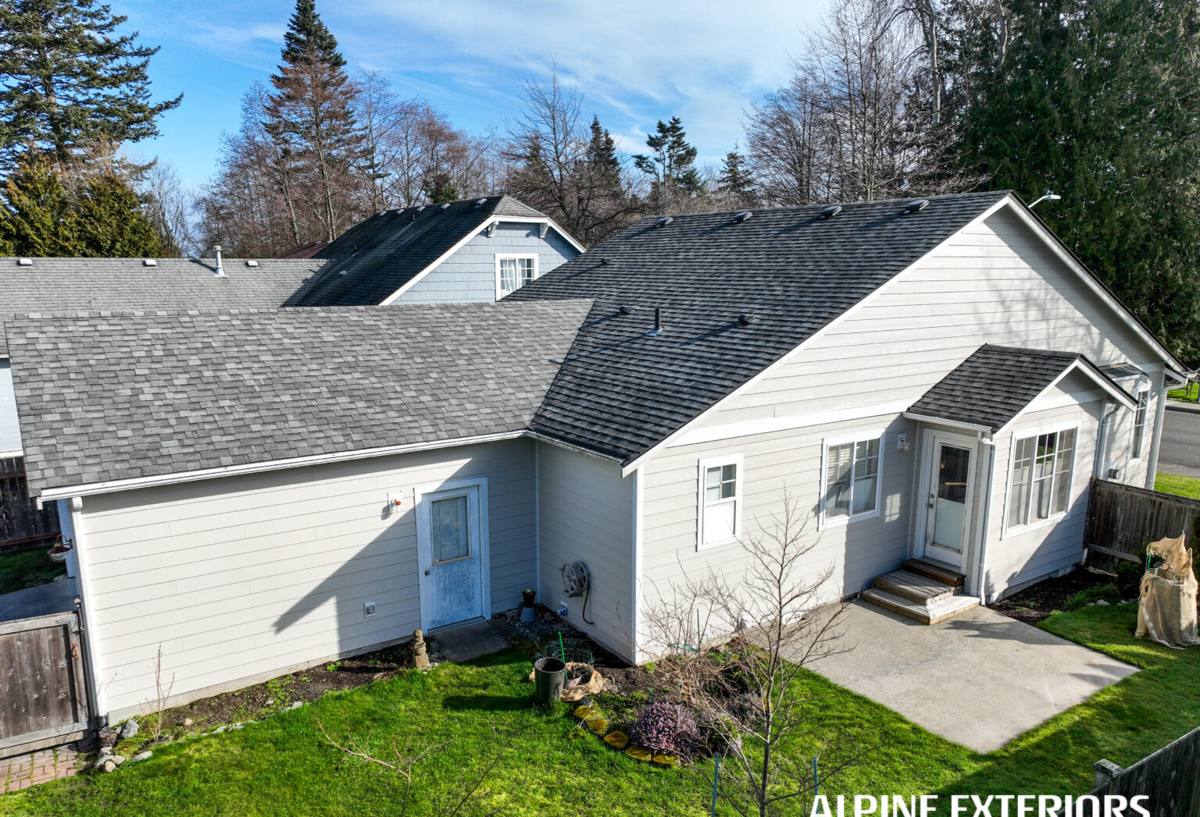
What the Climate Does to Homes Out Here
Salt Air Off the Water
Properties near the water at Cherry Point get a steady dose of salt-laden marine air, and unlike a sheltered inland lot, there's often little standing between a house and open water to slow that exposure down. Salt accelerates corrosion in fasteners, flashing, and any exposed metal trim, and it breaks down lower-grade paints and coatings faster than a drier climate would. On a rural property, hardware often goes unnoticed longer between inspections too, simply because there's more house and more acreage to keep an eye on.
Driving Rain and Open Wind Exposure
Open, rural land near the water doesn't offer the same windbreak that a denser residential block does. Storms moving in off the water bring wind-driven rain that gets pushed sideways into siding laps, window flashing, and roof-to-wall transitions rather than falling straight down. That sideways moisture load is harder on a building envelope than the same total rainfall would be in a calmer setting, and it's exactly the kind of exposure that finds gaps a rushed installation would leave behind.
A Long Moss and Mildew Season
Mild temperatures combined with near-constant moisture add up to a moss season that can run most of the year on shaded or north-facing surfaces, and treelined rural lots around Cherry Point often have plenty of shade to go around. Roofs and siding that stay damp the longest are the first places moss and mildew take hold, and any material with even a little surface porosity becomes a growth surface over time. On a larger rural lot, it's common for one side of the house to weather very differently than the other, depending on which walls get sun and which stay shaded most of the day.
Rural Maintenance Realities
Homes further from town also tend to go longer between service visits, simply because it's less convenient to have someone out. That makes material choice matter more here, not less — a siding or roofing product that needs frequent upkeep to perform is a bigger liability on a rural property than on a house where a contractor is a five-minute drive away.
Why We Only Install James Hardie Siding
We used to install a wider range of siding products. We stopped, and the reasoning came directly from what we kept finding on tear-offs and service calls in exposed, rural coastal settings like Cherry Point — not from a supplier relationship or a marketing decision.
- Non-combustible core: Fiber cement doesn't feed a fire the way wood-based siding can, which matters for safety and can matter for insurance underwriting, especially on rural properties further from fire response.
- Factory-applied ColorPlus finish: The color is baked on under controlled factory conditions rather than brushed on in the field, holding up longer against fading, chalking, and salt exposure than site-applied paint.
- Climate-engineered HZ product lines: Hardie's HZ5 formulation is built for regions with heavy moisture exposure and freeze-thaw cycling, which matches the coastal Whatcom County climate around Cherry Point closely.
- Dimensional stability: Fiber cement doesn't swell, cup, or warp the way engineered wood products can after repeated wetting cycles through a wet season.
- A strong transferable warranty: Hardie backs the product with one of the more robust warranty structures in the industry, provided the installation follows their published spec.
We don't install LP SmartSide, vinyl siding, Cemplank, Allura, primed spruce, or cedar. Each of those has a legitimate place in the market, and plenty of homeowners elsewhere are satisfied with them. Our position is a professional one specific to this kind of exposure: on an open, wind-exposed, rural coastal property, we'd rather stand fully behind one system we trust than offer a cheaper option that quietly shifts more maintenance risk onto the homeowner down the road.
What Correct Installation Actually Requires
Fiber cement only performs the way it's engineered to when it's installed to Hardie's specifications — correct fastener type and spacing, proper clearance from grade, drainage or rain-screen detailing behind the panels where the assembly calls for it, and properly sealed or factory-mitered joints. On an exposed rural lot with limited windbreak, a loosely installed product will still develop moisture problems no matter how good the material is on paper. The installation is what determines the real-world lifespan, not just the product spec sheet.
Roofing for an Open, Wind-Exposed Property
Roofs take the most direct hit from wind, rain, and moss on a property like this, since there's often no neighboring structure or windbreak to soften the exposure. A roof system needs correctly lapped flashing at every penetration and wall transition, proper underlayment, and ventilation that lets the attic and roof deck actually dry out between storms rather than trapping moisture against the sheathing. We treat those fundamentals as baseline work, not optional upgrades, because a roof that cuts corners on flashing or ventilation shows it within a few wet seasons on an exposed lot like this — not decades.
Signs a Cherry Point-Area Roof Needs Attention
- Moss buildup in valleys or on shaded slopes that keeps coming back after cleaning
- Granule loss showing up in gutters or at the base of downspouts
- Soft spots, sagging, or visible daylight at roof-to-wall transitions in the attic
- Interior ceiling staining near exterior walls, especially after a windy storm
- Flashing that looks lifted, rusted, or missing sealant around chimneys and vents
Windows: Where Wind-Driven Rain Finds Its Way In
Window performance on an exposed rural property comes down to flashing and installation just as much as the window unit itself. A high-end window with poor flashing integration will still leak under sustained wind-driven rain, while a mid-grade window installed correctly will often outperform it over time. We pay close attention to how new window flashing ties into the surrounding siding and wall assembly, because that transition point is one of the most common places water gets into a wall system on open, water-exposed lots.
Decks Built for Salt Air and Open Sun
Decks near the water at Cherry Point deal with a combination a lot of inland decks never see: steady salt exposure, direct UV with little tree cover on the water side, and repeated wetting and drying cycles. That combination is hard on fasteners, structural connectors, and lower-grade decking materials alike. We use hardware rated for corrosive exposure and walk homeowners through the real maintenance difference between wood and composite decking for this specific setting, rather than giving a generic answer that doesn't account for the location.
Comparing Common Exterior Materials in This Setting
| Material | Moisture Behavior | Maintenance in Salt Air | Typical Longevity Here |
|---|---|---|---|
| James Hardie fiber cement | Dimensionally stable, resists swelling and cupping | Low; factory finish resists fading and chalking | 30+ years with correct installation |
| Vinyl siding | Can warp or distort under heat and settle with age | Low upfront, but seams and fasteners remain exposure points | Variable; shorter in open, wind-exposed spots |
| LP SmartSide / engineered wood | Wood-based core is moisture-sensitive at cut edges and joints | Moderate; edge sealing and caulk upkeep matter | Depends heavily on installation quality and upkeep frequency |
| Cedar / primed wood | Absorbs and releases moisture readily | High; regular refinishing needed in salt-laden, wet air | Shorter without consistent, frequent maintenance |
Cost Factors Worth Understanding Before You Budget
Every rural property has its own cost variables, but a few factors tend to move the number the most on jobs out around Cherry Point specifically:
| Factor | Why It Matters Here |
|---|---|
| Access and site distance | Larger, more spread-out lots can mean longer material staging and equipment setup than a tight in-town lot |
| Existing moisture damage | Rural homes that go longer between inspections sometimes have hidden sheathing or framing damage that surfaces once old siding comes off |
| Wind exposure on the water-facing side | Additional flashing and drainage detailing on the most exposed elevation adds labor but reduces long-term risk |
| Roof and siding age relationship | Replacing one system while the other is near end-of-life is often more cost-effective than doing them years apart |
Why a Local Crew Matters Here
A contractor who works this specific stretch of Whatcom County regularly already understands how salt air, open wind exposure, and long moss seasons behave differently on a rural coastal lot than they do on a sheltered in-town property. That familiarity shows up in the small decisions — where extra flashing gets added, which fastener grade gets used, how drainage detailing is handled on the most exposed wall — and those decisions are what separate an exterior system that lasts one wet season from one that lasts several decades.
A Simple Checklist Before Hiring for Exterior Work Near Cherry Point
- Ask what siding material they install and why, and whether they'll put a written warranty behind it
- Confirm current Washington contractor licensing and active liability insurance
- Ask how they detail flashing at windows, doors, and roof-to-wall transitions for wind-driven rain specifically
- Ask about fastener and hardware corrosion resistance, especially for decks and roofing near the water
- Get a clear, written scope of work before any contract is signed
- Ask whether they've worked on rural, wind-exposed properties in this part of the county before, not just in-town jobs
Our Process
We start with an on-site walk of the existing exterior — siding, roofing, windows, or decking, depending on what's being addressed — and look specifically at how the current system has handled moisture, salt, and wind exposure over time. From there we put together a clear, written scope and timeline before any work begins. Flashing, drainage, and fastener details that matter most in this kind of exposed setting are handled as standard practice on every job, not offered as optional upgrades.
If you're weighing options for siding, roofing, windows, or a deck on a property near Cherry Point, we're happy to walk the exterior with you and give an honest read on what it actually needs. Reach out below for a free, no-pressure estimate.