 Blaine
 Sandy Point Homes Face a Different Kind of Weather
Sandy Point sits right up against the water on the Whatcom County coastline, a few minutes from Blaine and the Canadian border. Homes here don't deal with the same conditions as a house fifteen miles inland. Being this close to open water means more wind, more salt in the air, and rain that doesn't just fall straight down — it comes in sideways, driven by wind off the water, and hits siding, trim, and window frames at angles that inland homes rarely see.
Over years, that combination wears on exteriors faster than most homeowners expect. We've worked on enough homes along this stretch of coastline to know that what holds up in Bellingham or Ferndale doesn't necessarily hold up a few blocks from the beach in Sandy Point. That's part of why we're picky about what we put on houses out here.
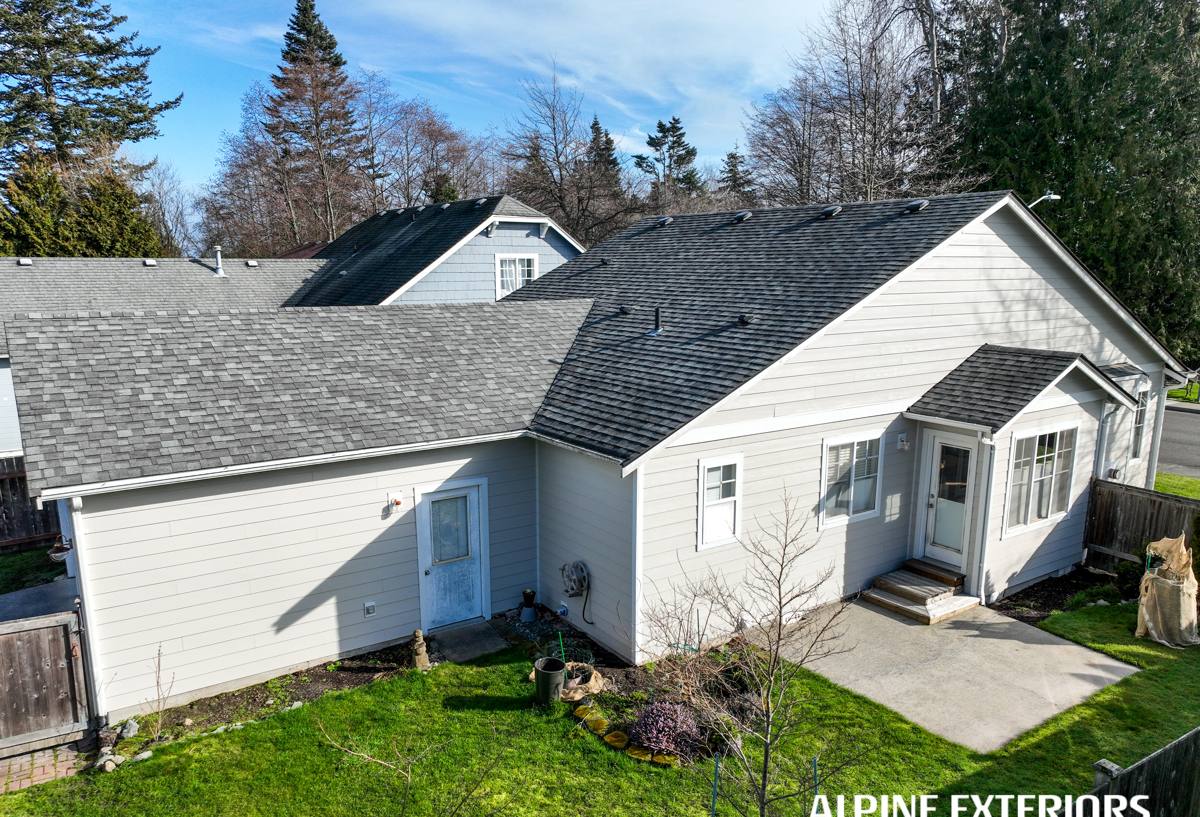
What Salt Air and Driving Rain Actually Do to a House
Salt air isn't just an inconvenience — it's chemically aggressive. Airborne salt settles on every exterior surface, and combined with the near-constant moisture off the water, it accelerates corrosion on metal fasteners, flashing, and hardware. It also breaks down caulking and sealants faster than they'd wear in a drier inland climate, which means water intrusion points can open up sooner than a homeowner would expect.
Wind-driven rain adds a second problem: water gets forced into seams, laps, and joints that would stay dry in a straight-down rainstorm. Siding materials that rely on paint film or surface coatings to keep water out are the ones that suffer most, because driving rain finds the weak points — nail heads, butt joints, corner trim — and works at them season after season.
Then there's moss. Whatcom County's long wet season, especially on shaded north- and west-facing walls near the water, gives moss and algae months to establish themselves. Moss holds moisture directly against a wall surface. On materials that aren't dimensionally stable or that absorb water readily, that trapped moisture is what eventually causes swelling, soft spots, and paint failure.
The Three Things We're Actually Fighting
- Moisture intrusion — from wind-driven rain forcing water past laps, seams, and fastener points
- Salt exposure — accelerated corrosion of fasteners and hardware, breakdown of sealants and coatings
- Sustained dampness — long moss and algae seasons that keep shaded wall surfaces wet for extended stretches
Why We Only Install James Hardie Fiber Cement
We get asked fairly often why we don't offer vinyl, LP SmartSide, or one of the other fiber cement brands on the market. The honest answer is that we made a call a while back to standardize on one product system rather than install whatever a homeowner happened to ask for, and James Hardie is what we chose.
Vinyl is inexpensive and easy to install, but it's a petroleum-based product that expands and contracts significantly with temperature swings, and in high-wind coastal exposure it's more prone to cracking, warping, and blow-off than fiber cement. It also isn't the material we'd choose for fire resistance, which matters more every year in Washington.
Engineered wood products like LP SmartSide use a wood-strand core with a resin coating. It's a legitimate product when installed and maintained correctly, but wood-based siding depends heavily on an intact protective coating to keep moisture out of the core. In a marine climate with driving rain and long wet seasons, any breach in that coating — a poorly sealed cut edge, a fastener hole, a scuff — gives moisture a path into the wood fiber, and that's where swelling and rot start. We'd rather not put a product on a Sandy Point home whose long-term performance depends that much on flawless caulking and touch-up over the years.
James Hardie fiber cement is engineered specifically to resist moisture, won't rot, and is non-combustible. Hardie's HZ5 product line is formulated for harsher, wetter, and more freeze-prone climates, which fits this part of Washington well. It comes with a factory-applied ColorPlus finish that's baked on and warranted separately from the substrate, so it holds color and resists the fading and chalking that plain field-painted siding shows after a few Pacific Northwest winters. It's also backed by a strong transferable limited warranty, which matters if a homeowner sells the house down the road.
None of this means other products are junk — plenty of them perform fine in the right setting. It means that for the specific conditions Sandy Point homes deal with, we think Hardie is the more sensible long-term choice, and we'd rather install one product well than install several products adequately.
Comparing Siding Materials for Coastal Whatcom County
| Material | Moisture Resistance | Wind/Impact Durability | Fire Resistance | Typical Maintenance |
|---|---|---|---|---|
| Vinyl | Fair — sheds water but seams can leak | Lower — can crack or blow off in high wind | Combustible | Low, but limited repair options if cracked |
| LP SmartSide (engineered wood) | Depends on coating integrity | Good | Combustible | Moderate — coating and caulk need monitoring |
| Primed wood / cedar | Weak without diligent upkeep | Good | Combustible | High — regular repainting and sealing |
| James Hardie fiber cement | Strong, engineered for wet climates | Strong | Non-combustible | Low — factory finish, occasional washing |
More Than Siding: Roofing, Windows, and Decks
Siding is only one piece of a coastal home's exterior envelope. We also handle roofing, window replacement, and deck construction, and out in Sandy Point those three usually need the same attention as the siding does — for the same reasons.
Roofing
A roof exposed to wind off the water needs proper edge and ridge fastening, and flashing details that account for wind-driven rain rather than just straight-down runoff. Roof valleys and penetrations near the coast are common points where undersized or degraded flashing lets water in over time.
Windows
Older wood or aluminum windows on waterfront homes tend to show their age faster — seals fail, frames corrode, and single-pane glass does little for the wind chill coming off the water. Replacing them with properly flashed, well-sealed units improves comfort and cuts down on one of the most common sources of moisture intrusion around an exterior wall.
Decks
A deck facing the water gets full exposure to sun, salt, and rain with no wall to shield it. Fastener choice, board spacing for drainage, and ledger flashing where the deck meets the house all matter more here than they would on a sheltered inland lot.
What a Siding Project Looks Like Out Here
Every Sandy Point home we look at gets assessed for its specific exposure — a house facing open water directly takes more weather than one set back with some tree cover or a neighboring structure as a windbreak. That affects how we detail flashing, house wrap, and fastening, even though the siding material itself doesn't change.
- On-site assessment of current siding condition, moisture damage, and wall exposure
- Inspection of sheathing and house wrap once old siding is removed — this is where hidden moisture damage often shows up
- Repair of any compromised sheathing before new siding goes on
- Installation of James Hardie panels or lap siding to manufacturer specifications, including proper fastener spacing and clearances
- Detailing around windows, corners, and trim to shed wind-driven rain rather than trap it
That second step matters more than people expect. We've opened up walls on coastal homes and found moisture damage that had been building for years behind siding that looked fine from the street. Fiber cement doesn't fix bad sheathing or a poor moisture barrier underneath it — correct installation from the studs out is what actually keeps a house dry.
Moss, Algae, and Realistic Maintenance
No siding material out here is entirely maintenance-free — anyone who tells a homeowner otherwise isn't being straight with them. Shaded, north-facing walls near the water will grow moss and algae faster than sun-exposed walls no matter what's on them. What changes with James Hardie is how much that growth actually threatens the material underneath. Fiber cement doesn't absorb and swell the way wood-based products can, so surface growth is a cosmetic issue you rinse off, not a structural one.
A simple annual rinse-down, especially on shaded elevations, keeps most Sandy Point homes looking clean and keeps moss from building up into something harder to remove.
Signs It's Time to Have Your Siding Looked At
- Soft or spongy spots when you press on the siding, especially near the bottom edge or around windows
- Paint that's bubbling, peeling, or chalking heavily on wind- and rain-facing walls
- Visible warping, cupping, or gaps opening up at seams and corners
- Persistent moss or algae that comes back quickly after cleaning
- Rust staining below fasteners or trim, a sign hardware is corroding
- Musty smells or discoloration on interior walls that back up to exterior siding
Why a Local Crew Makes a Difference
Installing fiber cement well in a marine climate isn't the same as installing it in a dry inland town. Fastener patterns, clearances above grade, and flashing details all need to account for the wind and moisture this stretch of the Whatcom County coast deals with. A crew that works this area regularly knows which walls take the worst of the weather and adjusts the install accordingly, rather than treating every wall the same.
Working locally also means we're not far away if a question comes up after the job is done — for a homeowner in Sandy Point, that's worth something.
If your siding, roof, windows, or deck are showing wear from the salt air and rain out here, we're happy to take a look and give you a straightforward, no-pressure estimate. There's no obligation — just an honest read on where your home stands and what it would take to fix it right.