 Blaine
 Birch Point: A Shoreline Community With Exterior Challenges of Its Own
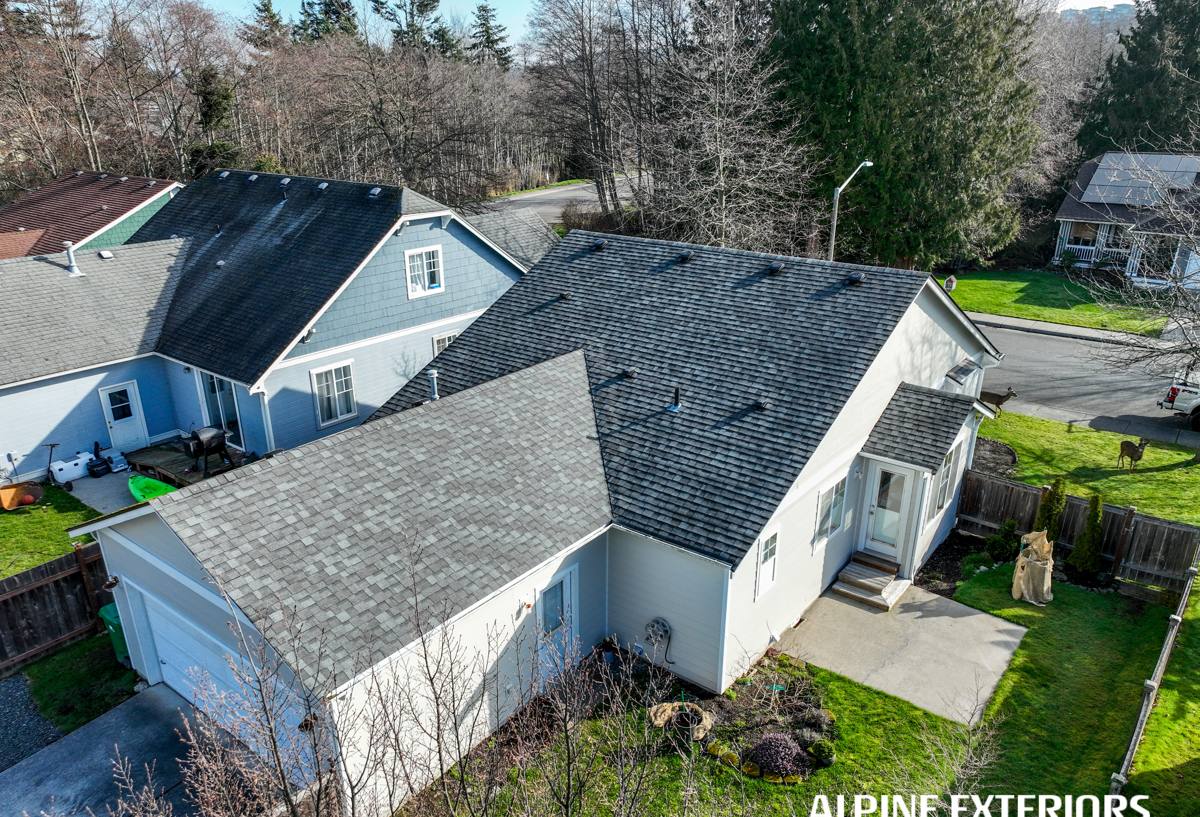
Birch Point sits along the Whatcom County coastline near Blaine, and homes out here don't age the same way homes ten miles inland do. Being close to the water means more direct exposure to salt-laden air, more wind-driven rain coming off the Strait, and a longer stretch of the year where surfaces stay damp instead of drying out between storms. Add in mature tree cover and shaded north sides on many lots, and you've got a recipe for moss, mildew, and slow moisture damage that inland siding never has to deal with.
None of that means a home here is doomed to constant repairs. It means the exterior materials and the installation details matter more than they would somewhere drier and further from the shoreline. We work on homes throughout the Blaine area, and Birch Point is one of the places where cutting corners on siding, flashing, or trim shows up fastest — sometimes within a single wet season.
What Salt Air, Wind-Driven Rain, and Moss Actually Do to a Home
Salt Air and Corrosion
Salt in the air settles on every exterior surface — siding, trim, fasteners, flashing — and accelerates corrosion on anything not built to handle it. Uncoated or poorly coated metal fasteners can start rusting years before they would inland, and once a fastener corrodes, the seal around it fails. That's a small leak point that grows over time, hidden behind the siding where you can't see it starting.
Wind-Driven Rain and Water Intrusion
Rain that's just falling straight down is relatively easy to shed. Rain that's being pushed sideways by wind off the water finds every gap, lap, and seam a straight-down rain would never reach. Birch Point gets more of this sideways-driven rain than sheltered inland lots, which means housewrap, flashing details, and butt-joint sealing on siding aren't optional extras — they're the difference between a wall assembly that stays dry and one that slowly saturates from the inside.
Moss, Shade, and Moisture Retention
Whatcom County's moss season runs long, and shaded, tree-covered lots near the coast rarely get the kind of direct sun that dries surfaces out quickly. Moss and algae hold moisture against siding and roofing longer than a clean, dry surface would, which is part of why organic wood-based sidings and shingles struggle here compared to materials that don't feed mold and moss growth in the first place.
Why We Install Only James Hardie Fiber Cement Siding
We made a deliberate call to install only James Hardie fiber cement siding, and we don't install vinyl, LP SmartSide, Cemplank, Allura, primed spruce, or cedar. That's not a marketing line — it's a standard we hold ourselves to because of what we've seen play out on coastal Whatcom County homes over years of exterior work.
What We Won't Install, and Why
- Vinyl siding expands and contracts with temperature swings, can warp under sustained heat or impact, and its seams and panels aren't built to hold up the same way against long-term wind-driven rain exposure.
- LP SmartSide and other wood-strand products are engineered wood — better than raw lumber in some ways, but still wood at the core, which means they depend on an intact factory coating and careful field-sealing to keep moisture out over decades near salt air.
- Cemplank and Allura are also fiber cement, and reasonable products in their own right — we simply standardized on Hardie's specific formulation, factory finish process, and climate-engineered product lines rather than installing multiple competing systems.
- Primed spruce and cedar are traditional and can look great, but they're organic material that needs ongoing paint maintenance, and in a moss-prone, high-moisture environment like Birch Point, that maintenance burden and the risk of rot at joints and fastener points is real.
James Hardie fiber cement is non-combustible, doesn't feed moss and mold the way wood-based products can, and comes with a factory-applied ColorPlus finish that's baked on rather than field-painted — which matters when the goal is a finish that survives salt air and UV without chalking or peeling early. Hardie also builds HZ5 and HZ10 product lines specifically engineered for different moisture and freeze-thaw climate zones, which is relevant for a coastal Pacific Northwest environment. It carries a strong transferable warranty when installed to the manufacturer's specifications — which is the other half of the equation, because even the best siding fails if it's installed wrong.
Siding Is Only Part of the Exterior — Roofing, Windows, and Decks
Siding doesn't work in isolation. Water that gets past a roof edge, a window flashing detail, or a deck ledger connection ends up in the same wall cavity that good siding is supposed to protect. We handle roofing, windows, and decks alongside siding for exactly that reason — a house is one connected system, and the transitions between these components are where most real-world leaks start, not the field of the siding itself.
For a Birch Point home, that usually means paying close attention to:
- Roof-to-wall and roof-to-chimney flashing, especially on the windward sides of the house
- Window and door flashing integration with the water-resistive barrier behind the siding
- Deck ledger attachment and flashing where a deck ties into the house wall
- Transitions between siding and foundation, trim, and any masonry
Replacing siding is a good opportunity to have a contractor look at all of these at once, rather than treating each as a separate project down the road.
What Working With a Local Blaine Crew Actually Means
A crew based in and around Blaine sees Birch Point conditions repeatedly — not as a one-off job description, but as a recurring pattern. That matters for a few practical reasons. Local crews know how exposure varies lot to lot in this area — a shoreline-facing wall takes different abuse than a tree-shaded back wall on the same house, and that should change flashing and detailing decisions, not just material choice. A local crew is also easier to have back for a warranty check or a follow-up question years later, and is more familiar with permitting and inspection expectations in Whatcom County than an out-of-area company passing through on a single job.
None of that replaces asking the right questions when you're vetting any contractor, coastal or not — but proximity and repeated local experience are worth something concrete when the climate itself is part of the problem you're solving.
The Replacement Process, Step by Step
- Assessment — we look at the current siding, the wall assembly behind it where accessible, and the condition of trim, flashing, and adjacent roofing, windows, and decks.
- Scope and product selection — deciding on Hardie plank, panel, or shingle profile, the appropriate HZ product line, and color approach (factory ColorPlus vs. field-applied paint).
- Tear-off and prep — removing old siding, inspecting and repairing any damaged sheathing, and correcting any existing flashing or water-resistive barrier issues found underneath.
- Installation to manufacturer spec — proper fastener type and placement, correct clearances, sealed joints, and flashing integration at every penetration and transition.
- Final detailing and cleanup — trim, caulking where appropriate, and a walkthrough of the finished work.
What Drives Cost on a Birch Point Siding Project
Every home is different, but the same handful of factors tend to move the price on coastal Whatcom County siding jobs more than anything else:
| Factor | Why It Matters |
|---|---|
| Home size and wall complexity | More corners, gables, and cutouts mean more cutting, fitting, and labor time |
| Tear-off scope | Removing existing siding down to the sheathing takes longer than installing over a already-prepped wall |
| Sheathing or framing repair | Hidden moisture damage found during tear-off adds material and labor before new siding can go on |
| Trim and detail work | Window and door surrounds, corner boards, and fascia detailing add time relative to plain flat runs |
| Color approach | Factory ColorPlus finishes cost more up front but avoid the ongoing cost of field repainting |
| Site access | Waterfront lots, steep grades, or limited equipment access can add setup and staging time |
We give straightforward, honest ranges once we've actually looked at a home — broad national averages don't mean much on a site-specific coastal project like this.
Signs Your Siding Needs a Closer Look
- Visible moss or algae buildup that keeps returning after cleaning
- Soft spots, bubbling, or discoloration, especially near the bottom edge of walls or below windows
- Cracked, warped, or separated panels or boards
- Paint that's chalking, peeling, or fading unevenly on one side of the house more than others
- Rust streaks running down from fastener heads or trim pieces
- Gaps opening up at seams, corners, or where siding meets trim, windows, or the roofline
Any one of these on its own might be minor. Several showing up together, particularly on the shoreline-facing side of a Birch Point home, is usually a sign it's worth having someone look at what's happening behind the surface.
Ready to Talk Through Your Home
If you're noticing any of the signs above, dealing with aging siding, or just want an honest read on what your Birch Point home's exterior needs, we're happy to take a look. There's no pressure and no obligation — just a straightforward assessment from a crew that works this coastline regularly. Use the form below to request a free estimate.