 Blaine
 Blaine Harbor sits right where the land meets Semiahmoo Bay and the open water of the Salish Sea, and that location shapes everything about how a home ages here. Homes near the harbor deal with a combination most inland Whatcom County properties don't face at the same intensity: salt-laden air moving off the water, driving rain that comes in sideways during winter storms, and a moss season that can stretch for months given our mild, wet Pacific Northwest winters. If you own a home in this part of Blaine, you've probably already noticed how much harder your exterior works compared to a house even a few miles inland.
What Blaine Harbor Homes Are Up Against
Salt air isn't just a coastal cliché — it's a slow, steady corrosive process. Airborne salt settles on siding, trim, fasteners, and roofing materials, and over years it accelerates the breakdown of anything that isn't built to handle it. Add in the region's rainfall pattern, where storms roll in off the water and hit the north and west-facing walls of a house hardest, and you get siding and trim that stay damp longer than they would on a more sheltered lot.
Moss and algae growth is the other half of the equation. Whatcom County's mild, moisture-heavy winters create ideal conditions for organic growth on roofs, siding, and anywhere water sits or shade lingers. Moss doesn't just look bad — where it takes hold on siding seams, trim joints, or roof valleys, it holds moisture against the surface far longer than open air ever would, and that sustained dampness is what causes real damage over time.
Why This Matters More Near the Harbor
Properties closer to the water get more direct salt exposure and more wind-driven rain than homes set back from the shoreline. That doesn't mean every Blaine Harbor home is in trouble — it means the margin for error in material choice and installation quality is smaller. Products and workmanship that would coast along fine in a drier climate get tested a lot faster out here.
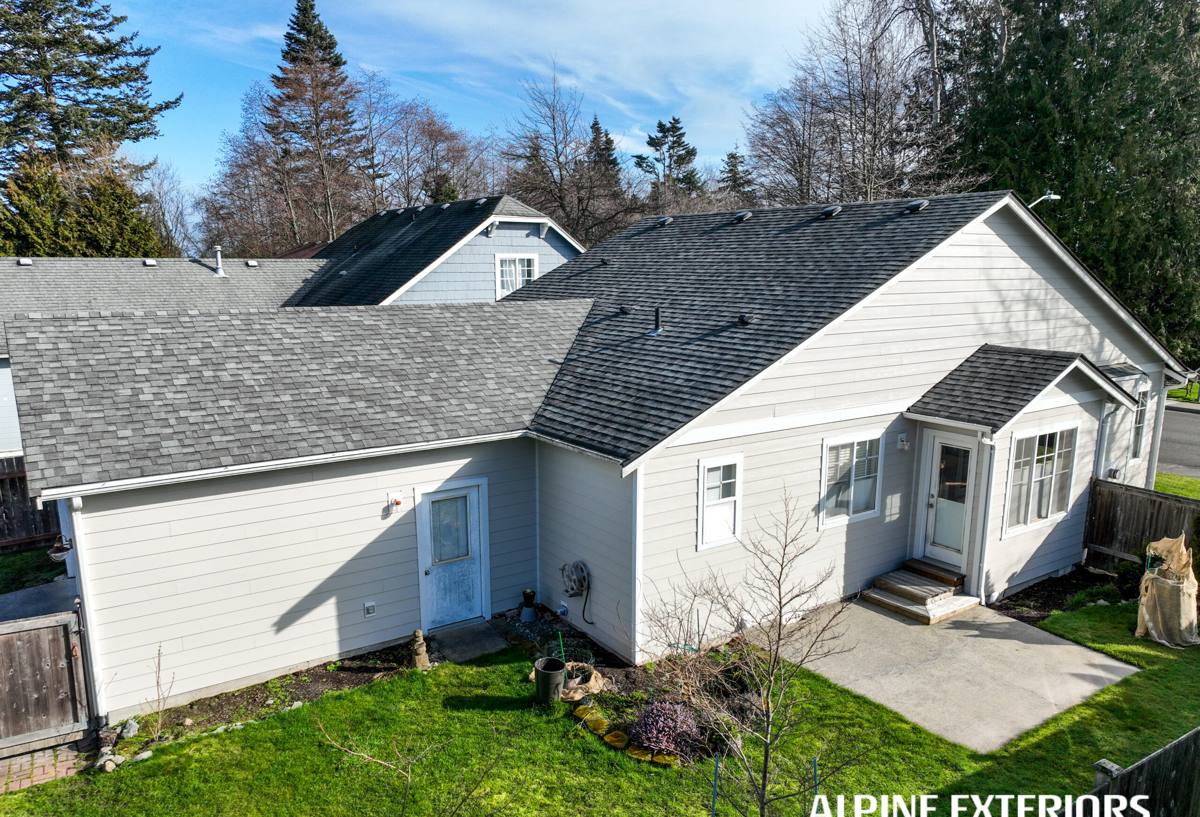
Why We Only Install James Hardie Fiber Cement Siding
We made a decision a while back to standardize on James Hardie fiber cement siding and stop installing other siding products — including vinyl, LP SmartSide, and other fiber cement brands like Cemplank or Allura. That's not a marketing angle; it's a standard we hold ourselves to because of what we've seen happen to siding in coastal and high-moisture climates like ours.
Fiber cement is fundamentally a mix of cement, sand, and cellulose fibers, which makes it non-combustible and dimensionally stable in ways wood-based and vinyl products can't match. Where Hardie separates itself further is the ColorPlus factory finish — a baked-on finish process that's more consistent and more resistant to fading and moisture intrusion than field-applied paint. For a harbor-adjacent home dealing with salt air and constant moisture cycling, that finish integrity matters more than it would somewhere drier.
James Hardie also engineers specific product lines (their "HZ" designations) for different climate zones, accounting for moisture and temperature patterns by region. That's a level of climate-specific engineering that most competing products simply don't offer.
What We Won't Install, and Why
| Product | What It Gets Right | Why We Don't Install It Here |
|---|---|---|
| Vinyl siding | Low upfront cost, easy availability | Can warp or become brittle with temperature swings; seams and laps give wind-driven coastal rain more paths to find a way in |
| LP SmartSide | Engineered wood is workable and relatively affordable | Wood-based core is more vulnerable to sustained moisture exposure than cement-based siding, which matters in a long wet season |
| Cemplank / Allura | Also fiber cement, similar core concept to Hardie | We standardized on one manufacturer so our crews master one install spec, one warranty structure, and one finish system rather than splitting expertise |
| Primed spruce / cedar | Natural look, traditional appeal | Requires ongoing paint and moisture maintenance that's a tough ask in a climate with this much sustained dampness and moss pressure |
None of these products are scams or junk — they all have a place in drier or more sheltered markets, and plenty of installers do fine work with them. Our position is narrower than that: for the conditions we see in Whatcom County, and especially this close to the water, we've chosen to put our name behind one system we can install and warranty with full confidence.
How We Approach Siding Work in Blaine Harbor
Every job starts with an honest look at the existing exterior — not just the siding surface, but what's happening behind it. In a coastal environment, moisture problems often start at the water-resistive barrier, flashing details, and butt joints long before they show up as visible siding damage. We check those details specifically because they're the parts of an install that determine whether a home holds up through twenty winters of harbor weather or starts showing problems in five.
Installation Details That Matter Here
- Proper flashing and kick-out details at rooflines, windows, and doors to direct wind-driven rain away from the wall assembly
- Correct fastener spacing and fastener material to resist the corrosive effects of salt air over time
- Adequate clearance between siding and grade, decks, and roof lines to reduce moisture wicking and moss-friendly damp zones
- Caulking and joint treatment following manufacturer spec rather than shortcuts that save time but fail early in wet climates
- Attention to north and west-facing elevations, which typically take the brunt of harbor-driven weather
Roofing, Windows, and Decks Face the Same Climate
Siding isn't the only exterior system fighting salt air and moss in Blaine Harbor — your roof, windows, and any exterior decking are dealing with the same conditions, just in different ways. We handle all four because they're connected: a roof that sheds water poorly overloads the siding and trim below it, windows with failing seals let moisture into wall cavities, and a deck built without the right ledger flashing and fastener choices will show corrosion and rot faster near the water than anywhere inland.
Roof moss growth is one of the most common calls we get from harbor-area homeowners, and it's usually tied to shaded roof sections or valleys that stay damp longer after our long rainy stretches. Windows near the water benefit from corrosion-resistant hardware and careful flashing integration with whatever siding system is going on the wall. Decks facing the water get more direct exposure to both rain and salt spray than decks tucked closer to a house's leeward side.
A Practical Pre-Winter Checklist for Harbor-Area Homes
- Check north and west-facing siding and trim for moss buildup or discoloration before wet season sets in
- Look at caulk joints around windows and doors for cracking or separation
- Clear gutters and downspouts so water isn't pooling against fascia or siding
- Inspect deck ledger boards and fasteners for early signs of corrosion, especially on water-facing decks
- Walk the roofline for moss in shaded valleys or north slopes, since untreated moss holds moisture against roofing material
Why a Local Crew Matters
Whatcom County weather isn't generic Pacific Northwest weather — Blaine's position on the water, its exposure to Semiahmoo Bay, and its distance from the drier rain shadow areas further south all make a difference in how fast moss establishes and how much salt exposure a home actually gets. A crew that works this specific area regularly knows which elevations need extra flashing attention, which neighborhoods see the most wind-driven rain, and how long moss season really runs here versus what a general regional estimate might assume.
That local knowledge shows up in small decisions — where to add an extra flashing detail, which fastener spec to use, how to sequence a job around our wetter months — that add up to a longer-lasting exterior.
What to Expect When You Work With Us
We start with an on-site look at your home's current siding, roofing, windows, and any decking, and we're upfront about what we find — including if a repair makes more sense than a full replacement. If James Hardie fiber cement siding is the right fit for your project, we'll walk through the specific HZ product line and ColorPlus color options that suit your home and its exposure. If your home's issues are really about flashing, roofing, or window seals rather than the siding itself, we'll tell you that too.
Cost Factors Homeowners Should Know
| Factor | How It Affects Your Project |
|---|---|
| Home size and wall complexity | More corners, gables, and trim details mean more labor and material |
| Existing wall condition | Hidden moisture damage found during tear-off can add scope once uncovered |
| Siding profile and color | Different Hardie profiles and ColorPlus finishes carry different material costs |
| Access and site conditions | Waterfront lots, slopes, or tight access can affect equipment and labor time |
| Scope bundling | Combining siding with roofing, window, or deck work can be more efficient than separate projects |
Let's Take a Look at Your Home
If you're noticing moss buildup, damp siding that never quite dries out, or trim and paint that's breaking down faster than it should, it's worth having someone look at what's actually going on before those issues get more expensive to fix. We're happy to walk your property, point out what we see, and give you a straight answer on whether siding, roofing, windows, or a deck is the priority — with no pressure to sign anything. Reach out for a free estimate using the form below.