 Blaine
 What Primed Spruce Siding Actually Is
Primed spruce siding is solid wood lap or channel siding, usually milled from spruce, pine, or fir (often labeled SPF), that arrives from the mill with a factory-applied primer coat. It's a step up from raw, unfinished wood because the primer gives painters a head start and offers some short-term protection against moisture while the boards sit on a job site or wait for finish coats. It's been a staple of Pacific Northwest home building for decades, and a lot of older homes in Whatcom County still wear it.
We get asked about it regularly, usually by homeowners who like the look of traditional lap siding and assume "primed" means "protected." It's worth being clear about what that primer coat is and isn't. It's a bonding layer for paint, not a weatherproofing system. Once it's on the wall, the long-term performance of the siding depends almost entirely on how well the finish paint is applied and maintained, year after year, for as long as the siding is up.
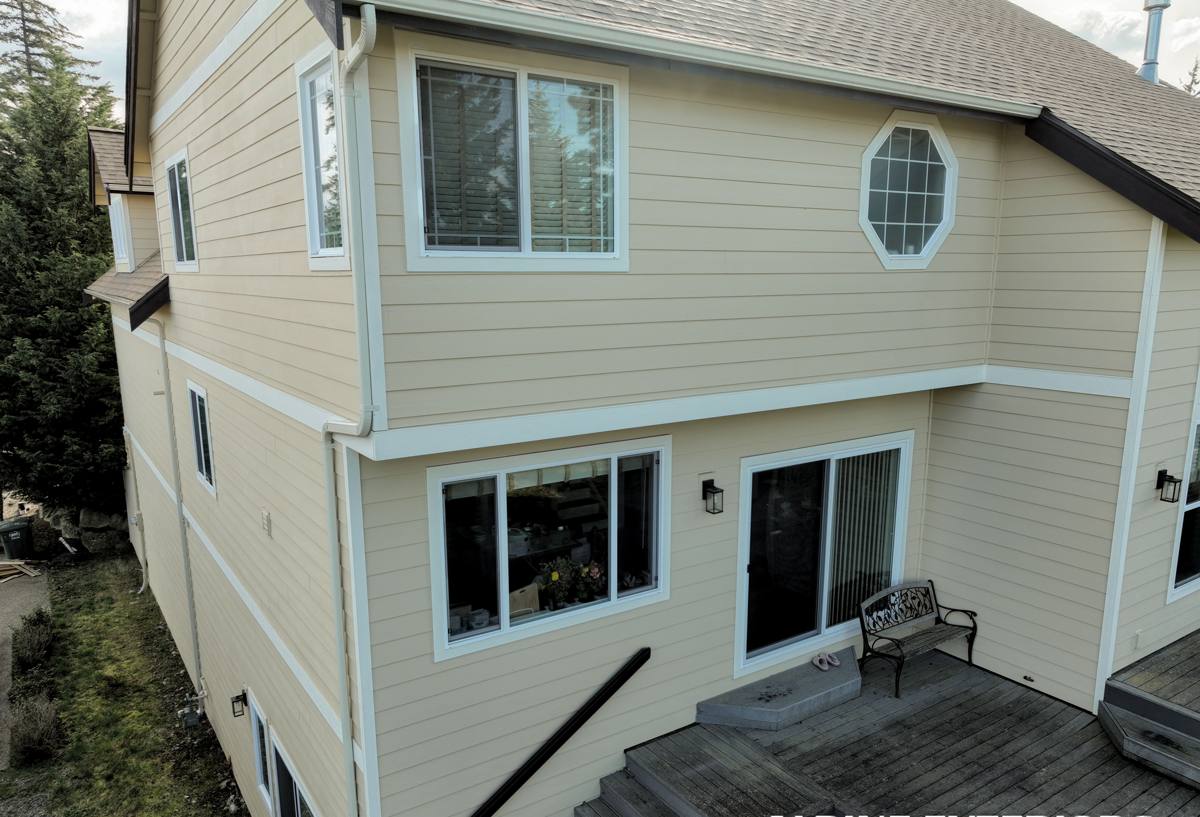
What Primed Spruce Siding Gets Right
We'll say this plainly: solid wood siding has real appeal, and it's not a bad product on paper. Spruce and fir take paint well, the boards are relatively easy to cut and fit on site, and a good carpenter can produce clean, tight reveals that look sharp on a traditional or craftsman-style home. Wood is also a renewable material, and some homeowners simply want the authenticity of real wood grain under the paint rather than a manufactured product. Those are legitimate reasons to like it.
The issue isn't the material's appearance when it's new. It's how that material behaves over fifteen, twenty, or thirty years of exposure to a marine climate — and that's where we've seen enough repeat problems that we stopped installing it.
Why Blaine's Climate Is Especially Hard on Primed Wood
Blaine sits at the very northwest corner of Washington, right on the water and the border, and that location matters for siding decisions. The salt air coming off the Salish Sea accelerates the breakdown of paint films and speeds up corrosion on any exposed fasteners. Salt-laden moisture works its way into the smallest paint cracks faster than it would inland, and once it reaches bare wood, the clock starts on rot.
Add to that the driving rain that comes with Pacific storm systems moving through Whatcom County. Wind-driven rain doesn't just wet the face of the siding — it pushes moisture sideways into laps, joints, and nail heads, the exact spots where a painted wood product is most vulnerable. And then there's moss season, which in this part of the state runs long. Shaded north walls, tree-lined lots, and the persistent damp keep siding surfaces wet for extended stretches, which is exactly the environment moss, mildew, and mold need to take hold on a painted wood surface.
None of this is unique to any one house. It's the baseline climate every wood-sided home in this area has to survive, every single year, for the life of the siding.
Where the Damage Shows Up First
- End grain at butt joints, where boards meet — the most absorbent part of any wood board and the hardest spot to keep fully sealed
- Finger joints on longer runs of primed spruce, where the glued joint can telegraph through paint or open up slightly as the wood moves
- Bottom edges of lap boards, where water sheets off and dwell time is highest
- Nail heads, which rust and bleed through paint faster in salt air
- Shaded, moss-prone elevations where paint film breaks down unevenly
The Maintenance Reality Homeowners Don't Expect
The primer coat is the beginning of a maintenance relationship, not the end of one. Once primed spruce siding is installed, it needs a full finish coat of quality exterior paint within a reasonably short window, and then it needs to be repainted on a cycle — often every five to seven years in a coastal climate like Blaine's, sometimes sooner on sun- or salt-exposed elevations. Skip a cycle, or let caulking at the joints fail without catching it, and moisture starts working into the wood underneath an intact-looking paint film, which is often how rot gets a head start before anyone notices.
This is the part of the conversation that changes people's minds most often. It's not that primed spruce siding fails quickly — it's that it demands an ongoing commitment of inspection, caulking, and repainting that most homeowners don't want to sign up for indefinitely, especially once they've priced out what professional repainting of a full exterior costs every several years, compounded over the decades they plan to own the home.
Moisture and Rot: The Core Trade-Off
Wood is a hygroscopic material — it absorbs and releases moisture with the weather, expanding and contracting as it does. Paint film is designed to slow that exchange, but it can't stop it entirely, and it certainly can't stop it once the film cracks, chalks, or peels. In a climate with heavy rainfall, long wet seasons, and salt air working against the paint's lifespan, that cycle of wetting and drying is what eventually leads to cupping, splitting, and soft or rotted sections, particularly at the joints and lower courses closest to grade or to horizontal trim.
Fiber cement doesn't share that vulnerability. It's not immune to moisture entirely — no exterior product is — but it doesn't swell, split, or rot the way solid wood does, and that changes the entire maintenance equation for a homeowner in Whatcom County.
Cost Over Time: A Fair Comparison
Primed spruce siding often looks competitive on the initial installed price. The real comparison has to account for what it costs to keep it looking and performing well over the years you actually own the home.
| Factor | Primed Spruce Siding | James Hardie Fiber Cement |
|---|---|---|
| Initial finish required | Full topcoat paint job after install, on top of the primer | Factory ColorPlus finish or field-paint option; no immediate topcoat required with ColorPlus |
| Repaint cycle in this climate | Roughly every 5–7 years, sooner on exposed walls | ColorPlus finish is warranted well beyond that window; field-painted Hardie still outlasts wood between coats |
| Rot risk at joints and end grain | Real and ongoing if caulk or paint fails | Non-combustible fiber cement does not rot |
| Moss and mildew resistance | Depends entirely on paint film condition | Engineered surface holds up better in prolonged damp shade |
| Salt air / fastener corrosion | Nail heads can rust and bleed through paint | Correct fastener specs reduce corrosion issues |
Installation Sensitivity Matters Too
Primed spruce siding is also less forgiving of small installation mistakes than people expect. Every cut end needs to be back-primed or sealed before it goes up, every joint needs proper flashing or caulking, and fastener placement has to account for wood movement or you risk splitting boards over time. Skilled carpenters can do this well, but it takes more attention to detail — and more time — than a lot of installers are willing to put in, which is part of why a large share of the wood siding problems we get called out to inspect trace back to shortcuts taken during the original install, not just age.
Why We Standardized on James Hardie Instead
We made the decision to install James Hardie fiber cement exclusively because it holds up to exactly the conditions Blaine throws at a home's exterior: salt air, driving rain, and long stretches of damp, shaded weather during moss season. It's non-combustible, which matters given the wildfire smoke and dry-season risk the broader region has seen in recent years, and it's engineered specifically for climate zones like ours through Hardie's HZ product lines. The factory ColorPlus finish is baked on under controlled conditions, which gives it a more consistent, longer-lasting bond than field-applied paint over primed wood ever achieves, and it comes with a strong transferable warranty that reflects the manufacturer's confidence in how the product performs over decades, not just years.
We're not installing it because it's trendy. We're installing it because when we tally up the service calls, the rot repairs, and the repaint cycles we've seen on primed wood siding around this area, fiber cement is what actually holds up without asking the homeowner to babysit it every five years.
What to Ask Before You Commit to Any Wood Siding Product
- Who is responsible for back-priming and sealing every cut end on site, and is that written into the contract?
- What repaint interval should you realistically plan for in a coastal, high-moisture climate like Whatcom County?
- How are butt joints and end grain being flashed or sealed, and what happens if that caulking fails?
- What warranty, if any, covers the wood product itself versus just labor?
- Has the installer priced out the full lifecycle cost — install plus every repaint cycle — or just the day-one number?
Get an Honest Look at Your Options
Every home and every wall exposure is a little different, and we're glad to walk your property, point out what we see, and explain in plain terms what we'd recommend and why. If you'd like a free, no-pressure estimate for your siding project, use the form below and we'll get back to you.