 Blaine
 Custer's Climate Puts Real Stress on Exterior Siding
Custer sits in the northwest corner of Whatcom County, close enough to Semiahmoo Bay and the Strait of Georgia that salt-laden air is a regular part of the weather, and close enough to the Canadian border and the open farmland around it that wind-driven rain has nothing to slow it down before it hits a house. Homes here don't face one big climate problem — they face a combination of smaller ones that add up over years: moisture that never fully leaves the air, salt that accelerates corrosion and finish breakdown, and a moss and algae season that can run from October well into spring. Siding that isn't built for this combination shows it early, usually as cupping, soft spots, peeling paint, or dark streaking along the north and west-facing walls that stay shaded and damp longest.
We're not describing a worst-case scenario — this is just ordinary weather for Custer and the rest of the Blaine area. A siding product or installation detail that "mostly holds up" in a drier inland climate often struggles here, because the margin for error is smaller. That's the lens we use on every project: what will this material and this installation actually do after a decade of Whatcom County winters, not just how it looks on day one.
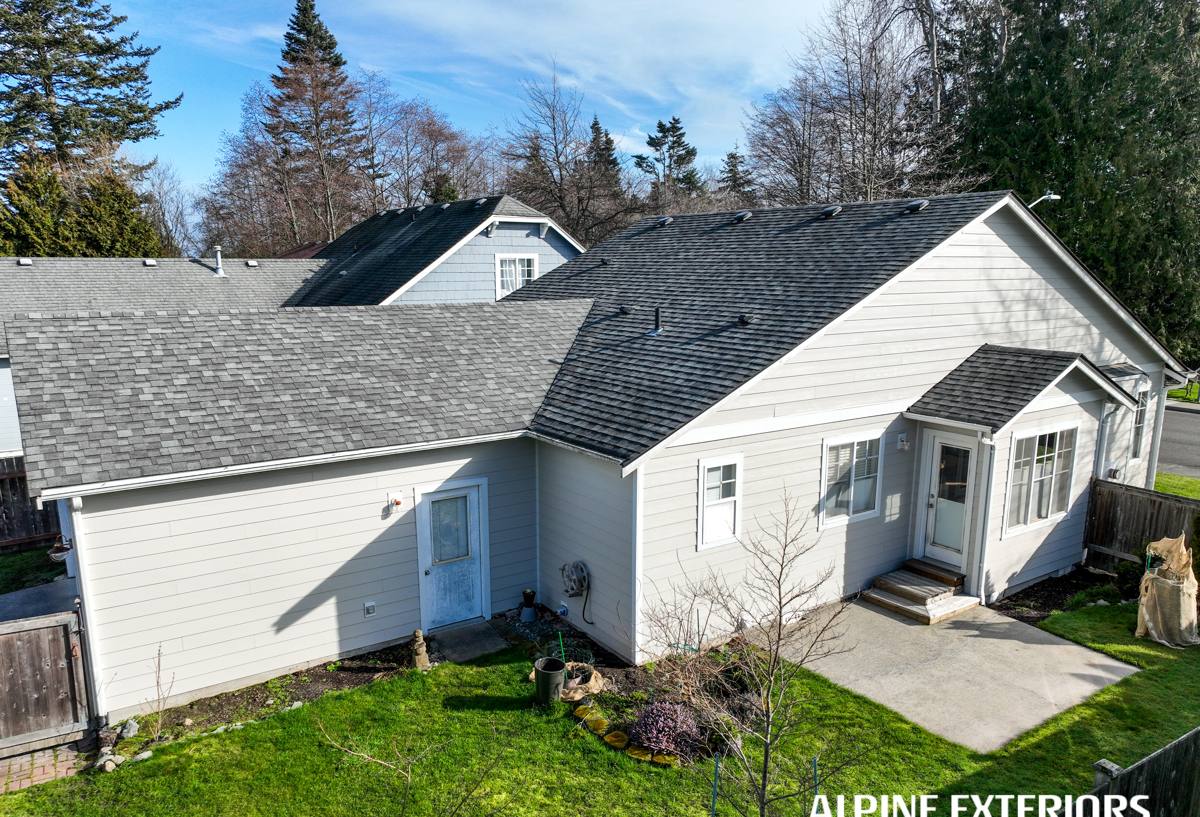
Why Salt Air Matters More Here Than People Expect
Salt air doesn't just affect homes directly on the water. Wind carries fine salt particles well inland, and in a place like Custer — open, low-lying, and exposed to marine wind off the Strait — that salt settles on siding, trim, fasteners, and roofing metal continuously. Over time it does two things: it accelerates corrosion on any exposed metal fasteners or flashing that isn't properly rated, and it breaks down lower-quality paint and coatings faster than inland weathering would. Wood and wood-composite siding are especially vulnerable, because salt-laden moisture works into any nick or seam in the coating and starts the swelling and rot process from the inside out.
This is one of the core reasons we standardized on James Hardie fiber cement siding rather than wood-based products. Fiber cement doesn't swell, rot, or feed the kind of organic growth that salt-moist environments encourage. Paired with corrosion-resistant fastening and correctly detailed flashing, it holds up to marine air in a way that most wood and engineered-wood sidings simply aren't built for.
What Salt Exposure Looks Like on a Home
- Premature paint failure or chalking on south and west walls exposed to prevailing wind
- Rust streaking below fasteners, hardware, or light fixtures
- Corroded or discolored flashing and trim well before the siding itself shows wear
- Faster fading on darker colors, especially with lower-grade factory or field-applied finishes
Driving Rain and the Whatcom County Wet Season
Custer gets the same long, wet stretch that defines weather across Whatcom County — steady rain punctuated by windier storm systems that push water sideways into walls rather than just down onto roofs. That "driving rain" component is what separates a good siding installation from a mediocre one. Flat, well-lapped siding with properly integrated water-resistive barriers, flashing, and window/door detailing sheds wind-driven rain. Siding installed without enough attention to those details — even a good product — can let water track behind the cladding, where it causes damage that's invisible until it's serious: rotted sheathing, mold, or damaged framing discovered years later during a remodel.
This is why we treat installation as equally important as product choice. James Hardie fiber cement is engineered to perform in wet climates, but the water management system behind the siding — house wrap, flashing at every penetration, proper clearances at grade and roof lines — is what actually keeps a wall assembly dry over 20 or 30 years.
Water Management Checklist We Follow on Every Job
- Correctly lapped and sealed water-resistive barrier before any siding goes up
- Flashing at every window, door, and roof-to-wall transition, not just the obvious spots
- Proper starter strip and clearance at the foundation so siding never sits in standing water
- Rain screen or drainage gap where the wall assembly calls for it, so incidental moisture can drain and dry
- Fasteners and trim rated for coastal/marine exposure, not general-purpose hardware
Moss, Algae, and the Long Shaded Season
Custer's mix of tree cover, farmland, and marine humidity means moss and algae aren't occasional problems — they're a seasonal reality on north-facing walls, under eaves, and anywhere siding stays shaded and damp for weeks at a time. On porous or textured wood-based products, moss and algae can actually take hold in the surface itself, not just sit on top of it, which makes cleaning more aggressive and more damaging to the finish. On a dense, factory-finished fiber cement surface, growth mostly stays on the surface and comes off with routine gentle washing instead of scraping or heavy pressure-washing that can strip a coating.
We tell homeowners honestly: no siding is moss-proof in this climate. The difference is how much damage the growth causes to the material underneath, and how hard the siding is to clean without hurting the finish. That's a real, ongoing maintenance factor worth weighing before choosing a product — not a one-time cosmetic decision.
Why We Install Only James Hardie Fiber Cement
We get asked regularly why we don't offer vinyl, LP SmartSide, cedar, primed spruce, or other fiber cement brands like Cemplank or Allura. It's a fair question, and the honest answer is that we made a standard based on what actually performs over decades in this specific climate, not what's cheapest to install or easiest to source.
The Trade-offs of Alternatives We See Regularly
| Product | Where It Falls Short Here |
|---|---|
| Vinyl siding | Can warp or crack in temperature swings and high wind; seams and moisture behind panels are hard to inspect; limited ability to manage driving rain at penetrations |
| LP SmartSide / engineered wood | Wood-based core is more vulnerable to swelling and edge deterioration if moisture gets past the coating, which is a real risk in a wet, salt-influenced climate |
| Cedar / primed spruce | Requires ongoing refinishing and is genuinely susceptible to rot, insect damage, and moss growth in constant damp shade |
| Other fiber cement brands | Similar base material to Hardie, but we've standardized on Hardie's factory-cured ColorPlus finish, climate-engineered HZ product lines, and transferable warranty backing for consistency across every job |
James Hardie fiber cement is non-combustible, dimensionally stable, and doesn't feed rot or insect damage the way wood-based products can. Its HZ5 product line is engineered specifically for the kind of wet, moderate-freeze Pacific Northwest climate Custer sits in. The ColorPlus factory finish is baked on under controlled conditions, which holds color and resists the fading and chalking that field-applied paint struggles with under salt exposure. It's backed by a strong transferable warranty, which matters if you sell the home before the siding's functional life is up. We install it because, after years of doing exterior work in this exact climate, it's the product that consistently holds up the way homeowners expect siding to.
How Our Process Works for Custer Homes
Every project starts with an honest look at the house — not just the siding, but the roofline, window flashing, deck attachment points, and grading, since water problems in one area often show up as siding damage somewhere else. We assess:
- Current siding condition and where moisture or moss damage has already started
- Flashing and water management at windows, doors, and roof transitions
- Exposure direction — which walls take the most wind-driven rain and salt air
- Any related roofing, window, or deck work that should happen alongside siding for a genuinely weathertight result
Because we handle siding, roofing, windows, and decks, we can coordinate work that touches more than one system — a common need on older Custer and Blaine-area homes where a full exterior refresh solves problems that piecemeal repairs don't.
Why a Local Crew Matters in Whatcom County
Marine climate detailing isn't universal knowledge — a crew that mostly works drier inland regions can miss the specific flashing and drainage details that matter here. A local crew that regularly works Blaine, Custer, Birch Bay, and the surrounding Whatcom County coastline knows which walls take the worst of the wind-driven rain, how far salt air actually reaches inland in this area, and where moss problems tend to start first on local homes. That local pattern recognition is part of what keeps a siding job performing well past year one.
Cost Factors Worth Understanding Before You Budget
| Factor | Why It Affects Cost |
|---|---|
| House size and complexity | More corners, gables, and trim detail mean more cutting, flashing, and labor time |
| Current siding removal | Tear-off of failing wood or vinyl siding adds labor and disposal costs versus a bare-wall install |
| Water damage discovered underneath | Rotted sheathing or framing found during tear-off needs repair before new siding goes on |
| Trim and accessory choices | Factory-finished trim and accessories add upfront cost but reduce future maintenance |
| Combined scope | Bundling siding with roofing, window, or deck work can reduce total mobilization and scheduling costs |
We won't quote a number without seeing the house, but we're always straightforward about what's driving the estimate and where a homeowner has real choices versus where the climate and code leave little flexibility.
Get a Straightforward Look at Your Home
If your Custer home is showing early signs of moss, moisture, or worn siding — or you're planning ahead before a small problem becomes a big one — we're happy to take a look. We'll give you a clear, honest read on your exterior and a free, no-pressure estimate, with no obligation to move forward.