 Blaine
 Exterior Work in California Creek
California Creek sits close to the water on the edge of Blaine, in a part of Whatcom County where the weather off the Strait of Georgia and Semiahmoo Bay shapes how every home on the exterior ages. Homes here don't fail because owners neglect them. They fail because the assumptions baked into a siding product, a roof system, or a window installation were made for a drier, calmer climate somewhere else. We work this area regularly, and the pattern is consistent enough that we can walk a property here and tell you within a few minutes which sides of the house are taking the worst of it.
This page is about what we actually see on siding, roofing, window, and deck work in California Creek, and why our siding standard — James Hardie fiber cement, installed to manufacturer spec, nothing else — comes directly out of that experience.
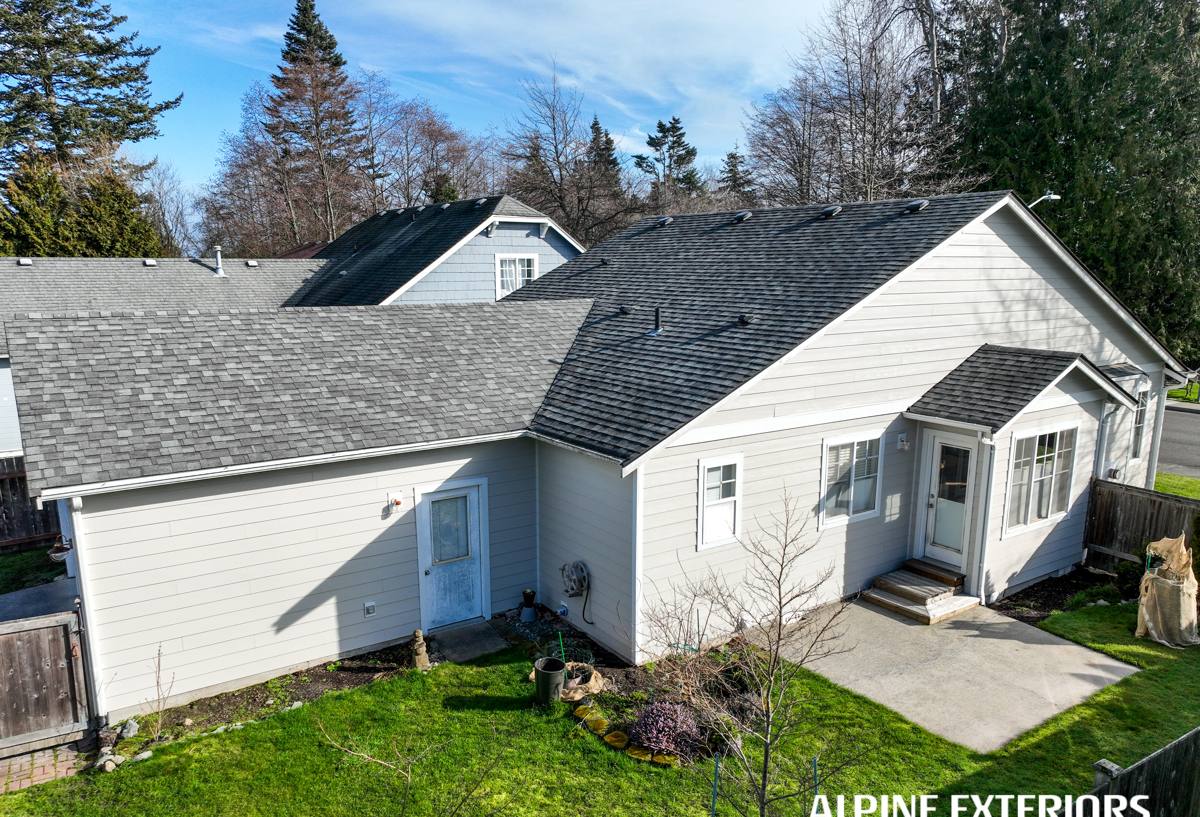
What the Local Climate Actually Does to a House
Salt Air
Proximity to tidal water means airborne salt is a constant, low-level presence on exterior surfaces, especially on west- and south-facing walls that catch the prevailing wind off the water. Salt is corrosive to exposed metal fasteners and trim, and it accelerates the breakdown of finishes that aren't engineered to resist it. Paint chalks and fades faster near the water than it does a few miles inland. This isn't dramatic, single-event damage — it's a slow tax that shows up as premature finish failure five or ten years earlier than a homeowner would expect.
Driving Rain
Blaine gets a lot of rain, and a meaningful share of it arrives sideways, driven by wind off the water. Driving rain doesn't just wet a wall — it forces moisture into every gap, lap joint, and fastener penetration that isn't properly flashed and sealed. Products and installation details that work fine in calmer, drier climates get exposed here. Water finds the shortcut, and over years that means rot at butt joints, corner boards, and anywhere trim meets siding without adequate water management.
A Long Moss Season
Cool temperatures, high humidity, and shaded north-facing walls under overhanging trees add up to a moss and algae season that runs most of the year in this part of Whatcom County. Moss holds moisture against a surface far longer than open air would, and on softer or more absorbent siding materials, that sustained dampness is exactly what leads to swelling, delamination, and rot underneath a surface that may still look okay from the street.
Why We Install Only James Hardie Fiber Cement
We get asked regularly why we don't offer LP SmartSide, vinyl, Cemplank, Allura, primed spruce, or cedar. Every one of those products has a legitimate place in the market, and some of them perform well in the right climate with the right maintenance. Our answer isn't that they're bad products — it's that we standardized on one system we can stand behind on every job in this specific climate, and James Hardie is that system.
What We Turn Down, and Why
- Vinyl siding is inexpensive and low-maintenance in mild, dry climates, but it can warp and deform under sustained heat exposure and doesn't hold paint if a homeowner ever wants a color change. It's also a poor match aesthetically for the more traditional Pacific Northwest home styles common in this area.
- LP SmartSide, Cemplank, and Allura are wood-strand or fiber cement competitors that vary in moisture tolerance and factory finish quality. Wood-strand products in particular depend heavily on unbroken paint film integrity — any breach, and moisture wicks into the substrate. In a driving-rain, high-humidity environment, that's a maintenance burden we don't think most homeowners want to sign up for.
- Primed spruce and cedar are traditional, attractive, and combustible, and they require an active repainting and caulking schedule to keep water out. Cedar in particular is beautiful but demands real upkeep in a moss-prone, high-moisture area — left unmaintained even one season too long, it invites exactly the rot conditions this climate creates.
Why Hardie Is What Goes On the House Instead
James Hardie fiber cement is non-combustible, dimensionally stable in wet-dry cycling, and finished at the factory with ColorPlus Technology — a baked-on finish that resists fading and chalking far better than field-applied paint, which matters directly for the salt-air fade issue described above. Hardie also engineers HZ5 product formulations specifically for climates with more moisture exposure, which is the category the Blaine coastline falls into. The warranty is transferable and backed by a large, established manufacturer, not something that depends on us being in business forty years from now. When it's installed correctly — proper clearances, correct fastening, factory-caulked or properly sealed joints — it is the product we trust to actually deliver on the "install once, don't think about it for decades" promise that most homeowners actually want.
How We Approach a California Creek Project
Every property near the water gets assessed a little differently than one further inland. Before we quote siding, we look at wind exposure by elevation, existing moss and moisture staining, the condition of trim and flashing at windows and rooflines, and whether the current wall assembly has a working weather-resistive barrier behind it. A lot of the value in re-siding a coastal-adjacent home isn't the new material itself — it's fixing the water management details underneath it that were never done right the first time.
What a Proper Installation Includes
- Correct starter strip, clearance from grade, and clearance from roof lines and decks
- Rain screen or drainage plane behind the siding where the wall assembly calls for it
- Stainless or coated fasteners appropriate for a salt-air environment
- Factory-mitered or properly sealed corners and butt joints, not just caulk over a gap
- Flashing integration at every window, door, and roof-to-wall transition
Roofing, Windows, and Decks Work Together Out Here
Siding doesn't fail in isolation. A roof that's shedding water onto a wall it wasn't designed to protect, a window that's no longer sealing at the flange, or a deck ledger board rotting into the rim joist all put moisture into the same wall assembly the siding is trying to keep dry. We handle all four trades — siding, roofing, windows, and decks — because on a coastal-influenced property like this, they need to be looked at as one connected water-management system, not four separate projects. A window replacement done without attention to the siding around it, or a deck rebuild that ignores the ledger flashing, can undo the protection new siding is supposed to provide.
Cost Factors on a California Creek Home
Every property is different, but these are the variables that most affect what a siding project actually costs here, beyond the base material price.
| Factor | Why It Matters Locally |
|---|---|
| Wind/salt exposure by wall | West- and south-facing walls near the water may need additional detailing or more frequent long-term inspection |
| Existing moisture damage | Rot found once old siding comes off adds sheathing or framing repair before new siding can go on |
| Trim and window integration | Coastal driving rain punishes poor flashing detail, so trim work is not a place to cut corners |
| Home size and complexity | Dormers, multiple gables, and tall walls add labor time and staging cost |
| Color and profile choice | ColorPlus factory finishes and certain textures/plank widths carry different material pricing |
Why a Local Crew Matters Here
A crew that mostly works drier inland projects can install a wall that looks correct and still isn't built for what this specific stretch of Whatcom County throws at it season after season. Knowing which walls in California Creek take the worst wind-driven rain, which lots hold moss the longest under tree cover, and how salt exposure behaves block by block near the water isn't something you get from a spec sheet — it comes from doing the work in this area repeatedly and seeing what holds up and what doesn't. That's the difference between siding that looks good at handoff and siding that's still performing in fifteen years.
Signs Your Current Siding May Be Struggling
- Persistent moss or algae staining that returns shortly after cleaning
- Soft spots, especially near the bottom courses, corners, or under windows
- Visible paint failure, chalking, or fading concentrated on water-facing walls
- Gaps or separation at butt joints and trim corners
- Any bubbling, warping, or delamination on wood-based or engineered wood siding
If any of these sound familiar, it's worth having someone look before small problems turn into sheathing or framing repairs.
Getting an Honest Look at Your Home
If you're in California Creek and want a straight answer on what your siding, roofing, windows, or deck actually need — not a sales pitch — we're glad to come take a look. There's no pressure and no obligation. Use the form below to request a free estimate.