 Blaine
 Why Bellingham Windows Wear Differently
Bellingham sits close enough to the water that salt-laden air is a real factor in how windows age, not just a coastal talking point. Combine that with the driving rain that comes off the Salish Sea through fall and winter, and a moss season that can stretch for months in shaded, north-facing yards, and you get a climate that's harder on window frames, sills, and seals than most manufacturers account for in their standard warranty language. Homes in this part of Whatcom County don't fail because the window itself was bad — they fail because water, salt, and constant dampness found a way in around it.
That's the core problem we're solving on every Bellingham window replacement: not just picking a good product, but installing it in a way that actually holds up to this specific climate.
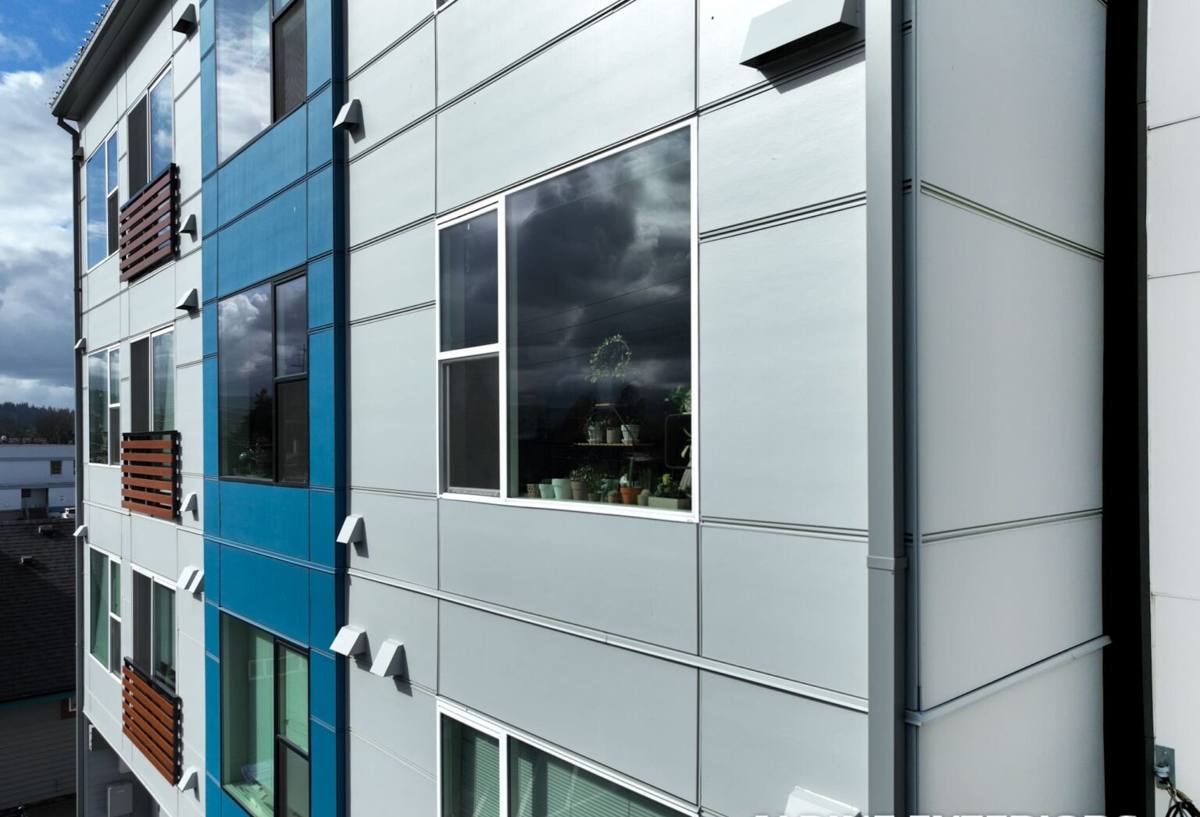
Signs a Bellingham Home Needs Window Replacement
Older window installations in this area tend to show trouble in predictable places. Knowing what to look for helps you decide whether you're looking at a repair or a replacement.
- Soft, discolored, or spongy wood trim around the frame — usually a sign moisture has been getting behind the casing for a while
- Fogging or a hazy film between panes on dual-pane units, which means the seal has failed and the insulating gas has escaped
- Visible corrosion or chalky white residue on aluminum frames or hardware, common closer to the water where salt air accelerates oxidation
- Green or black staining on the sill or lower frame, especially on shaded elevations — a sign moss and mildew have taken hold in a spot that stays damp too long
- Drafts or a noticeable temperature difference near the window even when it's fully closed and locked
- Windows that stick, won't stay open, or need force to latch — frame swelling from moisture intrusion is a common cause
Any one of these on its own might be a minor fix. Several together, especially on the same window, usually means water has been getting past the original flashing for a while and the frame or the wall behind it is compromised.
What a Correct Window Replacement Involves Here
The window itself is maybe half the job. The other half is everything most homeowners never see: how the opening is prepared, flashed, and sealed before the new unit ever goes in. In a climate that gets sustained, wind-driven rain, this is where jobs succeed or fail.
Removal and Inspection
We pull the old window and inspect the rough opening before anything new goes in. This is the point where hidden rot, soft sheathing, or old flashing that was never properly integrated with the water-resistive barrier gets found. If the framing underneath is compromised, replacing the window without addressing that just buries the same problem behind a new frame.
Flashing and Drainage
Proper flashing — sill pan, jamb flashing, and head flashing installed in the right shingle-lap order — is what actually keeps driving rain from working its way behind the window over time. This is the step that gets rushed on lower-quality installs, and it's also the step that matters most in a climate where rain doesn't just fall straight down, it gets pushed sideways into the wall.
Air Sealing and Insulation
The gap between the window frame and the rough opening gets sealed and insulated correctly — not just stuffed with fiberglass or foam and forgotten. Done right, this cuts drafts and keeps condensation from forming inside the wall cavity, which is a common contributor to the hidden moisture damage we see in older homes here.
Exterior Trim and Sealant
Exterior caulking and trim work has to account for how much this climate's moss and algae growth can degrade a poor sealant job. We use products and application methods suited to sustained damp exposure, not just what's fastest to apply.
Choosing the Right Frame Material for a Coastal Climate
There's no single "best" window material — the right choice depends on your home's exposure, your maintenance appetite, and your budget. Here's how the common options actually perform in Whatcom County conditions.
| Frame Material | How It Handles Salt Air & Moisture | Maintenance | General Notes |
|---|---|---|---|
| Vinyl | Won't corrode or rust; handles salt air well | Low — occasional cleaning | Most common choice for coastal Whatcom County homes; good value |
| Fiberglass | Very stable, resists moisture and corrosion, minimal expansion/contraction | Low | Higher upfront cost, strong long-term durability |
| Wood / Wood-Clad | Vulnerable without diligent upkeep; cladding helps but seams need attention | High — repainting, sealant checks | Best suited to sheltered exposures, not exposed or wind-facing walls |
| Aluminum | Prone to corrosion and pitting in salt air over time | Moderate to high | We generally steer clients away from bare aluminum on exposed elevations here — it's a maintenance and longevity trade-off, not a defect claim |
For most Bellingham homes, vinyl or fiberglass frames offer the best balance of durability and upkeep given the salt exposure and rain volume. Where a home calls for a wood look, wood-clad units on protected elevations — with a clear maintenance plan — are still a reasonable option.
Glass Packages and Energy Performance
Whatcom County's climate doesn't hit the extreme cold of the inland Northwest, but the combination of persistent damp, temperature swings, and coastal wind still makes glass package selection worth getting right.
- Dual-pane, low-E glass is the practical baseline for this climate — it manages heat loss and cuts condensation risk on the interior pane.
- Argon or krypton gas fill between panes improves insulating performance without changing how the window looks.
- U-factor matters more here than solar heat gain coefficient, since the priority is usually keeping heat in during our wetter, cooler months rather than blocking intense sun.
- Warm-edge spacers reduce the cold spot at the edge of the glass, which is where condensation and, eventually, seal failure tend to start.
We'll walk through glass options based on which direction the window faces and how exposed that wall is — a window on a wind-driven, water-facing elevation deserves a different spec than one tucked under an eave on a sheltered side.
Our Process
We keep the process straightforward and communicate what we're finding as we go, since a lot of the real decisions — like whether there's hidden rot behind an old frame — only become clear once the old window is out.
- On-site assessment — we look at each window's exposure, condition, and any signs of moisture intrusion before quoting anything
- Product and glass recommendation — matched to that window's specific exposure, not a one-size-fits-all package
- Removal and opening inspection — old window comes out, framing gets checked before anything new goes in
- Flashing, install, and air sealing — done in the sequence that actually sheds water, not just what's quickest
- Exterior finish work — trim, caulking, and touch-up sealing suited to sustained coastal moisture
- Final walkthrough — operation, seal, and finish checked with you before we consider the job done
Why a Local Bellingham-Area Crew Matters
Window replacement isn't a generic task you can spec the same way in every part of the country. A crew that regularly works Bellingham and the broader Blaine area already knows which elevations take the worst of the driving rain, where moss buildup tends to trap moisture against a sill, and how salt air changes the maintenance conversation for hardware and frames. That's not something you get from a manufacturer's install manual — it's knowledge built from working this specific stretch of Whatcom County, house after house.
It also means we're not guessing at code requirements or flashing details that work everywhere except here. Local experience shows up in the small decisions — how deep the sill pan slopes, which sealant holds up under sustained damp, which elevations need extra attention — and those small decisions are what determine whether a window replacement lasts fifteen years or needs revisiting in five.
What to Ask Before You Hire
Whoever you choose for the job, these are worth confirming upfront:
- Do they inspect and address the rough opening, or just swap the window in the existing frame?
- What flashing method do they use, and can they explain why?
- Do they carry manufacturer certification for the window brands they install, and is workmanship covered separately from the product warranty?
- Will they walk you through glass and frame options based on your home's specific sun and rain exposure, rather than a single default package?
- Do they have current experience working homes in Bellingham or the surrounding Whatcom County coastline?
A contractor who answers these clearly and specifically, without hedging, is usually one who does this work regularly and takes the moisture-management side seriously — which, in this climate, is the part that actually determines how long the job lasts.
If you're seeing drafts, fogged glass, or trim damage around your windows, or you're simply ready to plan ahead of the next wet season, we're happy to take a look. Reach out for a free, no-pressure estimate using the form below — we'll assess your home's actual exposure and give you a straight answer on what it needs.