 Blaine
 Why Dakota Creek Roofs Wear Out Differently
Dakota Creek sits close enough to the water that homes here take on weather most inland Whatcom County neighborhoods don't deal with. Salt-laden air off the bay accelerates corrosion on exposed metal — nails, flashing, vent stacks, gutter hardware — years before it would fail on a roof twenty miles inland. Add in the steady procession of driving rain off the Strait through fall and winter, and you've got a roof system that's tested constantly, not occasionally. Then there's moss. The combination of shade from mature trees, persistent moisture, and mild temperatures gives moss a long growing season here, and once it gets a foothold under shingle tabs it holds water against the roof deck long after the rain has stopped.
None of this means Dakota Creek roofs are doomed to fail early. It means they need to be built and replaced with those three stressors in mind — corrosion-resistant fasteners and flashing, water-shedding details sized for sustained rain rather than occasional downpours, and a roof surface and ventilation setup that doesn't give moss the conditions it needs to take hold. A roof replacement that ignores any of that is just setting the homeowner up for the same problems in half the expected lifespan.
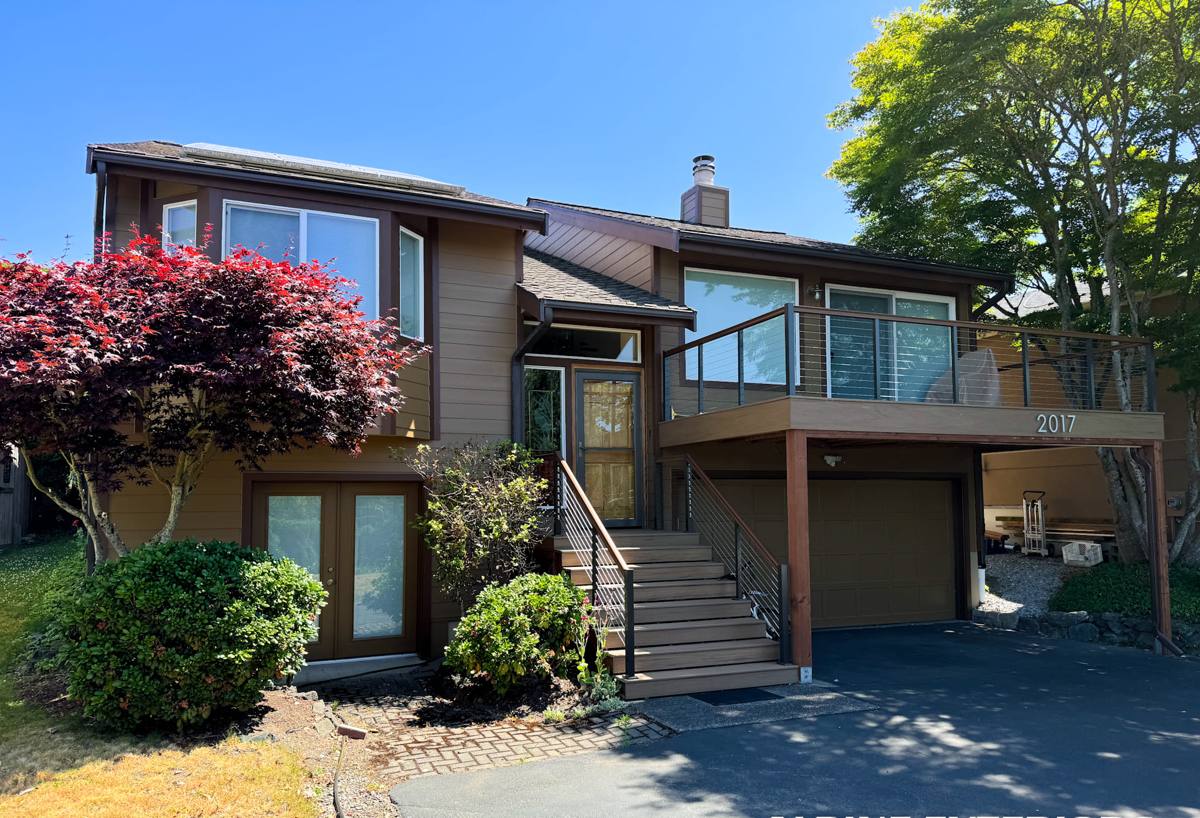
Signs a Dakota Creek Roof Needs Replacing, Not Patching
Roof repair makes sense when a problem is isolated — a cracked pipe boot, a section of flashing that worked loose, a handful of wind-lifted shingles. Replacement becomes the honest recommendation when the damage is systemic rather than local. In this area, that usually shows up as:
- Granule loss visible in gutters or downspouts across most of the roof, not just one slope
- Moss or algae staining that keeps coming back within a season or two of cleaning, especially on north-facing or shaded planes
- Soft or spongy decking felt underfoot during inspection, a sign moisture has been getting past the shingle layer for a while
- Rusted, pitted, or failing metal flashing around chimneys, valleys, and vent penetrations — the parts most exposed to salt air
- Shingles curling, cupping, or losing their seal in patches rather than at isolated wind-damage points
- Interior signs — ceiling stains, attic moisture, or musty smells — that point to a roof no longer doing its core job
If a roof is showing two or more of these at once, patching tends to be a short-term fix that costs money now and again in a year or two. A straight assessment up front saves homeowners from paying twice.
What a Correct Roof Replacement Involves Here
A roof replacement is more than swapping old shingles for new ones. In a coastal, high-moisture area like Dakota Creek, the details underneath the shingles do most of the work of keeping a home dry for the next 20-30 years.
Underlayment and Water Protection
We use synthetic or self-adhered underlayment rated for sustained wet conditions, with extra ice-and-water membrane run in the vulnerable spots — eaves, valleys, and around every penetration. In a climate where the roof deck can stay damp for days at a stretch during a wet stretch, this layer is what keeps a small shingle failure from becoming a deck failure.
Flashing Details That Matter in Salt Air
Flashing is where most premature roof failures near the water actually start. We spec corrosion-resistant metal — not the thinnest gauge available — for chimney flashing, step flashing along walls and dormers, valley metal, and vent boots. Fasteners matter too: standard steel nails corrode faster this close to salt air, so we use corrosion-resistant fasteners throughout, not just on the visible metal.
Ventilation to Fight Moss and Trapped Moisture
A roof that can't breathe traps warm, moist air against the underside of the deck, which is exactly the environment moss and algae like. Proper ridge and soffit ventilation, sized correctly for the attic volume, keeps that air moving and keeps roof temperatures more even — which also helps shingles last their full rated life instead of aging early from heat and trapped moisture.
Material Options for Blaine's Coastal Climate
There's no single "right" roofing material for every Dakota Creek home — it depends on the roof's pitch, the home's style, and the homeowner's budget and maintenance expectations. Here's how the common options actually perform in this climate:
| Material | Salt air / corrosion resistance | Moss resistance | Typical lifespan here |
|---|---|---|---|
| Architectural asphalt shingle | Good, with corrosion-resistant fasteners and flashing | Moderate — benefits from zinc/copper strips and clean ventilation | 20-30 years |
| Standing seam metal | Excellent when properly coated and fastened | Excellent — sheds moss naturally due to smooth, low-friction surface | 40-50+ years |
| Composite / synthetic shake | Good — doesn't corrode, but check fastener spec | Good, though still benefits from ventilation | 30-40 years |
| Cedar shake | Not applicable, but requires regular maintenance in this moisture level | Poor without diligent upkeep — organic material feeds moss growth | 20-25 years with maintenance |
We install what fits the home and the budget, but we're upfront when a material choice will mean more maintenance in a wet, mossy neighborhood like this one. That's a trade-off worth knowing before the contract is signed, not after the first wet winter.
Our Process, Start to Finish
- On-site inspection. We walk the roof and the attic, not just look from the ground, so the estimate reflects the actual deck and structure condition.
- Written estimate. Material options, scope of work, and a clear price — no vague allowances that turn into surprise add-ons mid-project.
- Scheduling around the weather. We plan tear-off and dry-in around forecast windows so the deck isn't left exposed to a rain system longer than necessary.
- Tear-off and deck inspection. Old material comes off, and any soft or damaged decking is identified and replaced before anything new goes down.
- Underlayment, flashing, and ventilation installed to spec. This is the stage that determines how the roof performs in ten years, not just how it looks on day one.
- Roofing material installed. Manufacturer specifications followed for nailing pattern, exposure, and fastener type suited to a coastal environment.
- Cleanup and final walkthrough. Magnetic sweep for stray fasteners, debris hauled off, and a walkthrough so the homeowner sees exactly what was done.
Cost Factors for a Dakota Creek Roof Replacement
Every roof is different, so we don't quote a number until we've actually inspected the roof — but these are the factors that most often move the price up or down:
| Factor | Why it matters |
|---|---|
| Roof size and number of planes | More square footage and more valleys/hips mean more material and labor |
| Deck condition | Rotten or soft decking found during tear-off adds repair cost that can't be known until the old roof is off |
| Material choice | Standing seam metal costs more upfront than asphalt but needs far less maintenance over time |
| Pitch and accessibility | Steep roofs or limited access for equipment add labor time |
| Flashing and penetration count | Chimneys, skylights, and multiple vent stacks each add detail work |
| Ventilation upgrades | Adding or correcting ridge/soffit venting during replacement is far cheaper than doing it later |
Why a Crew That Already Works Dakota Creek Matters
Roofing crews that mostly work drier, inland areas sometimes treat coastal jobs the same way they'd treat any other roof — standard fasteners, standard flashing, standard venting. On a roof twenty miles from salt water, that shortcut shows up as premature rust and recurring moss within a few years. A crew that regularly works Dakota Creek and the rest of the Blaine area already knows which details need upgrading for this environment and doesn't have to learn it on your roof. We've seen how these roofs age here, which means fewer surprises during tear-off and a spec that's built for the actual conditions, not a generic average.
Roof Replacement Checklist Before You Sign a Contract
- Does the estimate specify underlayment type and where ice-and-water membrane will be used?
- Is the flashing material and fastener type specified, or just "standard"?
- Does the contractor plan to inspect and address attic ventilation, not just the shingle layer?
- Is deck repair priced as a contingency, with a clear per-sheet rate, rather than a vague allowance?
- Does the estimate include cleanup, magnetic sweep, and debris haul-off?
- Is the manufacturer warranty explained clearly — what's covered, what voids it?
- Does the contractor carry current licensing and insurance, and will they provide proof without being asked twice?
Ready for a Straight Answer on Your Roof
If your Dakota Creek roof is showing granule loss, recurring moss, or you just want an honest read on how much life it has left, we'll come take a look and tell you what we actually see — no pressure, no upsell script. Fill out the form below for a free estimate.