 Blaine
 Board & Batten in a Place That Doesn't Forgive Shortcuts
Cherry Point sits right up against the Strait of Georgia, and that location shapes everything about how siding performs there. Homes out this way take on salt-laden air, wind-driven rain off the water, and a wet season that can stretch for months without a real drying window. Board and batten siding — with its bold vertical lines and deep shadow reveals — is one of the most popular looks for the farmhouses, craftsman-style homes, and newer builds going up around Whatcom County's coastline. But the same design that makes it handsome also makes it less forgiving of bad material choices or careless installation than a flat lap profile would be.
This page is about that one job, done right, for that one area: what Cherry Point's climate actually does to board and batten siding over time, what a correct installation looks like from the studs out, and why we install it exclusively in James Hardie fiber cement rather than the wood, vinyl, or engineered-wood alternatives you'll also find pitched around the region.
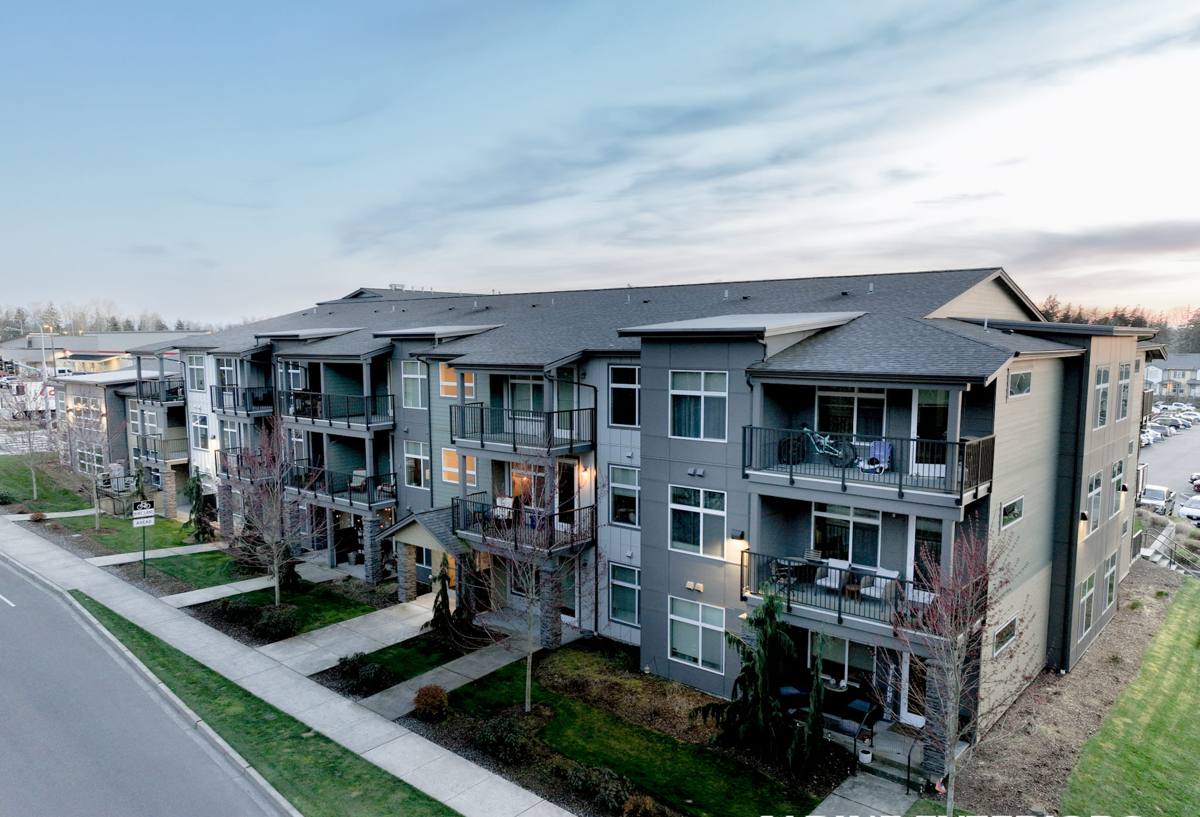
What Cherry Point's Climate Does to a Vertical Board Profile
Board and batten relies on narrow battens covering the seams between wider boards. Every one of those seams, and every fastener that holds a batten in place, is a potential entry point for water if the assembly isn't detailed correctly. In a climate like this one, that detail work isn't optional.
Salt Air
Proximity to open water means airborne salt settles on exterior surfaces and works into any exposed fasteners, seams, or coating gaps. Salt accelerates corrosion in the wrong fastener type and speeds up the breakdown of finishes not engineered for coastal exposure. This is one of the main reasons fastener selection and factory-applied finish quality matter more here than they would fifty miles inland.
Driving Rain
Storms coming off the Strait don't just fall straight down — wind pushes rain sideways into wall assemblies, and a vertical batten profile with dozens of linear feet of seams gives water more places to find a path in if flashing and gapping aren't handled correctly. A board and batten wall is only as good as the water-resistive barrier and rainscreen gap behind it.
A Long Moss Season
Cool, damp, shaded conditions for much of the year create ideal growing conditions for moss and algae, especially on north-facing walls and anywhere siding sits too close to landscaping or doesn't get airflow. Moss holds moisture against the surface, and a siding material that absorbs that moisture instead of shedding it will degrade faster than one that doesn't.
Why Board & Batten Specifically Needs the Right Material Here
A lap profile sheds water downward across a continuous horizontal overlap. Board and batten works differently — it's a series of vertical joints, and every batten is essentially a strip of material sitting directly over a seam, fastened through it. That means:
- More total seams and fastener penetrations per square foot than most horizontal profiles
- Battens that must stay dimensionally stable, or they'll pull away from fasteners and open gaps
- A finish that has to perform on both the wide boards and the narrow battens, including the cut edges
- A water-resistive barrier and rainscreen detail behind the whole assembly that has to be right the first time, since it's not something you can inspect later without removing siding
This is exactly where cheaper or less climate-engineered materials tend to show their weaknesses first — usually at the battens, since they're thinner, more exposed, and take the brunt of both moisture and UV.
Why We Install Board & Batten Only in James Hardie Fiber Cement
We don't install vinyl board and batten, LP SmartSide, primed spruce, cedar, or other fiber cement brands. That's a standard we hold company-wide, not just for this style. For a coastal, high-moss, high-rainfall area like Cherry Point, the reasons are especially concrete:
Dimensional Stability
Fiber cement doesn't swell, cup, or split the way wood-based products can when they take on repeated moisture cycles. Battens that stay flat and tight against their fasteners are battens that don't open gaps over time.
Non-Combustible Core
James Hardie siding is fiber cement, not wood fiber or wood-plastic composite — it doesn't contribute fuel to a fire the way engineered wood siding does. That's a meaningful difference in wildfire-adjacent regions, and it's a standard we don't compromise on anywhere we build.
ColorPlus Factory Finish
Rather than field-applied paint, ColorPlus finish is baked on at the factory in multiple coats, engineered to resist fading and hold up against exactly the kind of UV and moisture cycling that a marine climate delivers. It also means far less touch-up painting over the life of the siding — a real advantage on a profile with as many cut edges and seams as board and batten has.
HZ5 Climate Engineering
James Hardie manufactures different product formulations for different climate zones. The HZ5 line is engineered for regions with more moisture and freeze-thaw cycling, which fits Whatcom County's coastal weather pattern better than a one-size-fits-all product.
A Warranty Backed by the Manufacturer
James Hardie's transferable limited warranty is tied to the product and its factory finish, not just to our workmanship. That matters to homeowners who plan to sell, and it reflects a level of manufacturer confidence that the alternatives we've chosen not to install don't match.
Comparing Board & Batten Material Options
| Material | Behavior in Salt Air / Rain | Moss & Moisture Resistance | Maintenance Over Time |
|---|---|---|---|
| James Hardie fiber cement | Engineered for moisture cycling; won't corrode | Doesn't absorb moisture into the board itself | Occasional wash; factory finish resists fading |
| Vinyl board and batten | Won't rot, but can warp or crack in temperature swings | Moss grows on the surface same as any material; seams can trap moisture behind panels | Low, but limited repair options if damaged or discolored |
| Engineered wood (LP-type) | Wood fiber core is vulnerable to sustained moisture exposure | Prone to swelling at edges and battens if moisture gets in | Requires vigilant caulk and paint maintenance |
| Cedar / primed spruce | Natural wood movement; needs sealed end grain and battens | Absorbs moisture readily; moss and mildew take hold faster | Regular refinishing needed to keep water out |
This isn't a knock on every use case for those products — vinyl and engineered wood have their place in other climates and budgets. It's why, for the conditions Cherry Point homes actually face, we've standardized on fiber cement instead of stocking multiple product lines.
What a Correct Board & Batten Installation Involves
The visible boards and battens are the last thing installed, not the first. What happens underneath them determines whether the siding performs for decades or starts failing at the seams within a few years.
1. Water-Resistive Barrier
A continuous, properly lapped weather barrier goes over the sheathing before anything else. Every penetration — outlets, hose bibs, light fixtures — gets flashed and sealed into that barrier, not just caulked from the outside.
2. Rainscreen Gap
Furring strips or a purpose-built rainscreen product create a drainage and drying gap between the barrier and the siding. This gap lets any water that does get past the boards drain out and lets the wall assembly dry with airflow instead of staying damp — critical in a climate where things don't dry out quickly on their own.
3. Board Layout and Fastening
Boards are installed plumb and properly spaced for expansion, with fasteners placed according to Hardie's published fastening schedule — not wherever is convenient. Fastener type matters too: coastal exposure calls for corrosion-resistant fasteners, not standard interior-grade hardware.
4. Battens
Battens go over the board seams, fastened into structural framing where possible, with consistent reveal spacing. This is the step where sloppy work shows up fastest — uneven spacing or battens that aren't seated tight will telegraph and eventually work loose.
5. Trim, Corners, and Flashing Details
Window and door trim, outside corners, and the transition at the foundation line all need proper flashing and clearances, especially where wood contact with grade or hardscape could trap moisture.
6. Caulking and Finish Check
Sealant is used at specific joints per manufacturer spec — not as a blanket fix for gaps that shouldn't be there in the first place. Finished walls get a final check for consistent reveal lines and tight seams before we call the job done.
Our Process for a Cherry Point Job
- On-site assessment of your home's exposure — which walls face the water and prevailing wind, where moss has been an issue, and current siding condition
- Walkthrough of James Hardie board and batten options, colors, and reveal widths that fit your home's style
- Written estimate outlining scope, materials, and timeline — no vague allowances
- Removal of old siding and inspection of the sheathing underneath for any hidden moisture damage before we close the wall back up
- Installation following Hardie's fastening and clearance specifications, with rainscreen detailing appropriate to this climate
- Final walkthrough with you before we consider the job complete
Cost Factors for Board & Batten in This Area
| Factor | Why It Affects Cost |
|---|---|
| Wall condition underneath | Hidden rot or moisture damage from prior siding adds repair scope before new siding goes on |
| Home height and access | Multi-story walls and difficult site access affect labor and equipment needs |
| Reveal width and trim detail | Wider boards and more elaborate trim packages use more material and labor time |
| Color | Standard ColorPlus colors versus custom-matched finishes carry different pricing |
| Rainscreen and flashing complexity | Homes with more window and door penetrations require more detailed flashing work |
We don't quote board and batten off a square-footage rule of thumb alone — the walls facing the water and the condition underneath the existing siding both move the number, and we'll walk you through why before any work starts.
Why Local Familiarity With Cherry Point Matters
A crew that's worked homes in this specific stretch of Whatcom County already knows which walls tend to take the worst of the wind-driven rain, how fast moss comes back on shaded elevations here, and what corrosion-resistant hardware actually holds up against salt air over years, not just on paper. That's different from general siding experience — it's familiarity with how this particular coastline treats a house. It also means we're not guessing at appropriate rainscreen detailing or fastening for the conditions; we're applying what we've already seen work on homes near yours.
Maintenance Expectations Once It's Installed
Correctly installed James Hardie board and batten is low-maintenance, not no-maintenance. A periodic gentle wash to keep moss and salt residue from building up, prompt attention to any landscaping that's grown up against the siding and blocking airflow, and an occasional look at caulked joints are reasonable expectations. What you shouldn't need is repainting the whole exterior every few years — that's the trade-off ColorPlus finish is built to eliminate compared to field-painted alternatives.
If you're weighing board and batten for a home near Cherry Point, we're glad to walk your property, talk through what your specific walls are dealing with, and put together a straightforward, no-pressure estimate. There's a form below — reach out and we'll get you scheduled.