 Blaine
 A Roof Built for Point Roberts' Marine Climate
Point Roberts sits at the end of a small peninsula with water on nearly every side, which means roofs here take a different kind of beating than roofs a few miles inland. Salt-laden air off the water corrodes exposed metal faster than drier parts of Whatcom County — fasteners, flashing, and vent components can show rust and pitting years before a comparable roof elsewhere would. Storms roll in off the water and drive rain sideways rather than straight down, which tests every lap, seam, and flashing detail instead of just running off a clean slope. Add a long, wet season on top of that, and a roof here spends more months damp than dry — exactly the condition moss needs to take hold on shaded and north-facing sections. A repair that would hold up fine in a drier climate can fail within a couple of seasons if it isn't built with these specific conditions in mind.
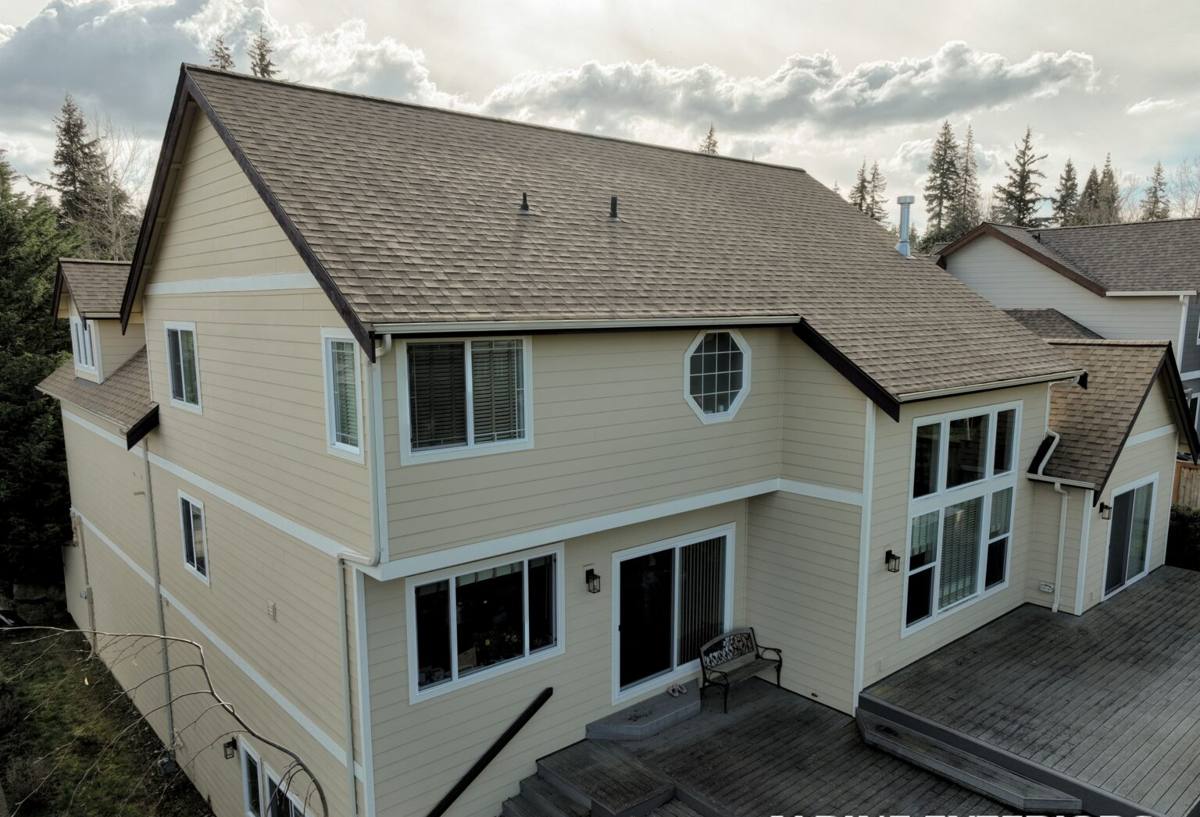
What Counts as Storm Damage
Not every roof problem after a windy night is "storm damage" in the sense that matters for repair scope or an insurance claim, and not every issue is obvious from the ground. Here's what we're actually looking for during a post-storm inspection.
Wind damage
Lifted, creased, or curled shingles, exposed nail heads where the seal has broken, missing tabs, and torn or lifted ridge cap. Wind damage often shows up first at roof edges, ridges, and any place the roof plane changes — the spots wind actually grabs.
Water intrusion
Wind-driven rain doesn't need a hole to get in — it can be forced sideways under flashing or lapped shingles that would shed a normal rain fine. Signs include ceiling stains, damp insulation in the attic, water tracking down rafters, and vent caps or boots that have shifted or cracked.
Tree and debris impact
Branch strikes, punctures, and granule loss from wind-blown debris. Even a strike that doesn't puncture the roof can bruise shingles or crack underlying decking in a way that isn't visible until it starts leaking weeks later.
The distinction that matters most is storm damage versus ordinary wear. A 20-year-old roof with curling shingles across the whole field is aging out, not storm-damaged, even if a windstorm is what made you notice. We'll tell you honestly which one you're looking at.
Why a Local Point Roberts Crew Matters
Point Roberts is part of Washington, but it isn't connected to the rest of the state by road — getting there means crossing into Canada and back into the U.S. That's a fact of life for residents, and it's a fact of life for any contractor trying to get a crew, tools, and materials onto the peninsula after a storm. A crew that doesn't do this regularly loses real time to border wait and has to figure out, on the fly, how to plan trailer loads, debris haul-off, and material deliveries around checkpoint hours instead of just driving over.
A crew based in Blaine that already works Point Roberts routinely has that logistics worked out ahead of time — documentation current for everyone on the job, trip timing planned so a day isn't lost sitting at the border, and material runs staged efficiently instead of improvised. After a storm, with a tarp on the roof and weather still moving through, that difference shows up directly in how fast the job actually gets done.
Our Storm Damage Repair Process
- Phone and photo triage. A quick call to understand what happened and, if you can safely get photos from the ground, a first look before anyone drives out.
- Inspection scheduled with the crossing in mind. We plan the visit around border logistics so we're not burning daylight in transit — one trip, done right.
- Emergency dry-in if needed. If there's an active leak or exposed decking, stopping water intrusion comes before anything else.
- Written scope and honest assessment. What's storm damage, what's pre-existing wear, and what repair actually requires — in writing, before work starts.
- Repair. Matching materials as closely as possible, sealing and flashing to hold up against wind-driven rain, not just cosmetic patching.
- Cleanup and debris haul-off. Storm debris and old material leave the peninsula with us — not left for you to deal with.
- Walk-through. We show you what was done and why, in plain terms.
Repair or Replace? How We Decide
Storm damage doesn't automatically mean a full roof replacement, but sometimes it's the honest answer. These are the factors that actually drive the decision:
| Factor | Leans toward repair | Leans toward replacement |
|---|---|---|
| Roof age | Well within expected service life | Already near or past typical lifespan |
| Extent of damage | Isolated to one slope or section | Widespread across multiple slopes |
| Material match | Matching shingle/product still available | Discontinued color or profile, visible patchwork |
| Decking condition | Sound plywood or sheathing underneath | Soft, delaminated, or water-damaged decking |
| Prior condition | No history of leaks or moss damage before the storm | Storm exposed problems that were already developing |
We'll walk you through where your roof lands on each of these before recommending either option — not the other way around.
Materials That Hold Up to Salt Air and Wind
Coastal conditions change what "good enough" fasteners and flashing look like. On repair work here, we lean toward corrosion-resistant fasteners — stainless steel or hot-dip galvanized rather than standard electroplated — because the salt air will find and exploit any weak point in ordinary hardware faster than it would a few miles inland. Flashing metal choice matters the same way: a metal that resists pitting and doesn't require repainting every few years is worth the modest extra cost compared to the labor of redoing flashing sooner than it should need it.
Sealants also matter more here than in a dry climate — a sealant rated for constant UV and moisture exposure holds up where a bargain product will crack and let water back in within a season or two. None of this is about chasing the fanciest product on the market; it's about matching materials to what this specific environment actually does to a roof over time.
Living With a Long Moss Season
Point Roberts' wet season runs long, and shaded or north-facing roof sections stay damp enough, long enough, for moss to establish itself well before summer dries things out. Moss isn't just cosmetic — it holds moisture against shingles and can work its way under tabs and flashing over time, which is exactly the kind of slow damage that shows up as a "mystery leak" during the next storm.
- Keep gutters, valleys, and roof-to-wall transitions clear of needles and debris — trapped organic matter holds moisture and feeds moss growth
- Trim overhanging branches where practical to improve airflow and sun exposure on shaded slopes
- Address moss growth with gentle, roof-safe methods — never pressure washing, which strips protective granules and shortens shingle life
- Have moss-prone areas checked during any storm inspection, since existing moss can hide flashing or shingle damage underneath
Documenting Storm Damage for Insurance
Good documentation makes a real difference in how smoothly an insurance claim goes, and most of it is easy to do if you know what to capture.
- Photos of visible damage from the ground — never climb onto a wet or moss-covered roof yourself
- The date and rough timing of the storm event
- Interior signs of water intrusion — ceiling stains, damp spots, anything new
- Our written inspection report and scope, which separates storm damage from pre-existing wear
- Any temporary measures taken, like emergency tarping, with photos before and after
We provide the inspection documentation you'll need to support a claim, in plain language rather than jargon — you shouldn't need a translator to understand your own roof report.
What To Do Right After a Storm
If you suspect storm damage, a few basic steps protect both your home and your ability to get repairs handled properly.
- Stay off the roof — wet, mossy, or wind-damaged surfaces are not safe to inspect yourself.
- Check attic spaces and ceilings for new stains or dampness.
- Take photos from the ground of anything visibly out of place.
- Call for an inspection before the next round of weather moves in, especially during Whatcom County's wetter months.
- Avoid patch jobs from anyone unfamiliar with coastal, salt-air conditions — a quick fix that ignores the local climate often fails within a season.
If a recent storm has left your Point Roberts roof with missing shingles, a new leak, or damage you're not sure how to assess, we're glad to take a look. Our estimates are free, honest about what's actually storm damage versus wear, and come with no pressure to sign anything on the spot — just fill out the form below to get started.