 Blaine
 Siding Replacement for Sumas Homes
Sumas sits at the far northeastern edge of Whatcom County, tucked against the base of the foothills near the Canadian border. It's a different pocket of the county than the coastline, but the siding on a Sumas home still answers to the same weather system that soaks the rest of Whatcom County for much of the year. Long stretches of steady rain, high humidity, and short winter daylight hours add up to siding that stays damp far more often than it stays dry. That's the condition any replacement siding has to be built for, not the occasional sunny week.
We get calls in Sumas for the same reasons we get them anywhere else in the county: paint that won't hold, boards that have gone soft at the bottom edge, or siding installed years ago that was never quite right to begin with and is now showing it. A siding replacement here isn't just a cosmetic swap — it's a chance to correct whatever let moisture in the first time and put something on the wall that's actually engineered for this climate.
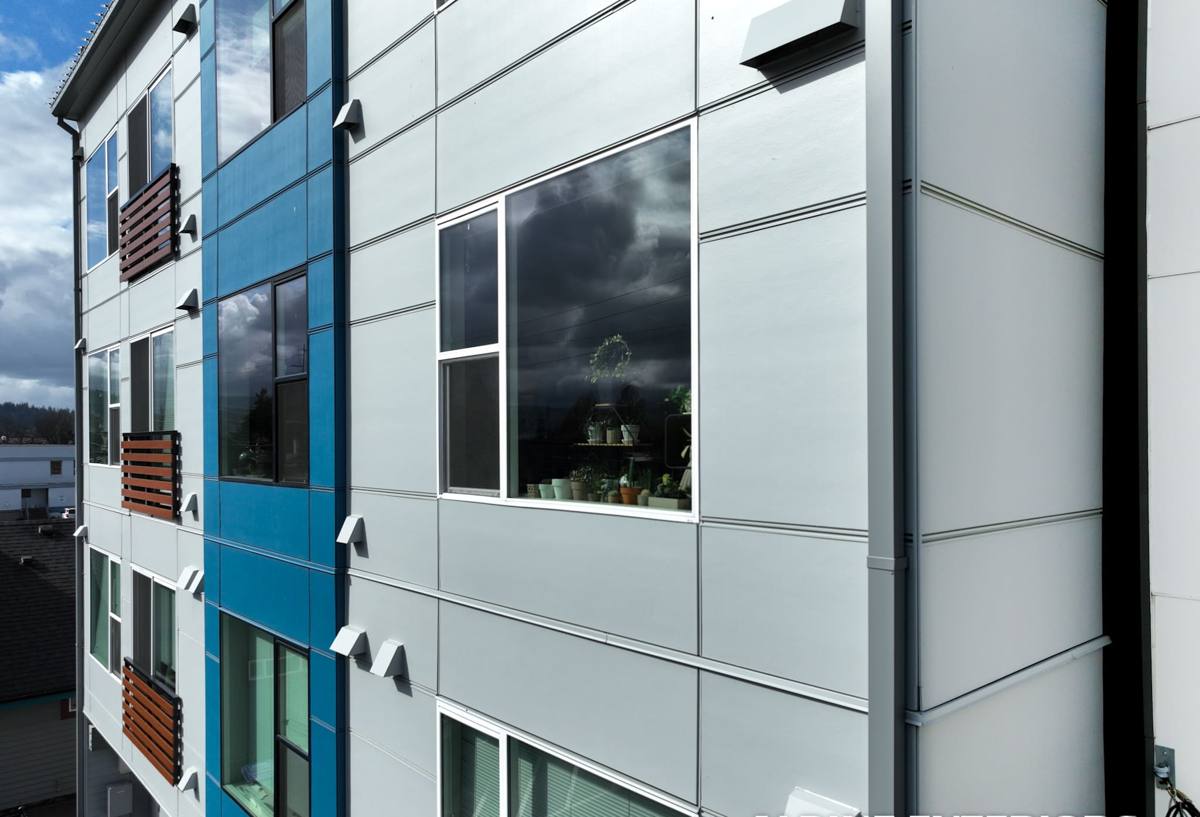
What the Local Climate Does to Siding Over Time
A few things stack up against exterior siding in this part of Washington:
- Sustained rain, not just storms. It's the steady, low-intensity rain over many months of the year — not the occasional downpour — that does the real damage, because siding rarely gets a long enough dry stretch to fully release moisture it's absorbed.
- Moss and algae growth. Shaded walls, north-facing elevations, and anywhere airflow is blocked by landscaping stay damp longer, giving moss and mildew the conditions they need to take hold on porous or textured siding surfaces.
- Temperature swings between seasons. Materials that expand and contract with humidity and temperature changes are more prone to cracking, cupping, or separating at the seams over repeated cycles.
- Wind-driven rain at wall penetrations. Windows, doors, and any place trim meets siding are where water finds a way behind the surface if flashing and sealant weren't detailed correctly the first time.
None of that is unique to Sumas — it's the reality across inland and coastal Whatcom County alike. What matters is whether the siding material and the installation were built to handle it, or just built to look good on installation day.
Signs a Home in Sumas Needs Siding Replacement
Repair makes sense when the damage is isolated. Full replacement becomes the honest recommendation when the problem is systemic — when what's failing in one spot is likely failing quietly in others. Warning signs worth taking seriously include:
- Paint that's peeling, bubbling, or needs repainting every few years no matter what product was used
- Soft, spongy, or crumbling siding, especially near the bottom courses and around window sills
- Visible warping, cupping, or boards separating from the wall
- Persistent moss or dark staining that comes back shortly after cleaning
- Rising energy bills paired with drafts or cold spots near exterior walls
- Siding that's simply reached the end of its practical service life, even if it hasn't failed outright yet
Any one of these can be a legitimate reason for an inspection. Several at once usually means the siding system — not just the paint — has run its course.
What a Correct Siding Replacement Actually Involves
Siding replacement done right is more than pulling old boards off and nailing new ones on. The steps that actually protect a home for the next several decades happen underneath what you can see:
Tear-off and inspection
Full removal of the old siding lets us actually see the sheathing underneath — which is the only way to know if there's hidden rot, past water damage, or framing issues that need to be addressed before anything new goes up. Covering over a problem with new siding just delays the discovery, at greater cost later.
Water-resistive barrier and flashing
A correctly lapped weather-resistive barrier, along with properly integrated flashing at every window, door, and roof-to-wall transition, is what actually keeps water out — the siding itself is the second line of defense, not the first. This is the part of the job that's invisible once it's finished, and it's also the part most likely to be rushed on a lower-quality install.
Proper fastening and clearances
Fiber cement siding has specific manufacturer requirements for fastener spacing, nail penetration, and clearance from grade, roof lines, and decks. Skipping these specs voids warranty coverage and shortens the real-world life of the siding, even if it looks fine on day one.
Trim, caulking, and finish detail
The finish details — corner trim, caulking at joints, touch-up paint on cut edges — are what keep water from finding its way in at the seams over the following years. This is where a rushed crew cuts corners that a homeowner won't notice until the next wet season.
Why We Install Only James Hardie Fiber Cement
We standardized on James Hardie siding for every job we do, including in Sumas, because it's built for exactly the conditions Whatcom County throws at it:
- Non-combustible material. Fiber cement doesn't feed a fire the way wood-based products can, which matters for insurance and for peace of mind.
- Climate-engineered HZ5 formulation. Hardie's HZ5 product line is engineered specifically for regions with freeze-thaw cycles and sustained moisture exposure — the Pacific Northwest climate zone it's rated for.
- ColorPlus factory finish. A baked-on finish applied under factory-controlled conditions holds color and resists fading, chipping, and peeling far better than field-applied paint, and it means we're not relying on weather-dependent site painting to get a durable topcoat.
- Doesn't feed moss and mildew the way wood fiber does. Because it's cement-based rather than wood-based, it doesn't provide the same organic material that moss and algae thrive on, though any exterior surface still needs occasional cleaning in this climate.
- Strong transferable warranty. Hardie backs its products with a warranty that can transfer to a new owner, which matters for resale in a market where buyers ask pointed questions about exterior maintenance history.
We don't install LP SmartSide, vinyl, Cemplank, Allura, primed spruce, or cedar. Each of those has legitimate uses elsewhere, but we've made a professional call to put one system on the homes we work on, install it correctly every time, and stand behind it — rather than juggle multiple product lines with different failure modes and different warranty terms.
Our Process for a Sumas Siding Replacement
- On-site inspection. We walk the exterior, check for hidden moisture and sheathing damage, and identify what's actually driving the failure — not just what's visible from the curb.
- Written estimate. A clear scope of work and pricing before anything is scheduled — no surprise change orders for work that should have been quoted up front.
- Tear-off and sheathing repair. Old siding comes off, any damaged sheathing or framing gets repaired, and the wall is ready for a proper water-resistive barrier.
- Weather barrier and flashing installation. This is the step that actually determines whether the wall stays dry for the next 30-plus years.
- Hardie installation to manufacturer spec. Correct fastening, clearances, and joint treatment, done to the standard that keeps the warranty valid.
- Final detail and cleanup. Trim, caulking, touch-up, and a full site cleanup before we consider the job done.
What Drives Cost on a Sumas Siding Job
Every home is different, but the same factors tend to move the price on a siding replacement project in this area:
| Factor | Why It Matters |
|---|---|
| Extent of hidden sheathing damage | Rot found during tear-off has to be repaired before new siding goes on — the scope of that repair isn't fully known until the old siding is off |
| Home size and wall complexity | More corners, gables, and window/door openings mean more cutting, flashing, and trim work |
| Siding profile and accessories chosen | Lap width, trim style, and accent details all affect material and labor cost |
| Access and site conditions | Multi-story walls, tight setbacks, or landscaping close to the home can add labor time |
| Removal and disposal of old siding | Volume of old material and any hazardous conditions (like older paint) affect disposal cost |
We don't quote broad ballpark figures without seeing the home — too many of these variables are only knowable in person. What we can promise is a written estimate that reflects the actual scope, not a lowball number that grows once the work starts.
Why Hiring a Crew That Already Works Whatcom County Matters
Siding installation isn't just about following a manufacturer's install manual — it's about knowing how this region's weather actually behaves against a wall over a full year, in every season, not just the dry months. A crew that already works Sumas and the surrounding Whatcom County towns has seen how moisture moves on north-facing walls here, how moss establishes on shaded elevations, and where flashing details tend to get missed by installers who aren't used to this climate. That local pattern recognition is hard to get from a crew passing through from somewhere drier.
It also means we're not disappearing after the invoice clears. If a warranty question comes up two years down the road, we're still working in the area and easy to reach — not a name from an out-of-town crew that did one job and moved on.
Questions Worth Asking Any Siding Contractor
- Are you licensed and insured in Washington, and can you provide proof?
- Will you remove all old siding and inspect the sheathing before installing anything new?
- What water-resistive barrier and flashing details do you use, and can you explain why?
- Do you install to the manufacturer's published specifications so the warranty stays valid?
- Who is actually on the crew doing the work — subcontractors or your own installers?
- What's included in writing, and what would trigger a change order?
Ready to Talk About Your Siding
If your home in Sumas has siding that's past its prime — peeling paint, soft spots, moss that won't stay gone, or just age — we're happy to take a look and give you an honest read on what it actually needs. There's no pressure and no obligation. Fill out the form below and we'll schedule a free estimate.