 Blaine
 What Lynden's Climate Does to Siding
Lynden sits inland, but Whatcom County's weather doesn't respect city limits. Homes here face the same driving rain moving in off the water, the same salt-laden air pushing inland from the Blaine waterfront and Semiahmoo Bay, and the same long, gray moss season that runs from fall through spring. Siding that isn't built and installed for that combination tends to fail early, and it usually fails quietly, behind the wall, well before anyone notices a problem on the surface.
We work on homes throughout Lynden and the surrounding Whatcom County communities out of our Blaine base, and siding replacement is one of the most common calls we get. It's rarely because siding is dramatically falling apart. More often a homeowner notices paint that won't hold, a board that feels soft underfoot pressure, or a musty smell in a closet on an exterior wall, and wants a straight answer about whether it's time to replace instead of patch. This page covers what local conditions do to siding, what a correct replacement actually involves, and how we approach the job.
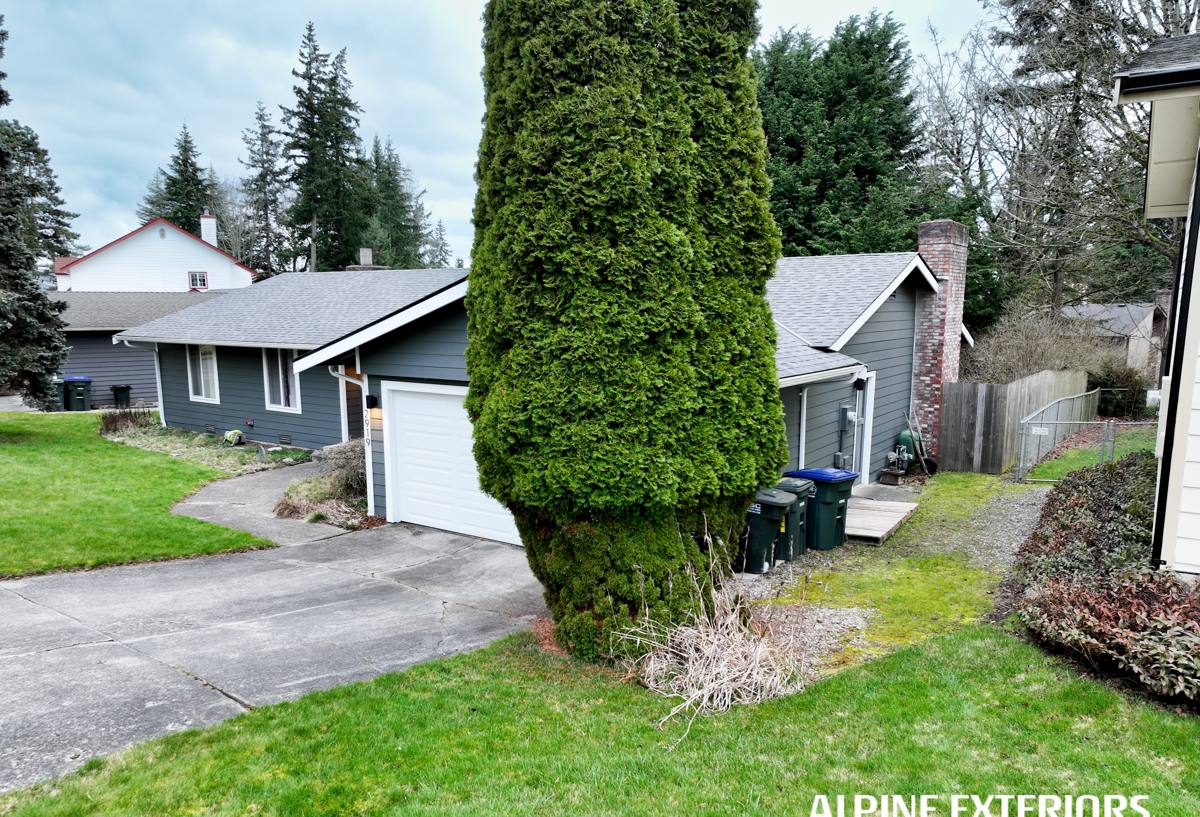
Signs Your Lynden Home Needs Siding Replacement
Not every siding problem calls for a full tear-off. But in a climate this wet, small problems on wood-based or aging siding tend to compound quickly rather than stay minor. Here's what tells us it's time to talk replacement rather than repair:
- Persistent moss or dark streaking that returns within a season of cleaning
- Paint that bubbles, peels, or won't hold for more than a couple of years
- Soft or spongy spots when you press on the siding, especially near the bottom courses
- Visible warping, cupping, or separated seams between boards or panels
- Rot or staining around window and door trim
- A musty smell inside on an exterior wall, which often means moisture is already in the wall cavity
- Original siding on a home built more than 20 to 25 years ago, particularly wood, hardboard, or early-generation composite
Any single item on that list can be a repair. Several together, especially on a home that's been through two decades or more of Whatcom County winters, usually means the moisture barrier and sheathing underneath need attention too, not just the visible siding.
What a Correct Siding Replacement Job Actually Involves
Siding replacement done right is mostly about what happens before the new siding goes up. The product you choose matters, but the water management behind it is what actually determines whether the wall stays dry for the next few decades.
Full Tear-Off, Not Overlay
A correct job means full removal of the old siding and trim, not installing new siding over the old. Overlaying covers up problems instead of finding and fixing them, and it's a shortcut we don't take. Once the wall is open, we inspect the sheathing for rot, soft spots, or prior water intrusion and repair or replace anything compromised before anything new goes back on.
Water-Resistive Barrier and Flashing
Next comes the water-resistive barrier, correctly lapped and sealed, and flashing at every window, door, and roofline intersection, installed shingle-style so water is always directed outward and down rather than trapped behind the cladding. This detail work is where driving, wind-blown rain either sheds off the house or finds its way in, and it's the single biggest factor in how long a siding job lasts here, more than the brand of siding itself.
Installation to Manufacturer Specification
The siding itself goes on to manufacturer spec: correct fastener type and spacing, correct clearance from grade and roofline, correct joint treatment, and a factory-applied finish where available so the color and coating aren't dependent on field-applied paint holding up to years of salt air and UV exposure.
Our Siding Replacement Process
We keep the process straightforward and tell you what we find as we go, since some of the most important decisions get made once the old siding is off and the wall is exposed.
- On-site inspection, walking the exterior with you to look at drainage patterns, moss and moisture problem areas, and anything you've already noticed
- An honest read on repair versus full replacement, with the reasoning explained, not just a recommendation
- Scoping tear-off, sheathing inspection, and water-resistive barrier and flashing work as one package, not a separate afterthought
- Removal and disposal of the old siding and trim
- Sheathing repair where needed, documented so you know exactly what was found and fixed
- Installing the water-resistive barrier and flashing at every penetration and transition point
- Installing the new siding, trim, and joint details to manufacturer specification
- A final walk-through with you before we call the job done
Why We Install Only James Hardie Fiber Cement
We standardized on James Hardie fiber cement siding, and we don't install vinyl, LP SmartSide, or unprimed cedar. Each of those products has genuine strengths, but each also has a trade-off that shows up specifically in a wet, salt-air, moss-prone climate like this one, and we'd rather not install something we know is working against the local weather from day one.
| Product | What It Gets Right | The Trade-Off Here |
|---|---|---|
| Vinyl | Affordable, no painting required | Thin material that expands, contracts, and can crack or blow off in wind; limited fire resistance |
| LP SmartSide | Engineered wood-strand product, easy to work with | Still wood-based; a breach in the factory coating left unaddressed can lead to swelling at cuts and seams in a consistently damp climate |
| Cedar | Natural material, attractive appearance | Requires ongoing refinishing and is vulnerable to moisture and pests without diligent upkeep |
| James Hardie fiber cement | Non-combustible, HZ5 formulation for cold/wet climates, factory ColorPlus finish, strong transferable warranty | Higher material cost than vinyl; installation sensitivity means it must be installed to spec |
James Hardie's HZ5 formulation is engineered specifically for climates like this one, and its ColorPlus finish is baked on under controlled factory conditions rather than applied on-site, which matters when the finish has to hold up to years of salt air and rain rather than just look good on installation day. It also carries a strong transferable limited warranty when installed to spec, which is worth asking about with any product you're comparing.
Cost Factors for Siding Replacement in Lynden
Every home is different, so exact numbers depend on your specific house, but these are the factors that actually move the price up or down on a real replacement job, not a generic square-footage estimate.
| Factor | Why It Matters |
|---|---|
| House size and number of stories | Access and staging cost more on multi-story homes |
| Sheathing condition | Repair scope is usually unknown until the old siding is off |
| Number of window and door openings | Each one needs individual flashing work |
| Existing siding type | Some materials are more labor-intensive to remove and dispose of than others |
| Trim and detail work | Fascia, corners, and architectural detail add labor beyond flat wall areas |
| Product line and profile | Different James Hardie profiles and finishes carry different material costs |
| Site access | Tight lots and limited driveway access affect staging and labor time |
We give you a real number after an on-site inspection, not a phone estimate, because sheathing condition behind your existing siding is often the single biggest variable in the final cost.
Why Hiring a Crew That Already Works Lynden Matters
Siding installation isn't just about the product, it's about whether the installer understands what this specific climate does to a wall over time. A crew that mostly works drier regions may treat a flashing detail as optional that's actually essential here. We work Lynden, Blaine, and the surrounding Whatcom County communities regularly, so we're used to the drainage patterns, the moss growth on north-facing and shaded walls, and the salt air exposure that homes closer to the water contend with.
That local familiarity also means we're not learning the permitting process on your project. We know what local jurisdictions in Whatcom County expect for a residential siding replacement, and we build that into the schedule up front rather than discovering it partway through the job.
Permits, Timeline, and What to Expect
Most full siding replacement projects in this area take one to two weeks of on-site work once material is on hand, depending on house size and how much sheathing repair is involved. Weather is a bigger factor here than in drier climates, since we need dry conditions to keep the wall safely open during tear-off and before the new water-resistive barrier goes on. We build weather buffer into the schedule rather than closing up a wall in marginal conditions.
Permitting requirements vary by scope and jurisdiction, and we handle that process as part of the job rather than leaving it to you to sort out. We'll walk you through what applies to your specific project before work starts.
If your Lynden home has siding that's showing its age, or you're just not sure whether you're looking at a repair or a full replacement, we're happy to take a look. The estimate is free, there's no pressure, and you'll get a straight answer about what your home actually needs.