 Blaine
 Grandview Siding Takes a Different Kind of Beating
Grandview sits close enough to the water that homes here deal with a steady diet of salt-laden air, wind-driven rain, and long stretches of gray, damp weather that never quite dries out. That combination is harder on exterior siding than most homeowners realize. Salt air accelerates corrosion on fasteners and metal flashing. Driving rain finds its way into seams, laps, and butt joints that would stay dry in a calmer climate. And Whatcom County's extended moss season means anything shaded or north-facing stays wet longer than it should, which is exactly the condition mold, rot, and paint failure need to take hold.
None of that means Grandview homes are doomed to constant siding trouble. It means repairs here have to account for those conditions specifically, not just patch the visible damage and move on. A fix that would hold up fine in a dry inland climate can fail within a season or two out here if it doesn't address moisture management.
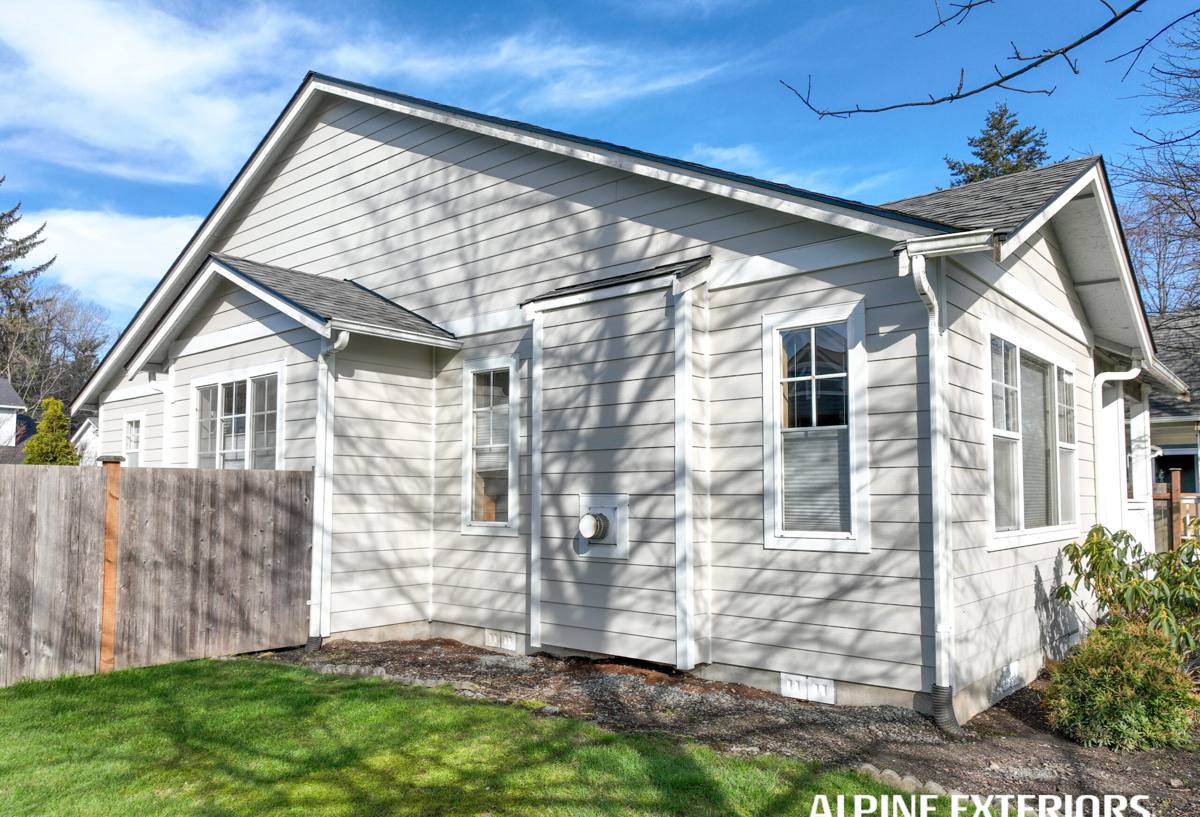
Signs Your Siding Needs a Repair Call
Some siding problems are obvious. Others are quiet and get worse for months before anyone notices. Here's what we look for, and what you should keep an eye on between now and your next paint or inspection cycle:
- Soft or spongy spots when you press on the siding, especially near the bottom courses or below windows
- Paint that's bubbling, peeling, or alligatoring in patches rather than evenly across a wall
- Visible gaps at seams, corners, or where siding meets trim, window frames, or the foundation
- Warping, cupping, or boards that no longer sit flat against the wall
- Dark streaking or persistent moss and algae growth concentrated in one area, which often points to a moisture source rather than just shade
- Rust staining running down from nail heads or metal flashing
- Soft trim boards, sills, or corner boards, which usually mean water has been getting behind the siding for a while
Any one of these on its own might be minor. Several showing up in the same area, or a soft spot that's spreading, usually means water has already gotten past the surface and is working on the sheathing or framing underneath.
What a Correct Repair Actually Involves
A siding repair that only replaces what's visibly damaged and caulks the edges is a temporary fix, not a real repair. In a climate like Blaine's, that approach tends to fail again within a year or two because it never addresses why the water got in.
Diagnosing the Cause, Not Just the Symptom
Before we replace a single board, we want to know why that section failed. Was it a flashing gap above a window? A failed caulk joint that let wind-driven rain track sideways? A missing or torn weather-resistive barrier behind the siding? Repairing the surface without fixing the entry point just buys time.
Checking What's Behind the Siding
Once damaged siding is pulled, we check the sheathing and weather barrier underneath. If there's rot in the sheathing or framing, that has to be dealt with before new siding goes back on — covering rotten wood with a fresh piece of siding just hides the problem and lets it keep spreading.
Proper Flashing and Water Management
Most siding failures we see in Grandview trace back to flashing detail, not the siding material itself. Window heads, deck ledgers, and horizontal trim boards all need flashing that sheds water outward and down, not detail that lets it collect and soak in. A repair that skips this step is patching the symptom while leaving the cause in place.
Matching Materials and Finish
Where the existing siding is still sound, we match profile and, where possible, finish so the repair blends rather than standing out as an obvious patch. Where the surrounding material is failing more broadly, we'll tell you honestly rather than keep chasing individual boards.
Repair or Replace? An Honest Look
Not every siding problem needs a full re-side, and we're not going to tell you it does. But there's a point where repeated repairs cost more over time than doing the job once, correctly. Here's how we think through it:
| Situation | Usually a Repair | Usually Points to Replacement |
|---|---|---|
| Damage location | Isolated to one wall or a few boards | Spread across multiple elevations |
| Underlying sheathing | Sound once opened up | Soft, delaminating, or rotted in more than one spot |
| Cause of failure | A single identifiable flashing or caulk gap | Systemic issue — no weather barrier, widespread butt-joint failure, product-level moisture problems |
| Age and material | Siding is otherwise in good condition | Siding is near end of life or a product prone to ongoing moisture issues |
| Repair history | First repair in this area | Same section has already been patched once or twice before |
If your home is a good candidate for repair, we'll say so and do the work. If we open up a wall and find the underlying problem is bigger than one section, we'll walk you through what we found and what your real options are — including doing nothing further right now if that's the honest answer.
How the Material Behind the Repair Matters
What we're patching into matters as much as how we patch it. Older vinyl siding is prone to warping and cracking in cold snaps and doesn't take paint, which limits repair options to swapping panels. Wood and primed spruce siding are the most vulnerable to the rot issues Grandview's moisture and moss season create, especially where paint maintenance has lapsed. LP SmartSide and similar engineered wood products hold up reasonably well when the factory edge seal and caulking schedule are kept current, but once moisture gets past a compromised edge, the strand-based core can swell and won't return to its original shape — a patch there is a cosmetic fix, not a structural one.
This is part of why we install James Hardie fiber cement exclusively when a wall needs full replacement rather than a repair. Fiber cement doesn't absorb and swell the way wood-based products do, and it isn't vulnerable to the cracking and UV brittleness that eventually shows up in vinyl. If your repair area is small and isolated, we'll fix what's there in the existing material. If we're looking at a section that needs to come off entirely, we'll explain honestly why we'd recommend rebuilding it in Hardie rather than replacing like-for-like.
Our Repair Process
- Inspection and diagnosis. We look at the visible damage, check surrounding areas for related issues, and identify the likely water entry point before quoting anything.
- Opening the affected area. Damaged siding comes off so we can see the sheathing, framing, and weather barrier condition underneath — not guess at it.
- Addressing the cause. Flashing, weather barrier, or caulk detail gets corrected so the same failure doesn't recur in the same spot.
- Repairing structural damage. Any soft or rotted sheathing or framing gets replaced before new siding goes back on.
- Reinstalling and finishing. New or matched siding goes back on with correct fastening and joint detail, then finish work to blend the repair.
- Walkthrough. We show you what we found and what we did, including photos of anything that was hidden behind the old siding.
Why Local Experience in Grandview Matters
A repair crew that's worked homes throughout Blaine and Whatcom County knows which elevations take the worst of the wind and salt spray, where moss builds fastest, and which older construction details in this area tend to be the weak points — things like flashing practices that were common years ago but don't hold up to this climate long-term. That's the difference between a repair that's guessing and one that's informed by what actually fails on homes like yours, in this specific weather.
It also means we're not learning on your house. We've seen how salt air and driving rain interact with different siding materials and details over multiple seasons, not just in a single visit.
What to Check Before You Hire Anyone for a Siding Repair
- Do they explain what caused the damage, or just quote a price to replace boards?
- Will they check and repair the sheathing and weather barrier if needed, not just the visible siding?
- Are they licensed and insured, and willing to show proof without you asking twice?
- Do they give you an honest opinion on repair versus replacement, including telling you when a repair is enough?
- Will they show you what they found once the old siding is off, before it's covered back up?
Keeping Repaired Siding From Failing Again
Once a repair is done right, a little upkeep keeps it that way. Rinse off moss and algae buildup before it spreads, especially on shaded or north-facing walls where Whatcom County's damp winters give it the most time to take hold. Keep gutters clear so water isn't overflowing directly onto siding below. Check caulk joints around windows and trim once a year, since that's usually the first thing to fail and the cheapest thing to catch early. And take a look at any area that's been repaired before after the first heavy storm season, just to confirm the fix is holding.
If you're seeing soft spots, peeling paint, or gaps in your siding anywhere in Grandview, we're glad to take a look and give you a straight answer on what it needs. The estimate is free, there's no pressure to do more than the job actually calls for, and you can request one through the form below.