 Blaine
 Why Siding Installation Near Bellingham Is Different
Homes around Bellingham and Blaine sit in one of the more demanding climates in Washington for exterior siding, even by Pacific Northwest standards. You're dealing with salt-laden air off the water, wind-driven rain that hits walls sideways instead of falling straight down, and a moss season that can stretch from October well into May. None of those factors are dramatic on their own, but stacked together over years, they expose sloppy siding work fast. A installation that would hold up fine in a drier inland climate can start showing problems in Whatcom County in half the time.
That's the real argument for getting siding installation right the first time in this area. It's not about picking a fancier material for its own sake — it's about matching the product and the installation method to what the local climate actually does to a wall system, year after year.
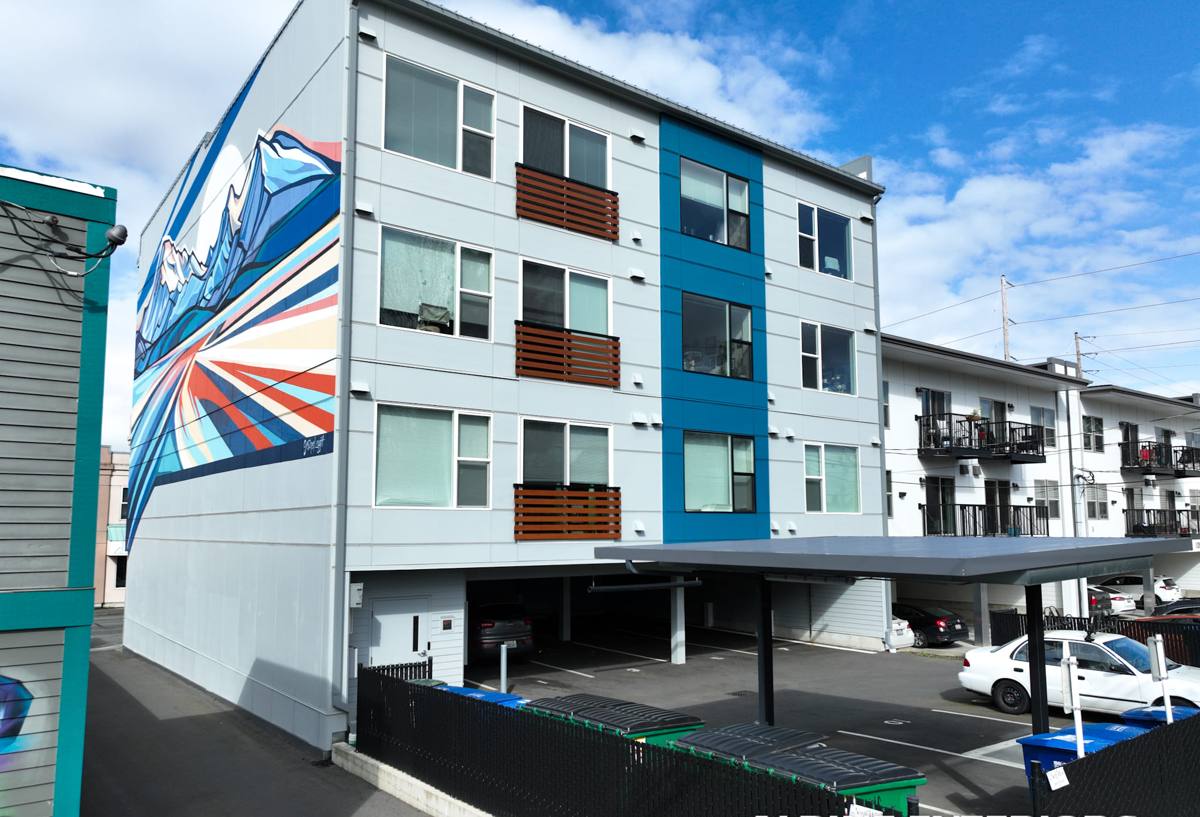
What Salt Air, Driving Rain, and Moss Actually Do to a Wall
Salt Air
Proximity to Bellingham Bay and the Salish Sea means airborne salt settles on exterior surfaces and works into any exposed fastener, seam, or crack in a coating. Salt accelerates corrosion in metal flashing and fasteners, and it can degrade certain paint and coating systems faster than manufacturers' standard weathering estimates assume. Siding and trim near the water need corrosion-resistant fasteners and a factory finish built to handle that exposure — not a field-applied coating that was never tested for it.
Driving Rain
Wind off the water doesn't just drop rain on a roof — it pushes it horizontally into wall assemblies. That means water finds its way behind siding at butt joints, around windows, and at any penetration that wasn't flashed correctly. A siding installation that relies on caulk alone to keep water out, instead of proper flashing and drainage, is a maintenance problem waiting to happen in a climate like this one.
Moss Season
Cool, damp, low-light conditions for much of the year give moss and algae a long runway to establish themselves on north-facing walls, under eaves, and anywhere airflow is restricted. Moss holds moisture against the siding surface far longer than open air would, which is exactly the condition that rots wood-based products and stresses coatings on lesser materials. Siding that can't tolerate sustained dampness without swelling or breaking down is a poor match for this region.
What Correct Siding Installation Actually Involves
A siding job done to spec in this climate is a system, not just a layer of panels. Every piece has a job:
- A continuous water-resistive barrier (WRB) behind the siding, lapped correctly so water sheds outward, not inward
- Properly integrated flashing at every window, door, and penetration — installed before the siding, not caulked in afterward
- A drainage gap or rainscreen strategy so any water that does get behind the siding can dry out instead of sitting against the wall
- Corrosion-resistant, manufacturer-specified fasteners driven at the correct depth and spacing
- Correct clearance between the siding's bottom edge and grade, decks, roofs, and hardscaping
- Factory-applied finish carried through with matching, compatible caulks and sealants at joints
Skip any one of these and the wall assembly has a weak point. In a climate that sends rain sideways and keeps things damp for months at a stretch, weak points get found.
Why We Install Only James Hardie Fiber Cement
We standardized on James Hardie fiber cement siding for every home we work on, including in Bellingham and Blaine, and we don't install vinyl, LP SmartSide, or other fiber cement brands. That's a deliberate call, not a marketing line. Fiber cement is non-combustible and dimensionally stable, so it doesn't expand and contract with moisture the way wood-based products do — a real advantage in a climate where humidity rarely lets up. Hardie's ColorPlus factory finish is baked on under controlled conditions and backed by a real finish warranty, which matters when salt air and UV are working against a coating year-round. And Hardie's HZ5 product line is engineered specifically for wetter, harsher climates like ours, with moisture and freeze-thaw performance that generic siding lines aren't built around.
We're not going to tell you every other product is worthless — vinyl and engineered wood both have legitimate uses and honest trade-offs. But once you've seen what damp, salty, moss-prone conditions do to siding that wasn't built for it, it's hard to recommend anything else for a permanent installation on a Whatcom County home.
Our Installation Process
- Assessment: We walk the exterior, check existing siding and sheathing condition, and identify moisture-prone areas — north walls, low-clearance sections, and anywhere trim or flashing already shows wear.
- Tear-off and sheathing check: Old siding comes off and we inspect the sheathing underneath for rot or soft spots before anything new goes up. Problems found here get fixed, not covered.
- Water-resistive barrier and flashing: A new WRB goes on with correct laps, and flashing is integrated at every window, door, and penetration before siding installation starts.
- Drainage plane: Depending on the wall assembly, we build in a drainage gap so bulk water and vapor have somewhere to go instead of sitting against the siding.
- Hardie panel or plank installation: Panels are fastened per James Hardie's published specifications — fastener type, spacing, and clearance are not areas where we improvise.
- Trim, caulking, and finish details: Compatible sealants at joints, proper clearance at grade and roof lines, and a final walk-through before we call it done.
Signs Bellingham and Blaine Homeowners Should Watch For
If your current siding is showing any of the following, it's worth having someone look at the wall assembly, not just the surface:
- Persistent moss or algae growth that returns quickly after cleaning
- Soft or spongy spots when you press on siding, especially near the bottom courses
- Paint or coating that's peeling, chalking, or bubbling faster than expected
- Visible gaps or cracked caulk at butt joints and trim
- Rust streaking from fasteners or flashing
- Warping, cupping, or separation at seams
Any of these can mean water has already been getting behind the siding for a while — the surface damage is usually the last thing to show up, not the first.
Cost Factors for Siding Installation in This Area
| Factor | Why It Matters Here |
|---|---|
| Home size and wall complexity | More corners, windows, and penetrations mean more flashing and detail work, which drives labor time |
| Existing sheathing condition | Rot from prior water intrusion, common on older homes near the water, adds repair scope before siding can go on |
| Product line selected | HZ5-rated Hardie products cost more than standard lines but are built for this exact climate |
| Drainage plane requirements | Homes with a history of moisture issues may need added rainscreen detailing, which adds material and labor |
| Access and site conditions | Steep lots, mature landscaping, or tight setbacks near the water can slow staging and installation |
| Trim and finish scope | Matching existing trim details or upgrading trim packages affects both material and labor cost |
Why Hiring a Crew That Already Works This Area Matters
Siding installation isn't just about following a manufacturer's manual — it's about knowing how that manual needs to be applied to the specific conditions a wall will face. A crew that regularly works in Bellingham and Blaine already knows which wall orientations need extra attention for moss, how much clearance really matters near the water, and where driving rain tends to cause the most trouble on local home styles. That's the kind of judgment that doesn't come from a spec sheet alone — it comes from having done the work here, repeatedly, and having gone back to see what held up and what didn't.
When you're vetting a contractor for a siding project, ask directly about their experience with fiber cement installation in coastal Whatcom County conditions, how they handle flashing and drainage detailing, and whether they stand behind both labor and product with real warranty coverage. Vague answers on any of those are worth taking seriously as a red flag.
Maintenance After Installation
Correctly installed Hardie siding is low-maintenance, not zero-maintenance. A periodic rinse to knock down moss and algae buildup, an annual visual check of caulking and trim, and prompt attention to any landscaping that's crowding the wall and blocking airflow will go a long way. Because ColorPlus finish is factory-applied and warrantied, you're not signing up for repainting on the schedule that field-painted siding usually demands — but a quick look at the exterior once or twice a year is still worth the time in a climate this damp.
Get a Straightforward Estimate
If you're weighing a siding project on a home in Bellingham, Blaine, or elsewhere in Whatcom County, we're glad to take a look and give you an honest read on what your wall assembly actually needs. The estimate is free, there's no pressure, and you'll get a clear answer about scope and cost before you decide anything.