 Blaine
 Semiahmoo's Waterfront Exposure Is Not Average Siding Weather
Homes along the Semiahmoo waterfront sit in one of the more demanding exposure zones in Whatcom County. The siding on a house here isn't just dealing with rain — it's dealing with salt-laden wind coming off the bay, near-constant humidity, and a stretch of gray, wet months long enough to grow moss on just about anything that holds still. Siding that would hold up fine on an inland lot in Ferndale or Lynden can fail years early once it's facing the water in Semiahmoo.
That combination — salt air, driving rain, and a long moss season — is exactly why we treat a Semiahmoo siding job differently than a standard re-side. The material has to resist corrosion and moisture intrusion at the same time it's shedding wind-driven rain, and it has to do that for decades, not just look good the first summer.
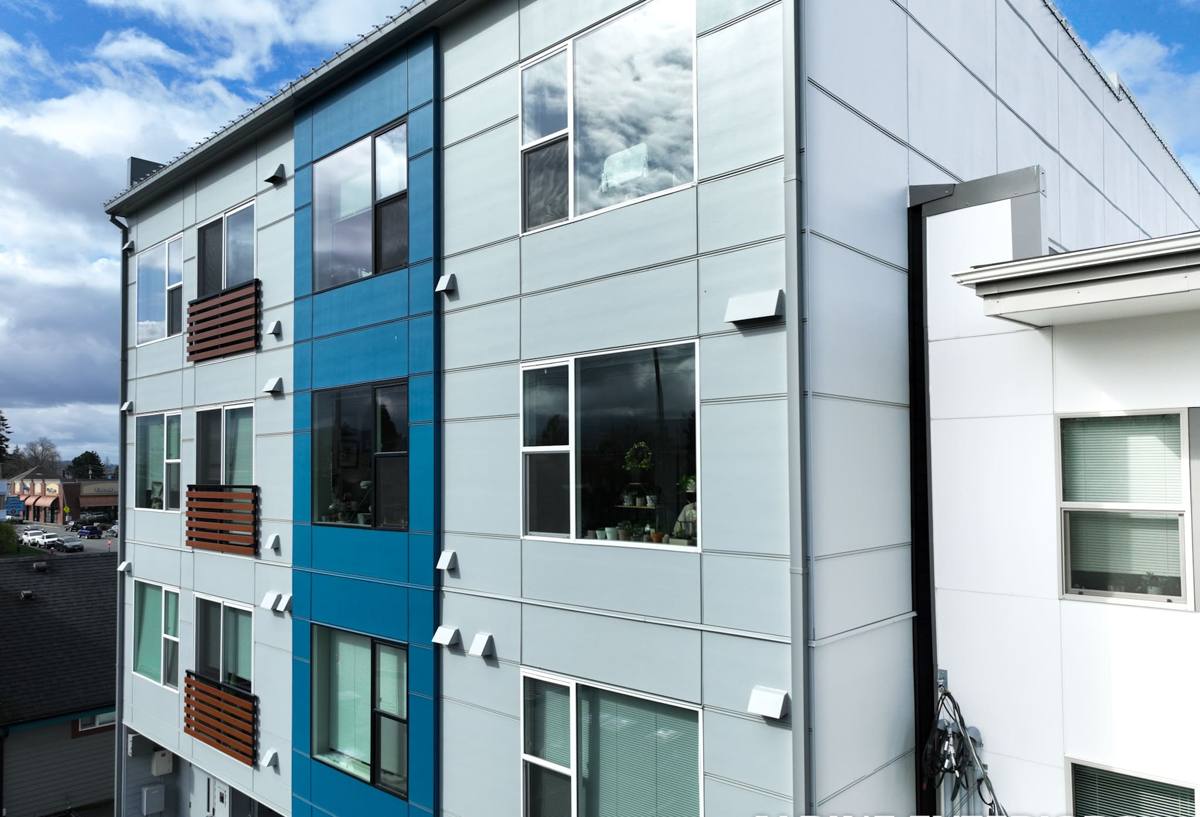
Why Fiber Cement Is the Right Call for This Exposure
We install James Hardie fiber cement siding exclusively, and nowhere does that decision matter more than on a waterfront lot. Fiber cement is non-combustible, dimensionally stable, and doesn't absorb and swell with moisture the way wood-based products can. For a home taking on salt spray and driving rain off Semiahmoo Bay, that stability is the difference between siding that stays flat and tight at the seams and siding that starts cupping, checking, or delaminating at the edges within a few winters.
HardieZone and Why It Was Built for This Climate
James Hardie engineers its siding by climate zone under its HardieZone system, and the Pacific Northwest falls into the HZ5 category — the zone built around moisture exposure, moss and mildew resistance, and freeze-thaw cycling rather than extreme heat. That's a meaningful distinction. A product engineered for a dry, high-UV climate doesn't perform the same way here, and it's part of why we don't substitute in siding lines that weren't designed with a wet marine climate in mind.
ColorPlus Finish and Salt Air
Factory-applied ColorPlus finish matters more on a waterfront home than almost anywhere else we work. Field-painted siding is more exposed to fading and finish breakdown when it's regularly hit with salt spray and UV reflecting off open water. The baked-on ColorPlus process is more resistant to that combination, and it comes with its own finish warranty — one less thing for a homeowner to have to repaint every few years on a house that's already hard enough to access from a ladder near the water.
What a Correct Installation Actually Involves Here
Fiber cement is only as good as the installation behind it, and in a high-exposure location like Semiahmoo, the details that get skipped on an easier job are exactly the details that cause problems. A correct installation follows the manufacturer's fastening and clearance specifications to the letter, not "close enough."
- Correct ground, roof, and deck clearances so splash-back and standing moisture can't wick into the bottom edge of the siding
- Stainless steel or coated corrosion-resistant fasteners, sized and spaced to Hardie's published pattern — not whatever was left over from the last job
- A proper water-resistive barrier and drainage plane behind the siding, so any moisture that gets past the cladding has somewhere to go
- Correctly flashed windows, doors, and roof-to-wall intersections, since these are the first points where driving rain finds a way in
- Factory-cut and factory-primed edges wherever possible, with field cuts sealed per spec rather than left raw
- Caulking and joint treatment sized for real-world movement and wind-driven rain, not just a bead run down every seam
None of this is exotic. It's simply what the manufacturer's installation manual calls for. The problem on waterfront homes is that skipped details show up faster — a gap that would take ten years to cause a problem on a sheltered inland wall can cause one in three or four years when it's facing open water and salt-laden wind.
Moss, Algae, and the Long Wet Season
Whatcom County's wet season runs long, and Semiahmoo's proximity to open water keeps humidity elevated even between rain events. That's a growing environment moss and algae are happy to take advantage of, especially on north-facing walls, shaded elevations, and anywhere gutters or downspouts are dumping water where it shouldn't be.
Ventilation and Drainage Behind the Cladding
A rainscreen or properly vented drainage gap behind the siding lets trapped moisture dry out instead of sitting against the back of the panel, which is where mold and rot problems start even when the face of the siding looks fine. On a home this exposed to sustained damp conditions, that airspace isn't optional — it's part of what keeps the wall assembly healthy for the life of the siding.
Grading and Gutter Details Matter As Much As the Siding Itself
We also look at how water moves around the house before we ever touch the siding — poor grading, undersized gutters, or downspouts discharging too close to the foundation will keep the lower courses of siding wet longer than they should be, accelerating moss growth and staining no matter how good the material is.
How Fiber Cement Compares in This Environment
| Factor | Vinyl | Cedar / Untreated Wood | James Hardie Fiber Cement |
|---|---|---|---|
| Salt air resistance | Can become brittle and discolor faster near open water | Vulnerable to salt-accelerated weathering and checking | Non-combustible, dimensionally stable material designed to hold up under coastal exposure |
| Moisture / rot resistance | Doesn't rot, but seams and J-channels can trap water | Prone to rot and swelling without diligent, ongoing maintenance | Engineered to resist moisture-driven swelling and rot when installed to spec |
| Moss / algae resistance | Surface can host growth in shaded, damp areas | Absorbent surface is especially prone to moss and mildew | Denser surface resists moss adhesion better; factory finish sheds growth more easily |
| Maintenance over time | Low, but repairs are visually obvious and hard to color-match | High — regular sealing, staining, or painting required | Low when installed correctly; factory finish reduces repaint cycles |
| Fire resistance | Melts and deforms under heat | Combustible | Non-combustible material |
This is the same comparison that led us to standardize on James Hardie in the first place, and it holds even more weight on an exposed waterfront lot like Semiahmoo, where every weak point in a material gets tested harder and sooner.
Our Process for a Semiahmoo Siding Project
- On-site assessment — we walk the exterior, check for existing moisture damage, evaluate grading and drainage, and look at wall orientation relative to prevailing wind and sun exposure
- Tear-off and substrate check — old siding comes off and we inspect sheathing for rot or hidden moisture damage before anything new goes up
- Weather barrier and drainage plane — housewrap or building paper and a drainage gap go in correctly, repairing or upgrading as needed
- Hardie installation to manufacturer spec — correct clearances, fastening pattern, and flashing at every penetration and transition
- Trim, caulking, and finish work — detailing sized for real wind-driven rain, not just a cosmetic bead
- Final walkthrough and warranty registration — we confirm the installation qualifies for Hardie's manufacturer warranty before we consider the job done
What Affects the Cost of a Semiahmoo Siding Job
| Cost Factor | Why It Matters |
|---|---|
| Home size and wall area | More square footage means more material and labor, straightforwardly |
| Existing siding removal | Tear-off of old wood, vinyl, or damaged material adds time before installation can begin |
| Trim and architectural detail | Multiple gables, dormers, or accent trim require more precise cutting and flashing work |
| Exposure level | Waterfront-facing elevations often need extra attention to flashing and clearances compared to sheltered walls |
| Substrate condition | Rot or moisture damage found during tear-off may require sheathing repair before new siding goes on |
| Access and staging | Steep lots, limited driveway access, or waterfront setbacks can affect scaffolding and material staging |
We give straightforward, written estimates after seeing the actual house — not a generic per-square-foot number that ignores what your specific home and lot need.
Signs Your Semiahmoo Home May Need New Siding Soon
- Green or black staining that keeps returning within a season or two of cleaning
- Soft spots, bubbling, or visible warping, especially on walls facing the water or prevailing wind
- Paint or finish that's peeling or chalking faster than it should, particularly on the windward side
- Gaps opening up at seams, corners, or trim boards
- Visible rot or discoloration around window and door trim
- Rising energy bills that suggest the wall assembly behind the siding isn't performing the way it should
Why Hiring a Crew That Already Works Semiahmoo Matters
Siding installation isn't one-size-fits-all, and a crew that mostly works sheltered inland neighborhoods won't automatically know which details fail first on a home facing open water. We've worked on homes along this stretch of Blaine's waterfront and know where moss tends to establish first, which elevations take the worst of the wind-driven rain, and where drainage problems tend to originate on these lots. That local pattern recognition is worth more than a generic installation crew that's never had to account for salt air in their fastener choice or flashing details.
It also means we're familiar with the permitting and inspection process through Whatcom County and the City of Blaine, so there are no surprises partway through the project.
If your Semiahmoo home's siding is showing its age, or you're planning ahead for a project, we're happy to walk the property and give you a straightforward, no-pressure estimate — including what we'd actually recommend and why. Fill out the form below to get started.