 Blaine
 Fiber Cement Siding, Built for Birch Bay Specifically
Birch Bay sits right on the water in northern Whatcom County, close enough to Blaine that it's part of our regular route. That waterfront position means homes here take a steadier dose of salt-laden air, more wind-driven rain off the water, and a moss season that can run most of the year on shaded walls. Those three conditions together put more stress on siding than a lot of homeowners expect, and they're exactly why the siding choice and the installation details matter more in Birch Bay than they would a few miles inland.
This page is about one thing: fiber cement siding for Birch Bay homes specifically, what the climate here asks of it, and what a correct installation actually involves. We install James Hardie fiber cement exclusively, and we work Birch Bay regularly enough to know how this stretch of coastline treats an exterior wall over time.
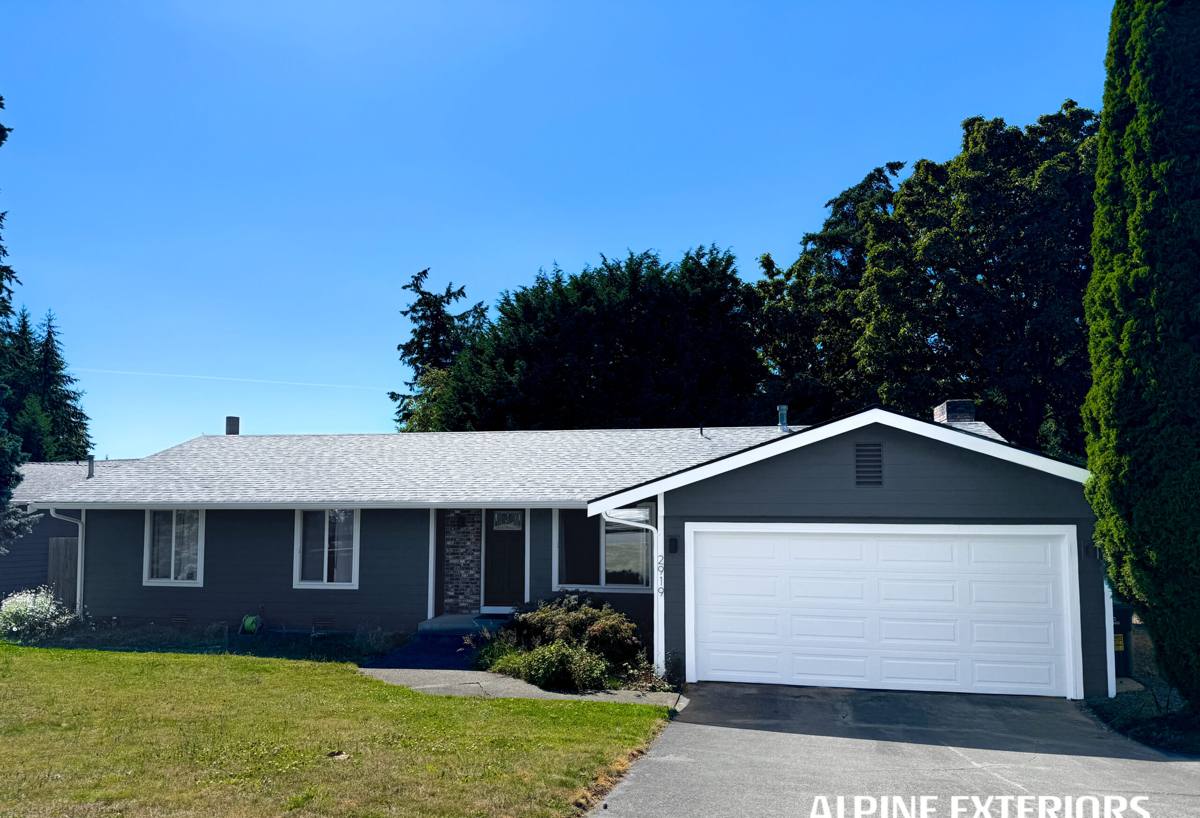
What Birch Bay's Climate Asks of a Siding System
Salt Air and Corrosion
Being close to the water means more direct salt exposure than towns set further inland. Salt accelerates corrosion on fasteners, flashing, and any exposed metal trim, and it breaks down lower-quality paints and finishes faster than a dry climate would. On a siding job, that means fastener grade and finish quality aren't cosmetic choices — they're the difference between siding that looks the same in year fifteen and siding that's already showing rust streaks and chalking.
Wind-Driven Rain at the Wall Assembly
Storms coming off the water don't just fall straight down. Wind pushes rain sideways into wall assemblies, seams, and trim joints, which is a heavier and more persistent moisture load than a simple rainfall total suggests. Siding that isn't detailed for sideways-driven water — meaning correctly lapped house wrap, sealed joints, and proper drainage behind the panels — will eventually let moisture behind it, no matter how good the surface material is.
A Moss Season That Doesn't Let Up
Mild temperatures and near-constant moisture add up to a long moss and mildew season across this part of Whatcom County, and it shows up earliest on shaded, north-facing walls. Any siding material with even a little surface porosity becomes a growth surface over time, holding moisture against the substrate underneath. That's a maintenance issue on its own, and on lower-quality materials it can also be an early sign of moisture getting deeper into the wall.
Why Fiber Cement, and Specifically James Hardie
We used to install a wider range of siding products. We stopped, and the change came directly from what we kept finding on tear-offs and service calls in coastal, high-moisture areas like Birch Bay — not from a supplier deal or a sales angle.
- Non-combustible core: Fiber cement doesn't feed a fire the way wood-based siding products can, which matters for both safety and insurance considerations.
- Factory-applied ColorPlus finish: The color is baked on under controlled factory conditions instead of brushed on in the field, so it holds up longer against fading, chalking, and salt-air exposure than site-applied paint.
- Climate-engineered HZ formulation: Hardie's HZ5 product line is engineered for regions with sustained moisture and freeze-thaw cycling, which describes waterfront Whatcom County well.
- Dimensional stability: Fiber cement doesn't swell, cup, or warp the way wood-based or engineered wood siding can after repeated wetting off the water.
- Strong transferable warranty: Hardie backs the product with one of the stronger warranty structures in the industry, provided the installation follows their published spec.
We won't install LP SmartSide, vinyl siding, Cemplank, Allura, primed spruce, or cedar. Each has a legitimate place in the market, and plenty of homeowners are happy with them in less demanding settings. But on a shoreline exposure like Birch Bay, we made a professional call to install one system we fully stand behind rather than offer something cheaper that quietly shifts long-term maintenance risk onto the homeowner.
The Hardie Product System
"Fiber cement siding" covers more than one product, and the right choice depends on the home's style and how much of the wall is exposed to direct weather.
Lap, Panel, and Shingle Profiles
HardiePlank lap siding is the most common choice for traditional home styles and gives that classic horizontal reveal. HardiePanel works well for modern or mixed-material facades where a smooth or textured vertical panel fits the design. HardieShingle replicates a shingled look for homes that want that texture without the moisture sensitivity of real wood shingles. All three use the same core material and the same HZ5 formulation appropriate for this climate — the difference is aesthetic, not performance.
Trim, Soffit, and Fascia
Trim boards, soffit, and fascia matter as much as the field siding itself, especially in a wet climate. Hardie trim resists the same swelling and rot that wood trim is prone to at corners, window casings, and eaves — spots that take on more water than a flat wall section and are usually the first place damage shows up on a poorly built exterior.
| Product Line | Typical Use | Why It Fits Birch Bay |
|---|---|---|
| HardiePlank lap siding | Traditional horizontal siding, most common choice | HZ5 formulation resists sustained coastal moisture |
| HardiePanel | Modern facades, accent walls, mixed-material designs | Dimensionally stable under wind-driven rain exposure |
| HardieShingle | Shingled-look sections without real wood's upkeep | Doesn't absorb and release moisture like cedar shingles |
| Trim, soffit, fascia | Corners, window casings, eaves, roof edges | Resists rot at the highest-exposure points on the wall |
What Correct Installation Looks Like on This Coastline
Fiber cement only performs the way it's engineered to when it's installed to Hardie's published spec, and in a place like Birch Bay, a few details matter more than they would in a milder climate.
- Rain screen or drainage gap: A small cavity behind the siding lets any moisture that does get past the surface drain and evaporate instead of sitting against the sheathing.
- Correct fastener type and spacing: Corrosion-resistant fasteners placed exactly where Hardie specifies, not wherever is convenient — wrong fastener choice is one of the more common causes of early failure we see on tear-offs near the water.
- Properly lapped house wrap and flashing: Every seam and penetration needs to shed water downward and outward, particularly on walls that face the water directly.
- Sealed butt joints and factory-mitered trim: Open or poorly sealed joints are where salt-laden moisture finds its way behind the siding first.
- Proper clearance from grade and roof lines: Siding installed too close to the ground or a roof plane stays wet longer and invites the moss and rot problems this climate already encourages.
None of that is exotic — it's the manufacturer's own installation spec, followed consistently on the parts that are hardest to see once the job is buttoned up.
Color and Finish Choices Near the Water
ColorPlus finish is available across the full Hardie color range, and the factory-baked coating matters more here than in a drier climate — site-applied paint near salt air tends to chalk and fade faster than most homeowners expect. Darker colors run slightly hotter in direct sun and can show dust or salt residue differently than lighter tones, which is worth thinking through on a home with significant water-facing exposure. There's no wrong choice from a durability standpoint since ColorPlus performs consistently across the palette, so color is really a style decision once the underlying product and installation are handled correctly.
Cost Factors for a Birch Bay Fiber Cement Project
| Factor | What Drives It | Birch Bay Consideration |
|---|---|---|
| Tear-off vs. new construction | Removing and disposing of existing siding adds labor and time | Substrate repair if moisture has already gotten behind old siding |
| Home size and wall complexity | Square footage, number of corners, dormers, and trim details | More joints and transitions mean more places to detail correctly |
| Product line selection | Lap, panel, and shingle profiles carry slightly different material costs | All use the same HZ5 formulation, so performance doesn't vary by profile |
| Drainage and flashing detail | Rain screen installation and flashing complexity add labor time | Not optional this close to the water — skipping it shortens the siding's life |
These are general drivers, not a quote. Every Birch Bay property sits at a slightly different distance from the water and under different tree cover, so we walk the house before putting a real number on the work.
Our Process for a Birch Bay Siding Project
We start with an on-site look at the existing siding and wall assembly, checking specifically for how the current system has handled moisture and salt exposure over time. From there we put together a clear, written scope covering product selection, tear-off or overlay, and the flashing and drainage details the job needs — before any contract is signed. During the install, the rain screen, fastener, and flashing details described above are standard practice on every job, not optional upgrades quoted separately.
Why Hiring a Crew That Already Works Birch Bay Matters
A contractor who works this stretch of coastline regularly already knows how salt air, wind exposure, and prolonged dampness behave differently here than they do even a few miles inland. That shows up in small decisions on install day: which walls need extra drainage attention, how tight to run fastener spacing near corners, where flashing needs a second look. A crew unfamiliar with this specific exposure can install a good product and still leave gaps in the details that only show up after a few wet winters.
Before Hiring for Siding Work in Birch Bay
- Ask what siding product they install and why, and get their answer in plain terms, not a sales script
- Confirm current Washington contractor licensing and active liability insurance
- Ask specifically how they detail rain screen drainage and flashing for wind-driven rain off the water
- Ask how they handle substrate repair if moisture damage turns up once old siding comes off
- Get a clear, written scope of work, including product line and finish, before signing anything
If you're weighing fiber cement siding for a Birch Bay home, we're glad to walk the property with you and give an honest read on what it needs. Reach out below for a free, no-pressure estimate.