 Blaine
 Metal Roofing for the Sumas Area's Real Weather
Homes in and around Sumas deal with a specific combination of conditions: salt-laden marine air moving in off the water, long stretches of driving rain in the fall and winter, and a moss season that can run most of the year in shaded spots. That combination is hard on roofing materials that aren't matched to it. A roof that performs well in a dry inland climate can struggle here, and a lot of the roofing problems we get called out for trace back to a mismatch between the material and the actual environment it's sitting in.
Metal roofing has become a popular answer for homeowners in this part of Whatcom County because it handles the two things that cause the most trouble locally — sustained moisture and biological growth — better than most alternatives, provided it's installed correctly. That "provided it's installed correctly" part matters. Metal roofing is not forgiving of shortcuts the way some other materials are, which is a big part of why the installation process deserves as much attention as the product itself.
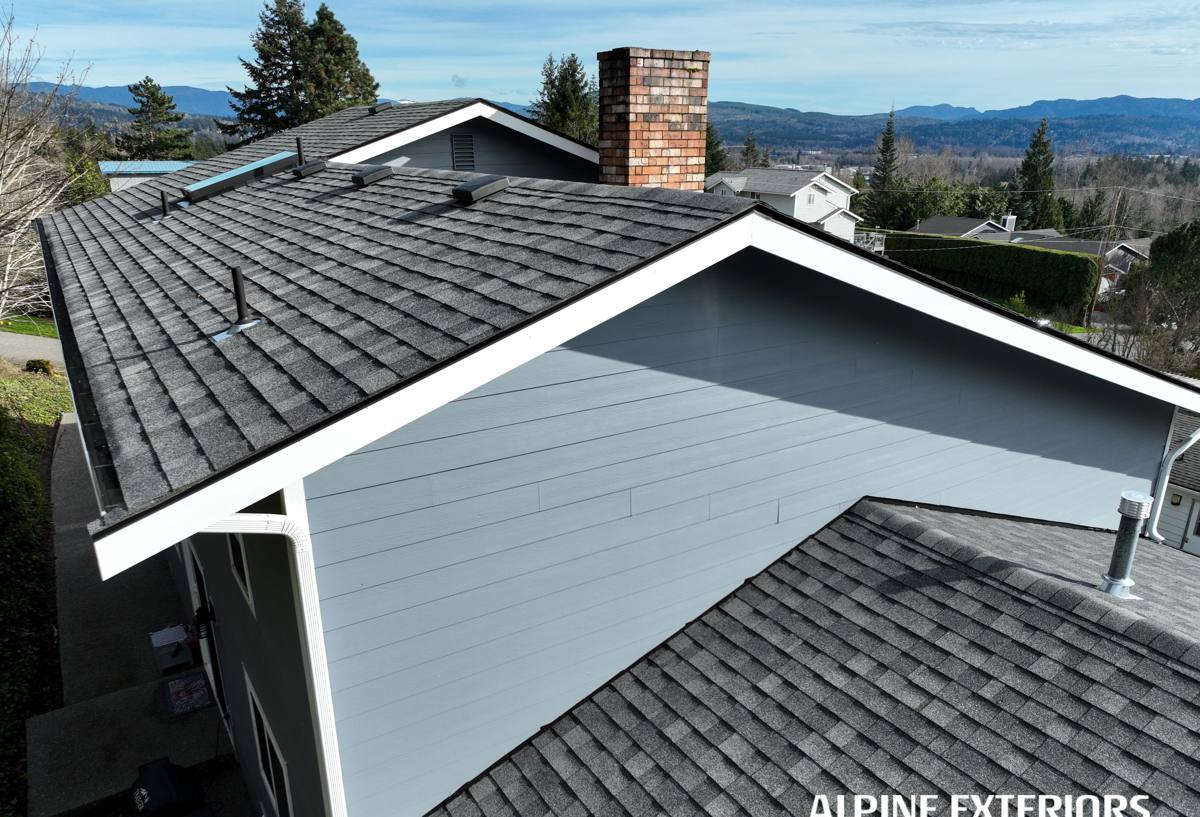
What This Climate Actually Does to a Roof Over Time
It helps to understand the specific failure patterns we see on roofs in this area before talking about how metal roofing addresses them.
Moisture Load
Rain here isn't just frequent, it's often prolonged — days of steady, low-intensity rainfall rather than short heavy storms. That means roofing materials and underlayment stay wet for extended periods. Any weak point in the water-shedding system gets tested repeatedly over a season instead of just during isolated storms.
Moss and Organic Growth
Shaded roof sections, north-facing slopes, and areas under tree cover stay damp long enough for moss and algae to establish. Moss holds moisture against the roof surface, works into seams and laps, and can lift shingles or shorten the life of some coatings if left unchecked.
Salt Air and Corrosion Exposure
Proximity to the water means airborne salt is a real factor for fasteners, flashing, and any exposed metal components. Untreated or poorly rated hardware corrodes faster here than it would further inland, which is one reason fastener and flashing choice matters as much as the roofing panel itself.
Panel Types: What We're Actually Choosing Between
"Metal roofing" covers a range of products, and the right one depends on the home, the roof pitch, and the budget. Here's how the common options compare for this climate:
| Panel Type | Best For | Local Climate Fit |
|---|---|---|
| Standing seam (concealed fastener) | Homeowners wanting the longest service life and cleanest look | Excellent — no exposed fasteners for moisture or salt to attack over time |
| Exposed-fastener panels | Budget-conscious projects, outbuildings, secondary structures | Good if installed with proper gasketed, corrosion-rated fasteners and re-checked periodically |
| Stone-coated steel | Homeowners wanting a shingle or shake profile in metal | Good — durable, but coating detail at cuts and penetrations needs care |
| Aluminum panels | Homes closer to the water or with higher salt exposure | Very good — naturally corrosion-resistant, doesn't rust |
For most homes in the Sumas service area, we lean toward standing seam or aluminum when salt exposure is a real factor, since the long-term maintenance burden is lower. That said, the right choice always depends on the specific roof, the budget, and what the homeowner actually wants to maintain over the years — we'll walk through the trade-offs honestly rather than pushing one product for every job.
What a Correct Metal Roof Installation Involves
The panels get most of the attention, but the parts that actually determine how a metal roof performs in this climate are mostly hidden once the job is done.
Underlayment
Given how much sustained rain this area gets, we use a synthetic or high-temp ice-and-water underlayment as a full second line of defense, not just a code-minimum layer. This matters most at eaves, valleys, and any low-slope transitions where water sits longer.
Flashing and Penetrations
Chimneys, vents, skylights, and wall transitions are where the majority of roof leaks originate — on metal roofs and every other type. Flashing has to be formed to fit the specific roof detail and integrated with the underlayment correctly, not just caulked and hoped for.
Fasteners and Hardware
Given the salt air factor, we specify corrosion-rated fasteners and matched hardware rather than whatever is cheapest at the supply house. This is a small line item on an estimate that has an outsized effect on how the roof looks and performs a decade in.
Ventilation
Metal roofs need proper attic and ridge ventilation to manage condensation, especially in a climate with this much ambient moisture. Skipping or under-sizing ventilation is one of the more common corners cut on lower-bid jobs, and it shows up later as moisture damage that has nothing to do with the roofing material itself.
Mistakes We See on Existing Metal Roofs
When we're called out to inspect or repair a metal roof that's underperforming, the cause is almost always one of the same handful of issues:
- Exposed fasteners that were never gasketed properly, or gaskets that have hardened and cracked with age
- Flashing that was caulked instead of properly formed and integrated, with the caulk now failed
- Panels fastened too tightly or too loosely, causing oil-canning or fastener backout as the metal expands and contracts
- Moss and debris allowed to build up in valleys, holding moisture against seams
- Mismatched or standard-grade hardware that's visibly corroding faster than the panels themselves
- Missing or undersized ventilation leading to condensation on the underside of the panels
Most of these are avoidable with correct installation up front, and several are catchable early with a basic annual look at the roof before they turn into interior damage.
Our Process, Start to Finish
We keep the process straightforward and don't ask homeowners to make decisions they don't have enough information for.
- On-site assessment — we look at the existing roof, note pitch, penetrations, ventilation, and any problem areas, and take real measurements rather than estimating from a distance.
- Honest product discussion — we walk through panel options, trade-offs, and a realistic cost range based on your roof, not a generic quote.
- Written estimate — clear scope of work, material specifications, and timeline, so there's no ambiguity about what's included.
- Installation — proper underlayment, flashing formed to fit, correct fastener spacing and hardware, and ventilation addressed as part of the job, not an afterthought.
- Final walkthrough — we go over the finished roof with you before calling the job done.
Cost Factors Worth Understanding
Metal roofing costs more upfront than asphalt shingles, and installed pricing in this region commonly falls somewhere in the broad range of roughly $9 to $16 per square foot, depending heavily on the factors below. Treat this as a general planning range, not a quote — your actual number depends on the specifics of your roof.
| Factor | Why It Moves the Price |
|---|---|
| Panel type | Standing seam and aluminum generally cost more than exposed-fastener steel |
| Roof pitch and complexity | Steep roofs, multiple valleys, and dormers take more labor and material |
| Tear-off vs. overlay | Removing an existing roof adds cost but is often the right call for a full inspection |
| Underlayment upgrade | Full ice-and-water coverage costs more than minimum code underlayment but performs better in this climate |
| Penetrations and flashing detail | Chimneys, skylights, and multiple vents each add labor for proper flashing |
| Ventilation work | Adding or correcting ridge and soffit ventilation adds cost but protects the investment |
Maintaining a Metal Roof in This Climate
Metal roofing is genuinely low-maintenance compared to most alternatives, but "low-maintenance" isn't "no-maintenance," especially with the moss and moisture pressure this area sees. A short annual routine keeps small issues from becoming roof-replacement issues:
- Clear debris and needles from valleys and gutters before the fall rains set in
- Check for moss or algae on shaded slopes and treat early rather than letting it establish
- Look at exposed fasteners (if applicable) for signs of corrosion or backout
- Check flashing around chimneys, vents, and skylights for any separation
- Confirm gutters and downspouts are flowing freely, since standing water at the eaves stresses flashing
- After any major windstorm, do a visual check for lifted panels or loose trim
Why a Crew That Already Works Sumas Matters
A roof is a system, and the right system for a home here isn't necessarily the right system for a roof three climate zones away. A crew that already works in and around Sumas and the broader Blaine service area has already seen how these conditions play out over years — which flashing details hold up, which fastener grades actually last against salt exposure, and which roof sections in this area tend to hold moss longest. That's not something you get from a spec sheet; it's something you get from doing this work locally and following up on it.
It also means accountability. We're not driving in from out of the area for one job — we're a crew you can reach if something needs a follow-up look after a hard winter. That local presence is part of what you're paying for when you choose who installs your roof, and it's worth asking any contractor how much local work they actually have on the ground.
If you're weighing options for a metal roof in the Sumas area, we're glad to come take a look and give you a straight, no-pressure estimate — just fill out the form below.