 Blaine
 The Climate California Creek Roofs Are Up Against
Homes along California Creek sit close enough to the water that salt-laden air is a daily fact of life, not an occasional nuisance. Combine that with Whatcom County's long wet season, driving rain off the Strait, and a moss season that can stretch from fall through spring, and you've got a roof environment that's genuinely harder on materials than most inland areas of Washington. Metal fasteners corrode faster, asphalt granules wear thinner, and anything shaded by fir or cedar canopy stays damp long enough for moss and moisture to work into seams that would stay dry elsewhere.
None of this means a roof here is doomed to fail early. It means the replacement has to be specified and installed with this exact exposure in mind — the right underlayment, the right fastener grade, and a ventilation plan that actually moves the moist air out instead of trapping it under the deck. A roof designed for a dry inland subdivision, installed as-is on a California Creek home, will show its age years before it should.
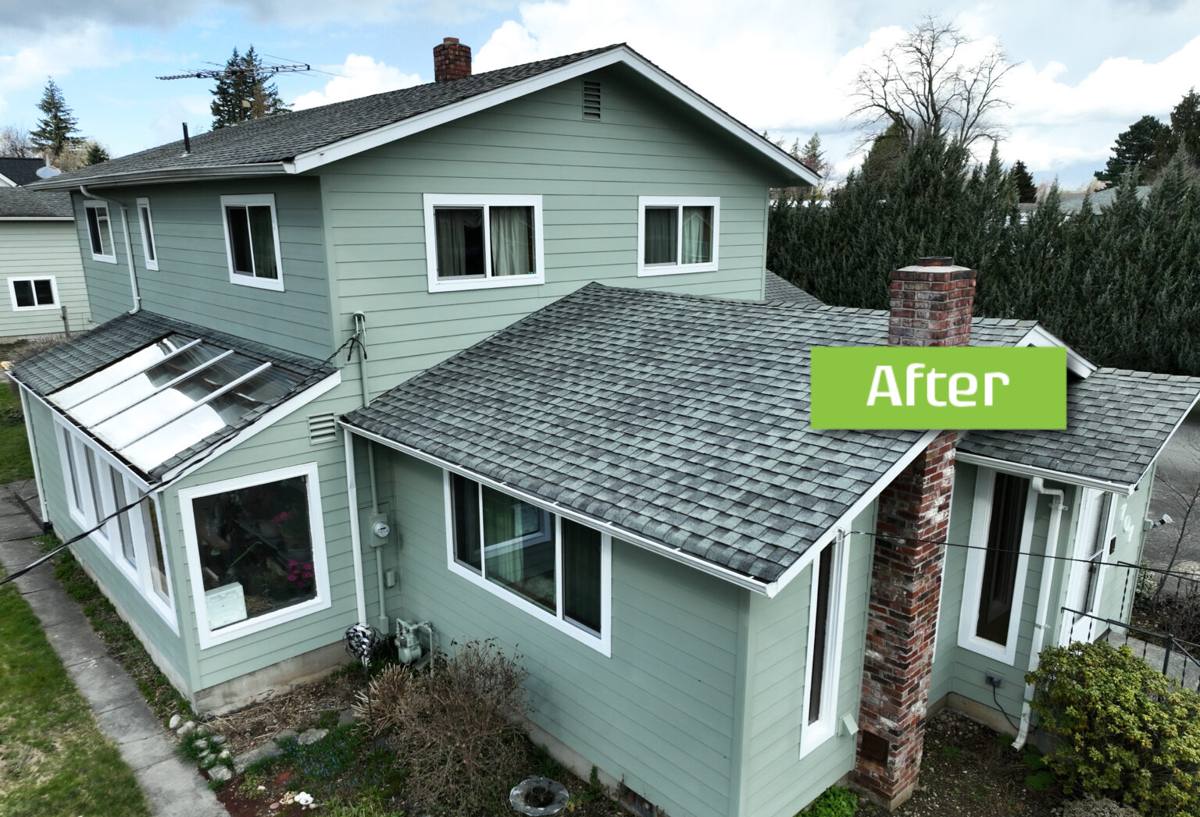
Signs a Roof Needs Replacing, Not Just Repair
Repair makes sense when the damage is isolated — a cracked pipe boot, a handful of lifted shingles after a windstorm, a flashing detail that was never sealed right. Replacement becomes the honest recommendation when the problems are spread across the whole roof or point to the underlayment and deck, not just the surface layer. Here's what we look for during an inspection:
- Granule loss heavy enough that you can see bare asphalt mat in multiple spots, not just one weathered slope
- Shingles that are cupping, curling, or cracking across large sections rather than in one localized area
- Moss or algae staining that keeps returning within a season or two of cleaning, especially on north-facing slopes
- Soft spots or sponginess underfoot on the deck, usually a sign moisture has been getting past the shingles for a while
- Daylight or water staining visible in the attic along the ridge, valleys, or around vent penetrations
- A roof that's already had two or more rounds of repairs in the same areas within a few years
- Rusting or failing fasteners and flashing, common on homes closest to the water
If a roof is showing two or three of these at once, patching one area usually just buys a year or two before the next spot fails. That's the point where a full replacement is the more honest use of the homeowner's money.
What a Correct Roof Replacement Involves Here
A tear-off and reroof done right in this climate is about more than nailing down new shingles. The layers underneath do most of the work of keeping a California Creek home dry through the winter.
Underlayment and Moisture Barriers
Standard felt underlayment is fine in drier climates, but in an area with this much sustained rain and salt spray, we lean on synthetic underlayment for its water resistance, and we add self-adhered ice-and-water membrane at the vulnerable spots — eaves, valleys, around chimneys and skylights, and anywhere wind-driven rain is likely to push water sideways under the shingle tabs. That membrane is the difference between water that beads off harmlessly and water that finds its way to the deck.
Ventilation
A roof deck that can't breathe stays damp longer after every rain, which is exactly what moss and wood rot need to take hold. We check that intake at the soffits and exhaust at the ridge are balanced, not just present, since a lot of older homes in this area have one without the other and end up with trapped moisture year-round.
Flashing, Edges, and Penetrations
Every place metal meets shingle — chimneys, sidewalls, vent pipes, valleys — is a spot where a shortcut installer saves ten minutes and a homeowner pays for it in five years. We use corrosion-resistant flashing given the salt air, and we treat step flashing and valley work as its own discipline rather than an afterthought to the shingle install.
Choosing a Roofing Material Built for This Exposure
There's no single "best" roofing material for every home — it depends on budget, roof pitch, and how much maintenance a homeowner wants to take on. What matters is picking a material honestly suited to salt air, moss pressure, and sustained rain, and installing it correctly. Here's how the common options compare for a California Creek home specifically:
| Material | Moss & moisture resistance | Salt air durability | Typical lifespan here |
|---|---|---|---|
| Architectural asphalt shingle | Good, especially with algae-resistant granules | Good with corrosion-resistant fasteners | 25–30 years |
| Standing seam metal | Excellent — sheds moss growth naturally | Very good with marine-grade coatings and fasteners | 40–50+ years |
| Cedar shake | Fair — needs regular treatment and cleaning to resist moss | Fair — salt exposure accelerates weathering | 20–25 years with upkeep |
| Synthetic composite shingle | Good, low organic material for moss to grip | Good | 30–40 years |
We don't push homeowners toward the priciest option by default. A well-installed architectural shingle roof with the right underlayment and fastener spec holds up perfectly well here for most homes. Metal earns its higher upfront cost on steep-pitch roofs, homes closest to the water, or anyone planning to stay long-term and wanting to reroof as few times as possible. Cedar looks the part but asks the most in ongoing maintenance to fight moss in this climate, which is a fair trade-off for some homeowners and not for others — we'll tell you honestly which category yours falls into.
What Drives the Cost of a Roof Replacement
Every estimate is specific to the home, but the factors that move the price up or down are consistent. Knowing them ahead of time makes the estimate easier to evaluate.
| Factor | Why it matters |
|---|---|
| Roof size and number of stories | More square footage and steeper access both add labor time |
| Roof pitch and complexity | Valleys, dormers, and multiple planes take more flashing and cutting |
| Deck condition | Rotten or soft sheathing found during tear-off needs replacing before new roofing goes down |
| Material choice | Asphalt, metal, and composite carry different material and labor costs |
| Layers to remove | Tearing off two layers of old shingles costs more than one |
| Ventilation and flashing upgrades | Correcting inadequate venting or old flashing adds to scope but prevents repeat problems |
We don't quote a number until we've actually been on the roof, because deck condition in particular can't be judged accurately from the ground or from photos.
Our Process, Start to Finish
- On-site inspection of the current roof, attic ventilation, and any visible moisture damage
- Written estimate that breaks out material, labor, and any deck repair allowance, with no vague lump sums
- Material selection walkthrough so you understand the trade-offs for your specific roof and budget
- Scheduling that accounts for our wet-season stretch, since we don't tear off a roof if a hard rain is likely before it's dried in
- Tear-off, deck inspection and repair as needed, then underlayment, flashing, and new roofing installed in sequence
- Final walkthrough covering the completed work, ventilation, and what to expect in the first year
We protect landscaping and gutters during tear-off and haul away all old material — a full reroof is disruptive enough without leaving a mess behind.
Why Local Experience in California Creek Matters
A crew that's replaced roofs across Blaine and the surrounding Whatcom County waterfront knows which slopes hold moss the longest, which flashing details tend to fail first on homes this close to salt water, and how to sequence a tear-off around a weather window that can close quickly in this region. That's knowledge you don't get from a general contractor working a wide territory who sees a handful of coastal jobs a year. It shows up in small decisions — fastener grade, underlayment placement, how tight the ventilation balance needs to be — that add years to a roof's life without adding much to the cost.
Maintaining Your New Roof Through Moss Season
A correctly installed roof still benefits from basic upkeep in this climate. Keep gutters clear so water isn't backing up under the eaves, especially during the heaviest rain stretches. Have moss growth treated or gently removed before it thickens rather than waiting until it's visible from the street — early moss is easy to manage, established moss holds moisture against the shingle and shortens its life. Trim back overhanging branches where possible, since shaded, damp roof sections are always the first to show algae and moss growth. A quick visual check after major windstorms catches lifted shingles or flashing before they turn into a leak.
If you're weighing a roof replacement for a California Creek home, we're happy to take a look and give you a straight answer — whether that's a full replacement, a targeted repair, or a plan to get another few years out of what's there. The estimate is free, there's no pressure attached to it, and you can start with the form below.