 Blaine
 Birch Bay Roofs Take a Different Kind of Beating
Birch Bay sits right on the water in Whatcom County, and that location cuts both ways. The same bay views that make the area desirable also mean roofs here deal with a steady mix of salt-laden air, wind-driven rain coming off the Strait of Georgia, and long stretches of gray, damp weather that never quite lets a roof dry out. Add in the tree cover that shades a lot of lots back from the waterfront, and you get ideal conditions for moss and algae to take hold. A roof that would hold up fine twenty miles inland can show its age fast out here.
None of that means a Birch Bay roof needs to be exotic or over-engineered. It means the replacement needs to be done with those specific conditions in mind — the right materials, the right fasteners, the right ventilation, and flashing details that actually hold up to salt exposure and constant moisture. That's the difference between a roof that looks good for a season and one that performs for its full service life.
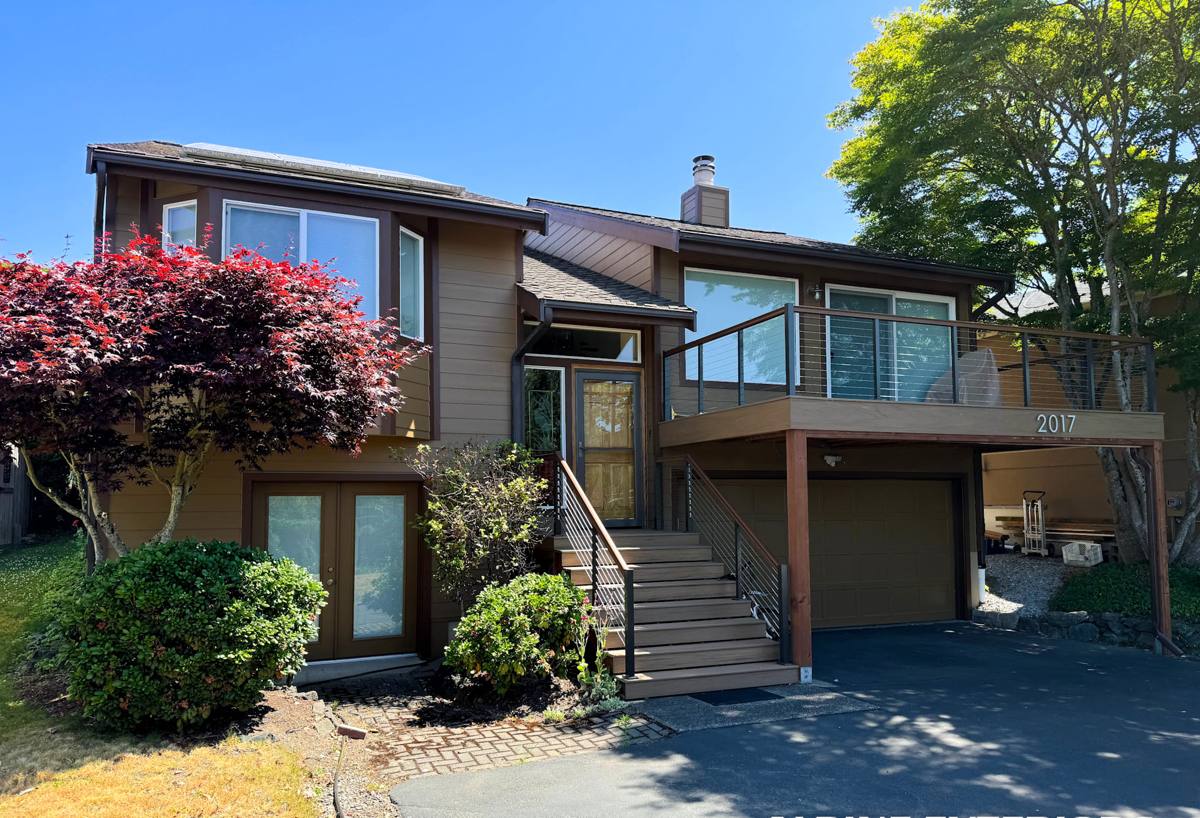
Signs a Birch Bay Roof Needs Replacement, Not Another Repair
Roof repairs make sense when the damage is isolated — a cracked pipe boot, a few lifted shingles after a windstorm. Replacement becomes the right call when the problems are spread across the whole roof or point to failure underneath the surface. In Birch Bay, we typically see full replacement recommended when a home shows:
- Granule loss heavy enough that shingles look bald or patchy in more than one section
- Moss that keeps returning within a year or two of cleaning, especially on north-facing or shaded slopes
- Soft spots or sagging in the decking, usually found near valleys or eaves where water sits longest
- Rusted or heavily corroded flashing, vent boots, or fasteners — common on homes closer to the water
- Interior staining on ceilings or attic framing that shows up during or after wind-driven rain
- A roof past 20-25 years old (asphalt) that has never had underlayment or ventilation upgraded
If a roof is showing two or more of these at once, patch repairs usually end up being a short-term expense that delays the inevitable rather than solving it.
What a Correct Roof Replacement Involves Here
Tear-Off and Deck Inspection
Every proper replacement starts with a full tear-off, not an overlay. Overlaying new shingles on old ones traps moisture and hides deck damage — a bad trade-off in a climate this wet. Once the old roofing is off, we inspect the decking board by board. Any wood that's soft, delaminated, or water-stained gets replaced before anything new goes down. Skipping this step is one of the most common ways a "new" roof ends up leaking within a couple of years.
Underlayment Built for Wet Climates
In an area that gets driving rain off open water, underlayment is not a place to cut corners. We use synthetic underlayment across the field for its tear resistance and water shedding, plus self-adhering ice-and-water membrane at eaves, valleys, and around every roof penetration — the spots where wind-driven rain is most likely to find a way in. This membrane matters more in Birch Bay than in more sheltered parts of the county, simply because the wind off the bay pushes rain sideways and upward under normal shingle laps.
Ventilation That Matches the Moisture Load
A roof deck that can't breathe stays damp longer, and a damp deck is what invites rot and moss regrowth from underneath. We balance intake at the eaves with exhaust at the ridge so air actually moves through the attic space instead of stagnating. This is especially important on homes with shaded, tree-covered lots, where the roof surface itself gets less sun to dry it out between rains.
Flashing That's Sized for Salt Exposure
Flashing failures are behind a large share of the leaks we find on older Birch Bay roofs. Standard galvanized flashing corrodes faster this close to salt water. We flash chimneys, skylights, sidewalls, and valleys with corrosion-resistant materials and proper step-and-counter-flashing technique rather than relying on caulk or sealant to do the job flashing metal should be doing.
Salt Air and Corrosion: What It Actually Changes
Salt air doesn't just affect homes directly on the waterfront — it travels on the wind and settles on roofs blocks inland too. The practical impact on a roof replacement is mostly in the hardware most people never think about:
- Fasteners: we use corrosion-resistant roofing nails rather than standard electro-galvanized, which can rust and stain a roof from the inside out
- Flashing and drip edge: stainless or heavier-gauge coated metals hold up longer than basic galvanized in a salt-air environment
- Vent stacks and boots: rubber boots degrade faster under UV and salt exposure, so we check these on an inspection before assuming they just need caulk
- Metal roofing panels and trim, where used, need coatings rated for coastal exposure — not every "metal roof" product is built for it
None of this adds dramatic cost to a replacement. It's a matter of specifying the right-grade materials up front instead of the cheapest available option, which is where a lot of corrosion problems on older Birch Bay homes actually started.
Moss, Algae, and Shade: Managing the Long Moss Season
Whatcom County's wet, mild winters and the tree cover common on Birch Bay lots add up to a long moss season — moss can actively grow here nearly year-round on shaded roof slopes. A roof replacement is the best time to build in some resistance to it, rather than treating moss as an annual maintenance chore forever:
- Algae-resistant shingles with embedded copper or zinc granules slow regrowth on shaded sections
- Zinc or copper strips installed near the ridge let rain carry trace metal down the roof slope, which discourages moss over time
- Keeping overhanging branches trimmed back improves airflow and sun exposure, which does more for moss prevention than any product alone
- Proper ventilation (see above) keeps the deck itself drier, which matters because moss holds moisture against the roof surface and accelerates granule loss underneath it
None of these steps make a roof moss-proof — nothing does in this climate. They meaningfully extend the time between cleanings and reduce how aggressively moss takes hold.
Comparing Roofing Materials for a Birch Bay Home
| Material | Coastal/Moss Performance | Typical Lifespan | Considerations |
|---|---|---|---|
| Architectural asphalt shingles | Good with algae-resistant granules and proper ventilation | 25-30 years | Most common choice locally; wide style and color range; needs periodic moss maintenance |
| Standing seam metal | Very good; sheds moisture fast, less surface for moss to grip | 40-50+ years | Higher upfront cost; coating must be rated for coastal/salt exposure |
| Synthetic composite shingles | Good; resists moisture absorption better than wood | 30-50 years | Higher material cost than asphalt; good option where wood-shake look is wanted without wood's moisture issues |
| Cedar shake | Poor in this climate without diligent maintenance | Varies widely | Constant moisture and shade accelerate rot and moss; we'll discuss this honestly if a homeowner is considering it |
Asphalt remains the practical choice for most Birch Bay homes because it balances cost, appearance, and performance when installed with coastal-appropriate underlayment and flashing. Metal earns its higher price tag on homes where long-term, low-maintenance performance matters more than upfront cost. We'll walk through the real trade-offs for a specific roof and budget rather than push one product across the board.
How Our Replacement Process Works
A roof replacement should be predictable, not a surprise-filled ordeal. Here's the sequence we follow on Birch Bay homes:
- On-site inspection and honest assessment of whether repair or full replacement makes sense
- Written estimate covering materials, scope, and timeline before any work begins
- Tear-off and deck inspection, with any damaged decking replaced and documented
- Underlayment and ice-and-water membrane installation at all vulnerable points
- New roofing material installed per manufacturer specification, not shortcuts
- Flashing, vent, and penetration detailing done last, where most leaks originate if rushed
- Full site cleanup, including magnetic sweep for nails and debris removal
- Final walk-through so the homeowner sees the finished work before we call it done
We also plan around Whatcom County's wetter months where possible. Roofing can be done responsibly in the rain with the right sequencing and material protection, but we prefer to schedule tear-off during drier weather windows whenever a homeowner's timeline allows it, precisely because an open deck in Birch Bay's rain isn't a risk worth taking unnecessarily.
Why Local Experience in Birch Bay Matters
A roofing crew that mostly works drier, inland areas can still do competent work, but they're often working from a generic playbook. A crew that regularly works Birch Bay and the surrounding Blaine area already knows which slopes hold moss longest, which flashing details actually fail out here, and how much underlayment overlap is worth the extra material cost given the wind direction off the water. That local pattern recognition shows up in fewer callbacks and a roof that's specified correctly the first time, not after a leak shows where the original installation cut a corner.
It also matters for something less technical: familiarity with the area means realistic scheduling around ferry traffic, seasonal population swings, and weather windows specific to this stretch of coastline — details that affect how a project actually runs, not just how it's priced.
Get a Straight Answer on Your Roof
If your Birch Bay roof is showing granule loss, recurring moss, or signs of age, it's worth getting an honest look before deciding between repair and replacement. We offer free, no-pressure estimates — use the form below to get one scheduled.