 Blaine
 Roof Repair Built for the Dakota Creek Area
Dakota Creek sits close enough to the water that homes here take a different kind of beating than roofs ten miles inland. Salt-laden air off the bay, wind-driven rain that comes in sideways during winter storms, and a moss season that can run eight months out of the year all work against a roof at the same time. A repair that would hold up fine in a drier part of Whatcom County can fail here in a fraction of the time if it wasn't done with this specific environment in mind. That's the gap we work to close: repairs matched to what Dakota Creek roofs actually deal with, not a generic patch job.
This page covers roof repair specifically — not full replacement, not siding, not gutters (though we'll flag where those systems affect roof health). If your roof is leaking, losing granules, growing moss in the shaded valleys, or showing soft spots near the eaves, this is the service you need and the background that explains why it has to be done a certain way out here.
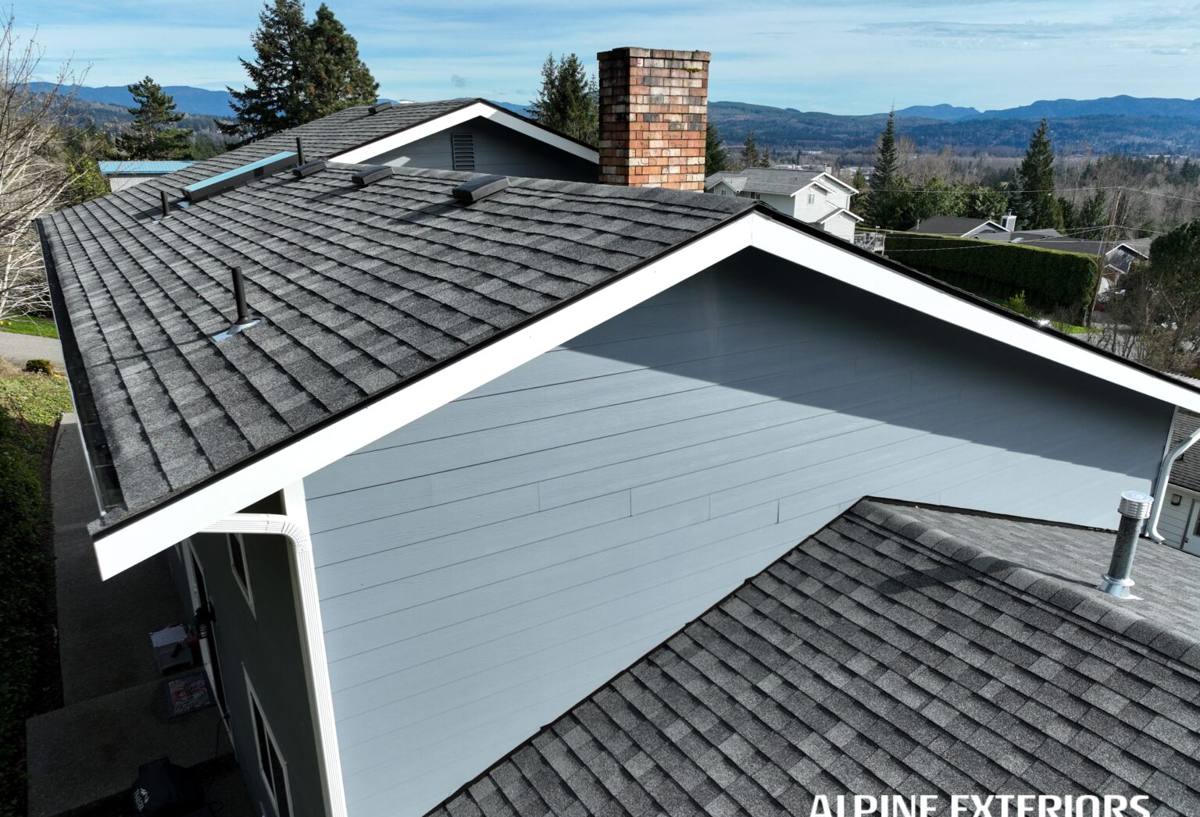
What Salt Air, Rain, and Moss Actually Do to a Roof
Salt Air and Metal Fasteners
Airborne salt from the marine environment accelerates corrosion on anything metal — nail heads, flashing, drip edge, and the fasteners holding shingles down. Standard galvanized nails can start rusting years before they would inland, and once a fastener corrodes, its grip weakens and shingles start to lift in wind. Flashing around chimneys, skylights, and vent pipes corrodes the same way, and a pinhole in old flashing is one of the most common leak sources we find on repair calls in this area.
Driving Rain
Blaine gets plenty of rain that falls straight down, which most roofing handles fine. The problem is the storms that push rain sideways off the water. Wind-driven rain finds its way under shingle tabs, through poorly lapped flashing, and into any gap that a calmer rain would never reach. Repairs that only address the visible hole and ignore how water travels underneath the roofing during a wind event tend to leak again at the next big storm.
Moss and Prolonged Moisture
Moss doesn't just look bad — it holds moisture against the roofing surface for weeks at a time, which breaks down asphalt shingles faster and can lift edges enough for water to get underneath. North-facing slopes and shaded valleys near trees are the worst spots. In a region with our rainfall pattern, moss isn't an occasional nuisance; it's a recurring maintenance issue that has to be factored into any repair plan, not treated as a separate problem.
Signs a Dakota Creek Roof Needs Repair
- Water stains on interior ceilings, especially after a windy rainstorm rather than a calm one
- Granules collecting in gutters or at the base of downspouts
- Shingles that look curled, cupped, or lifted at the tabs
- Dark streaking or thick moss growth in shaded or north-facing areas
- Rust staining below flashing points — chimneys, vents, skylights
- Soft or spongy decking felt underfoot in the attic near the eaves
- Daylight visible through the roof deck from inside the attic
- Missing or damaged shingles after a storm, even if there's no active leak yet
Any one of these on its own might be minor. Several together, or any sign paired with an actual leak, means it's time to get it looked at before the next storm makes it worse.
What a Correct Repair Actually Involves
A roof repair that holds up in this environment isn't just "find the hole, cover the hole." It follows a sequence:
- Diagnose the real source. Water often travels along the underside of decking before it drips through the ceiling, so the stain inside rarely marks the actual entry point. We trace it back to where it's coming in, not just where it's showing up.
- Check the surrounding area, not just the damage. If salt-air corrosion or moss damage caused the failure, nearby fasteners and flashing are often in similar condition. Patching one spot while ignoring the fasteners three feet away is how a "fixed" roof leaks again within a year.
- Replace, don't caulk over. Corroded flashing gets replaced with new flashing, not sealed with a bead of caulk that will fail again once it dries out and cracks — which happens faster here given the temperature swings and salt exposure.
- Match materials and technique to the existing roof. Shingle color, exposure, and fastening pattern need to match so the repair doesn't stand out and, more importantly, so it sheds water the same way the surrounding roof does.
- Address the moisture, not just the leak. If moss or standing debris contributed to the failure, we clear it and talk through what keeps it from coming back, since a repair next to an untouched moss bed is a short-term fix.
Common Repair Types We Handle
Flashing Repair and Replacement
Chimney flashing, skylight flashing, and vent boot flashing are the most frequent failure points on roofs in this area because they combine metal, sealant, and multiple roofing planes in one spot — exactly where salt-air corrosion and wind-driven rain do the most damage. We replace failed flashing with new material properly stepped and lapped, not resealed over corrosion.
Shingle Replacement (Spot Repair)
Wind and moss damage often show up as isolated bad spots rather than whole-roof failure. Spot shingle replacement — pulling damaged shingles and installing matching new ones with correct nailing — is often the right scope of work when the rest of the roof still has useful life left.
Decking Repair
Long-term moisture intrusion can soften or rot the wood decking underneath the shingles. Any decking that's gone soft has to be cut out and replaced before new roofing goes back down — covering rotten decking with new shingles just hides the problem and it will fail again, faster.
Moss Treatment and Debris Clearing
Where moss is part of what caused the failure, we clear it from the repair area and, where it makes sense, treat nearby growth so it doesn't immediately undo the work. We don't pressure-wash roofing — it strips granules and shortens shingle life, which is its own kind of damage.
Valley and Ridge Repair
Valleys concentrate water flow and collect debris; ridges take direct wind exposure. Both are common failure points and both require repair methods specific to how water and wind actually move across them, not a one-size patch.
Repair vs. Replacement: How We Help You Decide
| Factor | Leans toward repair | Leans toward replacement |
|---|---|---|
| Age of roof | Under roughly 12-15 years | At or beyond expected shingle lifespan |
| Extent of damage | Isolated area (flashing, one slope, storm damage) | Widespread granule loss, curling across most of the roof |
| Decking condition | Solid, no rot found | Rot found in multiple areas |
| Leak history | First occurrence or single known cause | Recurring leaks in different spots over time |
| Moss/moisture history | Manageable with periodic clearing | Chronic, has already caused structural softening |
We'll give you a straight answer on which side of this table your roof falls on. If a repair genuinely covers it, that's what we'll recommend — replacement isn't the default answer just because it's the bigger job.
Our Process for a Dakota Creek Repair Call
We start with an on-roof inspection, not a guess from the ground or from photos. That includes checking the attic from inside where access allows, since interior signs often tell us more about how long a leak has been active than the exterior does. From there we walk you through what we found, what's causing it, and what the repair actually involves — plainly, before any work starts. Once you approve the scope, we schedule around the weather; wind-driven rain days aren't safe or effective for roof work, and we won't put a temporary patch on and call it done. When the repair is complete, we check that flashing laps correctly, fasteners are seated and rust-resistant, and the area sheds water the way the rest of the roof does.
Why Local Experience with Dakota Creek Roofs Matters
A crew that mostly works inland doesn't see salt-air corrosion patterns often enough to catch them early — they're used to fasteners and flashing lasting longer than they do here. Working this part of Whatcom County regularly means we know which flashing details fail first in this environment, which slopes hold moss the longest given our shade and rainfall pattern, and which repair techniques actually hold up against wind-driven rain instead of just looking fixed for a season. That's not a marketing point — it's the difference between a repair that lasts and one you're calling us back about next winter.
Maintenance That Extends a Repair's Life
A well-done repair still needs basic upkeep in this climate, especially where moss and salt exposure are ongoing conditions rather than one-time events.
- Clear moss buildup before it thickens, particularly on shaded or north-facing slopes
- Keep gutters and downspouts clear so water doesn't back up under the roof edge
- Trim overhanging branches that keep sections of roof shaded and damp
- After major windstorms, do a visual check for lifted or missing shingles
- Have flashing checked periodically, since corrosion often starts small and hidden
None of this replaces a proper inspection when there's an actual leak, but it does reduce how often you need one.
Get a Straight Answer on Your Roof
If you're dealing with a leak, storm damage, or just want a second opinion on what's going on up there, we're happy to take a look. The estimate is free, there's no pressure to book anything on the spot, and you'll get a clear explanation of what we found and what it would take to fix it right. Use the form below to get started.