 Blaine
 Roof Repair Built for Birch Point's Marine Climate
Birch Point sits close enough to the water that its roofs live a different life than a roof twenty miles inland. Salt-laden air, driving rain off the Strait, and a moss season that can run most of the year all add up to wear patterns that a generic roofing crew doesn't always recognize on the first visit. We work in this pocket of Whatcom County regularly, and this page covers what roof repair actually means for a Birch Point home — not a rewritten version of our general roof repair page, but what's specific to this stretch of coastline.
A roof repair done right here isn't just patching a leak. It's understanding why that spot failed first, whether the surrounding materials are still sound, and whether the fix will hold up through another wet Blaine winter or just buy a season before the same call comes back in.
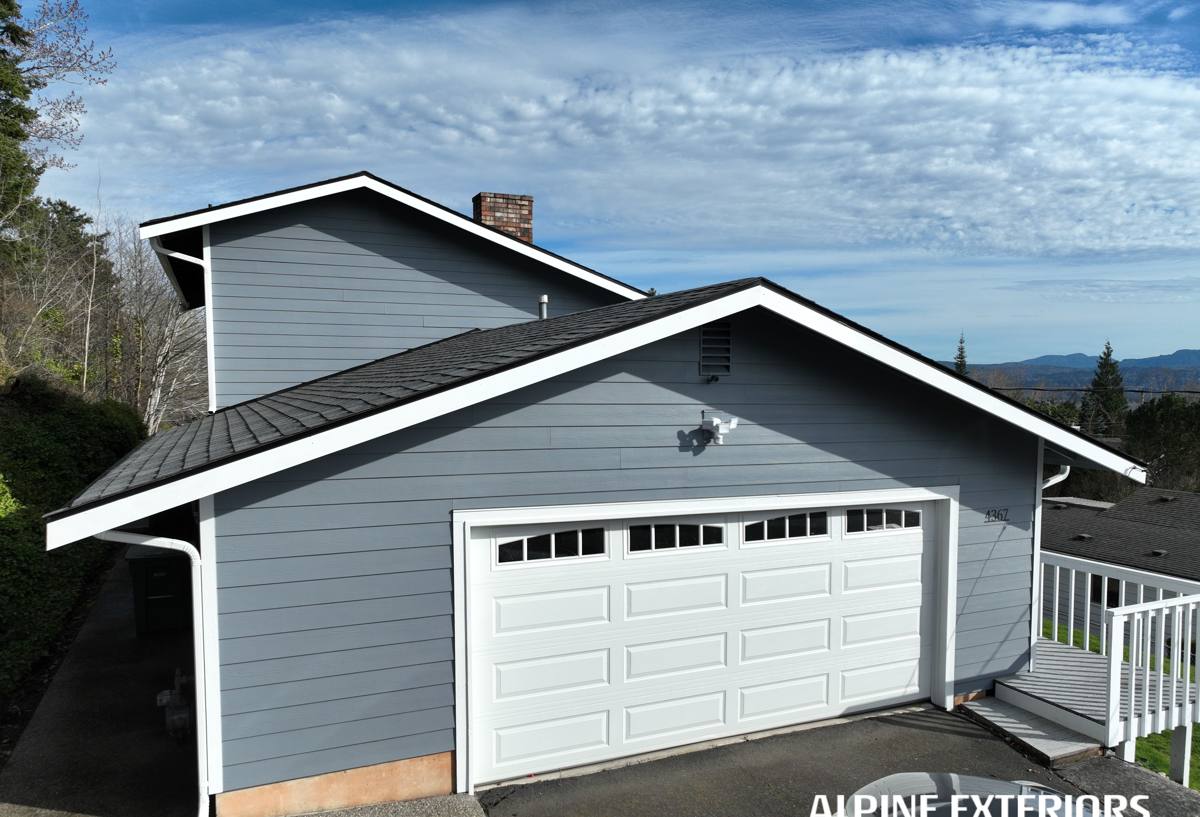
What Salt Air and Moss Do to a Blaine Roof Over Time
Salt-Laden Wind and Metal Fatigue
Homes near the water take on a steady drift of salt spray, even on days that feel calm. That salt settles on exposed metal — flashing, fasteners, gutter hardware, drip edge — and accelerates corrosion well beyond what you'd see on a roof a few miles inland. A nail head that rusts through loses its grip on the shingle around it, and a flashing seam that corrodes thin stops shedding water the way it should. This is usually a slow process, which is exactly why it goes unnoticed until a leak shows up.
Moss and Organic Growth on Shaded and North-Facing Slopes
Whatcom County's damp, mild climate keeps moss growing for most of the year, and Birch Point's tree cover and marine humidity make it worse than average. Moss doesn't just look bad — it holds moisture directly against the roofing material, works its way under shingle tabs and shakes, and can lift edges enough for wind-driven rain to get underneath. Left long enough, moss growth turns a cosmetic issue into a structural one.
Driving Rain and Wind-Driven Water Intrusion
Storms coming off the water don't just drop rain straight down — wind pushes it sideways, up under laps, and into any gap in flashing or underlayment that a calmer climate might never test. This is why repairs done to a "dry climate" standard often fail here: a fix that would hold in a low-wind area can leak the first time weather comes in sideways off the Strait.
Signs a Birch Point Roof Needs Repair, Not Just a Look
Most roof problems here don't announce themselves with an obvious hole. They show up as smaller signals that are easy to write off until they aren't. Homeowners in this area should watch for:
- Dark streaking or thick moss patches on north-facing or shaded slopes
- Granules collecting in gutters or at downspout outlets
- Rusty streaks running down from flashing, vents, or fasteners
- Soft or discolored ceiling patches after a windy rainstorm, even if they dry out
- Shingle edges that look lifted, curled, or out of line after a storm
- Visible daylight or gaps at flashing around chimneys, skylights, or roof-wall junctions
- Gutters overflowing or pulling away, which pushes water back up under the roof edge
Any one of these on its own might be minor. Two or three together, especially on a roof that hasn't been inspected in a few years, usually means it's time for a closer look.
What a Correct Roof Repair Actually Involves
Diagnosing the Source, Not Just the Symptom
A leak inside the house rarely shows up directly below the actual failure point — water travels along rafters and sheathing before it drips. A correct repair starts by tracing the path back to where water is actually getting in, which usually means getting on the roof and checking flashing, fastener lines, and underlayment condition around the affected area, not just patching where the stain appears inside.
Matching Materials and Fasteners for Coastal Exposure
Given the salt exposure common near Birch Point, we pay attention to what fasteners and flashing metals go back into a repair. Mismatched or lower-grade materials might hold for a season, but they corrode faster in this environment and can even accelerate corrosion in the metal around them through galvanic reaction. A repair that's meant to last should use materials suited to a marine-influenced climate, not just whatever matches the color.
Flashing and Detail Work at Vulnerable Points
Most roof leaks trace back to a handful of predictable spots: chimney flashing, skylight curbs, valleys, roof-to-wall transitions, and vent boots. These are the places where two materials or two planes meet, and they're the first to fail under driving rain. A repair that only replaces field shingles without checking these details is treating the easy part of the problem and skipping the part most likely to leak again.
Repair vs. Replacement: How We Decide
Not every roof problem needs a full replacement, and not every leak can be solved with a patch. We look at the roof as a whole before recommending either path.
| Factor | Repair Usually Makes Sense | Replacement Usually Makes Sense |
|---|---|---|
| Roof age | Roof is under roughly two-thirds of its expected lifespan | Roof is near or past its expected service life |
| Extent of damage | Damage is localized to one area or detail | Multiple areas failing independently across the roof |
| Underlying deck condition | Sheathing is solid where inspected | Soft or rotted decking found in more than one spot |
| Moss and staining pattern | Limited to shaded slopes, treatable | Widespread across most of the roof surface |
| Material availability | Existing shingle or panel style still in production or closely matchable | Material discontinued or badly weathered relative to a patch |
We'll always tell you honestly which category your roof falls into, including when a repair is the right call even if a replacement would be a bigger job for us.
Our Process for Birch Point Homes
Inspection and Estimate
We walk the roof (or use a ladder and camera where a full walk isn't safe on the pitch), check attic access if available, and identify every point of concern — not just the one you called about. You get a written estimate that explains what we found and why we're recommending the scope we are.
The Repair Itself
Depending on scope, most Birch Point repairs are completed in a single day. We remove and replace only the affected materials, rebuild flashing details correctly rather than caulking over old flashing, and match shingle or panel color and profile as closely as available stock allows.
Cleanup and Follow-Up
We clear debris, run a magnetic sweep for stray fasteners around the work area, and walk you through what was done. If moss or organic growth was part of the original problem, we'll tell you what to watch for and how often it should be checked going forward.
Why a Crew That Already Works Birch Point Matters
A roofer who works this part of Blaine regularly already knows which flashing details tend to fail first in this wind exposure, how aggressive the moss season typically is on shaded lots near the water, and what material grades actually hold up against salt air rather than looking fine for the first year and corroding after. That's not something you can fully substitute with a general roofing background — it comes from doing this work, in this specific climate, over and over. It also means fewer surprises: we're not guessing at how weather here behaves, we're accounting for it from the first inspection.
Maintenance Between Repairs
A good repair lasts longer when the roof around it is kept up. A few habits go a long way in this climate:
- Keep gutters and downspouts clear so water isn't backing up under roof edges
- Trim back overhanging branches to reduce shade, debris, and moss growth
- Have moss treated or removed before it thickens, rather than after
- Schedule a roof check after any major windstorm, even if nothing looks obviously wrong
- Address small leaks early — a small fix now is almost always cheaper than the water damage from waiting
If you're seeing any of the warning signs above, or it's simply been a while since your roof was checked, we're happy to take a look. Fill out the form below for a free, no-pressure estimate — we'll tell you honestly what we find and what it would take to fix it.