 Blaine
 Why Point Roberts Is Tougher on Windows Than Most of Whatcom County
Point Roberts sits out on its own peninsula, surrounded by water on three sides, which means homes there catch more of everything the marine environment throws at them. Salt air, wind-driven rain off Boundary Bay and the Strait of Georgia, and a moss and mildew season that runs longer than most people expect all add up to windows that age faster here than they would fifteen or twenty miles inland. If you're planning a window replacement, it helps to understand exactly what you're up against before you pick a product or a contractor.
Salt Air and Metal Fatigue
Salt-laden air corrodes exposed metal components faster than it does in drier, inland parts of Whatcom County — hinges, cranks, screen frames, and especially lower-quality fasteners. This isn't a reason to panic, but it is a reason to be picky about hardware quality and about how a window is sealed at the frame. A window that looks fine from the curb can have hardware that's already stiffening up or corroding out of sight.
Driving Rain and Wind-Driven Water
Point Roberts gets its share of storms coming straight off open water, and that means rain doesn't just fall — it gets driven sideways into wall assemblies under real pressure. Windows that were installed with minimal flashing or a "caulk and hope" approach are the ones that eventually leak, and by the time you see a stain on the interior sill, water has usually been getting into the wall framing for a while.
The Long Moss Season
Cool, damp conditions here support moss, algae, and mildew growth for a good chunk of the year. On windows, that shows up as black streaking on sills and tracks, sticky sashes, and — over time — rot in wood trim that stays wet longer than it should. Window and trim choices that shed water quickly and dry out fast matter more here than they would in a drier climate.
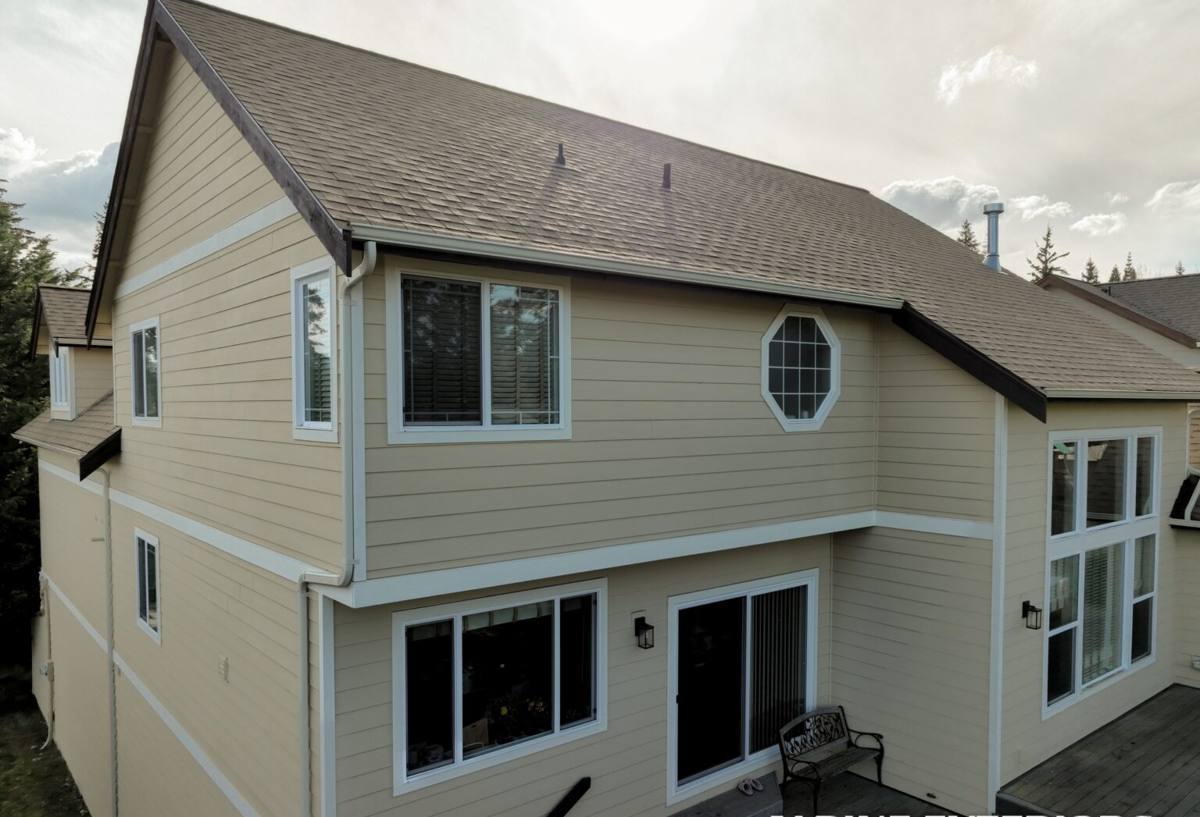
What a Correct Window Installation Actually Involves
A window installation is really a water-management project with glass in the middle of it. The window unit itself is often the easy part; the flashing, sealing, and integration with the surrounding wall is where jobs succeed or fail.
Flashing and Water Management
Done right, a window opening gets sill flashing (sloped so water runs out, not in), jamb flashing, and head flashing that laps over the layer below it — every piece shingled so water always moves downward and outward, never into the wall. This has to tie into the home's weather-resistive barrier correctly, not just get taped over it as an afterthought.
Sealant Isn't a Substitute for Flashing
Caulk and sealant have a job — sealing small gaps and keeping air infiltration down — but they are not a water-management system on their own. Sealant degrades with UV exposure and movement over time; flashing, when installed correctly, keeps working even after the sealant has started to fail. Any installer who's relying mainly on caulk to keep water out is setting a home up for a callback in a few years.
Signs Your Current Windows Are Losing the Battle
Coastal exposure tends to show up in predictable ways before a window fully fails. Worth checking for:
- Fogging or condensation between panes on double- or triple-glazed units (a sign the seal has failed)
- Soft or discolored wood trim around the window, especially at the bottom corners
- Sashes that stick, drag, or won't stay open without a prop
- Visible daylight or a draft you can feel around the frame on a windy day
- Paint or finish that's peeling specifically around the window opening, not elsewhere on the wall
- A musty smell near windows, which often points to moisture trapped in the wall cavity
Choosing the Right Window for a Marine Environment
There's no single "best" window material — each comes with trade-offs, and those trade-offs matter more in a salt-air, high-moisture climate than they would somewhere dry.
| Frame Material | How It Handles This Climate | Trade-Offs to Know |
|---|---|---|
| Vinyl | Won't rot or corrode; handles moisture well | Can expand/contract with temperature swings; quality varies a lot between manufacturers |
| Fiberglass | Very stable, resists moisture and doesn't corrode | Higher upfront cost than vinyl |
| Aluminum | Strong and low-maintenance on the frame itself | Metal hardware and trim pieces are more exposed to salt-air corrosion |
| Wood / Wood-Clad | Classic look, good insulating properties | Needs consistent upkeep — the highest-maintenance option in a wet, salty climate |
We'll walk through these options honestly based on your home's exposure, your budget, and how much upkeep you actually want to sign up for — not just push whatever has the best margin.
Our Installation Process
- Assessment — we look at the existing opening, the condition of the framing underneath, and how exposed that side of the house is to wind and rain
- Removal — old windows come out carefully so we can inspect the sill and framing for hidden rot or moisture damage before anything new goes in
- Repair as needed — any soft or water-damaged framing gets addressed before a new window goes in; installing a new window over damaged framing just hides the problem
- Flashing and air/weather barrier integration — sill, jamb, and head flashing installed and properly lapped with the home's existing weather barrier
- Window installation and shimming — set level, plumb, and square, with proper shimming so the unit operates smoothly for years
- Sealing and insulation — low-expansion foam or backer rod and sealant around the frame, sized correctly so it doesn't bow the frame
- Interior and exterior trim — finished to match or upgrade the home's existing look
- Final check — operation, seal, and visual inspection before we call it done
Why a Crew That Already Works Point Roberts Matters
Point Roberts is separated from the rest of Whatcom County by the international border — getting materials, tools, and crews in and out takes real logistical planning that a contractor unfamiliar with the peninsula won't have dialed in. That means extra lead time on scheduling, coordinating material delivery, and making sure everything needed for the job is on-site before work starts, since running back for a forgotten part isn't a quick trip like it would be in Blaine proper.
Beyond logistics, a crew that's already worked on the peninsula knows what its specific exposure to wind and salt air does to a building over time, and adjusts flashing details and product recommendations accordingly. That local experience is the difference between a window that's installed to a generic standard and one that's installed for the conditions it will actually face.
What Window Installation Costs in This Area
Costs vary based on window size, material, how many units you're replacing, and what condition the existing framing is in once we open things up. In broad terms, expect pricing to be shaped by a few main factors:
| Factor | Why It Moves the Price |
|---|---|
| Window material | Vinyl is typically the most budget-friendly; fiberglass and wood-clad cost more upfront |
| Full-frame vs. insert replacement | Full-frame (removing down to the rough opening) costs more than an insert replacement into a sound existing frame |
| Number of openings | Per-window cost usually drops somewhat as the total project size increases |
| Hidden framing damage | Rot or water damage found during removal adds repair time and cost, but it's cheaper to fix now than to seal over |
| Trim and finish work | Matching existing exterior trim or upgrading it adds labor and materials |
We give straightforward, itemized quotes so you can see exactly what you're paying for and where — no vague lump-sum numbers.
Keeping New Windows Performing for the Long Haul
New windows are only as good as the upkeep behind them, especially in a climate that doesn't give surfaces much of a break from moisture. A little routine attention goes a long way:
- Clear debris and moss buildup from sills and tracks a couple times a year
- Rinse salt residue off frames and glass periodically, especially on the sides most exposed to wind off the water
- Check exterior caulk lines annually and touch up any that have cracked or pulled away
- Operate every window a few times through the year so hardware doesn't seize up
- Watch for early signs of trim discoloration and address it before it spreads
None of this is complicated, but it's the kind of maintenance that gets skipped — and skipping it is exactly what shortens a window's life in a coastal climate.
Ready to Talk About Your Windows?
If your windows are drafty, fogged, sticking, or just showing their age, we're happy to take a look and give you an honest read on what's going on — no pressure, no hard sell. Fill out the form below for a free estimate, and we'll walk you through your options for your home's specific exposure on the peninsula.