 Blaine
 Point Roberts Weather Doesn't Treat Siding Gently
Point Roberts sits out on its own point of land on the Salish Sea, surrounded by water on three sides and connected to the rest of Whatcom County only through Canada. That geography means homes here take a steadier beating from salt-laden air, wind-driven rain coming straight off the water, and a moss season that seems to start earlier and last longer than it does just a few miles inland. Siding that would hold up fine in a drier, more sheltered part of the county can start showing problems in Point Roberts years ahead of schedule if it wasn't installed with this exposure in mind.
This page covers what siding installation actually needs to look like on a Point Roberts home, why the details matter more here than almost anywhere else in the area, and why we've standardized on one product system instead of offering a menu of options.
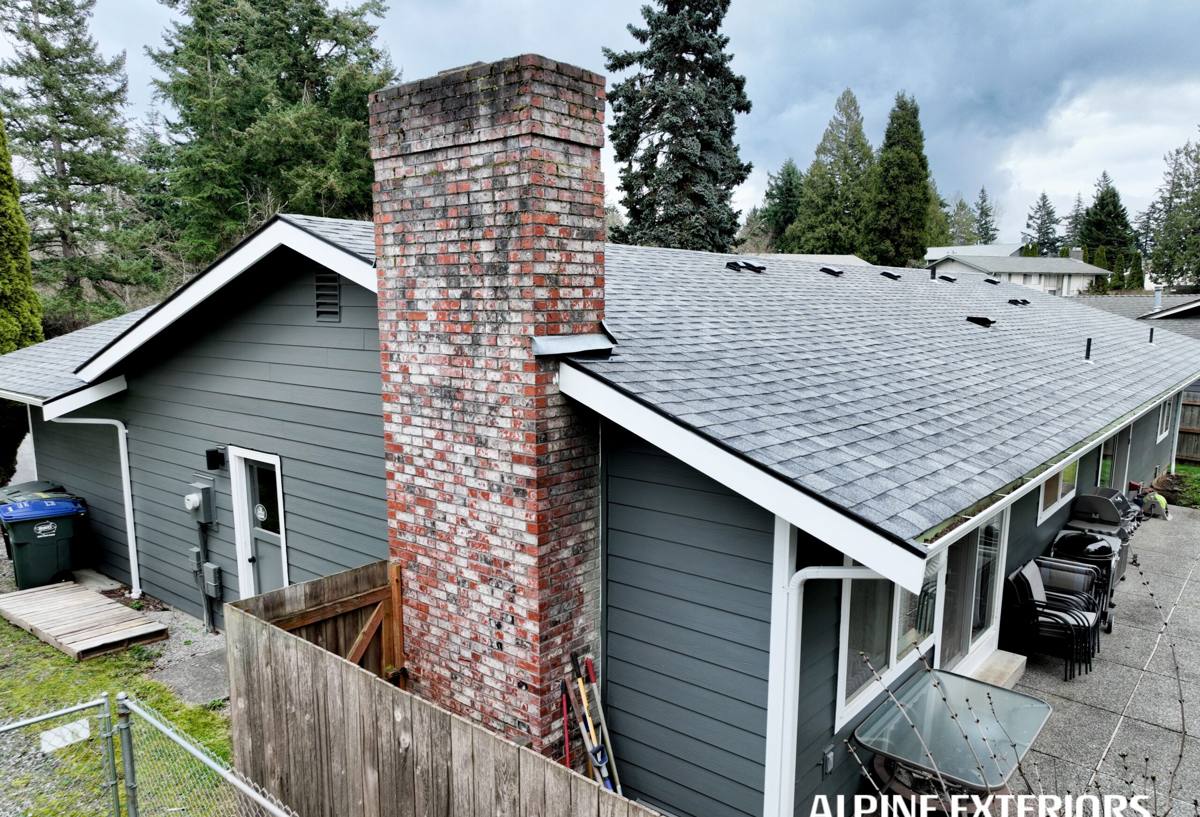
What Salt Air, Driving Rain, and Moss Actually Do to Siding
Salt Air
Airborne salt is corrosive. It attacks exposed metal fasteners, degrades caulk faster than inland exposure would, and speeds up fading and chalking on paint finishes that weren't built to handle it. Over years, a siding system that isn't resistant to this kind of exposure starts to look tired well before it's structurally due for replacement.
Driving Rain
Wind off open water doesn't just fall on a house, it drives rain sideways into laps, corners, and trim joints. Every seam, every piece of flashing, and every point where siding meets a window, door, or roofline becomes a place water will actively test, not just drip past. A siding job that only performs well in calm, straight-down rain is not built for this location.
Moss Season
Cool, damp, and often shaded conditions let moss and algae take hold on siding, trim, and roofing for a large part of the year here. Organic growth holds moisture directly against the wall assembly, and over time it breaks down caulk and paint film faster than it would in a drier climate. Left unaddressed, it also just makes a house look neglected.
Why Correct Installation Matters More Than the Brand on the Box
Most siding failures we see aren't caused by a bad product. They're caused by a product installed without regard for how water actually moves across and behind a wall. A weather-resistant barrier with gaps, flashing that was skipped or reversed, siding hung tight to trim with no drainage gap, or caulk used to "fix" a clearance problem instead of proper flashing — these are the failures that show up as rot, stains, and premature repaints, and they show up faster in Point Roberts than almost anywhere else in Whatcom County because the climate gives every mistake more opportunity to do damage.
That's why we treat installation as a water-management system, not just a fastening job. The siding is the visible layer. What's underneath it and around every penetration is what actually decides whether the wall stays dry.
Why We Install Only James Hardie Fiber Cement
We don't install vinyl, LP SmartSide, Cemplank, Allura, primed spruce, or cedar. That's not because those products have no place anywhere — it's because each of them comes with a maintenance rhythm or moisture behavior that doesn't line up well with what a salt-air, high-rainfall, moss-prone property demands over the long run, and we've made a professional decision to build every job around a system engineered specifically for this kind of exposure instead.
James Hardie fiber cement is non-combustible, dimensionally stable across our wet winters and dry summers, and available with a factory-applied ColorPlus finish that's baked on rather than brushed on site. That factory finish resists fading and chalking from salt air and UV exposure far better than a field-applied paint job, and because the board itself doesn't swell and shrink the way wood-based products can, the caulk lines and paint film aren't under the same ongoing stress. It also carries a strong transferable warranty when installed to the manufacturer's specification, which matters on a coastal property where you want the product working for you for decades, not years.
The HardieZone System Built for This Coastline
James Hardie engineers its products by climate zone, and the Pacific Northwest falls under the HZ5 line, built around the moisture cycling and coastal exposure common to this region rather than a generic national spec. For Point Roberts homes, that typically means:
- HardiePlank lap siding — the traditional horizontal look, engineered for consistent reveal and tight, weather-tight laps
- HardiePanel vertical siding — often used on accent walls, gables, or modern-style exteriors
- ColorPlus factory finish — a baked-on finish with a longer field-performance track record against fading and moss staining than most site-applied paint
- Primed options — available where a custom field-applied color is wanted, understanding that primed boards do require a properly timed paint job to perform as designed
Trim, fascia, and soffit pieces are selected from the same Hardie system so the whole exterior — not just the field siding — is built to the same standard.
Our Installation Process for Point Roberts Homes
The steps don't change from house to house, but the attention paid to a few of them changes based on how exposed the home is:
1. Inspection and Tear-Off
We remove the existing siding and inspect the sheathing underneath for hidden rot or moisture damage, which is more common on wave-facing and wind-facing elevations here than on sheltered walls.
2. Weather-Resistant Barrier
Any damaged or gapped house wrap gets repaired or replaced before anything goes back on the wall. This barrier is the last line of defense if wind-driven rain gets past the siding, so it doesn't get shortcuts.
3. Flashing at Every Penetration
Windows, doors, hose bibs, vents, and any other wall penetration get properly flashed and integrated with the barrier, lapped correctly so water sheds outward and down rather than getting trapped behind the siding.
4. Installation to Manufacturer Clearance and Fastening Spec
Boards are installed with the correct clearances from grade, roofing, and decks, and fastened per the Hardie spec rather than however is fastest. This is one of the most common places installers cut corners, and it's one of the most consequential.
5. Caulking and Finish Touch-Up
Caulk goes only where the system is designed to use it — not as a substitute for flashing or clearance. Factory finish nail heads and cut ends get touch-up coated to match, protecting the one place the factory finish doesn't already cover.
Getting Materials and Crews to Point Roberts
Point Roberts is a geographic exclave — the only land route in and out runs through Canada. That's a fact of life for anyone who lives there, and it's also something a siding contractor needs to plan around. Material deliveries, crew scheduling, and coordinating a multi-day install all take a bit more forethought when a border crossing is part of the logistics chain. A crew that's unfamiliar with that reality can end up with delayed materials, scheduling surprises, or a job that drags on longer than it should.
A crew that already works Point Roberts regularly has that logistics problem solved before your project starts, and still pulls permits through Whatcom County the same as any other project in the area. That's not a small convenience — it's the difference between a job that runs on schedule and one that doesn't.
What Siding Installation Costs Here
We don't publish flat prices because every home is different, but these are the factors that actually move the number on a Point Roberts project:
| Cost Factor | Why It Matters Here |
|---|---|
| Full tear-off vs. install over existing | Wave- and wind-facing homes more often need a full tear-off to properly inspect and repair sheathing |
| Home size and number of stories | More wall area and height directly affect material and labor time |
| Trim and detail complexity | Homes with more windows, corners, and architectural detail require more flashing and fitting work |
| Hidden moisture or rot repair | Coastal exposure makes rot repair more common than in sheltered inland properties |
| Siding profile and finish choice | Lap width, panel style, and ColorPlus color selection affect material cost |
| Delivery and mobilization logistics | Exclave access can affect scheduling and delivery timing more than it affects the raw price |
Keeping It Right After Installation
Even a correctly installed Hardie system benefits from a little upkeep in this climate. A few habits go a long way:
- Keep gutters and downspouts clear so runoff doesn't mist salt-laden water back onto the wall
- Give siding an occasional gentle wash to knock down moss and algae spores before they establish
- Avoid aggressive pressure washing directly into laps and seams
- Walk the exterior once a year and look for cracked or missing caulk at trim joints and penetrations
- Address any new staining or soft spots early rather than waiting for the next paint cycle
Signs a Point Roberts Siding Installation Was Done Right
- Visible drainage gaps at the bottom of the wall that were not caulked shut
- Proper clearance between siding and grade, decks, and roof lines
- Flashing visible and integrated at every window, door, and penetration
- Fasteners set flush, not overdriven or countersunk into the board
- Factory finish touch-up that matches the ColorPlus color at cut ends and fastener heads
- Caulk used only at manufacturer-specified joints, not as a general gap-filler
If you're planning a siding project in Point Roberts, we're glad to take a look at your home and put together a free, no-pressure estimate — no obligation, just a straight assessment of what your walls need. Use the form below to get started.