 Blaine
 Why Roofs Wear Out Faster in Peace Arch
Homes near the water on Blaine's west side deal with a different set of stresses than roofs a few miles inland. The Peace Arch area sits close to the shoreline and right up against the international border, which means near-constant exposure to salt-laden air, wind-driven rain coming off the water, and long stretches of shade and dampness that keep roofs wet far longer than homes in drier parts of Whatcom County. None of that is a reason to panic about your roof, but it is a reason to treat roof replacement here differently than a generic job.
Salt Air and Metal Fatigue
Salt in the air accelerates corrosion on anything metal — flashing, fasteners, vent caps, and gutter hardware. A roofing system that isn't detailed with corrosion-resistant materials in this location will show rust streaks, pitted flashing, and premature fastener failure years before it should.
Driving Rain and Wind-Driven Moisture
Storms coming off the water don't just drop rain straight down — wind pushes it sideways, up under shingle tabs, and into any gap in the flashing. A roof built for a calmer inland climate often isn't sealed aggressively enough to handle that kind of driving rain.
A Long Moss Season
Whatcom County's mild, wet winters and shaded lots around Peace Arch add up to a moss season that runs much longer than most homeowners realize. Moss holds moisture against the roofing surface, works its way under shingle edges, and slowly lifts granules and fasteners loose. Left unaddressed, it shortens the life of even a well-installed roof.
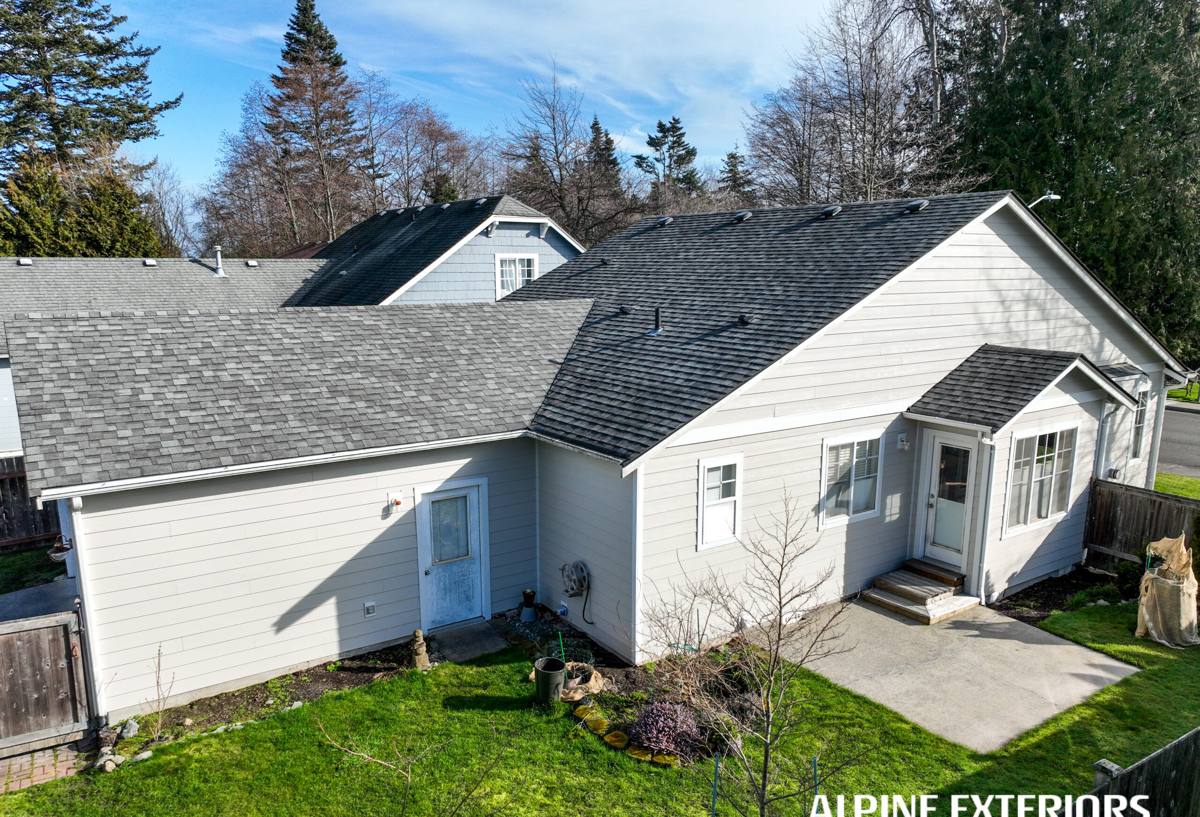
Signs a Peace Arch Home Needs Replacement, Not Just a Repair
Not every roof problem calls for a full replacement, and we'll tell you honestly when a repair is the smarter move. But there's a point where patching stops making financial sense. Watch for:
- Granule loss heavy enough that you can see bare, shiny patches on the shingles
- Shingles that are curling, cupping, or cracking across multiple areas of the roof
- Moss beds thick enough that you can't see the shingle surface underneath
- Daylight visible through the roof deck from inside the attic
- Soft or spongy spots when walking the roof, which usually means the decking underneath has taken on water
- Repeated leaks in different spots each winter, rather than one isolated area
- A roof approaching or past the manufacturer's rated lifespan, especially if it's never been maintained
What a Correct Roof Replacement Actually Involves
A roof replacement is more than swapping old shingles for new ones. The parts you don't see are what determine whether the roof holds up through a Whatcom County winter or starts leaking again in three years.
Full Tear-Off vs. Overlay
We tear off down to the deck rather than layering new shingles over old ones. An overlay hides problems instead of fixing them, and in a wet climate like this, trapped moisture between layers is exactly what accelerates rot. Tear-off also lets us actually see the deck, which matters a lot in a salt-air, high-moisture area.
Deck Inspection and Repair
Once the old roofing is off, we inspect every section of the plywood or plank decking for soft spots, delamination, or rot — common where moss or ice damming has held moisture against the wood over the years. Damaged sections get replaced before anything new goes down; installing a new roof over a compromised deck just guarantees an early failure.
Underlayment and Water Protection
Given how much wind-driven rain this area sees, underlayment choice matters. We use synthetic underlayment across the field for its tear resistance and water shedding, with self-adhering ice-and-water membrane at eaves, valleys, and any low-slope transitions where wind-blown water is most likely to find a way in.
Flashing Details
Flashing around chimneys, skylights, sidewalls, and roof-to-wall transitions is where most leaks actually start, not in the open field of shingles. We use corrosion-resistant flashing material and reseal or replace it as part of every replacement rather than reusing old flashing to save time.
Ventilation
Proper intake and exhaust ventilation keeps the attic dry and temperature-balanced, which matters for shingle life and for controlling condensation in a humid coastal climate. A roof that looks great but wasn't vented correctly will show problems from the inside out — mold, damp insulation, and premature shingle aging from beneath.
Choosing a Roofing Material for This Climate
There's no single "best" roofing material for every home — it depends on your budget, your roof's exposure, and how much maintenance you want to take on. Here's how the common options compare for a Peace Arch property:
| Material | Typical Lifespan | Moss & Moisture Resistance | Salt Air Considerations |
|---|---|---|---|
| Architectural asphalt shingle | 25–30 years | Good with proper ventilation; needs periodic moss treatment | Performs well; use corrosion-resistant fasteners and flashing |
| Standing seam metal | 40–50+ years | Excellent — sheds moisture and resists moss growth | Requires marine-grade coatings and fasteners to avoid corrosion |
| Cedar shake | 20–25 years with upkeep | Attractive but moisture-sensitive; needs regular cleaning and treatment | Higher maintenance burden in humid, salt-air conditions |
We install and stand behind all three, but we'll always walk you through the real maintenance expectations for your specific lot — a heavily shaded, water-facing roof has different needs than one that gets full sun most of the day.
Our Roof Replacement Process
- On-site inspection and honest assessment. We get on the roof, check the deck where accessible, and tell you plainly whether you need a replacement or a repair.
- Material and scope walkthrough. We go over material options, ventilation needs, and flashing details specific to your home before any pricing is finalized.
- Permitting. We handle the permit process with the applicable local jurisdiction so you don't have to track it down yourself.
- Weather-aware scheduling. We schedule around forecasted rain windows as much as possible, since starting a tear-off ahead of a storm is how decks get soaked.
- Tear-off and deck repair. Old roofing comes off, the deck is inspected and repaired, and debris is cleared as we go.
- Installation. Underlayment, ice-and-water membrane, flashing, and the roofing material go on in that order, with attention to every penetration and transition.
- Site cleanup. We run a magnetic sweep for nails and clear debris before we consider the job finished.
- Final walkthrough and warranty paperwork. We review the completed work with you and go over manufacturer and workmanship warranty coverage.
What Affects the Cost of a Roof Replacement Here
Every roof is different, so we won't quote a number without seeing yours — but these are the factors that most often move the price up or down:
| Cost Factor | Why It Matters |
|---|---|
| Roof size and number of planes | More square footage and more valleys/hips mean more material and labor |
| Deck condition | Rotted or soft decking found during tear-off requires repair before new roofing goes on |
| Material choice | Asphalt, metal, and cedar carry different material and labor costs |
| Roof pitch and access | Steep or hard-to-access roofs take longer and require more safety setup |
| Flashing and penetrations | Chimneys, skylights, and multiple vents add detail work |
| Ventilation upgrades | Adding or correcting intake/exhaust vents affects labor and materials |
Protecting Your New Roof From Moss and Salt Air Going Forward
A properly installed roof still needs some ongoing attention in this climate to hit its full lifespan. A few habits go a long way:
- Clear gutters and downspouts at least twice a year so water isn't backing up under the roof edge
- Trim back overhanging branches to cut down on shade and debris that feed moss growth
- Consider zinc or copper control strips near the ridge, which help suppress moss regrowth over time
- Have the roof looked at after major storms, especially ones with high wind off the water
- Avoid pressure washing shingles yourself — it strips granules and can void manufacturer warranties
- Schedule a periodic inspection every couple of years, even if nothing looks obviously wrong
Why Local Experience in Peace Arch Matters
A roofing crew that already works this specific stretch of Blaine knows what to expect before the tear-off even starts. That means understanding how far moss has typically progressed on a shaded, water-facing roof at a given age, which flashing details tend to fail first in this wind and rain pattern, and how to schedule work around the wetter stretches of the Whatcom County calendar. It also means being a known, reachable local business if a question comes up after the job is done — not a crew that worked one job in the neighborhood and moved on. When your roof is standing between your home and the kind of weather this area sees, that local familiarity isn't a nice-to-have, it's part of the job being done right the first time.
If your roof is showing its age or you just want an honest opinion on where it stands, we're happy to take a look. Fill out the form below for a free, no-pressure estimate on your Peace Arch roof replacement.