 Blaine
 Siding Replacement Built for the Nooksack Side of Whatcom County
Homes in the Nooksack area sit in a different microclimate than you might expect from a town this close to the Canadian border and the Salish Sea. You get the marine influence that defines Whatcom County weather — damp air, low winter sun angles, and long stretches of gray, wet months — combined with the shade and humidity that come from river-valley tree cover and lower elevation drainage near the Nooksack River. That combination is hard on exterior siding, and it's why a siding replacement here needs to be planned differently than the same job in a drier, sunnier part of the state.
This page covers what Nooksack-area homeowners should know before replacing siding: how the local climate actually attacks different materials, what a properly done tear-off-and-replace job involves, and why we've standardized on one product system instead of offering the full menu of options most contractors sell.
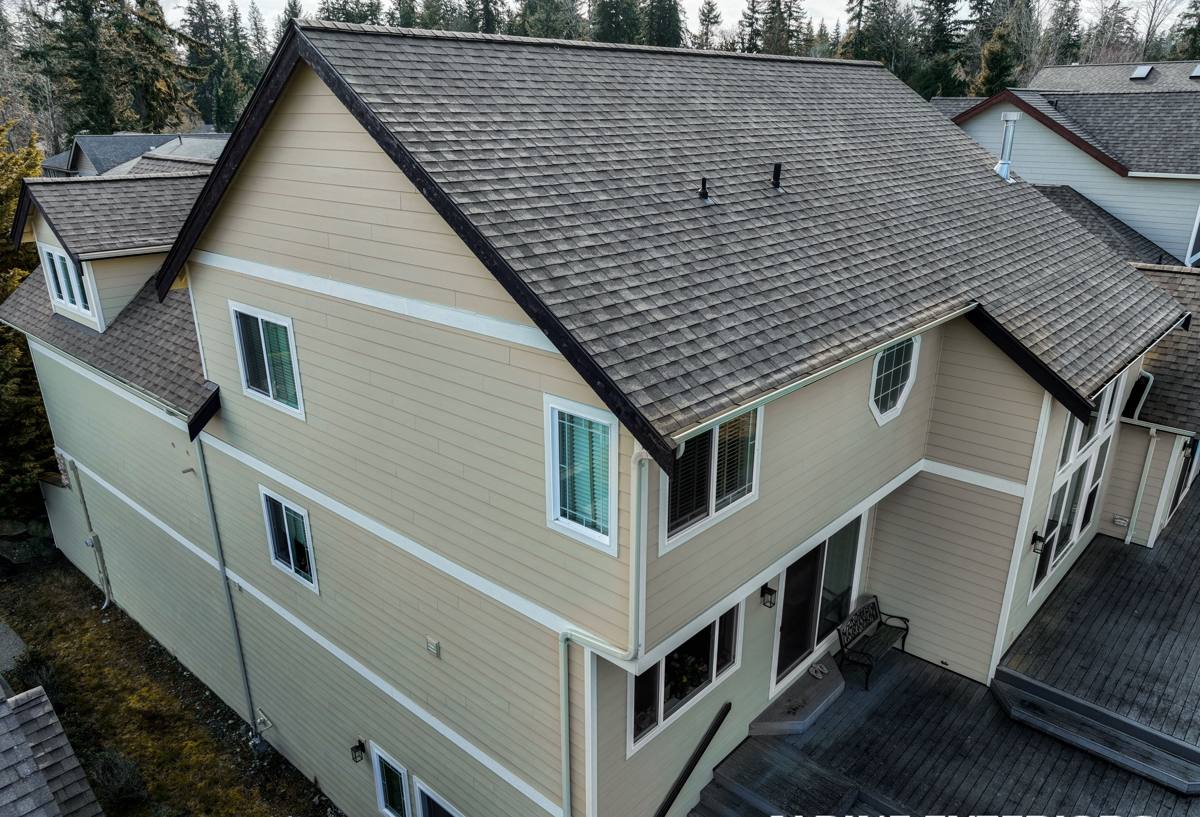
What This Corner of Whatcom County Does to Siding
Salt Air Doesn't Stop at the Coastline
Blaine sits directly on saltwater, and prevailing winds off the Salish Sea carry fine salt aerosol well inland — including into the Nooksack corridor. Salt-laden moisture accelerates corrosion on fasteners, flashing, and any exposed metal trim, and it degrades certain paint and coating systems faster than a standard weathering forecast would suggest. Siding material and hardware need to be chosen with that in mind, not just rated for generic "Pacific Northwest" exposure.
Driving Rain Finds Every Gap
Whatcom County doesn't just get a lot of rain — it gets wind-driven rain that hits siding at an angle instead of falling straight down. That means water gets pushed up under laps, into seams, and behind poorly flashed trim in ways that vertical-only rain never would. A siding system's water-management details — how laps overlap, how corners are flashed, how the weather-resistant barrier behind the siding is installed — matter more here than the siding material itself.
A Long Moss Season
Tree cover, valley humidity, and short winter daylight hours add up to a moss and algae season that can run most of the year on shaded north- and east-facing walls. Wood-based and wood-alternative products are especially vulnerable because moss holds moisture directly against the substrate, and that trapped moisture is what actually causes rot — the moss itself is just the visible symptom.
| Material | Salt Air Exposure | Moisture/Rot Risk | Moss & Algae Growth |
|---|---|---|---|
| Vinyl siding | Handles salt air fine, but can fade and grow brittle with UV/temperature cycling | Low direct rot risk, but hides water intrusion behind it for years | Moss grows on the surface; panels can warp if trapped moisture builds behind them |
| LP SmartSide / engineered wood | Coating can chalk and thin faster in salt-heavy air | Engineered wood strand core swells if the factory seal is ever breached | Requires active washing to prevent moss from holding moisture at seams |
| Cedar / primed spruce | Salt accelerates finish breakdown, exposing bare wood | Highest rot risk of the group once moisture gets past the finish | Most susceptible — moss and organic growth feed directly on the wood surface |
| James Hardie fiber cement | Non-combustible cement composite resists salt-driven degradation | Doesn't swell, rot, or delaminate from moisture the way wood-based products can | Still needs periodic washing, but the substrate itself isn't food for organic growth |
Signs a Nooksack-Area Home Needs Siding Replacement
Because so much damage in this climate happens behind the siding before it shows on the surface, it pays to know what to check for — and to check more than once a year given how long the wet season runs.
- Soft or spongy spots when you press on the siding, especially near the bottom courses and around window and door trim
- Persistent moss or dark streaking on north- or east-facing walls that comes back within weeks of cleaning
- Visible rust bleeding from fastener heads or flashing joints
- Peeling, bubbling, or chalking paint/coating that keeps returning after repainting
- Warping, buckling, or gaps opening up between siding panels or boards
- Rising interior humidity, musty smells, or unexplained higher heating bills, which can point to moisture getting in behind the wall assembly
- Visible daylight or drafts around outlets and trim on exterior walls
What a Correct Siding Replacement Job Actually Involves
Siding replacement is not just removing old boards and nailing up new ones. In a climate that pushes water sideways and grows moss on demand, the assembly behind the visible siding is what actually determines whether the job lasts.
Tear-Off and Sheathing Inspection
Old siding comes off down to the sheathing so it can be inspected directly, rather than covering over hidden damage. Any soft, delaminated, or water-stained sheathing gets identified and replaced before anything new goes up — installing new siding over compromised sheathing just resets the clock on the same failure.
Weather-Resistant Barrier and Flashing
A new weather-resistant barrier goes on with proper overlaps, shingle-style, so water is always directed downward and outward rather than trapped. Flashing at windows, doors, and any wall penetrations gets integrated with that barrier — this is the single most common place we find prior installation shortcuts, and it's exactly where driving rain does its damage.
Fastening and Lap Details
Correct fastener type, spacing, and depth matter more in salt air, since under-driven or over-driven fasteners create the gaps and stress points where corrosion starts. Lap siding needs the specified minimum overlap and clearance from grade, decks, and roof lines so water sheds correctly instead of wicking back up into the board.
Trim, Caulking, and Paint Details
Joints get sealed with the right sealant for the substrate, not a generic caulk, and factory-finished products get field-touched only at cut ends — not repainted wholesale, which would void the factory finish warranty on some systems.
Why We Install Only James Hardie Fiber Cement
We don't offer vinyl, LP SmartSide, Cemplank, Allura, primed spruce, or cedar as options — not because those products can't be installed correctly by someone, but because we've standardized our crews, warranty process, and climate expertise around one system: James Hardie fiber cement.
James Hardie's HZ5 product line is engineered specifically for climates like Whatcom County — freeze-thaw cycling combined with sustained moisture exposure. The fiber cement substrate is non-combustible, doesn't swell or rot when it gets wet, and isn't a food source for the moss and algae that thrive in shaded, humid conditions. The ColorPlus factory finish process bakes color and a protective topcoat on under controlled conditions, which holds up better against salt-air fading and chalking than field-applied paint typically does. James Hardie also backs the product with a substantial transferable warranty, which matters on a coastal-adjacent property where the next owner will care just as much about the siding's condition as you do.
None of that means other products are junk — it means we made a professional call to specialize in the one system we believe performs most consistently in this specific climate, and we'd rather do one thing at a high standard than offer five options at a mediocre one.
Our Nooksack-Area Installation Process
- On-site assessment: We inspect existing siding, trim, and visible sheathing condition, and talk through drainage, shade patterns, and moss history specific to your property's orientation.
- Written estimate and product selection: You get a clear scope of work, an HZ5 product and ColorPlus color selection suited to sun and shade exposure, and a realistic timeline.
- Tear-off and sheathing repair: Old material comes off, sheathing is inspected, and any water-damaged sections are replaced before moving forward.
- Weather barrier and flashing installation: New house wrap or building paper and flashing go in with correct overlaps at every penetration.
- Hardie installation to manufacturer spec: Correct fastener schedule, clearances, and lap details, following James Hardie's installation instructions rather than shortcuts.
- Trim, caulk, and final detailing: Corners, trim boards, and joints are sealed and finished.
- Final walkthrough: We review the completed work with you and cover basic care so the finish holds up through the next wet season.
Cost Factors for Siding Replacement in This Area
Every home is different, and we don't quote pricing until we've seen the property, but these are the factors that typically move the number up or down.
| Factor | Why It Matters Here |
|---|---|
| Sheathing condition underneath old siding | Hidden moisture damage from prior driving-rain intrusion often isn't visible until tear-off, and repair adds material and labor |
| Home size and wall complexity | More corners, dormers, and trim details mean more flashing and cutting time |
| Existing siding material | Some materials (cedar, older wood products) take longer to remove and dispose of than others |
| Access and site conditions | Tree cover, slopes, and tight lot lines common in this area can affect scaffolding and material staging |
| Trim and color complexity | Custom trim details or multiple ColorPlus colors add to material and labor time |
Why Hiring a Crew That Already Works This Area Matters
A crew that already works Whatcom County jobs regularly knows what to expect before the tear-off even starts: how much hidden moisture damage is typical behind older siding in this rainfall pattern, which wall orientations will need extra attention for moss and shade, and how salt-influenced air affects fastener and flashing choices even a few miles inland from the water. That's not something you can fully substitute with a generic national playbook — it comes from doing the work in this specific climate, on this specific type of housing stock, repeatedly.
Local familiarity also means realistic scheduling around the wet season, straightforward answers about permitting and disposal, and a crew that isn't guessing about how James Hardie's HZ5 line performs here — because they've already seen it hold up through a full Whatcom County winter.
If your Nooksack-area home is showing any of the signs above, or you're just planning ahead before the next wet season sets in, we're happy to take a look and give you a straightforward, no-pressure estimate — just fill out the form below to get started.