 Blaine
 Roofing in Birch Point Has to Answer to the Weather
Birch Point sits close enough to the water that salt air is part of daily life, not an occasional nuisance. Add Whatcom County's long wet season, wind-driven rain off the Strait, and a moss season that can run eight months or more, and you've got a roofing environment that's noticeably harder on materials than a typical inland installation. A roof that would hold up fine in a drier, more sheltered part of the state can start showing problems here years ahead of schedule if it wasn't built with these conditions in mind.
New roof installation in Birch Point isn't just about picking a shingle color and nailing it down. It's about material selection, ventilation, flashing detail, and underlayment choices that account for constant moisture exposure and salt-laden air. Get those details right and a roof performs for decades. Get them wrong and you're looking at premature granule loss, fastener corrosion, moss intrusion, and leaks in places that never should have failed.
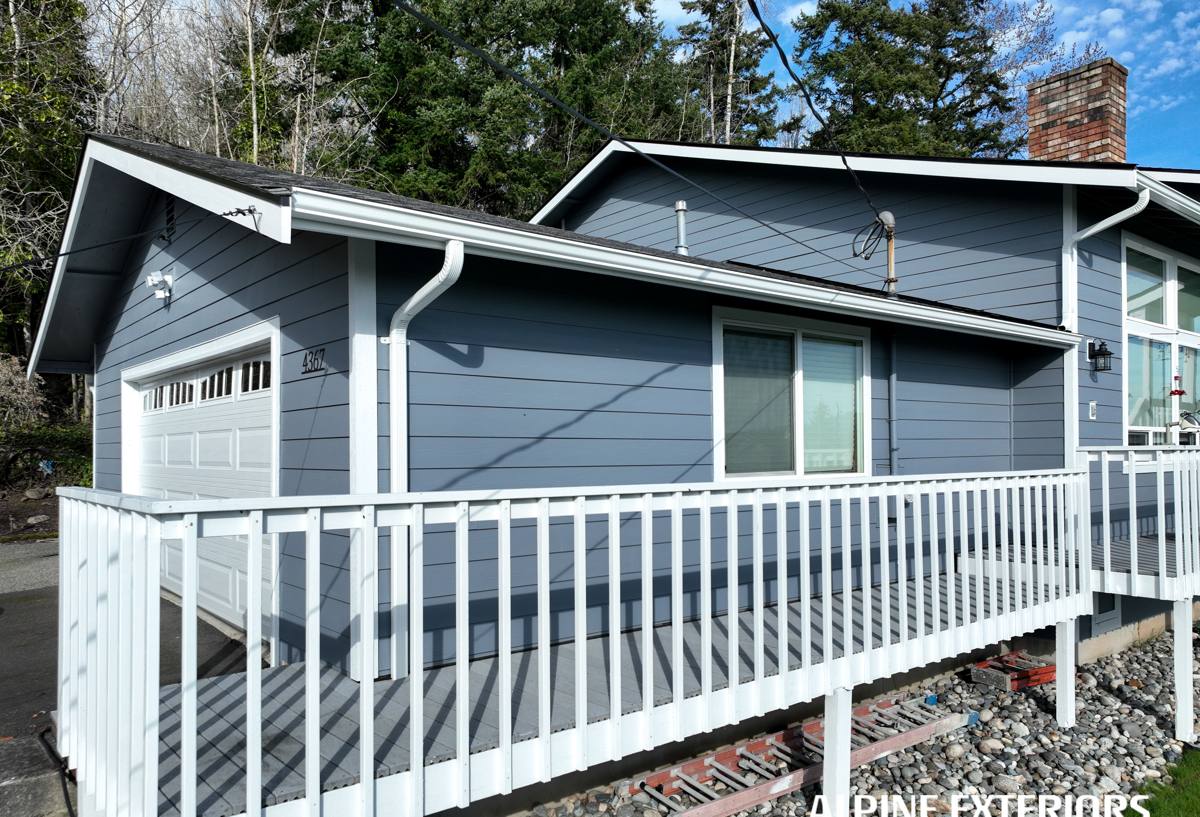
Signs a Birch Point Roof Needs Replacing, Not Another Patch
Homeowners often call us after a leak, but by the time water is visibly coming through, the roof has usually been struggling for a while. Some signs point clearly toward replacement rather than another round of spot repairs:
- Shingles that are cupping, curling, or losing granules in patches rather than evenly across the roof
- Moss establishing itself in the shingle mat itself, not just sitting on the surface — this lifts shingles and holds moisture against the roof deck
- Soft or spongy spots underfoot near valleys, chimneys, or where the roof meets a wall
- Rust staining or corrosion around flashing, vents, or exposed fasteners
- Multiple repair calls in the same areas over a couple of years
- A roof that's already 20-plus years old, since even well-maintained roofs in this climate rarely stretch much beyond that
If a roof is showing one or two of these in isolation, repair can still make sense. When several show up together, or the roof deck itself has taken on moisture damage, replacement is usually the more honest recommendation — and the more cost-effective one over time.
What a Correct Installation Actually Involves
Tear-off and deck inspection
We don't install a new roof over a compromised deck. Full tear-off lets us inspect the plywood or OSB sheathing underneath, replace any sections that have soaked up moisture or gone soft, and confirm the framing is sound before anything new goes down. Skipping this step is one of the most common shortcuts in the trade, and it's the one that causes the most expensive problems later.
Underlayment built for wet climates
A synthetic or self-adhered underlayment rated for high-moisture exposure is standard for us on Blaine roofs, not an upsell. In areas prone to wind-driven rain — which describes most of Birch Point on a given winter storm — proper underlayment is the difference between a nuisance leak and a dry attic.
Flashing and valley details
Most roof leaks don't happen in the open field of shingles — they happen at transitions: chimneys, skylights, wall intersections, and valleys. Salt air accelerates corrosion on cheap or thin flashing material, so we use flashing that's rated to hold up in coastal exposure, and we take the extra time on these details because that's where roofs actually fail.
Fasteners and hardware
Standard fasteners corrode faster in salt-air environments. Corrosion-resistant nails and hardware cost a little more up front and save homeowners from fastener failure years down the line — a problem that's expensive to diagnose because it hides under the shingles until something lets go.
Material Options and Cost Factors
There's no single "right" material for every Birch Point home — it depends on budget, roof pitch, architectural style, and how much long-term maintenance a homeowner wants to take on. Here's how the common options compare for this specific climate:
| Material | Coastal Climate Fit | Moss Resistance | Relative Lifespan |
|---|---|---|---|
| Architectural asphalt shingle | Good, with proper underlayment and flashing | Moderate — benefits from zinc/copper strips | 20-30 years |
| Standing seam metal | Excellent — sheds water and salt spray well | High — smooth surface resists moss establishment | 40-60 years |
| Cedar shake | Requires diligent maintenance in wet, salty air | Low without regular treatment | 20-25 years with upkeep |
| Synthetic composite shingle | Good — resists moisture absorption | Moderate to high | 30-50 years |
Cost is driven less by the material name and more by roof complexity — pitch, number of valleys and penetrations, deck condition, and access. A steep roof with multiple dormers costs more to install correctly than a simple gable roof of the same square footage, regardless of material chosen. We walk homeowners through actual cost drivers during the estimate rather than quoting a flat per-square number that doesn't reflect their specific roof.
Ventilation: The Detail That Prevents Moss and Rot
Proper attic and roof ventilation matters everywhere, but it matters more here. Poor ventilation traps moisture under the roof deck, which speeds up wood rot from the inside and creates the damp, shaded conditions moss thrives in from the outside. A correctly vented roof — balanced intake at the eaves and exhaust at the ridge — keeps the deck drier and the shingles cooler, which slows moss colonization and extends shingle life. We check existing ventilation during every roof assessment and correct it as part of the installation, not as a separate add-on project later.
Our Process, Start to Finish
- On-site assessment — we inspect the current roof, attic ventilation, and any visible deck or flashing issues before quoting anything
- Written estimate — material options, scope, and pricing laid out clearly, with no vague allowances
- Scheduling around weather windows — we plan installs to work with, not against, the wet season
- Tear-off and deck repair — old roofing removed, deck inspected and repaired as needed
- Underlayment, flashing, and roofing installation — done to manufacturer specification and adjusted for coastal exposure
- Site cleanup — magnetic sweep for stray fasteners and full debris removal before we consider the job done
- Final walkthrough — we review the completed roof with the homeowner and go over care and warranty details
Why Local Experience in Birch Point Matters
A crew that regularly works Birch Point and the surrounding Blaine area already knows what this specific coastline does to roofing materials over time. That's not something you get from a general contractor who mostly works inland jobs and treats a coastal roof like any other. We've seen how salt air chews through low-grade hardware, how moss establishes fastest on north-facing slopes shaded by mature trees, and which flashing details actually hold up through a Whatcom County winter versus which ones just look fine on installation day. That knowledge shapes every material and technique decision we make on a Birch Point roof, not just the sales pitch.
Local presence also means we're accountable after the job is done. If a question comes up two years into a new roof's life, we're not a crew that drove in from three counties away for one job and disappeared.
Questions Worth Asking Before You Sign a Roofing Contract
Not every roofing bid is built the same way, even when the price looks similar on paper. Before committing, it's worth confirming:
- Does the quote include full tear-off and deck inspection, or is it a straight overlay?
- What underlayment is specified, and is it rated for high-moisture, coastal exposure?
- Are corrosion-resistant fasteners and flashing included, or standard-grade hardware?
- Is ventilation being assessed and corrected, or left as-is?
- What's covered under workmanship warranty versus manufacturer material warranty, and for how long?
- Is the crew licensed, bonded, and insured in Washington State?
A contractor who answers these clearly and in writing, without hedging, is generally one worth trusting with a job this size.
Caring for a New Roof in This Climate
Even a well-installed roof benefits from periodic attention here. An annual gutter cleaning and a visual check for moss growth, especially on shaded north-facing slopes, catches small issues before they become expensive ones. Trimming back overhanging branches reduces both debris buildup and the shade that helps moss take hold. None of this requires a major service call — it's basic upkeep that meaningfully extends the life of the investment.
If your Birch Point home has a roof showing its age, or you're planning ahead rather than reacting to a leak, we're happy to take a look and give you a straightforward, no-pressure estimate. Use the form below to get started.