 Blaine
 Storm Damage Roof Repair in Grandview: What Local Homes Are Up Against
Grandview sits in the Blaine area of Whatcom County, close enough to the water that homes here take on a different weather load than properties further inland. Salt air off the water, storms that arrive with real wind behind them, and a moss season that runs most of the year all put steady pressure on a roof, and that pressure shows up fastest right after a storm has already loosened something. We work this area regularly, and Grandview roofs come with a specific set of storm-damage patterns we've learned to check for every time, rather than a generic inspection checklist borrowed from a drier part of the state.
This page covers one thing specifically: storm damage roof repair for homes in and around Grandview. Not a full roofing overview, not a sales pitch for a full tear-off — just what storm damage actually looks like on a roof in this climate, what a correct repair involves, and how we handle the work when a homeowner calls after a bad night of wind and rain.
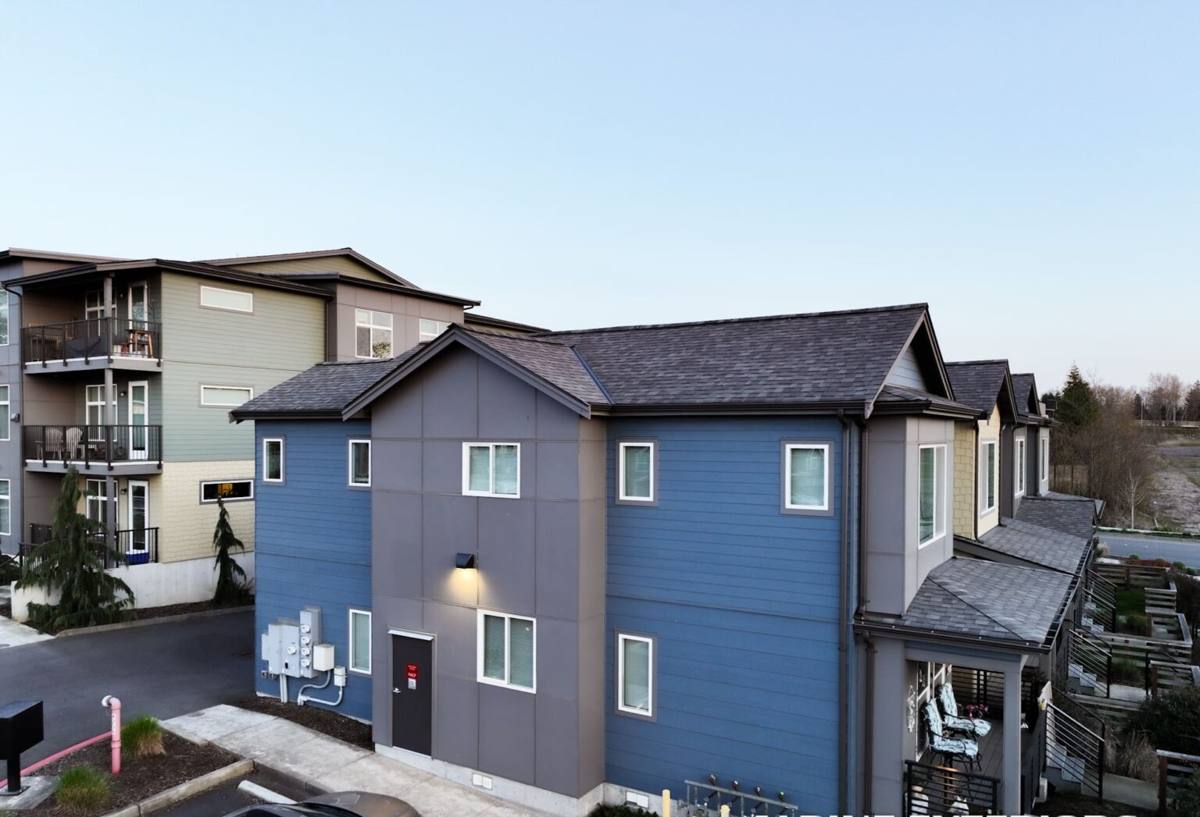
What Blaine-Area Weather Does to a Roof
Salt Air and Corrosion
Homes in Grandview sit close enough to the water that salt-laden air is a daily factor, not an occasional one. Salt accelerates corrosion on exposed fasteners, flashing, and metal roof components, which means hardware that would hold up for decades in a dry inland climate can start failing years sooner here. After a storm, corroded fasteners and flashing are often the weak point that actually gave way, even when the shingles themselves look fine from the ground.
Driving Rain and Wind-Driven Storms
Storms coming off the water rarely drop rain straight down. Wind pushes it sideways, up under shingle tabs, and into any flashing joint or penetration that isn't sealed tightly. That sideways load is what separates storm damage from ordinary wear — a roof can look intact from the street after a windstorm and still have lifted shingles, torn seals, or flashing that's been worked loose enough to let water in on the next rain, even a light one.
A Long Moss Season
Mild temperatures and near-constant moisture give moss a growing season that can run most of the year on shaded or north-facing roof planes. Moss holds water against shingles and roof decking longer than a dry surface would, and it can lift shingle edges over time, which gives wind an easier grip on the next storm. A roof already carrying moss going into a storm is more exposed to storm damage than a clean one, which is one reason moss control is worth taking seriously in Grandview even outside of storm season.
What Actually Counts as Storm Damage
Not every roof issue after a storm is storm damage in the insurance or repair sense, and it's worth knowing the difference before assuming a full section needs replacing. Common storm-caused issues we see on Grandview roofs include:
- Wind-lifted or torn-off shingles, especially along ridges, edges, and any area with less wind protection from surrounding trees or structures
- Flashing pulled loose or bent at chimneys, vent penetrations, and wall-to-roof transitions
- Impact damage from wind-driven debris or falling branches, ranging from cracked shingles to punctures through the roof deck
- Granule loss on shingles that were already aging, accelerated by wind abrasion during the storm itself
- Gutter and downspout damage that affects how water sheds off the roof afterward
- Underlayment or decking exposure where shingles were fully torn away
Gradual wear — shingles that are simply old, moss buildup that's been building for years, or fading and granule loss from routine sun exposure — isn't storm damage, even if it becomes more visible after a bad storm draws attention to the roof. That distinction matters both for how we scope the repair and for how an insurance claim gets evaluated.
What a Correct Storm Damage Repair Involves
Stopping Active Water Intrusion First
If a roof has an active leak or exposed decking after a storm, the first priority is stopping water from getting further into the house, not scheduling a full repair days out. That usually means temporary tarping or emergency covering over the damaged section until a full repair can be done properly and in dry conditions.
A Full Damage Assessment, Not Just the Obvious Spot
Storm damage rarely stays confined to the one spot a homeowner noticed from the ground. We check the full roof plane, not just the area with visible missing shingles, because wind damage often loosens shingles or flashing in a wider pattern than what's immediately obvious, and a partial repair that misses adjacent damage tends to fail again in the next storm.
Matching Materials and Proper Tie-In
A repair that patches in mismatched shingles or skips proper step flashing and underlayment tie-in at the edges of the repaired section is a repair that's likely to leak again, even if it looks fine on install day. Correct storm repair means matching the existing roofing material as closely as possible and integrating new underlayment and flashing with the surrounding roof system, not just laying replacement shingles over the gap.
Documentation for Insurance
Most storm damage repairs in Grandview involve an insurance claim, and thorough photo documentation of the damage — before, during, and after repair — makes that process smoother for the homeowner. We document what we find and what we repair, which gives homeowners a clear record to work from with their adjuster rather than relying on a verbal description after the fact.
Our Storm Damage Repair Process
1. Initial Inspection and Documentation
We walk the full roof, photograph the damage, and give the homeowner a clear, honest picture of what's actually wrong — not just the section visible from the driveway.
2. Temporary Protection if Needed
If there's active exposure or a leak, we address that first with temporary covering so the interior of the home is protected while the full repair is scheduled.
3. Repair Plan: Repair vs. Replace
Based on the extent of the damage, the age and condition of the existing roof, and how the damaged section ties into the rest of the roof system, we lay out whether a targeted repair makes sense or whether the damage is extensive enough that a larger section — or the full roof — should be considered instead.
4. Repair Work to Manufacturer Spec
Shingles, underlayment, and flashing go in following manufacturer installation specs, with attention to the fastening, sealing, and clearance details that matter most in a climate with this much wind-driven rain.
5. Final Walkthrough
We walk the completed repair with the homeowner, confirm it matches what was discussed, and provide documentation useful for insurance records or for the homeowner's own file going forward.
Repair vs. Replacement: What Drives the Decision
| Factor | Favors Targeted Repair | Favors Larger Replacement |
|---|---|---|
| Extent of damage | Localized to one section or slope | Spread across multiple slopes or the full roof |
| Roof age | Roof is relatively young with plenty of remaining service life | Roof is already near the end of its expected lifespan |
| Shingle match | Matching shingles are available and the existing roof is in good shape elsewhere | Discontinued shingle line or significant existing wear makes a clean match unlikely |
| Decking condition | Decking underneath is sound once exposed | Decking shows rot or soft spots from prior undetected moisture |
| Insurance scope | Adjuster scopes damage as a repair | Adjuster scopes damage as a full slope or roof replacement |
These are general considerations, not a determination we make from the street. We put eyes on the actual roof and decking before recommending either path, since two Grandview homes with similar storm exposure can end up with very different scopes once we're actually up there.
Signs a Grandview Roof Needs a Storm Damage Inspection
- Missing, torn, or visibly lifted shingles after a windstorm
- Granules collecting in gutters or at downspout outlets following a storm
- New or worsening interior water stains on ceilings or upper walls
- Visible daylight through the attic roof deck
- Bent, lifted, or missing flashing around chimneys, vents, or wall transitions
- Branches or other debris that struck the roof during the storm, even without obvious damage from the ground
- Gutters pulled loose or sagging after heavy wind or water load
Any one of these is worth a look before the next storm system moves through, since damage that lets in a small amount of water tends to get worse, not better, with each additional wet weather event.
Timing a Repair Around Blaine's Storm Season
Whatcom County's stormiest stretch typically runs from late fall through winter, when Pacific storm systems bring the strongest wind and heaviest rain of the year. That's also when roof damage is most likely to happen and hardest to repair in ideal conditions, since dry, calm weather makes for a better and more durable repair than trying to work between storm bands. Active leaks and exposed decking don't wait for good weather, though, so we prioritize emergency mitigation immediately and schedule the full repair for the first safe, workable window rather than delaying protection until conditions improve.
Why a Crew That Already Works Grandview Matters
A contractor who works this part of Blaine regularly knows which roof orientations catch the worst of the wind-driven rain, how quickly moss reestablishes on shaded slopes here, and which flashing details tend to be the actual failure point on older homes in the area. That familiarity shows up in practical ways after a storm: knowing what to check beyond the obvious damage, having a realistic sense of local material availability for a shingle match, and being straightforward about when a repair will hold versus when it's a short-term fix on a roof that's already near the end of its service life. It also means that if a question comes up on the repair down the road, it's a call to a crew still working in the area, not one that's moved on.
If a recent storm has left your Grandview home with missing shingles, a leak, or damage you're not sure how to scope, we're glad to come take a look and give you a straightforward, no-pressure estimate. Reach out using the form below to schedule a free assessment.