 Blaine
 Grandview's Siding Problem Isn't Like Most of the Country's
Homes in the Grandview area sit close enough to the water that siding takes on a different kind of workload than it would twenty miles inland. Salt-laden air moves through constantly, wind-driven rain hits siding sideways instead of falling straight down, and the shaded, damp stretches of the year run long. None of that is dramatic on its own, but stacked together over years it's exactly the combination that separates siding that lasts three decades from siding that starts failing in eight or ten years.
This page is about one thing: what it actually takes to put James Hardie fiber cement siding on a Grandview home correctly, and why that "correctly" part matters more here than it does in a drier, calmer climate.
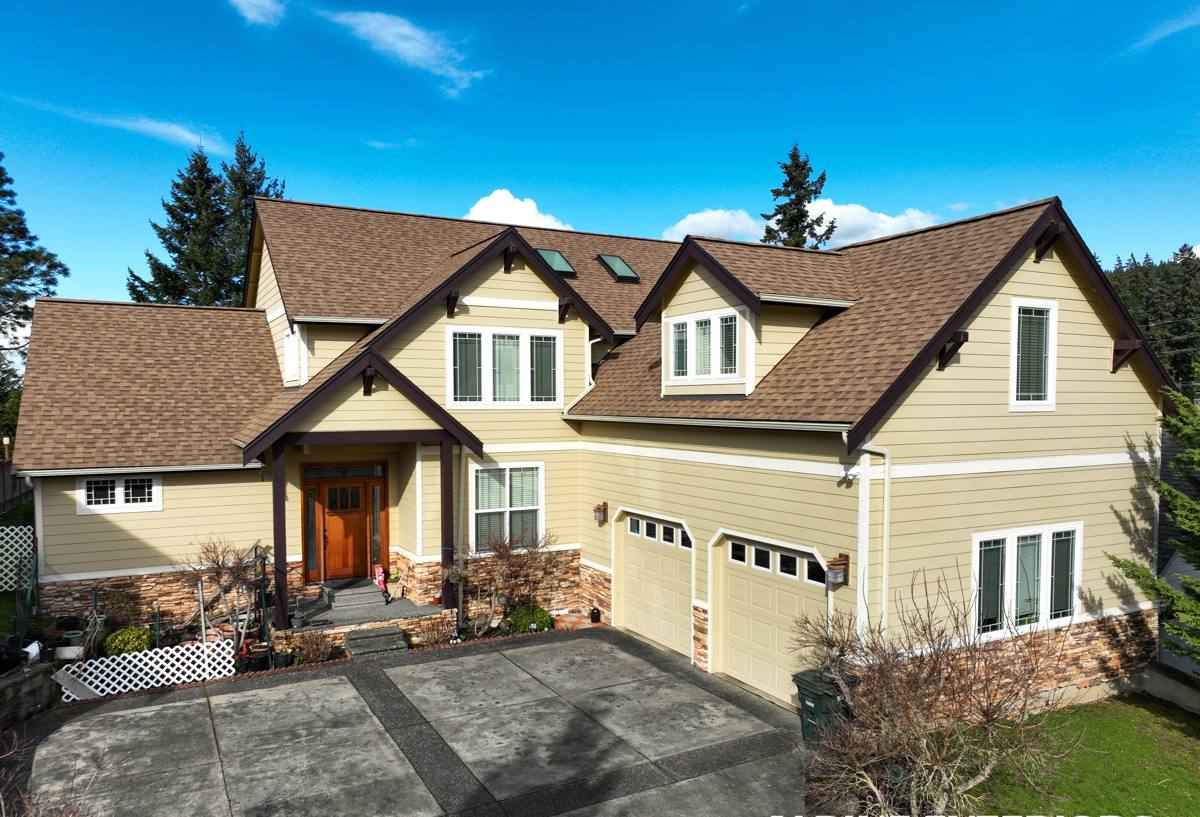
What Salt Air, Driving Rain, and Moss Season Actually Do to Siding
Each of these stresses attacks siding differently, and understanding the mechanism is the difference between a homeowner who asks good questions and one who just hopes the new siding holds up.
Salt Air
Airborne salt is corrosive to exposed metal — fasteners, flashing edges, trim screws — and it's abrasive to painted or coated surfaces over time, gradually breaking down finishes that weren't built to take it. Siding and fasteners rated for a generic climate can chalk, fade, or corrode faster near the water than the same materials would fifty miles inland.
Driving Rain
Rain that comes in at an angle doesn't just wet a wall's surface — it tests every seam, joint, and penetration in the siding system. A house that would stay dry under straight-down rain can take on moisture at window trim, corner boards, and butt joints when wind pushes water sideways and upward into gaps that were never properly sealed or flashed.
Moss and Prolonged Dampness
A long moss season means siding, trim, and the ground line stay damp for extended stretches, especially on north-facing and shaded walls. Materials that absorb moisture swell, soften, or hold that dampness against the wall assembly behind them — conditions moss and mildew thrive in, and conditions that shorten the life of anything not engineered to shed water and dry out quickly.
Why James Hardie Is the Right Match for This Climate
We install James Hardie fiber cement exclusively, and in a location like Grandview that's not a marketing preference — it's the product that actually holds up to what this environment does to a home's exterior.
Engineered for Damp Climates
Hardie's HZ5 product line is engineered specifically for climates with significant moisture exposure, which describes Whatcom County's marine environment well. Fiber cement doesn't absorb water the way wood-based or wood-fiber composite sidings can, so it doesn't swell, delaminate, or rot the way products with a wood component eventually do when they stay damp for weeks at a stretch.
A Factory Finish Built to Take Weather
James Hardie's ColorPlus finish is baked on in a factory-controlled process, not brushed on in the field. That finish is formulated to resist fading and hold its color under UV and weather exposure far longer than a standard field-applied paint job, which matters on a home that's getting salt air and driving rain on top of normal sun exposure. It also means touch-up and color-match are handled with Hardie-supplied products designed for the system, not a generic exterior paint.
Non-Combustible
Fiber cement doesn't burn, which isn't a Grandview-specific climate point, but it's part of why we standardized on Hardie across every home we side, coastal or not.
What a Correct Installation Actually Involves Here
Fiber cement siding is only as good as the installation behind it. In a low-moisture climate, sloppy flashing or a skipped gap might go unnoticed for years. In Grandview, driving rain finds those mistakes fast. A correct install includes:
Drainage and Flashing
A proper water-resistive barrier and drainage plane behind the siding, with flashing at every window, door, and horizontal transition, so any water that does get past the siding surface has a path down and out instead of a path into the wall assembly.
Fastening Specified for the Product and the Climate
Fasteners driven to Hardie's specification — correct type, correct depth, correct spacing — placed to avoid the corrosion issues that generic or undersized fasteners can develop faster in salt air.
Gaps, Clearances, and Caulking Done Right
Proper gaps at butt joints and trim, correct clearance from grade, decks, and roof lines, and sealant used only where Hardie's installation instructions call for it — not as a substitute for correct flashing. Caulking every seam "just to be safe" traps moisture as often as it keeps it out.
Cuts and Edges Sealed
Factory edges come primed, but field cuts expose raw fiber cement. Every cut edge gets sealed before installation so it isn't the weak point that lets moisture in over time.
Skipping any one of these steps might not show up at the final walkthrough. It shows up two or three winters later, usually at a corner, a window head, or a low wall section — right where Grandview's wind-driven rain concentrates.
Our Process for a Grandview Project
The work itself follows the same disciplined sequence on every home, adjusted for what we find once the old siding comes off.
- On-site assessment: We look at wall orientation, existing moisture damage, trim condition, and how the home is currently handling water before we ever quote the job.
- Tear-off and inspection: Once old siding is removed, we can see the sheathing and framing directly — this is where hidden rot or past water intrusion gets caught and addressed before new siding goes on top of it.
- Water-resistive barrier and flashing: The drainage plane and flashing details go in first, since this layer does more long-term work than the visible siding itself.
- Hardie installation to spec: Panels or lap siding installed per Hardie's fastening, clearance, and gap requirements — not shortcuts developed for a drier climate.
- Trim, caulking, and touch-up: Finished with Hardie-compatible sealants and ColorPlus touch-up product where field cuts or fastener heads need it.
- Final walkthrough: We go over the completed work with the homeowner and flag anything worth watching, like a shaded wall section that may need more frequent rinsing.
What Drives Cost on a Grandview Siding Job
| Factor | Why It Matters Here |
|---|---|
| Extent of hidden water damage found at tear-off | Sheathing or framing repair is common on older homes that have taken driving rain for decades |
| Wall complexity (corners, dormers, trim detail) | More seams and transitions mean more flashing detail work, which is where water intrusion starts |
| Product line and profile chosen | Lap siding, panel systems, and shingle-style Hardie products carry different material and labor costs |
| Access and site conditions | Slope, shaded/damp ground, and tight lot lines affect scaffolding and staging time |
| Color and finish | ColorPlus factory finishes vs. site-applied paint after installation carry different cost and long-term maintenance profiles |
Comparing Hardie Product Lines for a Coastal Whatcom County Home
| Product | Typical Use | Fit for Grandview's Climate |
|---|---|---|
| HardiePlank lap siding | Traditional horizontal lap look | Most common choice; strong track record in wet coastal climates |
| HardiePanel vertical siding | Modern vertical look, often paired with lap siding as an accent | Works well when flashing and joint detailing are done correctly, since vertical seams need careful water management |
| HardieShingle siding | Shingle-style curb appeal | More seams than lap siding, so correct installation detail matters even more in driving rain |
Maintenance a Grandview Homeowner Should Actually Expect
James Hardie siding is low-maintenance, not no-maintenance. In this climate, a short annual routine goes a long way:
- Rinse siding gently once or twice a year, with extra attention to shaded, north-facing walls where moss and mildew take hold first
- Keep gutters and downspouts clear so roof runoff isn't dumping extra water onto siding and trim
- Trim back landscaping and tree cover that keeps a wall section shaded and damp longer than the rest of the house
- Walk the exterior once a year and check caulking at windows, doors, and trim for cracking or gaps
- Address any small paint chip or fastener corrosion spot with Hardie-compatible touch-up product before it spreads
Why a Crew That Already Works This Area Matters
Siding installation instructions are the same everywhere, but judgment calls on site aren't. Knowing which wall orientations in this area tend to hold moss longest, how far driving rain typically pushes water up under trim during a winter storm, and where salt air does the most damage to fasteners over time comes from doing this work here repeatedly — not from a manual. A crew that already works Grandview and the surrounding Blaine area has already seen how homes in this exact exposure behave over time, and builds the install around that, not around generic assumptions.
If you're planning a siding project in Grandview and want a straightforward look at what your home actually needs, we're happy to walk the exterior with you and put together a free, no-pressure estimate.