 Blaine
 Grandview's Roofs Work Harder Than Most
Grandview sits close enough to the water that salt air is a daily fact of life, not an occasional nuisance. Add Whatcom County's long wet season, driving rain off the Strait, and months where moss and moisture barely let a roof dry out, and you've got conditions that shorten the life of a poorly built roof fast. We've re-roofed and repaired enough homes in this pocket of Blaine to know which failures show up here again and again, and it's rarely the shingle brand that's to blame. It's almost always ventilation, flashing, or underlayment choices that didn't account for what this specific climate does to a roof year-round.
This page is about one job in one place: asphalt shingle roofing for Grandview homes. Not a general overview of shingle roofing everywhere — the specific things a roof here needs to hold up.
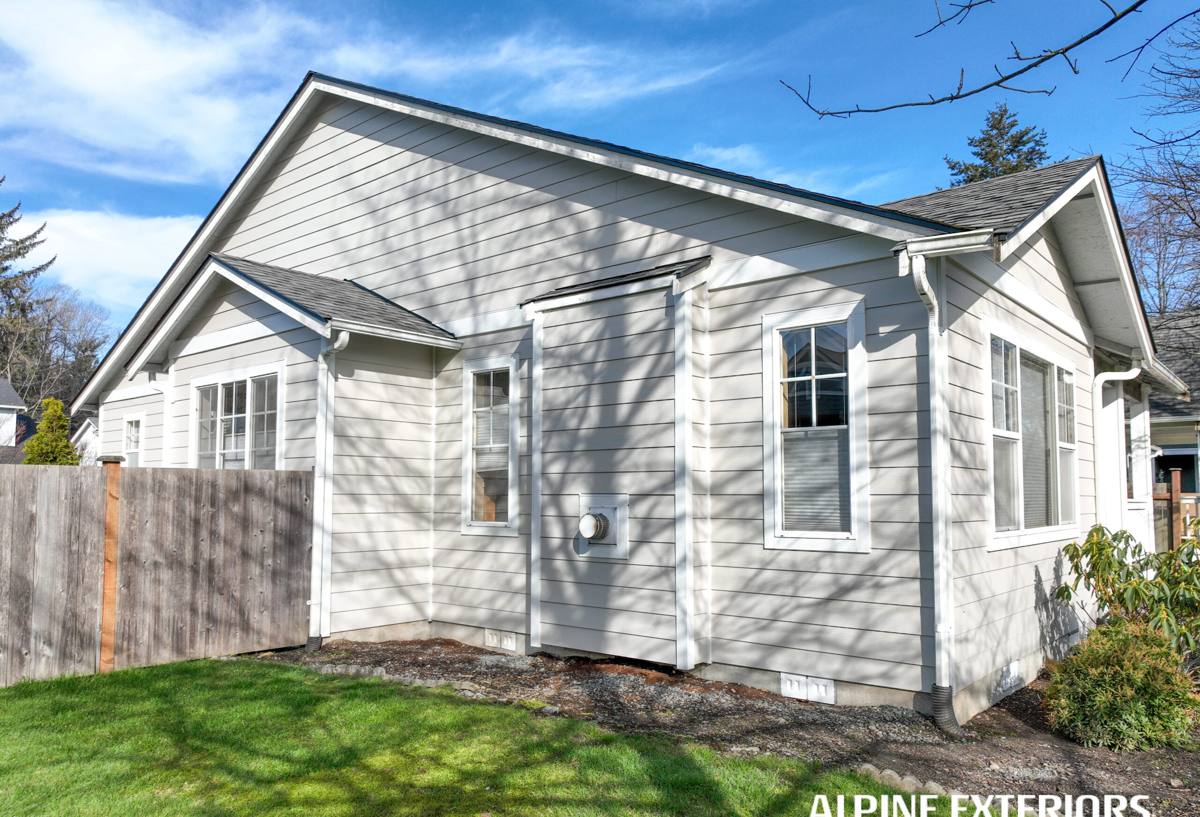
What Salt Air, Rain, and Moss Actually Do to a Roof
Salt Air
Airborne salt accelerates corrosion on anything metal — nails, flashing, drip edge, vent stacks. A roof built with standard-grade fasteners or thin flashing will show rust streaks and early failure at those points well before the shingles themselves wear out. This is one of the most common causes of leaks we find on older Grandview roofs: not the shingle field, but a corroded flashing detail at a chimney, valley, or vent.
Driving Rain
Wind-driven rain off the water doesn't just fall straight down — it gets pushed sideways and up under shingle edges, especially at eaves, rakes, and low-slope transitions. A roof here needs underlayment and edge details built for wind-driven moisture, not just a standard felt layer that assumes rain falls straight down.
Moss Season
Whatcom County's wet stretch runs long, and shaded or north-facing roof sections in Grandview often stay damp for weeks at a time. Moss and algae take hold in that dampness, and once established they lift shingle edges, trap moisture against the roof deck, and speed up granule loss. A roof that isn't detailed to shed water quickly and dry out between rains will grow moss faster than one that is.
What a Correctly Built Roof Needs Here
A shingle roof built for Grandview isn't a different product line — it's the same asphalt shingle system, installed with a few details treated as non-negotiable because of what the climate does over time.
- Balanced attic ventilation — intake at the eaves and exhaust at the ridge, sized correctly so moist air actually moves out instead of condensing under the deck
- Ice-and-water or high-quality synthetic underlayment at eaves, valleys, and around every penetration, not just felt across the field
- Corrosion-resistant flashing and fasteners — standard galvanized hardware corrodes faster in salt air than most homeowners expect
- Proper starter strip and drip edge at eaves and rakes to stop wind-driven rain from getting under the first course
- Algae-resistant shingles on any section that stays shaded or damp longer than the rest of the roof
- Sealed, correctly lapped valleys — one of the highest-leak-risk areas on any roof, and the first place driving rain finds a weak install
None of this is exotic. It's standard trade practice done properly, with the details weighted toward the failure modes we actually see in this climate rather than skipped to save time.
Signs a Grandview Roof Needs Attention
Most roof failures don't start with a dramatic leak — they start small and get ignored because they're easy to miss from the ground.
- Dark streaking or green-black patches on shaded or north-facing slopes
- Granules collecting in gutters or at downspout outlets
- Curling, cupping, or lifted shingle edges, especially near eaves
- Rust staining below flashing, vent stacks, or chimney counterflashing
- Soft or discolored ceiling patches, particularly after a stretch of wind-driven rain
- Moss visibly growing along shingle tabs or in valleys
- Daylight visible through the roof deck from inside the attic
Any one of these is worth a look before it becomes a deck repair instead of a roof repair. Catching flashing or ventilation problems early is almost always cheaper than waiting for a leak to show up inside the house.
Choosing the Right Shingle for This Climate
Most quality manufacturers now offer algae-resistant shingle lines, and for a Grandview roof with any shaded exposure, that upgrade earns its cost back in reduced moss growth and cleaning. Beyond algae resistance, the other variable that matters locally is wind rating — driving rain is usually paired with wind, and a shingle rated for higher wind speeds with proper sealant strip activation holds up better at the coast than a builder-grade minimum.
| Shingle Type | Typical Lifespan | Best Fit for Grandview |
|---|---|---|
| Standard 3-tab | 15–20 years | Budget projects with minimal shade; not our first recommendation on damp-prone slopes |
| Architectural (laminate) | 25–30 years | Most common choice here — better wind rating and thickness for driving rain |
| Algae-resistant architectural | 25–30 years | Recommended standard for any shaded or north-facing section |
| Premium/designer laminate | 30+ years | Good option for street-facing slopes where appearance and longevity both matter |
We'll walk through which tier makes sense for your specific roof rather than defaulting to one product for every home — a shaded, tree-covered lot and an open, wind-exposed lot in the same neighborhood can call for different specs.
Our Process, Start to Finish
1. On-Site Inspection
We look at the whole system, not just the shingles — decking condition, ventilation, flashing, and any signs of the salt-air corrosion or moss damage common in this area.
2. Written Estimate
You get a clear scope and price before anything starts, including which underlayment, flashing, and shingle grade we're recommending and why.
3. Tear-Off and Deck Check
Old roofing comes off down to the deck, and we check for soft spots or water damage that needs to be addressed before new material goes down — patching over a compromised deck is how roofs fail early.
4. Underlayment, Flashing, and Ventilation
This is where a Grandview roof earns its durability: correct underlayment coverage, corrosion-resistant flashing at every penetration and valley, and ventilation sized to the attic.
5. Shingle Installation
Installed to manufacturer spec for nailing pattern, exposure, and sealant strip activation — the details that determine whether a shingle roof actually hits its rated wind and weather resistance.
6. Final Walkthrough
We review the finished roof with you, cover warranty paperwork, and answer any questions about upkeep before we leave.
What Affects the Cost
| Factor | Why It Matters |
|---|---|
| Roof size and pitch | More surface area and steeper pitches take longer and require more safety setup |
| Deck condition | Rotten or soft decking found at tear-off adds material and labor to replace |
| Shingle tier | Standard vs. algae-resistant vs. premium laminate changes material cost and expected lifespan |
| Number of valleys, penetrations, and flashing details | Each one adds labor and is a leak-risk point that needs to be done right |
| Ventilation upgrades | Adding or correcting intake/exhaust venting is sometimes needed on older Grandview homes |
| Tear-off vs. layover | Full tear-off costs more up front but is almost always the right call in this climate |
We don't quote a number without seeing the roof — anyone who does is guessing. What we can tell you honestly is that skipping the underlayment or flashing upgrade to save money up front tends to cost more in repairs within a few years, especially this close to the water.
Why a Crew That Already Works Grandview Matters
A roofing crew that works this specific stretch of Blaine has already seen which flashing details fail, which slopes hold moss longest, and which corners of a roof take the worst of the driving rain. That's not something you get from a general contractor who does one job in the area and moves on. It shows up in small decisions — where we add extra underlayment, which vents we upgrade, how we detail a valley — that add years to a roof's life without adding much to the cost.
It also means we're not guessing at permitting, disposal, or access logistics for this area. We know the terrain and the weather windows that make for a clean, dry install.
Keeping a New Roof Healthy Through Moss Season
Even a well-built roof benefits from basic upkeep in a climate like this.
- Clear gutters and downspouts before the wet season builds up, so water actually drains off the roof
- Trim back overhanging branches that keep shaded sections damp longer than they need to be
- Have moss or algae growth treated early rather than letting it establish under shingle edges
- Schedule a quick visual inspection every year or two, especially after a hard windstorm
- Address any small leak or staining right away — small problems stay small when caught early
None of this requires a major time investment, but it's the difference between a roof that reaches its full rated lifespan and one that starts needing repairs a decade early.
Get a Straightforward Estimate
If your Grandview roof is showing moss, staining, curling shingles, or you're just due for a professional look, we're glad to come take a look and give you an honest read on where things stand. The estimate is free, there's no pressure attached to it, and you'll get a clear answer about what your roof actually needs — use the form below to get started.