 Blaine
 Siding Installation Built for Semiahmoo's Waterfront Exposure
Homes around Semiahmoo sit in one of the more demanding exterior environments in Whatcom County. The spit and surrounding shoreline put houses close enough to Semiahmoo Bay and the Strait of Georgia that salt-laden air is a daily fact of life, not an occasional weather event. Add Blaine's long, wet winters and the moss season that follows, and you have a combination that punishes the wrong siding choice fast. This page covers what a correct siding installation looks like for Semiahmoo homes specifically, why we install only James Hardie fiber cement, and how our process is built around the realities of this neighborhood rather than a generic install checklist.
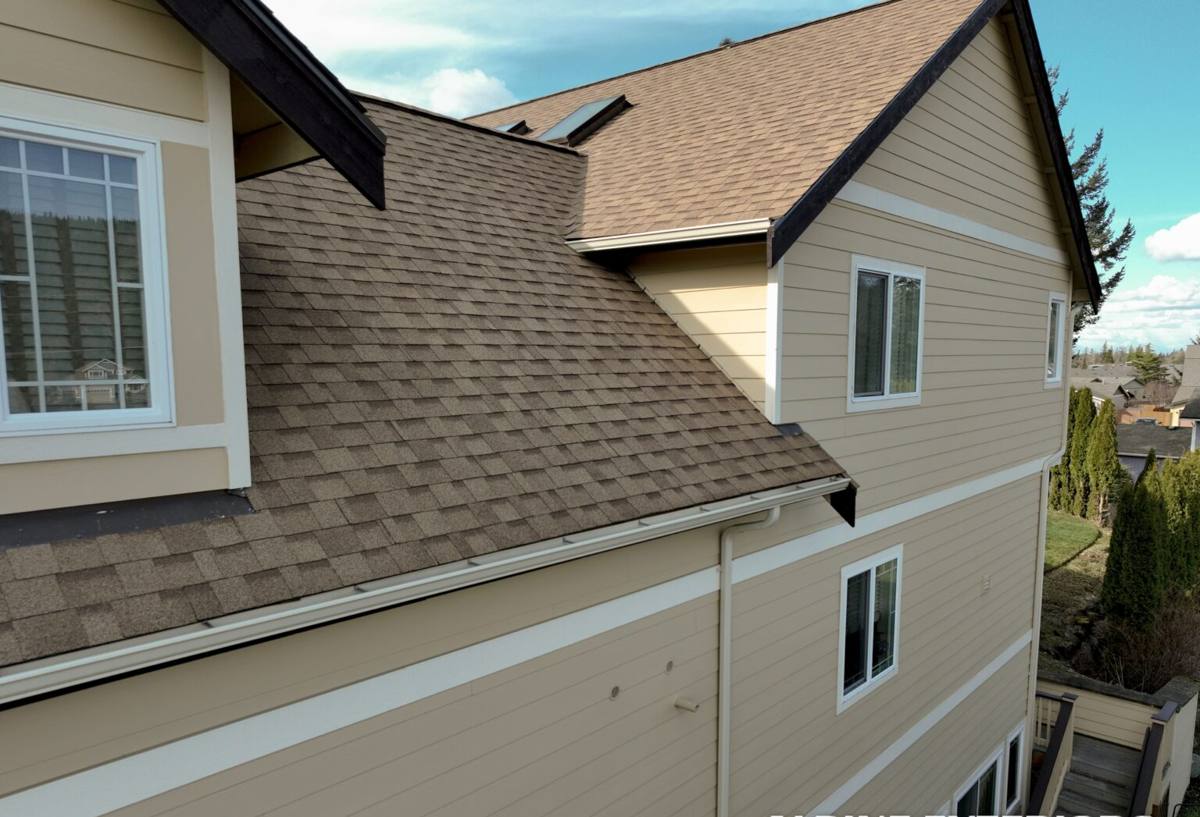
What Semiahmoo's Climate Actually Does to Siding
It helps to separate the specific stresses this area puts on an exterior, because they don't all show up the same way or on the same timeline.
Salt Air and Airborne Moisture
Proximity to the water means a steady low-level exposure to salt-laden air, especially on homes with a direct or partial view of the bay. Salt air accelerates corrosion of fasteners and metal flashing, and it interacts with certain siding finishes in ways that speed up fading, chalking, or surface breakdown. Materials and coatings that hold up fine 20 miles inland can degrade noticeably faster this close to salt water.
Driving Rain
Blaine gets wind-driven rain off the water, and Semiahmoo's exposed positions catch more of it than more sheltered inland lots. Driving rain doesn't just wet a wall surface — it pushes moisture sideways and upward into laps, seams, and penetrations that a calmer rain would never reach. Any siding system with weak seams, poor lap coverage, or moisture-sensitive core material is going to show problems here well before it does in a more protected setting.
Moss Season
Whatcom County's wet season runs long, and Semiahmoo's tree cover and humidity keep siding damp for extended stretches. That's exactly the condition moss and algae need to establish. Moss holds moisture directly against a wall surface, and depending on the siding material, that sustained dampness can lead to swelling, soft spots, or paint failure over time — problems that go well beyond a cosmetic green tint.
Why We Install Only James Hardie Fiber Cement
We don't install vinyl, LP SmartSide, cedar, primed spruce, Cemplank, or Allura. That's a deliberate standard, not a sales preference, and it matters more in an environment like Semiahmoo than almost anywhere else we work.
James Hardie siding is fiber cement — a non-combustible material made from cement, sand, and cellulose fibers. It doesn't have an engineered-wood core that can absorb and swell with moisture, and it doesn't have the seam and expansion behavior that vinyl relies on. For a bay-adjacent property dealing with salt air, driving rain, and long damp stretches, that difference in moisture behavior is the whole reason we standardized on it.
Hardie's ColorPlus finish is baked on at the factory under controlled conditions, rather than field-applied paint. In a salt air environment, factory-cured finishes generally hold color and resist chalking better than field-applied coatings, which is a meaningful advantage on homes that take direct salt exposure. Hardie also offers HZ5 formulations engineered for harsher, wetter climates — relevant for homes on more exposed parts of Semiahmoo that take the brunt of wind and rain off the water.
None of this means other products are unusable everywhere — cedar, LP SmartSide, and vinyl all have legitimate uses in the right setting. Our position is that for the specific combination of salt air, driving rain, and heavy moss pressure found around Semiahmoo, fiber cement is the material we're willing to put our name behind and warranty.
What a Correct Installation Involves Here
Material choice only matters if the installation respects it. A few things we treat as non-negotiable on Semiahmoo jobs:
- Proper weather-resistive barrier and drainage plane — a continuous water-resistive barrier with a drainage gap behind the siding so any moisture that does get past the surface has somewhere to go, rather than sitting against the sheathing.
- Correct fastener spec — corrosion-resistant fasteners appropriate for a salt air environment, placed and spaced to Hardie's installation instructions, not generic carpentry nailing patterns.
- Flashing at every penetration — windows, doors, hose bibs, vents, and any wall penetration get proper flashing detail, since driving rain finds exactly the gaps a calmer climate would never expose.
- Correct lap and clearance dimensions — minimum overlaps and ground/roof clearances per Hardie's specification, which matter more when wind is pushing rain sideways into those laps.
- Caulking and sealant only where specified — over-caulking traps moisture in places it should be able to drain or dry; under-caulking leaves gaps driving rain will exploit.
Skipping any one of these doesn't usually show up in year one. It shows up in year five or six, as staining, soft trim, or paint failure at the exact spots where water was allowed to sit.
Field-Cut Sealing
Every field cut into Hardie board exposes raw fiber cement edge, which needs to be primed or sealed per manufacturer spec before installation. In a driving-rain environment this step isn't optional — an unsealed cut edge is a moisture entry point waiting to happen, and it's one of the most common corners cut by crews unfamiliar with fiber cement.
Our Process for a Semiahmoo Installation
| Stage | What Happens | Why It Matters Here |
|---|---|---|
| Site walk and exposure assessment | We evaluate wind and rain exposure, moss/algae history, and existing moisture damage on your specific lot | A home right on the water gets different detailing attention than one set back with more tree cover |
| Tear-off and sheathing inspection | Old siding comes off and we inspect sheathing for rot or hidden moisture damage before proceeding | Salt air and driving rain often cause damage that isn't visible until the old siding is off |
| Weather barrier and drainage plane | Install continuous water-resistive barrier with a drainage gap system | Gives any incidental moisture a path out instead of trapping it against the wall |
| Flashing and trim detail | Flash all windows, doors, and penetrations before siding goes on | Driving rain finds unflashed gaps that calmer weather never would |
| Hardie installation | Install to manufacturer spec — fastener pattern, laps, clearances, sealed field cuts | Correct installation is what makes the material's climate rating actually apply |
| Final walkthrough | Review the finished job with you, including basic care guidance for this environment | Sets expectations for moss/algae maintenance and what to watch for going forward |
Living With Moss and Salt After Installation
A correct installation reduces problems significantly, but it doesn't eliminate the environment. A few things worth knowing:
- Periodic soft washing (not pressure washing directly at the surface) keeps moss and algae from establishing on ColorPlus finishes without damaging the coating.
- Keep vegetation trimmed back from siding where possible — reducing shade and airflow restriction cuts down on the damp conditions moss needs.
- Check caulking at trim and penetrations every year or two; sealant is the one component that wears faster than the siding itself in this climate.
- Rinse salt residue off in exposed areas periodically if you're on a direct waterfront lot — it's a simple step that extends finish life.
Why Hiring a Crew That Already Works Semiahmoo Matters
General siding experience doesn't automatically translate to this environment. A crew that mostly works drier, inland jobs may under-detail flashing or skip drainage plane requirements simply because it's never bitten them before. A crew that already works Blaine and the Semiahmoo area has seen what happens when those details get skipped — the soft trim, the failed paint, the moss-trapped moisture — and builds the job to avoid it from the start. That local pattern recognition is worth more than a lower bid from a crew unfamiliar with waterfront exposure.
Cost Factors Specific to a Semiahmoo Job
| Factor | Why It Affects Cost Here |
|---|---|
| Wall exposure and access | Waterfront-facing walls with direct wind exposure often need more careful flashing and detailing time |
| Existing damage from prior siding | Homes with older vinyl or wood siding may have hidden sheathing damage from years of moisture intrusion, discovered at tear-off |
| Drainage plane requirements | A proper rainscreen/drainage gap adds material and labor versus a direct-applied system, but it's what the climate calls for |
| Trim and flashing scope | Homes with more windows, doors, and architectural detail have more penetrations that need correct flashing |
| HZ5 vs. standard formulation | More exposed lots may warrant the harsher-climate Hardie formulation, which is a modest cost difference over standard product |
Get a Straight Answer for Your Property
Every lot around Semiahmoo has its own exposure profile — how close to the water, how much tree cover, which direction the weather comes from. Rather than quote a generic siding job, we'd rather walk your property, look at what your current siding has already told you about its exposure, and give you a straight assessment of what correct installation looks like there. If you'd like a free, no-pressure estimate for your home, we're happy to set up a time to take a look.