 Blaine
 Custer Decks Take a Different Kind of Beating
Custer sits close enough to the water and open farmland that decks here deal with a mix most inland Washington homes never see: salt-laden air drifting off the Strait, long stretches of driving rain through fall and winter, and a moss season that can run six months or more in a shaded yard. None of that is dramatic on its own. It's the combination, repeated year after year, that quietly breaks decks down from the inside out.
Salt air speeds up corrosion on anything metal — nails, screws, joist hangers, bolts. Driving rain doesn't just fall straight down; wind pushes it sideways and up under boards, into end grain, and behind ledger boards where it's hard to see. And moss doesn't just look bad — it holds moisture against wood and decking surfaces long after the rain has stopped, which is exactly the condition rot and mildew need to take hold.
A deck built or repaired without accounting for this climate will often look fine for a few years and then fail fast — usually at the fasteners, the ledger connection, or the framing underneath, not the decking boards people notice first.
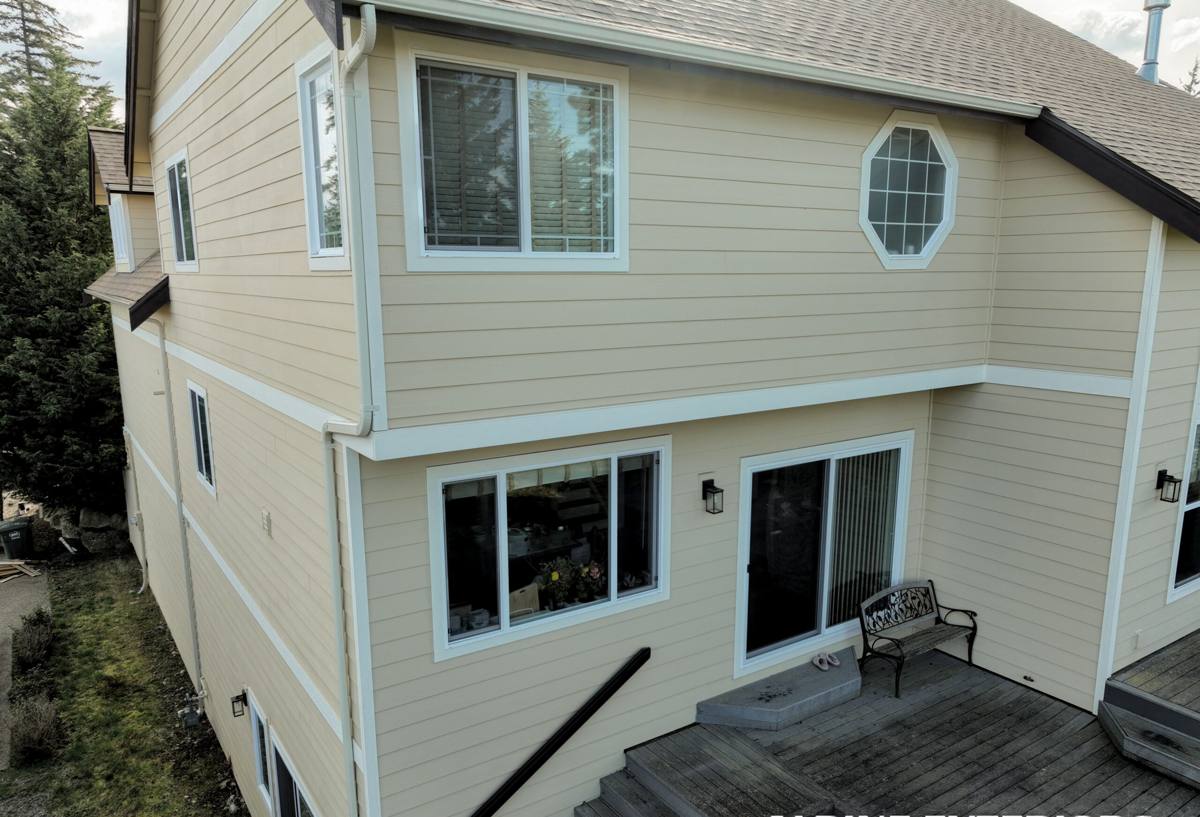
Common Signs a Custer Deck Needs Repair
Most deck problems we get called out for in this area fall into a short list. If you're seeing any of these, it's worth having someone look before it gets worse:
- Soft or spongy spots when you walk across the deck, especially near the house
- Rust streaks running down from screw heads, brackets, or joist hangers
- Green or black growth on boards that stays damp days after it last rained
- Gaps opening up where the deck meets the house (ledger board pulling away)
- Railings or posts that feel loose or wobbly when leaned on
- Boards that have cupped, split, or feel spongy at the ends
- Visible daylight or gaps where fasteners have backed out over time
None of these mean the whole deck needs to be torn out. Most of the time they point to specific, fixable problems — but only if they're caught and repaired correctly, not just patched on the surface.
What a Correct Deck Repair Actually Involves
It starts underneath, not on top
A deck that looks rough on the surface can have a solid frame underneath, and a deck with clean-looking boards can be sitting on rotted joists. We don't quote a repair from the surface — we get underneath the deck and check the ledger connection, joists, beams, and posts before deciding what actually needs to happen.
The ledger board is usually the real issue
The ledger — the board that attaches the deck to the house — is the single most common failure point we see in this climate. Wind-driven rain gets behind it, flashing (if it was installed at all) fails, and the wood behind the siding rots quietly for years. A repair that doesn't address the ledger and its flashing is just delaying the same problem.
Fasteners matter more here than almost anywhere else
Standard hardware corrodes faster this close to salt air. Any repair we do uses fasteners and hardware rated for coastal exposure, not whatever matches the existing (often rusted) hardware. Mixing metals — for example, the wrong screws in treated lumber or aluminum brackets — can actually accelerate corrosion, so we match hardware to the wood and to the environment, not just to what's already there.
Moss and moisture control
If a deck has heavy moss growth, we treat that as a drainage and airflow problem, not just a cleaning problem. Boards spaced too tight, poor grading underneath, or shade combined with no ventilation will bring moss back within a season no matter how well it's cleaned. Part of a proper repair is figuring out why moisture is sitting where it is.
Repair or Replace? How We Make That Call
| Condition | Usually Repairable | Usually Needs Replacement |
|---|---|---|
| Surface boards | Isolated cupping, splitting, or a few soft boards | Widespread rot across most of the deck surface |
| Framing | Localized soft spots near a leak source | Rot at multiple joists, beams, or posts |
| Ledger board | Flashing failure caught early, wood still sound | Ledger rot has spread into house framing |
| Railings/posts | Loose hardware, minor wobble | Post rot at the base, structural give under load |
| Age | Under 15 years, built with adequate flashing | Original construction had no ledger flashing at all |
The honest answer is that it depends on how far the damage has spread, not just how old the deck is. A well-built 20-year-old deck with one rotted section can often be repaired for a fraction of replacement cost. A 10-year-old deck with no ledger flashing and rot already into the house framing is a different conversation.
Our Repair Process
- On-site inspection — We check the deck from above and underneath, including the ledger connection, before quoting anything.
- Honest scope — You get a clear breakdown of what's actually failing, what's still sound, and what your realistic options are — repair, partial rebuild, or full replacement — with no upsell toward the most expensive option.
- Address the cause, not just the symptom — If rot is being caused by a flashing failure or drainage problem, we fix that as part of the repair, not just replace the damaged wood and leave the cause in place.
- Coastal-rated materials and hardware — Fasteners, flashing, and hardware selected for salt air and sustained moisture exposure, not generic hardware store stock.
- Cleanup and a final walkthrough — We show you what was done and why, including anything worth keeping an eye on going forward.
Materials: What We Use and Why
For framing repairs, we use treated lumber rated for ground contact or structural use where appropriate, connected with corrosion-resistant hardware — stainless or hot-dip galvanized rather than standard coated fasteners, which tend to rust visibly within a few seasons this close to salt air. For decking surfaces, both quality treated wood and composite boards are reasonable choices; each has trade-offs worth understanding rather than a single "best" answer:
- Treated wood — Lower upfront cost, natural look, but needs regular sealing or staining to hold up against driving rain and won't resist moss growth on its own.
- Composite decking — Higher upfront cost, resists rot and doesn't need staining, but still needs proper spacing and airflow underneath to avoid moisture and moss buildup between boards, and installation mistakes are harder to fix after the fact.
We'll walk through what fits your deck, your budget, and how much upkeep you actually want to do — not just what we'd rather install.
Keeping a Repaired Deck in Good Shape
A repair holds up a lot longer with a little seasonal attention. This is the same short list we give homeowners after a repair:
- Sweep debris and standing leaves off the deck regularly through fall — trapped organic matter holds moisture and feeds moss
- Check the ledger area once a year for any new gaps, discoloration, or soft wood near the house
- Look at fastener heads for early rust — it's cheaper to swap a few screws than to repair the board they're holding
- Re-seal or re-stain treated wood decking on the schedule the product calls for, not just when it looks faded
- Keep nearby vegetation trimmed back so airflow underneath and around the deck isn't blocked
- Address soft spots or loose railings right away rather than waiting for the next dry season
Why It Matters to Hire a Crew That Already Works This Area
A deck repair company working inland doesn't think about ledger flashing the same way, or spec hardware for salt exposure by default. Working regularly around Blaine and communities like Custer means we're used to diagnosing rot patterns that come from wind-driven rain and coastal air specifically, not guessing at it from a general playbook. That shows up in what gets checked during the inspection and what materials get specified — not just in the final look of the repair.
It also means we're not learning Whatcom County's weather on your project. We know which parts of a deck fail first here, and we build the repair to address that, not just to pass a quick visual check.
Get a Straight Answer on Your Deck
If your deck has soft spots, rust, moss that won't quit, or a ledger board that doesn't look right, it's worth getting an honest, no-pressure look before it turns into a bigger project. Fill out the form below for a free estimate — we'll tell you what we actually find, repair or otherwise.