 Blaine
 Window Replacement Built for Everson's Climate, Not a Catalog
Everson sits inland from the coast, tucked along the Nooksack River in Whatcom County, but that doesn't mean the weather goes easy on a house here. The same marine air that moves in off the Salish Sea and pushes salt-laden moisture across the county still reaches the river valley, just in a different form: persistent damp, long stretches of gray drizzle, and a moss season that can run most of the year. Add in driving rain that comes sideways during winter storms, and window replacement in this area is a different job than it is somewhere dry and sunny. We approach it that way.
This page is specifically about replacing windows on homes in and around Everson. It's not a general overview of window brands or a national pricing guide. It's what we've learned installing and repairing windows on houses that sit in this valley, through this weather, year after year.
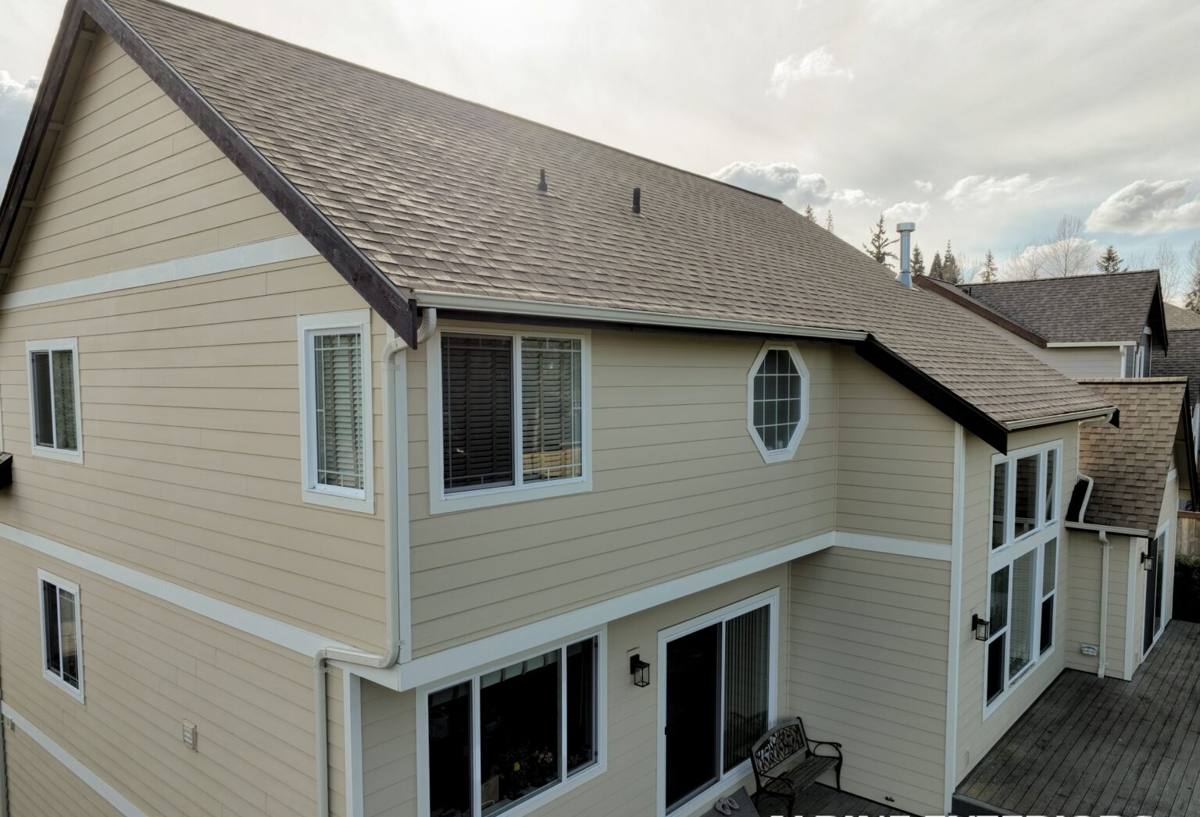
What Everson Homes Are Actually Up Against
Moss, Moisture, and the Valley Damp
Homes near the Nooksack tend to hold moisture longer than houses on higher, more exposed ground. Shade from mature trees, lower air movement in some yards, and the general humidity of a river valley all add up to conditions where moss and algae get a foothold on siding, trim, and window sills that don't get much direct sun. That's not just a cosmetic issue. Moss holds water against wood trim and painted surfaces, and over time that trapped moisture works its way into seams, nail holes, and any gap where an old window was never properly flashed.
Driving Rain and Wind-Driven Water
Whatcom County gets rain that doesn't just fall straight down. Winter storms push rain sideways against west- and south-facing walls, and that wind-driven water finds every weak point in a window installation — a missed flashing lap, a bead of caulk standing in for real water management, a sill pan that was never installed at all. A window can look fine from across the yard and still be feeding water into the wall cavity every time it storms.
Temperature Swings and Condensation
The valley sees bigger day-to-night and season-to-season temperature swings than you'd expect this close to the water. Combined with indoor humidity from cooking, showers, and heating a house through a long wet winter, older single-pane or failed double-pane windows in Everson homes often show condensation, fogging between the panes, or frost on the glass on cold mornings. That's a sign the seal has failed, not something a new coat of paint or a tube of caulk fixes.
Signs It's Time to Replace, Not Repair
Not every window problem means a full replacement. But there's a point where patching a window costs more over time than putting in a new one that's actually sealed and flashed correctly. Here's what we look for during an inspection:
- Fogging or a visible film between the panes — the seal has failed and the gas fill (if there was one) is gone
- Soft or spongy wood at the sill, jamb, or the trim around the window
- Visible moss or dark staining on trim directly below or beside a window
- Windows that are difficult to open, don't stay open, or won't lock tightly
- Noticeable drafts or cold spots near the window frame in winter
- Peeling or bubbling paint on interior trim near the window, which often points to moisture getting in from outside
- Visible daylight or gaps around the frame when the window is closed
- Single-pane glass on a home that's otherwise been updated — an easy source of heat loss and noise
If a window is showing one or two of these on an otherwise sound wall, repair or re-caulking might be reasonable. If we're seeing several of these together, or any sign of water having tracked into the framing, replacement is almost always the more honest recommendation.
What a Correct Window Replacement Job Actually Involves
Removal and Inspection
The old window comes out carefully so we can see the condition of the rough opening underneath — this is the step that gets skipped when a job is rushed, and it's the step that matters most in a climate like this one. If there's rot, soft framing, or old water staining behind the window, that gets addressed before anything new goes in. Installing a new window into a wet or compromised opening just hides the problem for a few more years.
Flashing and Water Management
This is where most window failures actually start, and it's not glamorous work. A correct installation uses a sloped sill pan so any water that gets past the window drains back out instead of sitting against the wood, plus properly lapped flashing tape at the sides and head so water sheds down and out, never behind the housewrap. In a place that sees as much wind-driven rain as Everson does, this step is not optional and it's not something you can verify just by looking at the finished window from outside.
Setting, Shimming, and Sealing
The new window gets set square and plumb, shimmed so it isn't relying on the frame to hold its shape, and fastened per the manufacturer's schedule — not just a couple of screws in convenient spots. Insulation goes in the gap around the frame (not spray foam packed in tight enough to bow the frame), and the exterior gets sealed with the right sealant at the right joints, not caulk smeared over everything as a catch-all.
Interior and Exterior Finish
Trim gets reinstalled or replaced, interior sills get checked for level, and the exterior gets a final look for anything that needs paint, caulking, or a repaint match to the surrounding siding. A window replacement that ends the moment the glass is in isn't finished.
Choosing the Right Frame and Glass for This Area
There's no single "best" window for every house, but in a climate with this much sustained moisture and moss pressure, some choices hold up better than others. We'll walk through the real trade-offs rather than pushing one option:
| Frame Material | How It Handles This Climate | Maintenance |
|---|---|---|
| Vinyl | Doesn't rot or absorb moisture; performs consistently in wet, humid conditions | Low — occasional cleaning, no painting |
| Fiberglass | Very stable in temperature swings, resists moisture well, holds paint if color changes are wanted later | Low to moderate |
| Wood | Good insulator and classic look, but needs consistent upkeep to keep moisture from reaching bare wood, especially under moss-prone eaves | High — regular painting/sealing |
| Wood-clad (wood interior, clad exterior) | Combines wood's interior look with a weather-resistant exterior shell; a common middle ground for this climate | Moderate |
On glass, double-pane with a low-E coating and an argon gas fill is the practical standard for this region — it cuts heat loss, reduces condensation risk, and helps with the road and rain noise that comes with driving storms. Triple-pane is worth discussing for north- or west-facing rooms that take the brunt of winter weather, but it adds weight and cost that isn't always necessary on every wall of a house.
How Our Process Works
- Estimate visit — We look at the actual windows, the wall condition around them, and talk through what's failing and why, not just measure for a quote.
- Written proposal — Frame material, glass package, and scope of work spelled out plainly, including whether any rot repair or additional flashing work is needed.
- Scheduling around the weather — We plan installs for stretches of drier weather where possible, and we don't leave openings exposed overnight in a way that invites water in.
- Installation — Removal, inspection, flashing, setting, and sealing, done in the order that actually keeps water out, not the order that's fastest.
- Final walkthrough — We check operation, look at the finish work inside and out, and go over care and warranty information before we consider the job done.
What Affects the Cost
Every home is different, but these are the factors that most often move a window replacement estimate up or down:
| Factor | Why It Matters |
|---|---|
| Number and size of windows | Larger openings and more windows mean more material and labor |
| Frame material chosen | Vinyl, fiberglass, wood, and wood-clad all sit at different price points |
| Glass package | Standard double-pane low-E vs. triple-pane vs. specialty coatings |
| Condition of the rough opening | Rot repair or reframing adds time and material beyond a straightforward swap |
| Full-frame vs. insert replacement | Full-frame (tearing out to the studs) costs more than an insert replacement into a sound existing frame, but is sometimes the only correct option |
| Access and site conditions | Second-story windows, tight landscaping, or limited access can add time |
We'll always tell you honestly if a lower-cost approach (like an insert replacement) is appropriate for your window, or if the existing frame's condition means it isn't — and why.
Why Hiring a Crew That Already Works in Everson Matters
A window replacement crew that mostly works drier climates or newer subdivisions doesn't always think about sill pans, moss-prone shade patterns, or how far wind-driven rain travels up a wall in this part of Whatcom County — because they haven't had to. We work in this weather regularly, which means we're not guessing at how a flashing detail will hold up three winters from now; we've seen what happens when it's done right and what happens when it isn't. That local experience shows up in small decisions during the job that don't get mentioned on an invoice but make the difference in whether a window is still performing well a decade later.
It also means we're realistic about scheduling. We know this region's weather patterns well enough to plan installs around them, rather than pushing through a job during a soaking week and hoping the sealant sets up before the next storm.
Ready to Talk About Your Windows?
If your windows in Everson are fogging, drafting, sticking, or showing water damage at the sill or trim, we're happy to take a look and give you a straight answer about repair versus replacement — no pressure, no upsell. Fill out the form below for a free estimate, and we'll walk through what your home actually needs.