 Blaine
 Everson sits inland from the salt air that rolls off Semiahmoo Bay and the Strait of Georgia, but that doesn't mean local homes get an easier ride. Whatcom County's marine-influenced climate reaches well past the coastline: damp air, long stretches of drizzle, and a growing season for moss and algae that runs most of the year. Siding installed here has to handle moisture that lingers rather than moisture that falls hard and clears out. That distinction shapes almost every decision that goes into a correct siding installation in this area, from the water-resistive barrier underneath the cladding to the paint finish on top of it.
We install James Hardie fiber cement exclusively, and this page walks through what that means specifically for a home in Everson: what the local climate demands, what a proper installation actually involves, and why the details matter more here than they would in a drier part of the state.
What Everson's Climate Actually Does to Siding
Homeowners often assume the biggest threat to siding is wind or storm damage. In Whatcom County, the bigger long-term threat is slower and quieter: sustained dampness. Rain here tends to arrive as extended drizzle rather than short, hard downpours, which means siding and the wall assembly behind it can stay wet for days at a time during the fall and winter months. Add in the region's cool, shaded microclimates and you get ideal conditions for moss, algae, and mildew to establish themselves on any surface that holds moisture or organic debris.
Salt-laden air moving inland from the Strait also plays a role, particularly on the sides of a home that face open exposure. Salt accelerates corrosion on fasteners, flashing, and any metal trim that isn't rated for coastal-adjacent conditions. It's a slower process than what you'd see directly on the water, but over 15-20 years it adds up, especially on a product that wasn't engineered with that exposure in mind.
Why Moss Season Is Longer Here Than Homeowners Expect
In much of the country, moss is a shaded-roof problem. In this part of Washington, it's a full-exterior problem. North-facing walls, areas under mature tree canopy, and siding near sprinkler overspray can all develop moss growth if the material and the installation don't account for drainage and drying. Once moss establishes itself on a wall, it holds moisture against the surface constantly, which is exactly the condition that causes rot in wood-based products and coating failure in poorly finished materials.
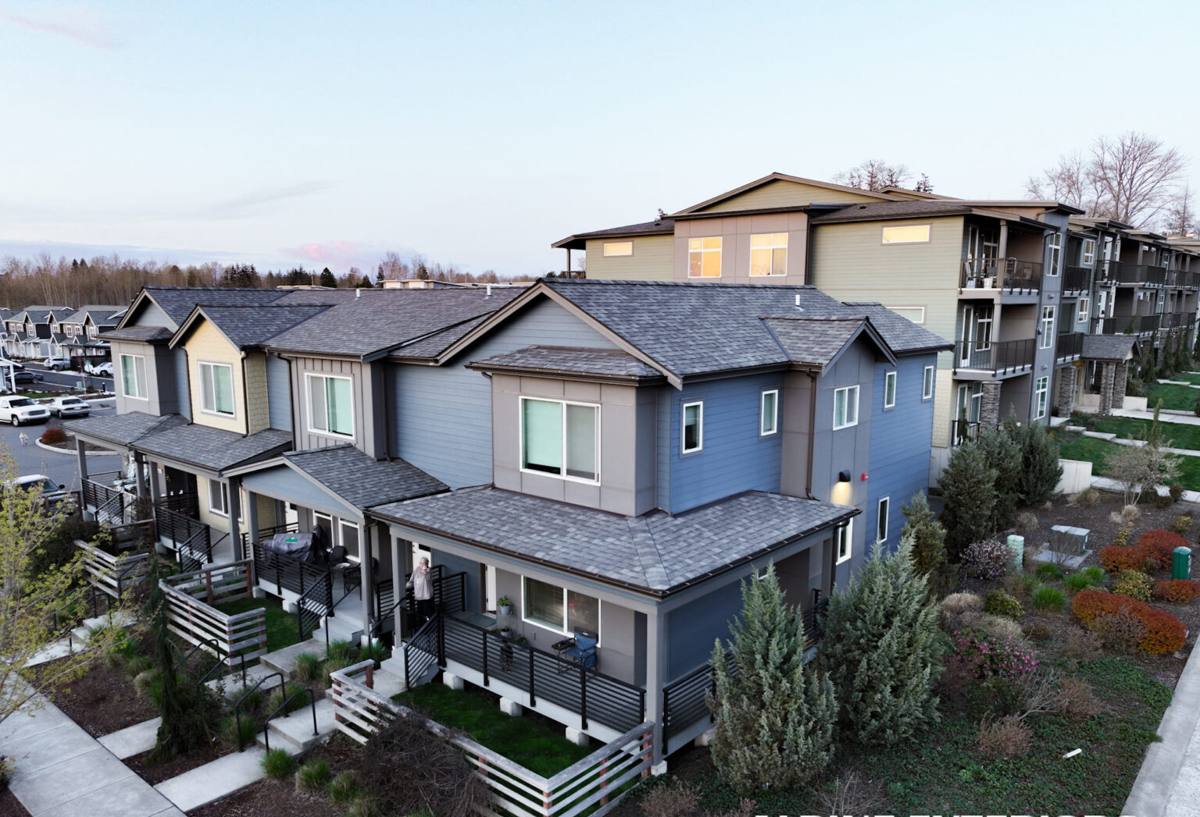
Why This Is a Different Job Than Siding Installation Anywhere Else
The physical steps of installing siding — house wrap, flashing, fastening pattern, caulking joints — don't change much from region to region. What changes is how much margin for error you have. In a dry climate, a slightly under-flashed window or a gap in the water-resistive barrier might go years without causing a visible problem. In Everson's climate, the same shortcut can lead to trapped moisture and rot within a few wet seasons, because the wall assembly rarely gets a long dry stretch to recover.
That's why we treat drainage and moisture management as the foundation of the job, not an afterthought behind the visible siding:
- Water-resistive barrier installed and lapped correctly, shingle-style, so water is directed out and down rather than trapped behind the cladding
- Rainscreen or drainage gap detailing where the wall assembly calls for it, giving any incidental moisture a path to escape and dry
- Window and door flashing sequenced correctly with the barrier — this is the single most common failure point we find on older homes in this area
- Proper fastener spacing and embedment per manufacturer specs, not "close enough," since under- or over-driven fasteners compromise the panel's ability to shed water at the joint
- Caulking only where it belongs — over-caulking gaps that are supposed to allow drainage traps moisture instead of stopping it
Why We Only Install James Hardie Fiber Cement
We don't install vinyl, LP SmartSide, primed spruce, cedar, or other fiber cement brands like Cemplank or Allura. That's a deliberate standard, not a sales preference, and it comes directly from what this climate does to exterior materials over time.
How Hardie Performs in Sustained Damp Conditions
James Hardie siding is fiber cement — a mix of cement, sand, and cellulose fiber — which means it's non-combustible and doesn't absorb and swell with moisture the way wood-based products can. In a climate where siding can stay damp for days at a stretch, that matters. Wood-based composite sidings rely on edge sealing and diligent maintenance to keep moisture out of the substrate; if that maintenance lapses, or if a cut edge goes unsealed during installation, moisture intrusion can start well before it's visible from the ground. Fiber cement doesn't carry that same vulnerability at the material level.
ColorPlus Finish and Moss/Algae Resistance
Hardie's ColorPlus finish is baked on in a factory-controlled process, which produces a more consistent, durable bond than field-applied paint. A tighter, more uniform finish gives moss and algae spores less texture and less moisture retention to latch onto, which is a real advantage in a region where organic growth on siding is a year-round concern rather than a seasonal one. It's not a moss-proof guarantee — nothing is — but a well-sealed, factory-finished surface is meaningfully easier to keep clean than a field-painted or unfinished substrate.
The HZ5 Product Line
James Hardie engineers its siding by climate zone, and the HZ5 line is built for the wetter, cooler regions that include the Pacific Northwest. It's formulated to hold up against sustained moisture exposure and freeze-thaw cycling better than a generic, one-size-fits-all fiber cement product. That's part of why we standardized on this brand specifically — not fiber cement in the abstract, but the version engineered for exactly the conditions Whatcom County sees.
What a Correct Installation Involves, Start to Finish
| Stage | What Happens | Why It Matters Here |
|---|---|---|
| Assessment & tear-off | Remove existing siding, inspect sheathing for hidden rot or moisture damage | Damp climates hide problems behind old siding longer than dry ones do |
| Sheathing repair | Replace any compromised sheathing before new materials go on | Covering damaged sheathing locks in a problem instead of fixing it |
| Water-resistive barrier | Install and properly lap house wrap or building paper | Primary defense against sustained rain and drizzle |
| Flashing | Integrate flashing at windows, doors, and penetrations with the barrier | Most common failure point on older regional homes |
| Hardie installation | Install panels or planks to manufacturer spec, correct fastening and clearances | Spec deviations shorten service life and can void warranty coverage |
| Trim & caulking | Finish trim, caulk only where drainage isn't required | Prevents both water intrusion and moisture trapping |
| Final inspection | Walk the full exterior, check clearances and finish | Catches issues before they become callbacks |
What Everson Homeowners Should Watch For on an Existing Home
Whether or not you're ready for a full re-side, it's worth knowing what early trouble looks like in this climate. Catching it early is almost always cheaper than catching it late.
- Dark green or black streaking, especially on north-facing or shaded walls — early moss and algae growth
- Soft or spongy spots when you press on siding near the bottom edge or around windows — possible moisture intrusion
- Peeling or bubbling paint, particularly on wood-based or engineered wood siding — a sign the substrate underneath is no longer sealing properly
- Visible gaps or separated caulking at trim and window joints — an entry point for moisture during Everson's long wet season
- Rust staining below fasteners or metal trim — a sign hardware isn't holding up to the area's moisture and salt exposure
Why Local Installation Experience Matters
Siding installation isn't just a spec sheet — it's a series of judgment calls about flashing sequencing, drainage detailing, and fastening that have to account for how a specific region behaves across a full year of weather. A crew that installs mostly in drier climates can do technically correct work by a generic standard and still leave a home under-protected against Whatcom County's damp stretches, longer moss season, and coastal-influenced air. Working this area regularly means we're not guessing at how a wall assembly will perform here — we're building to what we've seen hold up and what we've seen fail.
We also stand behind installation quality directly, which matters more in a climate that punishes shortcuts faster than most. Combined with James Hardie's strong transferable product and finish warranties, that gives Everson homeowners coverage on both the material and the labor that put it on the wall.
Cost Factors for an Everson Siding Installation
Every home is different, so we won't quote a number without seeing the property, but the factors that typically move the price on a project like this are worth understanding upfront:
| Factor | Why It Affects Cost |
|---|---|
| Tear-off and disposal | Removing old siding and hauling debris adds labor and disposal fees |
| Sheathing condition | Rot or moisture damage found underneath requires repair before new siding goes on |
| Home size and complexity | More corners, dormers, and trim detail mean more labor hours |
| Siding profile | Lap, shingle, and panel styles vary in material and labor cost |
| Trim and accessory scope | Full trim replacement costs more than reusing sound existing trim |
If you're planning a siding project in Everson and want a clear picture of what your home needs, we're happy to take a look and walk you through it. Reach out for a free, no-pressure estimate using the form below.