 Blaine
 Roof Repair for the Everson Area, Done by a Crew That Already Works Whatcom County
Everson sits inland from the coast but still lives inside the same weather system that soaks the rest of Whatcom County — long wet winters, a marine layer that never fully clears, and a growing season for moss and algae that most of the country doesn't have to think about. A roof here doesn't fail the way a roof fails in a dry climate. It fails slowly, from the top down and the edges in, usually from water that found a small opening months or years before anyone noticed a stain on the ceiling. Repairing that kind of damage correctly takes more than a caulk gun and a patch shingle. It takes knowing what this specific climate does to a roof over time, and fixing the cause, not just the symptom.
We're based in Blaine and work Everson and the surrounding Whatcom County communities regularly, which means we're not learning the local weather patterns on your dime. We know which roof details tend to fail first out here, what a repair needs to hold up through another wet season, and when a "repair" is actually masking a bigger problem that needs an honest conversation instead of a quick fix.
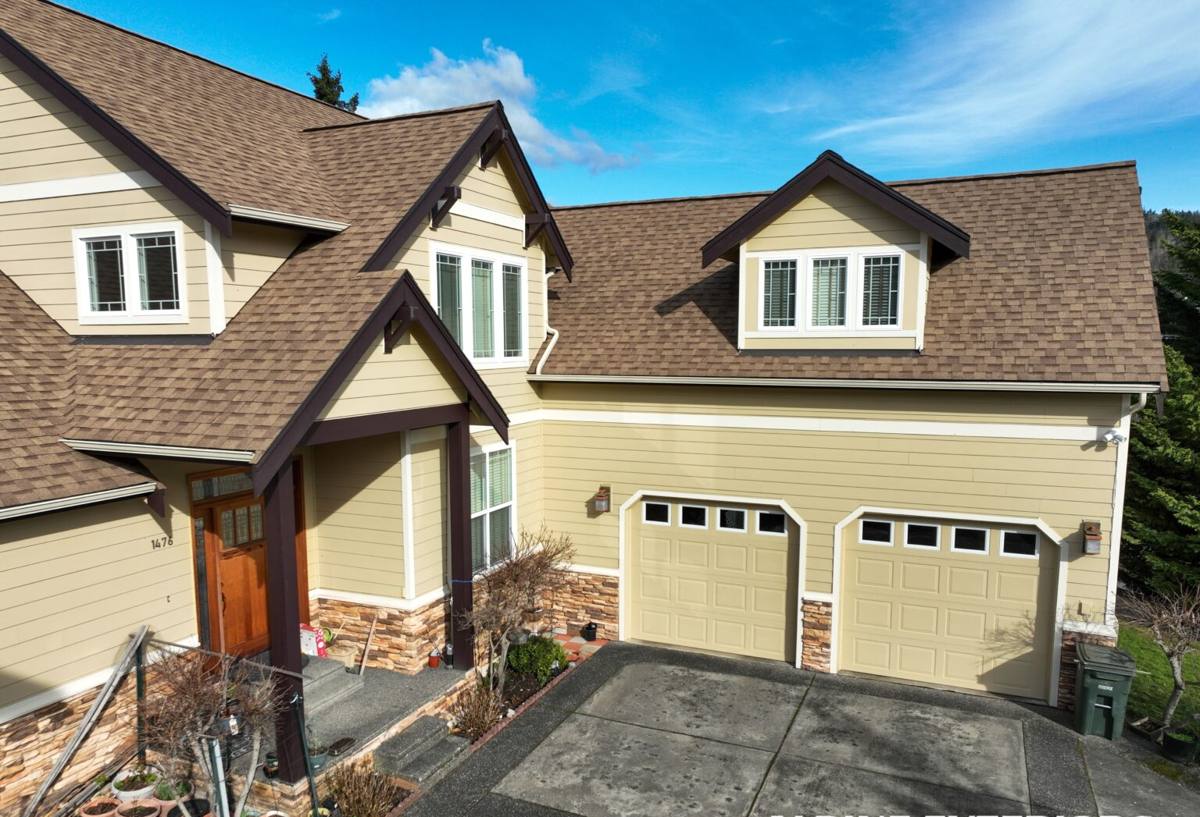
What This Climate Does to a Roof
Three things drive most of the roof repair calls we get from homes near Everson and Blaine, and they compound each other over a roofing lifespan.
Driving Rain
This region doesn't just get rain — it gets wind-driven rain that hits roof surfaces at an angle instead of falling straight down. That matters because flashing, step-flashing, and shingle overlaps are designed around water running downhill in a fairly predictable way. Angled, wind-driven rain finds the gaps that vertical rain never would: under-lapped shingles, nail heads that have backed out slightly, and flashing laps that are technically sealed but not built for sideways pressure.
Salt Air
Proximity to Puget Sound and the Strait of Georgia means salt-laden air moves inland further than people expect, especially on windier days. Salt air accelerates corrosion on exposed metal — nail heads, flashing, gutter fasteners, and any lower-grade hardware — well before the roofing material itself is due for replacement. A roof repair that reuses corroding fasteners or unsealed metal is a repair that's already halfway to failing again.
A Long Moss Season
Whatcom County's moss and algae season runs far longer than most homeowners realize — the shaded, north-facing, and tree-covered slopes common around Everson properties barely get a dry break most years. Moss doesn't just sit on top of shingles; it roots into the granule surface, holds moisture against the roof deck, and physically lifts shingle edges as it grows, creating new entry points for water that weren't there when the roof was installed.
None of these three factors is dramatic on its own. Together, over several years, they're the reason a roof that looks "mostly fine" from the ground can have real damage underneath — and why a repair that only addresses the visible symptom often comes back within a season or two.
Signs an Everson-Area Roof Needs Repair
Most roof repair calls we get start with one of these signs. None of them mean the whole roof needs replacing — but all of them mean it's worth a look before the next storm cycle.
- Water stains on interior ceilings or upper walls, especially after a heavy wind-and-rain event rather than steady rain
- Visible moss buildup along ridge lines, in valleys, or on north-facing slopes
- Granules collecting in gutters or at downspout outlets, a sign of shingle wear
- Shingles that look lifted, curled, or cupped at the edges
- Rust streaking below metal flashing or fasteners
- Soft or spongy spots when walking a lower-slope roof (a sign of deck damage underneath)
- Daylight visible through the attic at roof penetrations — vents, chimneys, skylights
- Sagging in the roofline that wasn't there a year or two ago
If you're only seeing one or two of these and they're isolated, a targeted repair is usually the right call. If several are showing up together, that's often a sign of a roof reaching the end of its practical repair life, and we'll tell you that plainly rather than patching around it.
What a Correct Repair Actually Involves
A roof repair that's done right isn't just replacing what's visibly broken. It's three separate steps, and skipping any one of them is how "repairs" end up needing to be redone.
1. Find the Actual Entry Point
Water travels. A stain on a bedroom ceiling might trace back to a flashing failure three feet away, following a rafter or the underside of the deck before it shows up indoors. Chasing the visible damage instead of the water's real path is the single most common reason repairs fail to hold.
2. Assess What's Underneath
Once we're at the source, we check the roof deck and underlayment condition around it — not just the shingle or flashing on top. Wet, soft, or delaminated decking has to be addressed before new material goes back on, or the new work is sitting on a compromised base.
3. Rebuild the Detail, Not Just Patch It
Flashing, step-flashing, valleys, and penetrations get rebuilt to spec — not smeared over with sealant. Sealant has its place as a finishing step, but it's not a structural fix, and in a climate this wet, sealant-only repairs tend to fail within a season or two once UV and moisture cycling break it down.
Our Repair Process
| Step | What Happens |
|---|---|
| Inspection | On-roof and attic-side check to trace the actual leak path, not just the visible symptom |
| Assessment | Honest read on whether it's a targeted repair, a larger section replacement, or a full re-roof conversation |
| Written scope | Clear explanation of what's being fixed and why, before any work starts |
| Repair work | Deck repair if needed, correct flashing and underlayment detailing, matched roofing material |
| Cleanup and check | Debris cleared, gutters checked for granule buildup, and a final look to confirm the fix holds under the details we found |
Materials and Fasteners: Why the Details Matter Here
In a dry climate, the difference between standard and corrosion-resistant hardware might never show up. In Whatcom County's salt air and near-constant moisture, it shows up in a few years as rust streaks, backed-out nails, and failed flashing seams. We use corrosion-resistant fasteners and properly detailed flashing on repairs specifically because of the coastal exposure around Blaine and Everson — it costs a bit more upfront and it's the difference between a repair that lasts and one that reopens the same leak path in a couple of winters.
| Detail | Standard Approach | Our Standard for This Climate |
|---|---|---|
| Fasteners | Basic galvanized nails | Corrosion-resistant fasteners rated for coastal/salt exposure |
| Flashing seams | Sealant-only patch | Rebuilt lap and step-flashing detail, sealant as a finishing layer only |
| Underlayment at repair zone | Reused if "still there" | Replaced if compromised, since trapped moisture underneath causes deck rot |
| Moss-prone slopes | Not addressed unless requested | Flagged during inspection with a maintenance recommendation |
Moss, Algae, and Ongoing Roof Health
A roof repair fixes the current problem, but on a moss-prone Everson-area property, it's worth thinking about what happens next. Moss that isn't addressed will come back on the same shaded slopes, and it will eventually create the same lifted-shingle, trapped-moisture conditions that caused the original leak. We'll point out moss and debris buildup during a repair visit even when it's not the reason for the call, because catching it early is a lot cheaper than repairing the damage it eventually causes. Simple, periodic moss and debris removal — done carefully, without a pressure washer that strips granules — is one of the most cost-effective things a homeowner in this climate can do for roof longevity.
Repair or Replace? How to Think About the Decision
Nobody wants to be sold a full roof when a repair would do, and nobody wants to keep paying for repairs on a roof that's genuinely done. A few honest questions help sort that out:
- Is the damage isolated to one area, or showing up in multiple unrelated spots?
- How old is the roof relative to its material's expected service life?
- Is the deck underneath sound, or is rot spreading beyond the immediate repair zone?
- Has this same area been repaired before?
- Would a repair likely last through several more wet seasons, or just buy a year?
We'll walk through these with you plainly. If a repair is the right call, that's what we'll recommend and do well. If the roof is past the point where repair makes financial sense, we'll say that too — with our reasoning, not a sales pitch.
Cost Factors for Roof Repair
Roof repair costs vary a lot based on scope, and we won't quote a number without seeing the roof — but these are the main factors that move the price up or down:
| Factor | Effect on Cost |
|---|---|
| Size of the affected area | Larger sections or multiple leak points increase labor and material |
| Roof pitch and access | Steep or hard-to-access roofs take longer and require more safety setup |
| Deck condition underneath | Rotted decking adds material and labor beyond the surface repair |
| Material match | Matching existing shingle color/style can add sourcing time on older roofs |
| Flashing complexity | Valleys, chimneys, and skylights require more detailed, slower work than open field repairs |
Most straightforward, isolated repairs are a modest expense compared to replacement. The number climbs when deck rot, extensive moss damage, or multiple failure points are involved — which is exactly why catching problems early, before they spread underneath the surface, keeps repair costs down.
Why a Local Blaine-Based Crew Matters for Everson Roofs
Roofing crews that don't work this region regularly tend to treat every job the same way, regardless of climate. That's how you end up with repairs built to a generic standard instead of one that accounts for wind-driven rain, salt air corrosion, and a moss season that outlasts most calendar-based maintenance schedules. Working Whatcom County and the Blaine area consistently means we've seen how repairs done to a lower standard hold up — or don't — a few winters later, and we build accordingly from the start. It also means we're not a stranger showing up once and disappearing; if a repair needs a follow-up check after a hard storm season, we're a local call, not a long drive.
Before You Hire a Roof Repair Contractor: A Quick Checklist
- Do they inspect the attic side, not just the roof surface, to trace the actual leak?
- Do they explain what caused the damage, or just what they're replacing?
- Do they use corrosion-resistant fasteners and hardware appropriate for coastal exposure?
- Will they put the scope of work in writing before starting?
- Are they licensed and insured, and willing to show it without hesitation?
- Do they have experience with this specific region's climate, not just roofing in general?
If a contractor can't answer these clearly, that's worth noticing before you sign anything.
Get an Honest Look at Your Roof
If you're dealing with a leak, moss buildup, or damaged flashing on a home in the Everson area, we're happy to take a look and give you a straight answer about what it needs — a targeted repair, a larger fix, or just something to keep an eye on. The estimate is free, there's no pressure attached to it, and you can use the form below to get started.