 Blaine
 Everson sits in a part of Whatcom County where a roof rarely gets a break. Between the long wet season, the moss that thrives in the shade of mature trees, and the salt-tinged air that drifts in off the Strait and Puget Sound lowlands, asphalt shingle roofs here age differently than they would inland or in a drier climate. A roof that looks fine from the driveway can be losing granules, holding moisture under the shingle mat, or feeding a moss colony that's already working its way under the tabs. This page covers what an asphalt shingle roof actually needs to hold up in this area, what a correct installation looks like, and how we approach the work for Everson homeowners.
Why Everson Roofs Take a Beating
Asphalt shingles are engineered to shed water and survive UV exposure, but they're not engineered for constant dampness. In Whatcom County, roofs often go weeks at a time without fully drying out between rain events, especially on north-facing slopes or sections shaded by trees. That prolonged moisture is what allows moss and algae to take hold, and once moss roots itself under a shingle edge, it lifts the tab just enough to let wind-driven rain work its way underneath.
Add in the driving rain that comes with fall and winter storms off the water, and any weak point in the roofing system — a poorly lapped underlayment, a nail driven at the wrong angle, flashing that's just "close enough" — becomes a leak point faster than it would in a milder climate. Salt-laden air, common throughout this part of the county, also accelerates corrosion on exposed metal fasteners, flashing, and vent components if they aren't rated for it.
None of this means asphalt shingles are a poor choice for Everson. It means the installation details matter more here than they do in a lot of other places, and cutting corners shows up sooner rather than later.
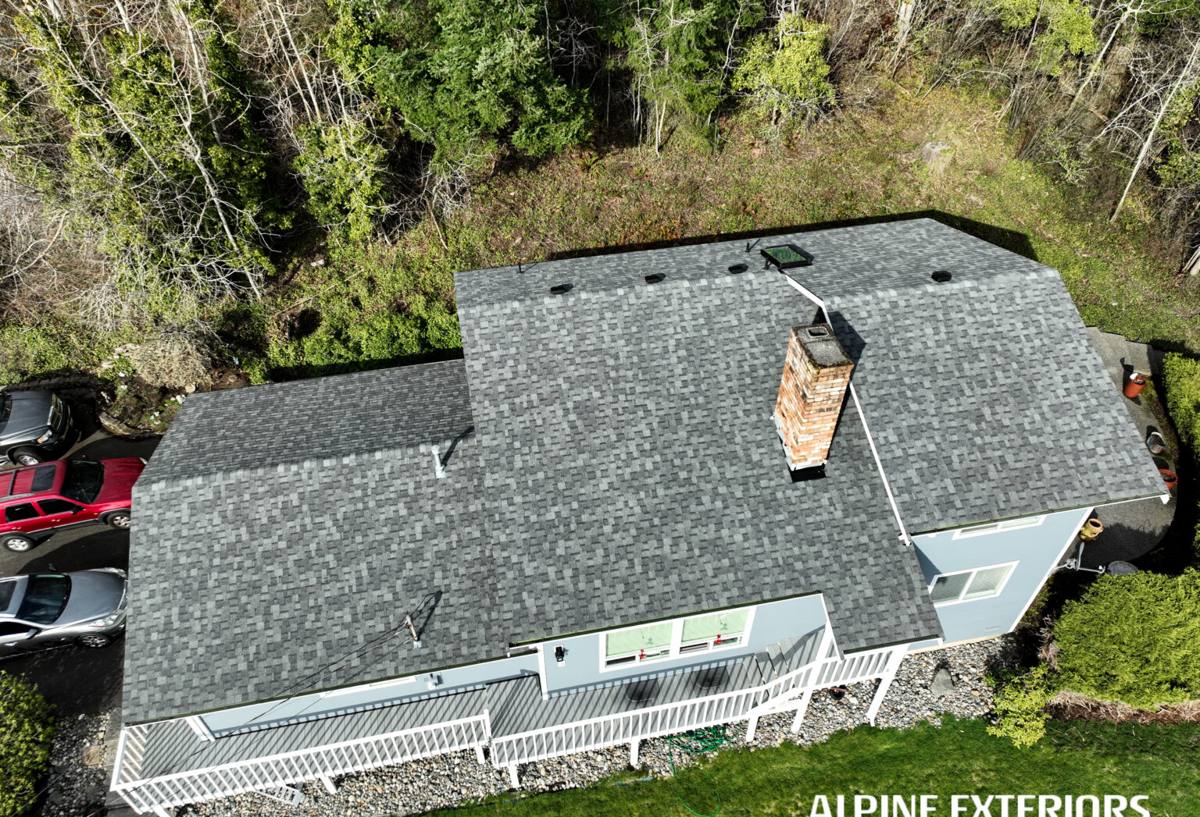
What a Correct Asphalt Shingle Installation Involves
A shingle roof is a system, not a single product. Every layer underneath the shingles is doing part of the work, and skipping or shortcutting any one of them undermines the whole roof — regardless of how good the shingles themselves are.
Deck Inspection and Repair
Before anything goes down, the existing decking gets inspected for soft spots, delamination, or water staining that points to a prior leak. Any bad sheathing gets replaced. Installing new shingles over a compromised deck just hides a problem that will resurface as a sagging or spongy roof section later.
Underlayment and Ice-and-Water Protection
A synthetic or felt underlayment goes down first as a secondary water barrier. In this climate, we pay particular attention to valleys, eaves, and any low-slope transitions — these are the spots where standing water and wind-driven rain are most likely to find a way in, and they get self-adhering ice-and-water membrane rather than standard underlayment alone.
Flashing
Flashing around chimneys, skylights, sidewalls, and roof-to-wall transitions is one of the most common failure points on any roof, and it's rarely a shingle problem when a roof leaks — it's a flashing problem. Correctly lapped, corrosion-resistant flashing is not optional in a salt-air environment where cheaper or improperly installed metal will corrode and fail years before the shingles wear out.
Ventilation
Proper intake and exhaust ventilation keeps the attic space dry and temperature-regulated. Without it, moisture from inside the home can condense against the underside of the roof deck, which shortens the life of the shingles from below at the same time moss and rain are working on them from above. This is one of the most overlooked parts of a re-roof and one of the most important for long-term performance in a wet climate.
Shingle Installation and Nailing
Shingles need to be nailed in the manufacturer's specified nailing zone, with the correct number of fasteners, driven flush (not overdriven or underdriven). Incorrect nailing is a leading cause of shingle blow-off in wind events and voids most manufacturer warranties — even if the roof looks fine on installation day.
Choosing the Right Shingle for This Climate
Not every asphalt shingle product performs the same way once it's exposed to years of Whatcom County weather. The table below outlines the general tiers of asphalt shingle available and how we think about them for homes in the Everson area.
| Shingle Type | Moisture and Wind Performance | Relative Cost |
|---|---|---|
| Standard 3-tab | Adequate on well-ventilated, low-exposure roofs; less margin against wind-driven rain and moss lift | Lower |
| Architectural / Laminate | Heavier mat, better wind resistance, more resistant to tab lift in driving rain | Mid-range |
| Algae-Resistant Architectural | Copper- or zinc-infused granules that slow algae and moss growth; strong fit for shaded, damp roof sections | Mid to higher |
| Impact-Resistant / Premium Architectural | Highest durability tier; best long-term value on roofs with heavy tree cover or debris exposure | Higher |
For most Everson homes, we lean toward an architectural shingle with algae-resistant granules, particularly on shaded slopes. It costs more up front than 3-tab, but the maintenance burden and moss regrowth on standard shingles in a shaded, damp yard usually make up the difference within a handful of years.
Moss, Algae, and Moisture — What Actually Works
Moss prevention is about limiting the conditions moss needs to grow, not just treating it after the fact.
- Zinc or copper strips installed near the ridge let trace metals wash down the roof with every rain, which slows new moss and algae growth over time.
- Algae-resistant shingle granules build the same protection into the shingle itself rather than relying solely on strips.
- Tree trimming to open up sun and airflow on shaded slopes reduces how long the roof stays damp after a rain.
- Gutter and valley cleaning keeps organic debris — the stuff moss actually feeds on — from accumulating on the roof surface.
- Gentle moss removal done by hand or with low-pressure methods, never aggressive pressure-washing, which strips granules and shortens shingle life.
We don't recommend high-pressure washing as a moss control method. It's a common shortcut, but it strips the protective granules off the shingle surface, which accelerates UV damage and reduces the roof's remaining service life — trading a short-term cosmetic fix for a long-term problem.
Our Process, Start to Finish
- On-site assessment. We inspect the existing roof, decking condition, ventilation, and flashing details before quoting anything, so the estimate reflects what your roof actually needs.
- Written estimate. A clear breakdown of materials, scope, and timeline — no vague allowances or surprise add-ons discovered mid-project.
- Tear-off and deck repair. Old roofing is removed down to the deck, and any damaged sheathing is replaced before anything new goes down.
- Underlayment, flashing, and ventilation work. The system layers that determine long-term performance go in before a single shingle is installed.
- Shingle installation. Installed to manufacturer nailing specs and local wind exposure conditions.
- Cleanup and walkthrough. Site cleared of debris, magnetic sweep for stray nails, and a final walkthrough so you know exactly what was done.
Signs Your Everson Roof Needs Attention
Most roof failures don't happen overnight. Watch for these signs, especially heading into the wet season:
- Granules collecting in gutters or at downspout outlets
- Dark streaking or green/black patches on shingle surfaces (algae or early moss)
- Moss visibly bridging shingle tabs, especially on north-facing or shaded slopes
- Curling, cracking, or cupping shingle edges
- Daylight visible through the attic roof deck, or damp insulation below it
- Water stains on interior ceilings, particularly near valleys or chimneys
- Missing or lifted shingles after a windstorm
Why Hire a Crew That Already Works in Everson
A roofing crew that regularly works Whatcom County homes already knows which details matter here — how much ice-and-water protection a valley actually needs in this rainfall pattern, which flashing metals hold up against the salt air, and how aggressively moss establishes itself on a shaded roof in this climate. That's not something you get from a generic regional install; it comes from doing the work repeatedly in the same conditions your roof faces every winter.
It also matters for accountability. A local crew is easy to reach if a question comes up after the job, and has a reputation in the community worth protecting — which shows up in the quality of the work, not just the sales pitch.
Maintenance After Installation
A correctly installed asphalt shingle roof in this climate still benefits from basic upkeep. Clean gutters and valleys at least twice a year, keep overhanging branches trimmed back to allow sun and airflow, and have moss or algae growth addressed early rather than left to spread. A quick annual visual check — from the ground or by a professional — catches small issues like a lifted shingle edge or a failing pipe boot before they turn into an interior leak.
If your roof is showing moss, granule loss, or you're just not sure how much life it has left, we're glad to take a look. Reach out for a free, no-pressure estimate using the form below, and we'll give you a straight assessment of where things stand.