 Blaine
 Why Sandy Point Decks Take a Different Kind of Beating
Sandy Point sits right up against the water in northern Whatcom County, and that location is exactly what makes deck repair here different from a typical inland job. Homes facing the shoreline take direct salt spray off the water almost year-round, and that salt works its way into every seam, joint, and fastener on a deck. Add in the driving rain that comes off winter storms and the long stretch of gray, damp months that make up our moss season, and you've got a combination that ages a deck faster than most homeowners expect.
We're not describing a problem unique to one house — it's the baseline condition for anything built outdoors in this part of Blaine. A deck that would last 20 years with minimal issues in a drier, inland climate can start showing real trouble in half that time here if it wasn't built or maintained with salt air and moisture in mind. That's the lens we bring to every Sandy Point deck repair: what's actually failing, why it failed here specifically, and what needs to change so it doesn't just fail again in a year or two.
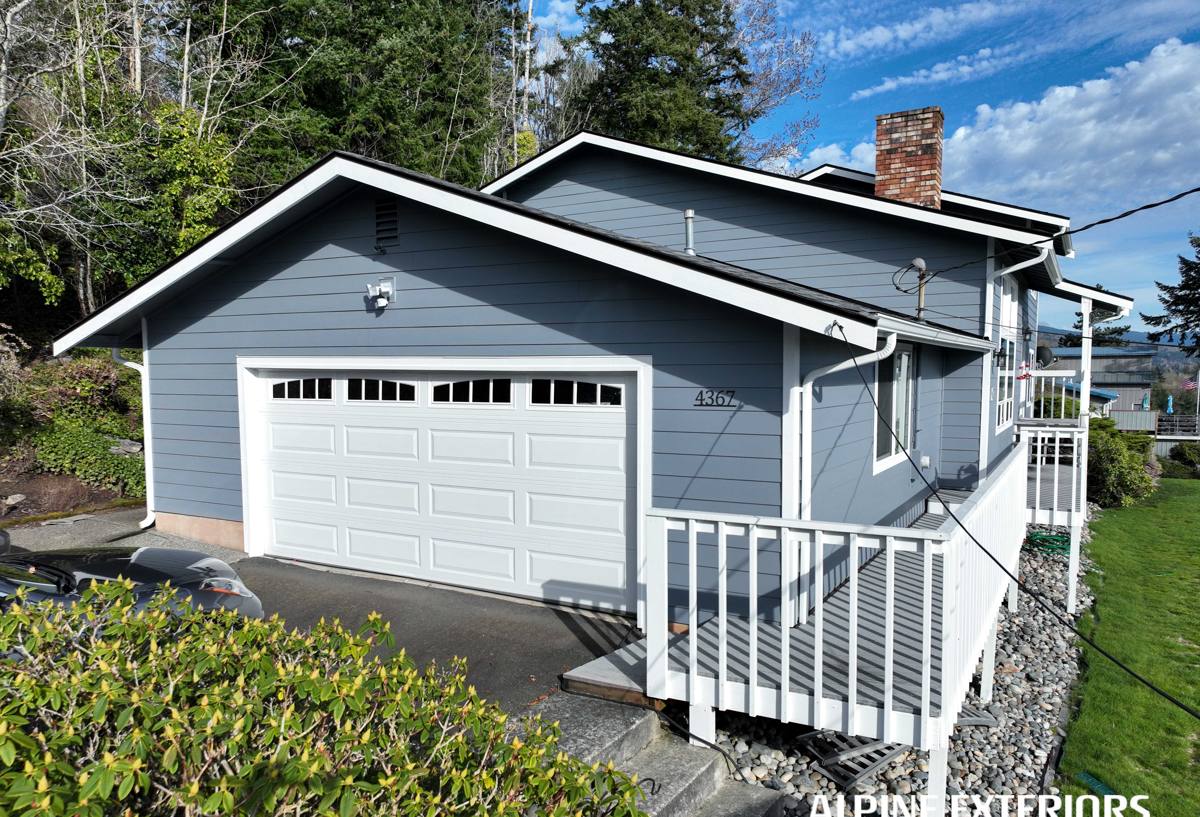
What a Real Deck Repair Inspection Covers
A lot of deck "repairs" amount to replacing a rotten board and calling it done. That approach almost never holds up in a salt-air, high-moisture environment, because the board usually isn't the actual problem — it's a symptom of something happening underneath or around it. We inspect the whole structure, not just the visible surface.
Ledger Board and House Connection
This is where the deck attaches to the house, and it's the single most important structural point on the whole structure. Flashing failures here let water track behind the siding and into the rim joist, which can rot from the inside out while the deck surface still looks fine. Given how much wind-driven rain this area sees, we check this connection closely on every job, repair or not.
Support Posts and Footings
Posts that sit in or near standing water, or footings that were never poured deep enough or with proper drainage, are common culprits behind a deck that feels spongy or has started to sag or lean. Moss and standing moisture around the base accelerate wood decay here more than almost anywhere else on the structure.
Fasteners and Hardware
Salt air corrodes standard fasteners and joist hangers far faster than it would inland. We regularly find galvanized hardware that's rusted through, or nails that have loosened as the surrounding wood swells and shrinks with repeated wet-dry cycles.
Decking Boards and Railings
Surface-level issues — cupping, splintering, soft spots, moss growth in shaded corners — are usually the easiest thing to see and often the last thing to actually fail structurally. Railings deserve their own look too, since a loose or rotted railing post is a safety issue, not just a cosmetic one.
Signs Your Sandy Point Deck Needs Repair Now
Some warning signs are obvious. Others get ignored for a season or two because the deck still "feels fine" to walk on. Here's what we tell homeowners to watch for:
- Soft, spongy, or bouncy spots underfoot, especially near the house or around posts
- Visible moss or dark green-black staining that keeps coming back after cleaning
- Gaps opening up between the deck and the house siding or trim
- Rust streaks running down from screws, nails, or metal brackets
- Railings or posts that wiggle or flex when you lean on them
- Boards that stay damp long after the rest of the deck has dried
- Any wood that a screwdriver sinks into easily without much pressure
Any one of these on its own might be minor. Several together usually mean the moisture problem has been ongoing for a while and it's worth having someone look before it turns into a bigger structural repair.
Repair or Replace? How We Help You Decide
Not every deck problem means starting over, and we don't push a full rebuild when a targeted repair will genuinely hold up. The decision usually comes down to how much of the structure is actually compromised versus how much is still sound.
| Factor | Leans Toward Repair | Leans Toward Replacement |
|---|---|---|
| Framing condition | Solid joists and posts, isolated soft spots | Rot has spread through multiple structural members |
| Age of deck | Under 10-15 years, built with decent materials | Original construction is old and undersized by current standards |
| Ledger/house connection | Flashing intact, minor fixes needed | Water intrusion has damaged the rim joist behind it |
| Extent of damage | Localized to a few boards, one railing section, or a post or two | Damage is spread across most of the deck surface or structure |
| Cost over time | Repair cost is a fraction of full replacement | Repeated repairs are starting to add up to near-replacement cost |
We walk through this with you in plain terms during the inspection — what's structural, what's cosmetic, and what a repair will and won't fix long-term. If a repair is a short-term patch on a bigger problem, we'll tell you that up front rather than sell it as a fix.
Our Deck Repair Process, Start to Finish
Every job looks a little different depending on what's actually wrong, but the sequence we follow stays consistent:
- Full inspection — framing, fasteners, ledger connection, posts, footings, decking, and railings, not just the obvious problem area.
- Clear scope and plan — we tell you exactly what needs to be replaced, what can be repaired, and why, before any work starts.
- Permit check — some structural repairs in Whatcom County require a permit depending on scope; we'll confirm what applies to your job rather than guess.
- Demo of damaged material — removing only what's actually compromised, keeping sound structure intact wherever it's genuinely sound.
- Structural repair — sistering or replacing joists, resetting or replacing posts and footings, correcting flashing at the ledger.
- New decking, railings, and hardware — installed with corrosion-resistant fasteners appropriate for a marine-influenced climate.
- Final walk-through — we go over the repair with you so you know exactly what was done and what to keep an eye on going forward.
Materials That Actually Hold Up in Salt Air and Moss
Material choice matters more here than in a lot of places, because the same product can perform very differently a mile from the water versus right on it. Our standard is to match materials to the specific exposure of your deck, not just default to whatever's cheapest.
Fasteners and Hardware
Standard galvanized fasteners are fine in a lot of the country. In direct salt air, we prefer stainless steel or hot-dip galvanized hardware rated for coastal exposure — the upfront cost is small compared to what it costs to fix a deck that's failing because of rusted-through connectors.
Decking Material
Pressure-treated lumber, cedar, and composite decking each behave differently in a wet, salty, moss-prone environment. Composite generally sheds moisture and resists moss staining better with less upkeep, but it costs more up front. Wood costs less initially but needs more consistent cleaning and sealing to keep moss and moisture from gaining a foothold, especially in shaded sections of a deck.
Structural Lumber and Flashing
Below the surface, we use pressure-treated framing lumber rated for ground contact where posts meet the soil, and we treat ledger flashing as non-negotiable — it's cheap insurance against the kind of hidden rot that's expensive to fix later.
A Maintenance Checklist to Stretch the Life of Your Deck
Good repairs last longer with a little seasonal attention, especially given how long the wet, low-sun months run here. None of this is complicated, but it makes a real difference:
- Sweep debris and standing water off the deck surface regularly, especially in fall and winter
- Clean moss and algae off boards and railings before it builds up a heavy layer
- Check and re-seal or re-stain wood decking on the manufacturer's recommended cycle, not just when it looks faded
- Look at fastener heads periodically for rust streaking or loosening
- Keep gutters and downspouts clear so runoff isn't dumping extra water onto or under the deck
- Trim back vegetation that keeps sections of the deck shaded and damp longer than the rest
- Walk the deck perimeter each fall and spring checking for soft spots or gaps at the house connection
Why Hire a Crew That Already Works This Neighborhood
A contractor who mostly works inland jobs isn't wrong to recommend certain fasteners, finishes, or framing details — those recommendations are just built for a different climate. Working regularly in Sandy Point and the surrounding Blaine waterfront means we've already seen how salt air, wind-driven rain, and moss affect decks here specifically, and we build and repair accordingly rather than applying a generic standard and hoping it holds.
That local familiarity also shows up in smaller ways — knowing which areas of a property tend to stay shaded and damp longest, which orientations catch the worst of the weather off the water, and what kind of wear is normal aging versus an early warning sign. It's the difference between a repair that's technically correct and one that's actually built for where it sits.
If your deck is showing any of the signs above, or you just want an honest read on its condition, we're happy to come take a look. Estimates are free, there's no pressure, and you'll get a straight answer about what your deck actually needs — use the form below to get started.