 Blaine
 Windows for the Dakota Creek Climate
Homes in the Dakota Creek area sit close enough to Semiahmoo Bay and Drayton Harbor that salt-laden air is a daily fact of life, not an occasional nuisance. Add in the driving rain that comes sideways off Puget Sound through the fall and winter, and a moss season that can stretch from October into May, and you have a climate that is genuinely hard on window assemblies. This isn't a place where a standard-grade window from a big box store performs the way it would inland. Corrosion-resistant hardware, tight air seals, and correct flashing detail matter more here than in most of the country.
We install and replace energy-efficient windows throughout the Dakota Creek area with that reality in mind. A window that looks fine on a spec sheet but wasn't built or installed for a marine climate will show its weaknesses within a few winters — fogged glass, swollen sashes, or a slow trickle of moisture behind the trim that nobody notices until the wall sheathing is already compromised.
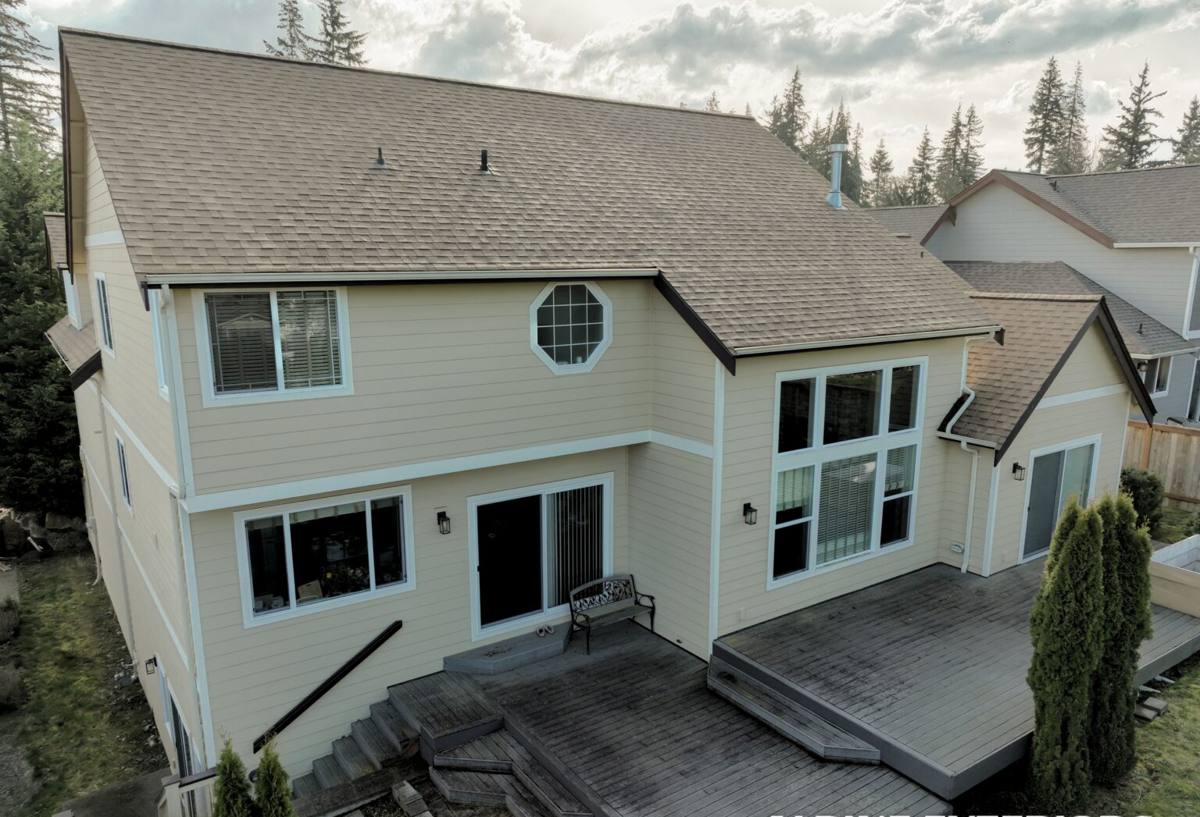
What "Energy-Efficient" Actually Means Here
Energy efficiency in a window comes down to a handful of measurable properties, not marketing language. When we talk with Dakota Creek homeowners about window options, three numbers matter most:
- U-factor: how well the window resists heat loss. Lower is better. In Whatcom County's climate, this is the number that most affects your winter heating bill.
- Solar Heat Gain Coefficient (SHGC): how much solar heat passes through the glass. Since this area doesn't get intense summer sun, a moderate SHGC usually makes more sense than the low numbers used for hot climates.
- Air leakage rating: how much air moves through the window assembly when closed. This one is directly tied to comfort near drafty exterior walls and to keeping moist coastal air from working its way into wall cavities.
Every code-compliant window sold today carries an NFRC label with these numbers. We'll walk through what they mean for your specific home rather than just pointing at a sticker — orientation, wall exposure, and how sheltered or exposed your lot is all change what "efficient" looks like in practice.
Signs Your Current Windows Are Working Against You
Most homeowners don't replace windows on a schedule — they replace them when something starts costing money or causing damage. In the Dakota Creek area, the tells are fairly consistent:
- Condensation forming between the panes of a double-pane window — this means the seal has failed and the gas fill (or air) between the panes is gone. It cannot be fixed; the glass unit or window needs replacing.
- Visible daylight or a draft you can feel at the frame edge, especially on walls facing the water or prevailing weather.
- Wood or vinyl frames that feel soft, discolored, or have a chalky, pitted surface — a sign of prolonged moisture and salt exposure.
- Difficulty opening or closing a sash that used to move freely, often from swelling or corroded hardware.
- A noticeable jump in heating costs without a change in usage.
- Moss or dark streaking building up on the sill or frame faster than on the rest of the trim.
Any one of these is worth a look. Several together usually mean the window unit itself, not just the caulking, is due for replacement.
What a Correct Installation Actually Involves
The window unit is only part of the job. In a marine climate, the installation detail is what determines whether that window lasts fifteen years or thirty. A correct installation includes:
- Removing the old unit carefully and inspecting the rough opening for rot, soft sheathing, or prior water intrusion before anything new goes in.
- Correcting any damaged framing or sheathing — installing a new window into a compromised opening just hides the problem behind new trim.
- Installing flashing in the correct order — sill pan flashing first, then side flashing, then head flashing, each one lapped so water sheds outward and down, never inward. This sequence matters more in driving-rain conditions than almost anything else in the job.
- Setting the window level, plumb, and square, shimmed at the manufacturer's specified points so the frame isn't stressed and the sash operates correctly for years, not just on install day.
- Sealing the interior air barrier with backer rod and sealant, separate from the exterior weather seal — these are two different jobs with two different purposes, and skipping the interior seal is one of the most common shortcuts we see in older installs.
- Insulating the gap between the frame and rough opening without overpacking it, which can bow the frame and cause the sash to bind.
- Finishing the exterior weather seal and trim so the whole assembly sheds water the way the original siding detail intended.
Skip or rush any one of these steps and the window itself barely matters — water finds its way in behind the frame instead of through it, which is a harder and more expensive problem to catch.
Comparing Frame Materials for a Coastal Climate
There's no single "best" frame material for every home — it depends on your budget, your home's style, and how exposed the window location is to wind-driven rain and salt air. Here's how the common options generally hold up in this specific climate:
| Frame Material | Coastal Durability | Maintenance | General Cost |
|---|---|---|---|
| Vinyl | Good — won't rot or corrode; UV exposure can cause slow fading over many years | Low — occasional cleaning | Lower |
| Fiberglass | Very good — dimensionally stable, resists moisture and salt well | Low | Mid to higher |
| Wood-clad | Good on the exterior (clad), but interior wood needs protection from condensation | Moderate — clad exterior easy, interior finish needs occasional attention | Higher |
| Aluminum | Poor to fair in salt air unless marine-grade — prone to corrosion and poor thermal performance | Moderate to high | Varies |
We generally steer Dakota Creek homeowners away from standard aluminum frames for this reason — not because aluminum is a bad product everywhere, but because untreated aluminum performs poorly against salt air and has a naturally higher U-factor that works against your efficiency goals in this climate. Vinyl and fiberglass are the two materials we install most often here, based on straightforward maintenance trade-offs, not brand preference.
Glass Options Worth Knowing
Beyond the frame, the glass package matters just as much:
- Low-E coatings reflect heat back into the room in winter — standard on nearly all efficient windows now.
- Argon or krypton gas fills between panes improve insulation over plain air, at a modest cost increase.
- Triple-pane glass offers the best performance but adds weight and cost — often worth it on north-facing or highly exposed walls, less necessary on sheltered ones.
Our Process for Dakota Creek Window Projects
We keep the process straightforward and try not to waste your time with unnecessary visits:
- On-site assessment: we look at each window opening individually — sun exposure, wind exposure, and any existing moisture or framing issues.
- Honest recommendation: we'll tell you which windows genuinely need replacing now and which can reasonably wait, along with material and glass options that fit your budget.
- Accurate measurement: every opening is measured individually — older homes in this area are rarely perfectly square, and assuming otherwise leads to gaps and callbacks.
- Installation: full removal, opening inspection and repair as needed, correct flashing sequence, and proper sealing as described above.
- Cleanup and walkthrough: we test every operable window before we consider the job done and walk you through anything you should know about care going forward.
Why a Local Crew Matters for This Job
Window installation is one of the few exterior jobs where local experience shows up directly in the outcome. A crew that regularly works the Dakota Creek area already understands how far the driving rain angle changes from a sheltered lot to one facing open water, how quickly moss establishes on north-facing trim, and how Whatcom County's wet season narrows the practical window for tear-out-and-replace work without exposing your home's interior to weather. That's scheduling knowledge you don't get from a crew passing through the area for one job.
It also matters for permitting and code familiarity — window replacement in Blaine can trigger permit requirements depending on scope, and a crew that pulls permits in this jurisdiction regularly moves through that process without it becoming your problem to manage.
Keeping New Windows Performing Long-Term
A well-installed, efficient window still benefits from basic upkeep in a salt-air, high-moss climate. A short seasonal checklist:
- Rinse frames and sills periodically to clear salt residue, especially on water-facing walls.
- Keep weep holes (the small drainage openings at the bottom of the frame) clear of debris and moss so water can drain out as designed.
- Check exterior caulking annually for cracking or separation, particularly after the first hard winter.
- Wipe down tracks and hardware occasionally to prevent grit and salt buildup from affecting smooth operation.
- Watch for any soft spots in interior trim or sills, which can signal a seal has started to fail.
None of this is heavy maintenance — it's the same kind of periodic attention any exterior feature needs in this climate, and it goes a long way toward getting the full service life out of your investment.
Get a No-Pressure Estimate
If you're dealing with drafty, fogged, or hard-to-operate windows in the Dakota Creek area, we're happy to take a look and give you a straightforward assessment — no pressure, no scare tactics. Use the form below to request a free estimate, and we'll walk your home's specific exposure and framing with you before recommending anything.