 Blaine
 Building Decks for Bellingham's Marine Climate
Bellingham sits on Bellingham Bay, and that proximity to salt water shapes how a deck ages here in ways a generic build spec doesn't account for. Salt-laden air corrodes exposed metal fasteners and hardware faster than it would further inland. Driving rain coming off the water finds every gap in flashing and every unsealed cut end. And the long, wet moss season that runs from fall through spring turns any deck surface that doesn't shed water and get some sunlight into a slick, green problem within a year or two. A deck built to a bare-minimum national spec shows its weaknesses here faster than in drier parts of the state.
We're based just up the road in Blaine and have worked exteriors throughout this part of Whatcom County long enough to know which shortcuts turn into callbacks two winters later. This page covers what a custom deck actually needs to hold up under Bellingham conditions, not just what looks good on the day it's finished.
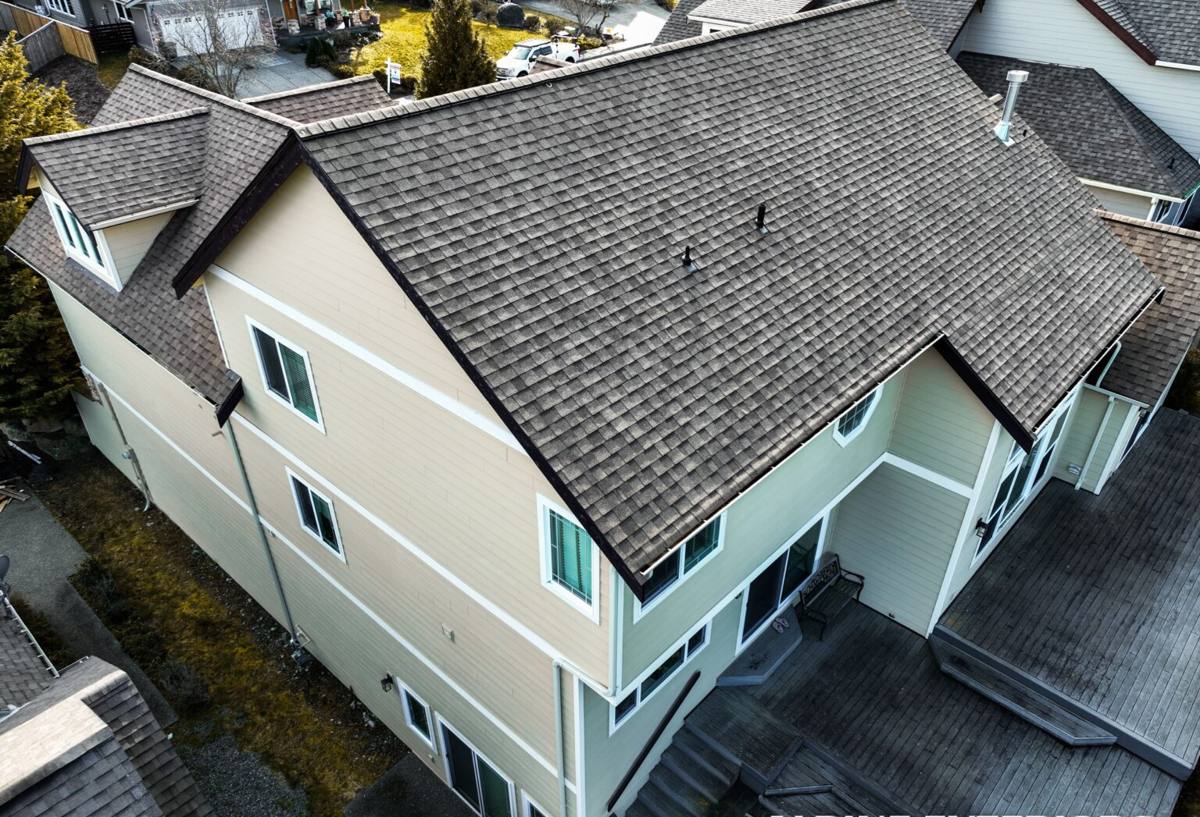
What the Local Climate Actually Does to a Deck
Salt Air and Hardware
Fasteners, joist hangers, and structural screws that aren't rated for coastal exposure will start showing rust bleed and pitting well before the wood around them shows any wear. Once hardware corrodes, it loses holding strength quietly — you usually don't notice until a board is loose or a rail flexes. Everything structural on a deck we build near the water gets hot-dip galvanized or stainless hardware, not the cheaper coated fasteners that are fine in a dry climate but undersized for salt exposure.
Driving Rain and the Ledger Connection
The single point where most Bellingham deck failures start isn't the decking surface — it's the ledger board, where the deck attaches to the house. Wind-driven rain gets pushed sideways and upward against the siding, and if that ledger isn't flashed correctly, water tracks behind it and into the house framing. This is slow, hidden rot, and it's the most expensive kind of mistake to fix because by the time you see damage, it's often reached the rim joist or wall sheathing.
Moss, Shade, and Standing Water
Between the tree cover common on Bellingham lots and the number of overcast, damp days each year, any deck surface that stays wet and shaded builds up moss and algae. That's not just a cosmetic issue — it makes the surface slick and, on wood decking, holds moisture against the boards long enough to accelerate rot at fastener points and board ends.
The Structural Basics a Correct Build Covers
Regardless of what decking material sits on top, the framing underneath is what determines whether a deck lasts 10 years or 30. For our climate, that means:
- Footings sized and set to local frost depth requirements, not just poured to whatever depth is convenient
- A ledger board properly flashed with metal or high-quality membrane flashing, and separated from the siding with the right spacing and sealant details
- Joist hangers and structural fasteners rated for coastal/salt exposure, not standard interior-grade hardware
- Joist spacing matched to the actual decking material chosen, since composite and thinner wood profiles often need tighter spacing than standard 16-inch framing
- Post bases that keep wood posts off direct ground or slab contact, so they aren't sitting in standing water after a heavy rain event
None of this is visible once the deck is finished, which is exactly why it's the part worth asking your contractor about directly rather than assuming it's handled.
Choosing a Decking Material for This Climate
There's no single "right" decking material — it depends on budget, how much upkeep you want to do, and how the deck will be used. Here's how the common options actually perform under Bellingham's rain and moss conditions:
| Material | Moisture Behavior | Maintenance | Typical Lifespan | Rough Cost Range |
|---|---|---|---|---|
| Pressure-treated lumber | Resists rot with proper sealing; can cup or check if left unsealed | Needs cleaning and re-sealing every 1-2 years in this climate | 15-20 years | Lowest upfront cost |
| Cedar | Naturally rot- and insect-resistant, but softer and more prone to surface weathering from constant damp | Regular cleaning and periodic oil or stain to hold color and prevent graying | 15-25 years | Mid-range |
| Composite decking | Doesn't absorb water or rot, but can develop surface mold/algae in shaded, damp spots if not cleaned | Low — periodic washing, no sealing or staining | 25-30+ years | Higher upfront cost |
In practice, we steer a lot of Bellingham homeowners toward composite for heavily shaded lots or waterfront-adjacent properties simply because it removes the annual sealing cycle that wood decking demands here. On drier, sun-exposed lots, cedar or treated lumber can perform well and cost less, as long as the owner is realistic about the maintenance commitment.
Railings, Stairs, and Code Requirements
Most decks in this area fall under local building permit requirements once they exceed a certain height or size, and inspectors check guardrail height, baluster spacing, and stair geometry closely — these are the details that get flagged most often. Current residential code generally calls for guardrails around 36 inches high on elevated decks, baluster spacing that won't pass a 4-inch sphere, and consistent stair rise and run within tight tolerances. We handle the permit process and design to meet these requirements from the start, rather than building first and adjusting to pass inspection later.
Railing material matters here too. Metal cable or bar railings look clean but need corrosion-resistant hardware near the water, and wood railings take the same weathering the rest of the structure does. We'll walk through the tradeoffs based on where your property sits relative to the water and tree cover.
Drainage and Airflow Underneath the Deck
What happens under a deck matters as much as what happens on top of it. A deck built low to the ground with poor grading traps moisture, which is exactly what feeds moss and rot in a climate that's already wet most of the year. A correctly built deck accounts for:
- Grading that moves water away from the house foundation and post footings, not toward them
- Enough clearance and airflow underneath for wood framing to dry out between rain events
- Under-deck drainage systems where the space below is finished or used for storage, so water doesn't pool against the house
- Gaps between decking boards sized correctly for the material, so water sheds rather than sitting on the surface
Our Process for a Bellingham Deck Project
Every custom deck we build follows the same sequence, adjusted for the specific lot and design:
- On-site assessment of the lot, existing structure, drainage patterns, and sun/shade exposure
- Design and material selection based on how the deck will actually be used and how much maintenance the owner wants to take on
- Permit drawings and submission to the local jurisdiction, handled on our end
- Footings and framing built to local frost depth and coastal-exposure hardware standards
- Decking, railing, and stair installation with attention to fastening method and board spacing
- Final walkthrough covering how to maintain the specific material installed
Why a Blaine-Based Crew That Already Works Bellingham Matters
We're not driving in from out of the area to bid this job. Working regularly throughout Whatcom County — including Bellingham — means we already know how the local permitting process runs, what inspectors here are looking for, and which hardware and material choices actually hold up on this stretch of coastline versus what a supplier's generic spec sheet recommends. That familiarity shows up in fewer surprises during the permit process and a build that's specified correctly for this climate the first time, rather than value-engineered down to a lower-cost, lower-durability spec that wasn't designed for salt air and year-round rain.
Keeping a New Deck Looking Good Through the Wet Season
Whatever material you choose, a little seasonal upkeep goes a long way here. Clear leaves and debris from between boards before they trap moisture. Sweep or rinse off algae and moss buildup before it gets slick, especially on shaded sections. For wood decking, keep to a sealing or staining schedule rather than waiting until it visibly needs it — by the time wood decking looks dry and gray, it's already lost some of its protection. For composite decking, an occasional wash is usually all that's needed. If you notice a soft spot near the ledger board or a post base sitting in water after a rain, that's worth a call before it becomes a bigger repair.
If you're planning a new deck or replacing one that hasn't held up to Bellingham's weather, we're happy to take a look and give you a straight, no-pressure estimate — just fill out the form below.