 Blaine
 James Hardie Siding, Built for What Custer's Weather Actually Does
Custer is a small, spread-out community in Whatcom County between Ferndale and Blaine, close enough to the water and the Canadian border that its homes take on the same coastal exposure as the rest of this stretch of the county, even on lots that feel inland. Farms, wooded acreage, and newer residential construction sit side by side out here, and all of it faces the same underlying conditions: salt-laden air drifting in off the water, rain that arrives sideways as often as it falls straight down, and a moss season that runs long enough to be a permanent maintenance line item rather than a seasonal chore. This page is specifically about James Hardie siding installation for Custer homes — what the material needs to do here, what a correct job actually involves, and how our process works when you call us.
We install James Hardie fiber cement siding exclusively. We don't offer it as one option on a longer list; it's the only siding system we put on a house, and that's a decision built around what we've seen hold up — and what hasn't — on homes in exactly this kind of exposure.
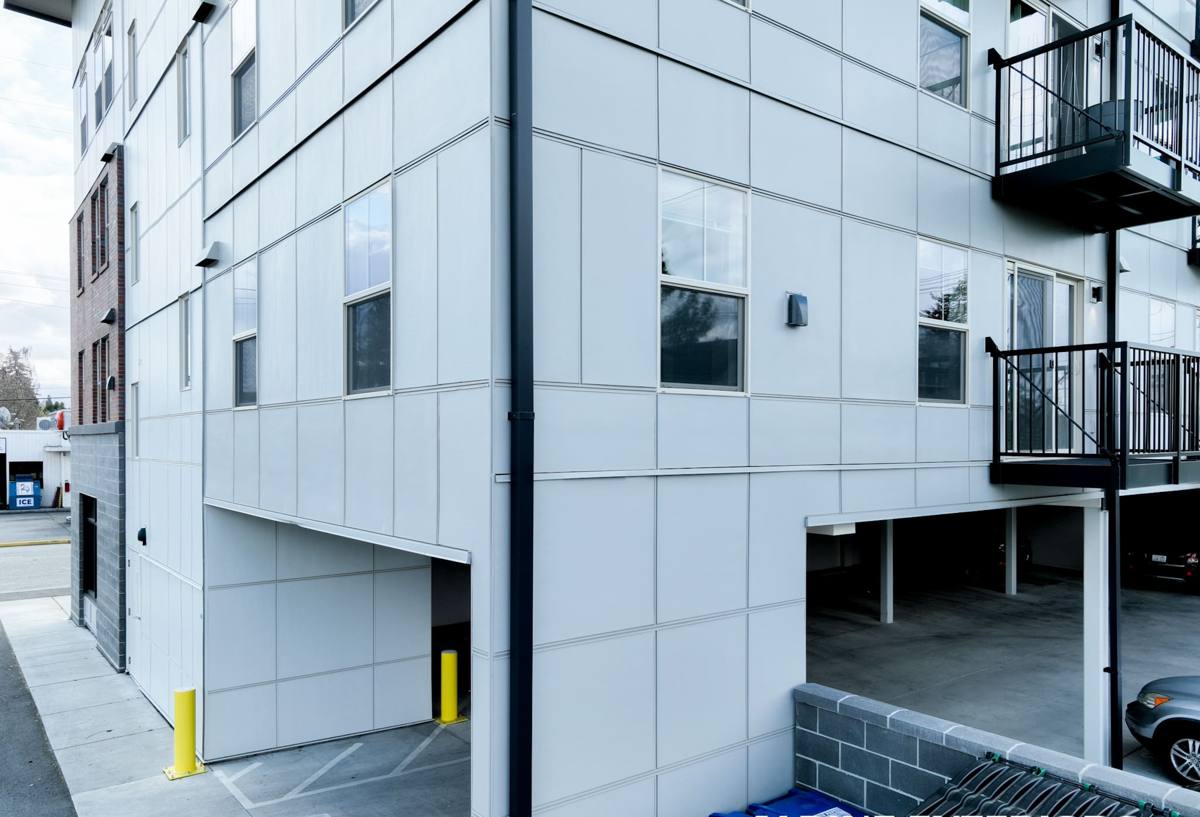
What Custer's Climate Actually Does to Siding
Salt Air Off the Water
Custer sits close enough to Semiahmoo Bay, Drayton Harbor, and the broader Strait that salt-laden air reaches most properties in the area, not only the ones with a direct water view. Salt accelerates corrosion on fasteners, flashing, and exposed trim hardware, and it wears down lower-grade paint and coatings noticeably faster than a dry, inland climate would. That's a slow process, not a dramatic one, which is exactly why it's easy to underestimate until a decade or two in, when a cheaper coating system has visibly failed and a better one hasn't.
Driving, Wind-Pushed Rain
Storm systems moving through this part of Whatcom County rarely drop rain straight down. Wind pushes it sideways into wall assemblies, lap joints, and window and door flashing, which is a much harder test on a house than the same total rainfall would be somewhere calmer. Siding that depends on a tight, intact surface or caulked seams to stay dry struggles more here than the manufacturer's general marketing usually accounts for, because Custer's exposure is closer to the coastal end of what a product line is rated to handle.
A Long Moss and Mildew Season
Mild temperatures combined with steady moisture keep moss and mildew active across most of the calendar year on shaded, tree-lined, or north-facing walls, which describes a large share of Custer's wooded and rural lots. Moss on a siding surface isn't just cosmetic; it holds moisture directly against the wall behind it, and that trapped dampness is where a lot of long-term rot and coating failure actually starts, well before it's visible from the ground.
Why James Hardie Is the Right Match for This Exposure
Fiber cement as a category is the right direction for a climate like this, but the specific engineering behind the product matters as much as the material itself. Here's what makes James Hardie specifically the system we stand behind for a Custer property.
Climate-Engineered HZ5 Formulation
James Hardie builds different formulations for different climate zones rather than selling one generic product nationwide. The HZ5 line is engineered for regions with sustained moisture exposure and freeze-thaw cycling, which is a closer match to Whatcom County's winters than a formulation designed primarily for hot, dry inland climates. That distinction is a real engineering difference, not a marketing label, and it's one of the concrete reasons we standardized on this manufacturer rather than treating fiber cement as an interchangeable category.
Factory-Applied ColorPlus Finish
Instead of relying on paint applied in the field, Hardie's ColorPlus finish is baked on in multiple coats under controlled factory conditions before the boards ever reach the job site. That finish carries its own warranty, separate from the substrate warranty, and it's formulated specifically to resist fading and hold consistent color under UV and salt-air exposure better than a site-painted surface managed on a homeowner's repainting schedule.
A Core That Doesn't Absorb, Swell, or Rot
Fiber cement is an inorganic blend of Portland cement, sand, and cellulose fiber, cured into rigid boards. It doesn't have a wood-based or foam core that can absorb water and swell, cup, or feed rot and insects the way organic and engineered-wood siding materials can. In a climate where wet weather is the default rather than the exception, that's one less failure point to manage over the life of the siding.
Choosing the Right Hardie Product Line for a Custer Home
Not every Hardie profile fits every home, and part of doing this job right is specifying the product that actually matches the house and its exposure rather than defaulting to whatever's fastest to install.
| Product Line | Best Fit | Why It Works in Custer |
|---|---|---|
| HardiePlank lap siding | Most single-family homes | Traditional lap profile sheds wind-driven rain well when overlap and flashing are done to spec |
| HardiePanel vertical siding | Gables, accent walls, modern and farmhouse styles | Clean vertical lines with fewer horizontal seams for water to work into |
| HardieShingle siding | Craftsman-style homes and accent sections | Textured, shingle look without the moisture uptake and upkeep real wood shingle requires |
| HardieTrim boards | Corners, window and door casing, fascia | Factory-finished trim holds up to the same salt air and moisture cycling as the field siding |
Color and profile are a homeowner's choice, but the underlying spec, the fastening pattern, and the flashing details stay consistent no matter which profile you pick, because those are the parts of the job that actually determine how long the siding lasts.
What a Correct Installation Involves in This Climate
Fiber cement's reputation depends heavily on installation quality, and in a coastal, high-moisture area like Custer, the details matter more than they would somewhere drier. A rushed or out-of-spec install can undercut even the best material on the market.
- Rain screen or drainage gap behind the siding so any moisture that does get past the surface can drain and dry instead of sitting against the sheathing.
- Manufacturer-specified fastener type and spacing, using corrosion-resistant fasteners suited to a salt-air environment rather than whatever's on the truck.
- Properly lapped house wrap and flashing at every seam, window, door, and penetration, directing wind-driven rain down and out instead of behind the wall.
- Correct clearance from grade, roofline, and decks to keep splash-back and standing moisture away from board edges.
- Factory-cut edges used wherever possible, with field cuts sealed to spec so the factory finish's protection isn't compromised at the cut line.
None of this is exotic; it's the manufacturer's own installation spec, followed consistently instead of shortcut on the parts that are hardest to inspect once the siding is up.
Our Process for a Custer Siding Project
- Walk-through and assessment. We look at the current siding, trim, and any visible moisture, moss, or staining, and talk through what we're seeing and why.
- Honest recommendation and written estimate. We explain which Hardie product line fits the home and give a real number, not a placeholder that grows once work starts.
- Tear-off and substrate check. Removing the old siding is when hidden rot or trapped moisture actually shows up, and we address it before anything new goes on rather than covering it back up.
- Installation to manufacturer spec. Rain screen, fastening, flashing, and sealed joints, done in the order and to the tolerances Hardie's own installation guide calls for.
- Final walkthrough and warranty paperwork. We go over the finished work with you and make sure the manufacturer warranty registration is handled correctly, not left for you to sort out later.
Cost Factors for James Hardie Siding in Custer
| Factor | What It Affects | Why It Matters in Custer |
|---|---|---|
| Tear-off vs. overlay | Labor scope and access to sheathing | Tear-off is usually the honest choice here, since it's the only way to catch moisture damage hidden under old siding |
| Substrate condition | Repair cost before new siding goes on | Long-term trapped moisture from wind-driven rain can rot sheathing that isn't visible until the old siding is off |
| Product line and profile | Material cost and labor complexity | Vertical panel and shingle profiles involve different detailing than standard lap siding |
| Trim and detail complexity | Labor time | Homes with more windows, gables, and rooflines need more flashing and cut work to do correctly |
| Site access and lot conditions | Staging and labor time | Rural and wooded Custer lots sometimes have longer driveways or tighter staging than in-town properties |
These are general drivers, not a quote. We walk every property before putting a real number on the work, because two homes on the same road can need very different scopes once we're actually pulling old siding off the wall.
Why Hiring a Crew That Already Works Custer Matters
A crew that installs siding across this part of Whatcom County regularly has watched salt air, driving rain, and a long moss season play out on real houses over years, not just read about it in a product spec sheet. That experience shows up in small, practical decisions on install day: which wall orientations stay wet longest, where extra flashing attention actually pays off, and which fastener and sealing details are worth the added time so you're not dealing with a callback after the next storm off the water. Custer's mix of wooded, rural lots and open exposure closer to the water isn't identical to every town in the county, and a crew that treats that difference seriously, rather than applying a one-size-fits-all install, is what separates siding that lasts from siding that needs attention again in five years.
Signs a Custer Home's Siding Is Worth a Second Look
- Moss or dark staining that comes back quickly after cleaning, especially on shaded or north-facing walls
- Soft or spongy siding near the bottom of the wall or around window and door trim
- Rust streaking or visibly corroded fasteners and trim hardware
- Peeling, chalking, or faded paint on an older, non-Hardie product
- Gaps, cracking, or separation at butt joints and trim transitions
Get a Free, No-Pressure Estimate
If you're weighing new siding for a Custer home, we're glad to walk the property, take an honest look at what's on the walls now, and explain exactly what we'd recommend and why. Reach out using the form below to schedule a free, no-pressure estimate.