 Blaine
 Decking Built for California Creek's Weather, Not Against It
California Creek sits close enough to the water that homes here deal with a specific combination of conditions: salt-laden air rolling in off the water, driving rain that comes in sideways more often than straight down, and a moss season that can stretch from fall well into spring. Any deck material has to hold up against all three at once, year after year, not just look good the day it's installed.
We've installed and repaired decks all over Blaine and the surrounding parts of Whatcom County, and California Creek properties tend to show wear in the same predictable places: fastener heads that corrode faster than the board around them, north-facing sections that stay damp and grow moss first, and ledger connections where water has been quietly working its way into the house framing. Composite decking doesn't eliminate every one of these risks, but it removes the ones tied to wood rot and fastener pull-out, and it gives us better tools to manage the rest.
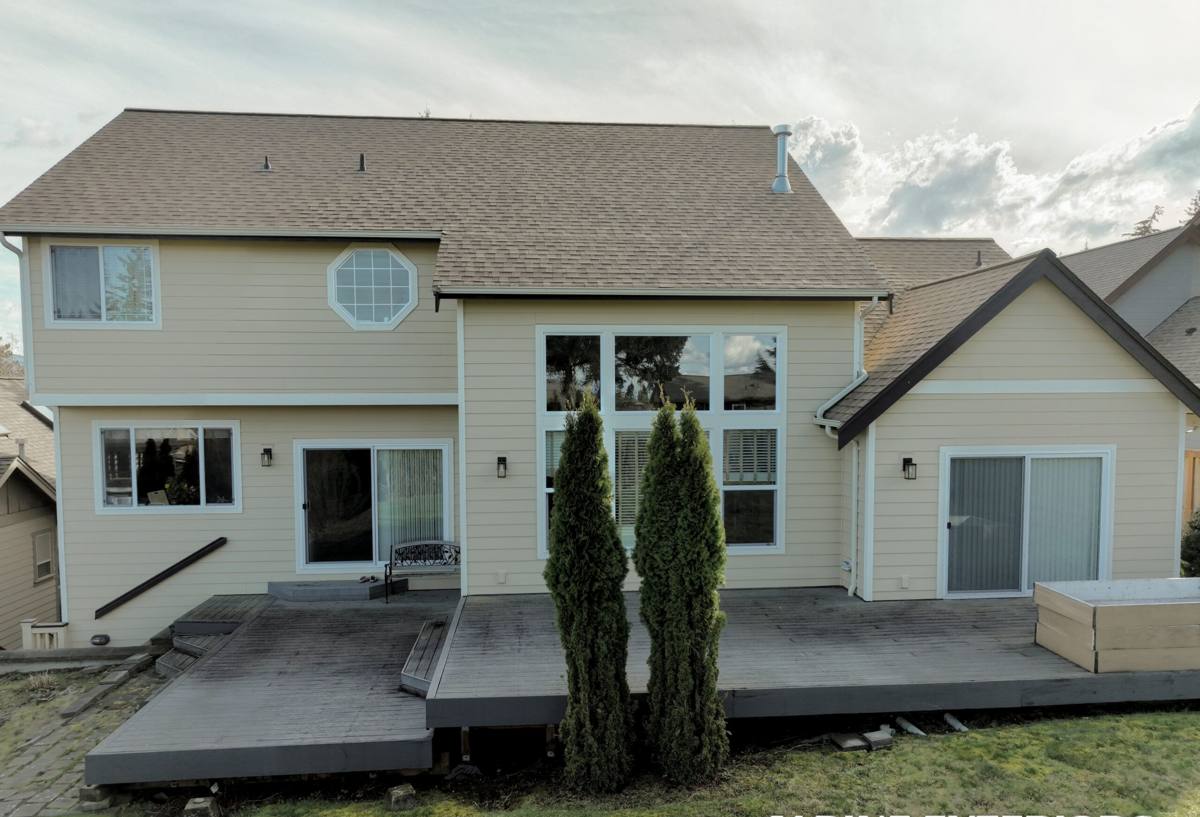
What Composite Decking Actually Solves
Moisture and Rot Resistance
Composite boards are made from a blend of wood fibers and plastic, which means they don't absorb water the way solid wood does. In a climate where boards can stay wet for days at a stretch during the rainy months, that matters. Wood decking in this kind of exposure needs regular sealing to keep water out of the fibers; composite doesn't need that step, and it won't cup, split, or rot the way an under-maintained wood deck eventually will.
Salt Air and Fastener Corrosion
Salt air doesn't rot composite boards, but it will attack the metal in a deck long before it touches the decking itself — screws, joist hangers, post bases, and flashing. This is one of the most common failure points we find on older decks near the water: the boards look fine, but the fasteners underneath are corroding. Composite decking doesn't fix this on its own; it has to be paired with the right hardware, which we cover below.
Moss and Slip Resistance
A long moss season means any horizontal surface that stays shaded and damp is going to grow something eventually. Composite boards with a textured, capped surface resist moss growth better than smooth wood or low-grade composite, and they're easier to clean when moss does start — a stiff brush and a deck wash is usually enough, versus the sanding and re-sealing a wood deck needs once moss has taken hold.
Not All Composite Boards Perform the Same in This Climate
"Composite decking" covers a wide range of quality, and the difference matters more in a marine climate than in a dry inland one. The table below reflects what we look for when we're speccing a deck for a wet, salty, moss-prone site like California Creek.
| Board Type | How It Handles This Climate | Trade-Offs |
|---|---|---|
| Uncapped composite | Absorbs some surface moisture over time; more prone to moss and mildew staining | Lower upfront cost, shorter realistic lifespan in wet climates |
| Capped composite (cap on top surface only) | Good moisture and moss resistance on the walking surface | Board edges and cut ends still need care during install |
| Fully capped composite (cap on all sides) | Best resistance to moisture intrusion and moss, including at cut ends | Highest material cost of the three |
| PVC-based decking | Essentially impervious to water; very moss resistant | Higher cost, different look and feel than wood-composite blends |
Brands like Trex and TimberTech offer products across most of these tiers, and the right choice usually comes down to budget balanced against how exposed the deck is — a shaded, low-airflow deck near California Creek is not the place to save money on an uncapped board.
What a Correct Installation Involves
The decking boards get the attention, but most of the deck failures we see start below them. A composite deck is only as good as the substructure and hardware underneath it.
- Fasteners and connectors: stainless steel or coated fasteners rated for coastal/marine exposure — not the standard galvanized hardware sold for general use
- Joist spacing: composite typically needs tighter joist spacing than wood to prevent flex and long-term sagging
- Ledger board flashing: proper flashing and a drainage gap where the deck meets the house, so water doesn't track back into the wall framing
- Ventilation under the deck: enough airflow beneath the boards to let moisture escape instead of sitting trapped against the framing
- Hidden fastener systems: reduce surface penetrations in the board face, which means fewer spots for water to sit and fewer visible corrosion marks over time
Skipping any one of these doesn't show up on day one — it shows up two or three winters later, usually as a soft spot near the house or rust streaks bleeding through the board surface.
Our Process for California Creek Decks
1. On-Site Assessment
We look at sun and shade patterns, drainage around the deck footprint, the condition of any existing structure, and how exposed the site is to wind and salt spray off the water. This tells us which board tier and hardware spec actually make sense, rather than defaulting to whatever is cheapest or most common.
2. Substructure Work
If the existing framing, posts, or footings are compromised — which is common on older decks in wet, salty conditions — we address that before a single composite board goes down. New composite decking installed over a failing substructure is just a nicer-looking version of the same problem.
3. Installation
Boards are laid with the manufacturer's specified gaps for expansion and drainage, fastened with corrosion-rated hardware, and finished with matching trim and fascia. We pay particular attention to cut ends and any spot where a board is notched around a post or fixture, since those are the places moisture finds its way in first.
4. Final Walkthrough
We check board spacing, fastener seating, railing attachment, and drainage before calling the job done, and we walk the finished deck with the homeowner so there are no surprises.
Living With a Composite Deck Through a Whatcom County Winter
Composite decking is low-maintenance, not no-maintenance. In a climate with this much rain and moss pressure, a little seasonal attention goes a long way toward keeping the deck looking and performing the way it should.
- Sweep debris and standing leaves off the deck regularly in fall — trapped organic matter is what feeds moss and mildew
- Rinse or lightly scrub shaded, north-facing areas more often than sun-exposed sections
- Check gaps between boards each season and clear out any built-up debris so water keeps draining properly
- Inspect fasteners and metal hardware annually for early rust or staining, especially near the water
- Keep gutters and downspouts near the deck clear so runoff isn't dumping directly onto or under the deck surface
- Use a cleaner rated for composite decking — pressure washing on the wrong setting can damage the board surface
Signs an Existing Deck Needs Attention
If you're deciding between repairing a current deck and replacing it with composite, these are the warning signs worth taking seriously before another wet season:
- Soft or spongy spots underfoot, particularly near the house or at board ends
- Persistent moss or dark staining that comes back within weeks of cleaning
- Visible rust streaks below fastener heads or around metal connectors
- Gaps or movement where the deck meets the house at the ledger board
- Boards that stay visibly wet long after the rest of the yard has dried out
Any of these point to moisture getting somewhere it shouldn't, and in a climate like this, that problem doesn't go away on its own.
Why Local Experience Matters for This Job
A composite deck built to a generic spec sheet and one built for the actual conditions at a specific California Creek property are not the same job. Fastener choice, ventilation, board tier, and even where moss is likely to become a problem all depend on how a particular site sits relative to wind, water, and shade. A crew that already works this area has seen which details matter here and which corners get punished by this specific climate — that's knowledge you don't get from a manufacturer's install manual alone.
If you're considering a new composite deck or need an honest read on whether your current one is still sound, we're happy to take a look. Reach out for a free, no-pressure estimate using the form below.