 Blaine
 Cherry Point's Siding Challenge: Salt, Rain, and Moss
Homes along the water near Cherry Point deal with a combination of stresses that inland Whatcom County properties simply don't see as often. Salt-laden air off the water works into seams and fastener heads. Driving rain, pushed sideways by wind off the Strait, gets forced into laps and joints that were never designed to handle water moving horizontally instead of down. And the region's long, damp moss season means anything shaded or north-facing stays wet longer than it should, giving organic growth a foothold on siding surfaces and behind trim. Individually, each of these is manageable. Together, over years, they're what turns a small siding problem into a rot pocket, a failed panel, or a paint job that won't hold.
Siding repair in this area isn't just about patching what's visibly wrong. It's about understanding why that spot failed first, and whether the rest of the wall is on the same timeline.
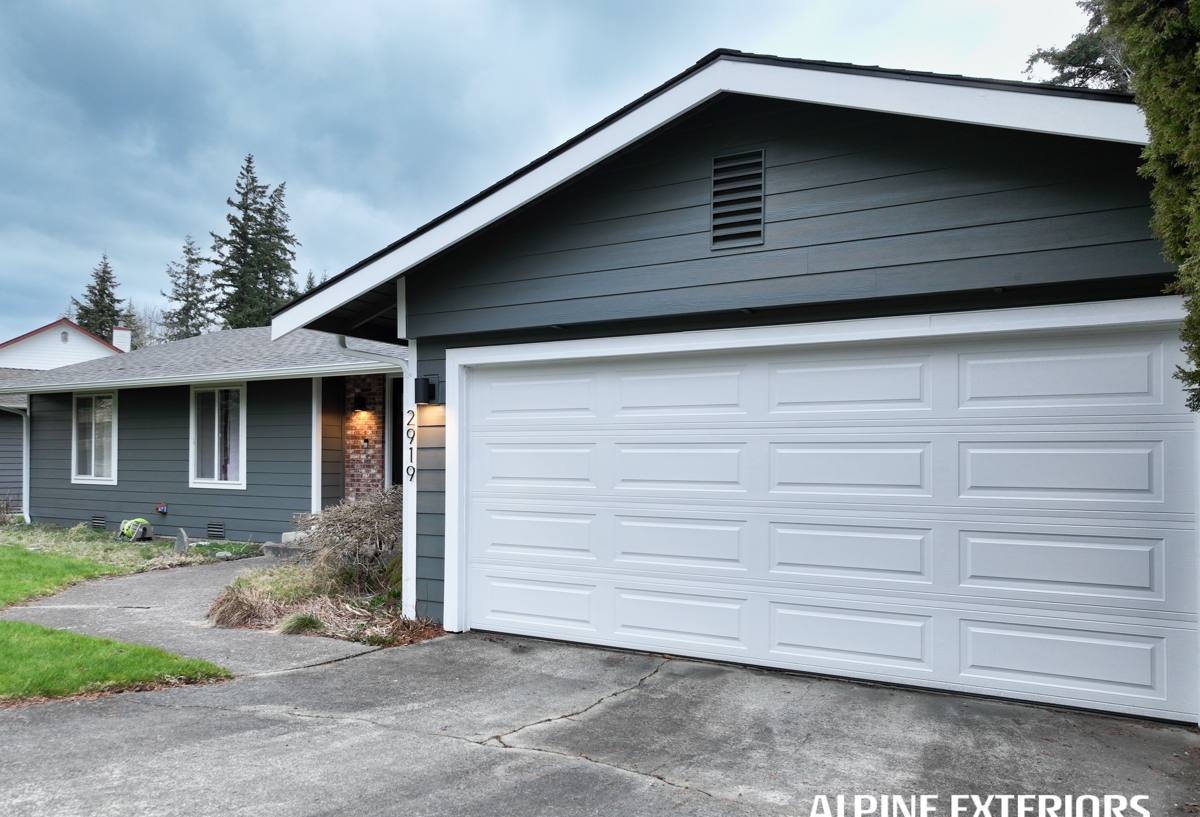
How Coastal Exposure Damages Siding Over Time
Salt Air
Airborne salt is corrosive to exposed metal fasteners, flashing, and trim hardware. Once a fastener starts to corrode, the hole around it enlarges slightly, water finds a path in, and the cycle accelerates. Salt residue also holds moisture against a surface longer than plain rainwater would, which matters most where siding meets trim, corner boards, or window casings.
Driving Rain
Wind-driven rain doesn't behave like a normal downpour. It gets pushed up and under laps, into butt joints, and around penetrations like hose bibs and light fixtures. Siding systems are engineered assuming water sheds downward — a wall exposed to frequent sideways rain needs its flashing, caulking, and overlap details done correctly the first time, because there's less margin for error.
Moss and Sustained Moisture
Moss itself doesn't eat through siding, but it does something arguably worse: it holds water against the surface for days after the rain stops. On wood-based products that means slow rot. On any material, trapped moisture behind moss and organic debris in gaps and corners keeps that section of wall wetter than the rest of the house, which is usually where repair calls originate.
Warning Signs It's Time for a Repair Call
Most siding failures give warning before they become expensive. Homeowners in Cherry Point should walk their exterior a couple of times a year, especially after the wet season, and look for:
- Soft or spongy spots when you press on siding, especially near the bottom courses or under windows
- Visible gaps or separation at butt joints and corners
- Paint that's peeling, bubbling, or failing in one localized area rather than evenly across the wall
- Dark streaking, moss, or persistent green growth concentrated in one section
- Fastener heads that are rusting, popping out, or leaving stains
- Warping, cupping, or visible cracks in individual boards or panels
- Interior clues — a musty smell, a discolored patch on drywall, or peeling interior paint on an exterior wall
None of these automatically mean a full re-side is needed. But they all mean the wall assembly should be opened up and looked at, not just caulked over.
Repair Realities by Siding Material
What a repair actually involves — and how long it holds — depends heavily on what's already on the wall. Here's how the materials most common on older Cherry Point-area homes tend to behave once water gets past the surface:
| Siding Material | Typical Failure in This Climate | Repair Approach | Long-Term Outlook |
|---|---|---|---|
| Cedar / wood lap | Rot at butt joints, bottom courses, and anywhere moss holds moisture | Cut out and splice matching stock; treat and prime all cut edges before closing up | Repairs are honest but the clock is already running on the rest of the wall |
| Vinyl | Cracking in cold snaps, warping near heat sources, water tracking behind panels at damaged spots | Panel replacement (color-matching older vinyl is often difficult); check and repair the water-resistive barrier underneath | Individual panels are cheap to swap, but faded or discontinued colors limit clean matches |
| LP-style OSB panel | Edge swelling and delamination where moisture gets into the substrate | Full panel replacement is usually required once swelling starts — patching doesn't hold | Once one panel fails from moisture, neighboring panels are frequently close behind |
| Fiber cement (e.g. James Hardie) | Impact damage, caulking failure at joints, or improper original installation (missing clearances, unsealed cuts) | Replace the damaged board section; correct any flashing or clearance issue that let water in | The board itself doesn't rot; failures are almost always installation or impact related, not material breakdown |
This is also why we're upfront that we don't install vinyl, LP SmartSide, or untreated wood siding on new projects — we see what these materials do in exactly this kind of coastal exposure, and it shapes what we're willing to put our name behind. That said, repair work is different from new installation, and we'll repair what's already on your house correctly, whether or not it's the product we'd choose ourselves.
What a Correct Siding Repair Actually Involves
Diagnose Before You Patch
The first step is always figuring out how the water got in, not just where it's showing. A stained board might be the symptom of a flashing gap two feet away. We open up the affected area enough to see the sheathing and house wrap behind it before deciding on a repair scope.
Match Materials Honestly
Where a splice or panel swap is possible, we match profile, exposure, and finish as closely as the existing product allows. Where an exact match isn't realistic — discontinued vinyl colors are a common example — we'll tell you that up front rather than promising a seamless result we can't deliver.
Fix the Water Path, Not Just the Board
Any repair on a home exposed to driving rain needs correct flashing and properly lapped house wrap behind the new material, plus fastener and caulking choices rated for coastal exposure. Replacing a board without fixing the water path behind it just delays the same failure.
Repair or Replace? How We Help You Decide
Repair makes sense when the damage is isolated, the sheathing behind it is sound, and the rest of the siding is holding up well. Replacement becomes the more honest recommendation when we find rot or moisture damage spreading beyond the original complaint, when the siding material itself is past its practical service life, or when repeated repair calls to the same wall suggest a systemic moisture problem rather than a one-off.
When a homeowner is facing that second scenario, our recommendation is James Hardie fiber cement — not because we're selling a product, but because it's what we're willing to install and stand behind on homes in this exposure. Non-combustible, factory-finished with ColorPlus so the color isn't relying on field-applied paint holding up to salt air, and available in HZ product lines engineered for wetter climates. We'll always give you the honest repair-first option before we talk about replacement.
Our Cherry Point Repair Process
- On-site inspection — we look at the reported issue and walk the full exterior, since coastal exposure rarely damages just one spot in isolation
- Open and assess — the affected section is opened enough to check sheathing, house wrap, and framing condition, not just the visible siding
- Written scope — you get a clear explanation of what's damaged, why, and what repair (or replacement) options make sense, with pricing before any work starts
- Correct repair — matching material where possible, proper flashing and moisture barrier work, and fasteners and sealants suited to salt-air exposure
- Walkthrough — we show you what was found and what was done, so you know exactly what's behind the wall now
Why Hire a Crew That Already Works in Cherry Point
Siding repair near the water isn't the same trade as siding repair on a sheltered inland lot. A crew that regularly works Cherry Point and the surrounding Blaine waterfront knows to check the same handful of spots first — low courses, north-facing walls, anything near a downspout discharge or a moss-prone roofline — because that's where this climate does its damage. That familiarity shortens the diagnostic process and means fewer surprises once a wall is opened up. It also means we're not guessing at what fastener, flashing, or sealant holds up to salt air and driving rain year after year — we've already seen what does and doesn't work on homes like yours in Whatcom County.
If you've got a section of siding that's staining, soft, or just doesn't look right, we're happy to take a look and give you a straight answer — repair, replace, or leave it alone for now. Reach out for a free, no-pressure estimate using the form below.